
One of my earliest memories of television involve a BBC children’s TV show that began in 1963: Doctor Who. My mother claims I watched every episode from behind the settee, but I wouldn’t let her turn it off even though I was clearly terrified. I was young enough that I don’t remember particular stories — I don’t even remember being surprised when the actor portraying the lead character suddenly changed from William Hartnell to Patrick Troughton. After my family came to Canada, I only occasionally caught an episode on TV, and I don’t think I saw anything produced after the late 1980s, so all the modern casting choices (and the controversy) passed me by.
Millennial Woes provides a helpful guide to the show from the first episode through to the late 1980s, which may be of interest to some of you:
Several people have asked me to write a guide to Doctor Who, so here it is. I think most readers will be familiar with the show so I won’t waste time introducing it. Suffice it to say, we’re talking about a somewhat silly family sci-fi show, but one that frequently had soul, style, humour, and a lot of warmth. As with so much contemporaneous TV drama, Doctor Who had charm that seems to be simply impossible to achieve nowadays.
This guide is a difficult one to write because there are simply so many stories to survey, and because the show has multiple eras which are very distinct — almost different TV shows altogether. (Broadly, I would say the eras are 1963-69, 1970-81, 1982-87, and 1988-89.)
[…]
Something you will notice is that I talk about the incidental music almost as much as the stories themselves. I find Doctor Who‘s music, across the various eras, very stimulating and enjoyable in its own right. (This indicates how big a part it must play in the show itself.)
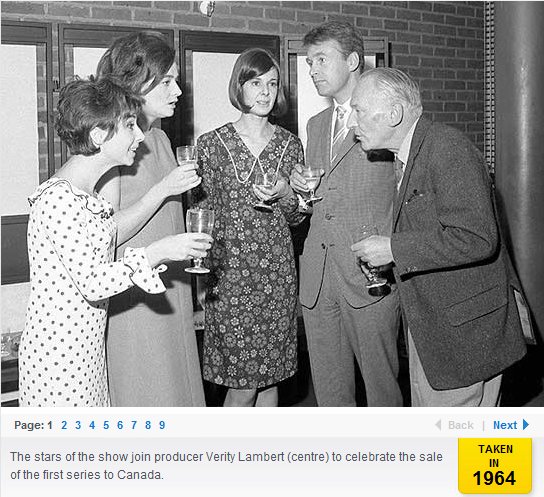
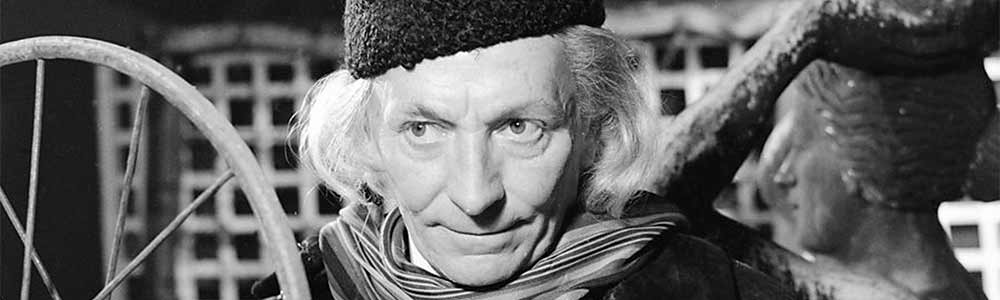
The First Doctor was played by William Hartnell. This was Doctor Who at its very beginnings, in 1963, so it is radically different not only from the modern 2005 show but even from the Pertwee era seven years later, by which time TV production had advanced in leaps and bounds.
I must confess to being barely acquainted with Hartnell’s era, having watched only four or five stories in total. It is too slow-moving for my tastes. However, I can certainly recommend one episode …
“An Unearthly Child”
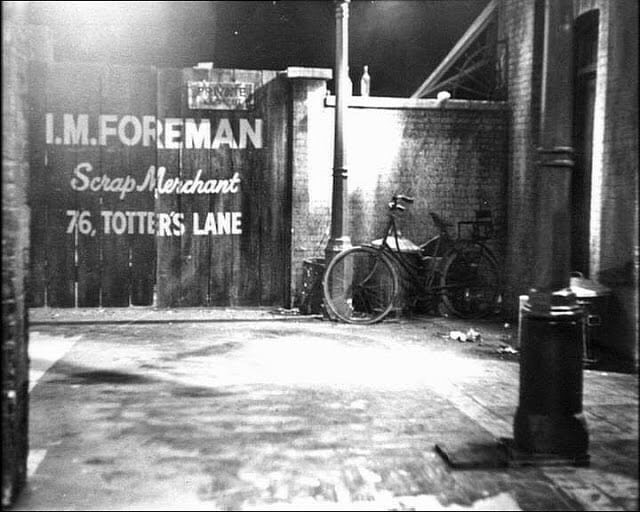
This is the very first episode. Though it is technically the first of a four-part story, it is really a “standalone” episode to set up the programme. The introduction of now-iconic elements is beautifully done. Everything at this stage seems darker and more mysterious than it will later be. The Doctor is secretive, unfriendly and sinister. The TARDIS is scary and doesn’t seem reliable, its first “flight” being a genuinely unnerving experience.
The atmosphere is terrific throughout. The whole thing is in grainy black & white reminiscent of a 1930s horror film. It is excellent, in my opinion. Had the show continued in this vein it would probably have been much shorter-lived but less lightweight. I guess things are always better while they still have their mystery.
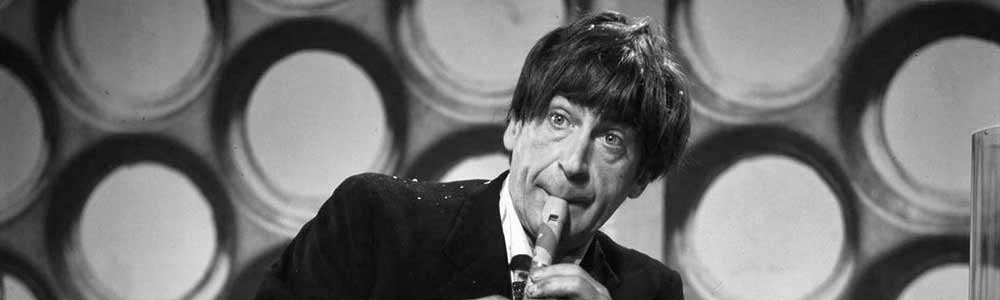
The Second Doctor was played by Patrick Troughton. He was perhaps the most talented — as an actor — of the men who played the role in the classic era. His turn on the character is much more playful and irreverent than Hartnell’s. I am again very unfamiliar with the era, so am somewhat at a loss for recommendations.
“The Three Doctors”
This is a cheat since this story is actually in the Third Doctor’s era, but I think the Second really dominates proceedings so it feels appropriate to cite this story as one of his. You get a strong sense of how different he is from the Third, whom Troughton effortlessly upstages. And it’s a good story.
The Third Doctor was played by Jon Pertwee, then known mostly for comedy work. During most of this era the Doctor is confined to Earth, working as “scientific advisor” to UNIT led by the Brigadier, and battling his Timelord nemesis the Master. A lot of the stories are 6 or 7-parters, formats that work very well; there is more world-building than in the 4-parters, which start to seem slightly lacking by comparison.
The third was perhaps the least “alien” incarnation of the Doctor. You can easily imagine him being a heroic leader in the Empire or a maverick figure in British government or business, up to about 1970 (after which such mavericks were tamed or filtered out by bureaucracy). Aristocratic but still practical and “a man of action”, he is constantly innovating and questioning, and being frustrated by the lack of imagination in the lesser men around him. But he is very much a man, not an alien. That choice was probably dictated by Pertwee’s own personality, and it would be reversed when his successor arrived.
Nevertheless, this era was a peak for Doctor Who. The storytelling is very competent, the production style has real charm and the acting (RP galore!) is consistent and endearing. All of this means the stories bear rewatching, remaining enjoyable time after time.
In terms of choice, you can hardly go wrong with this era. The only bad stories are “Carnival of Monsters” and “The Mutants“, with the rest being uniformly great fun.
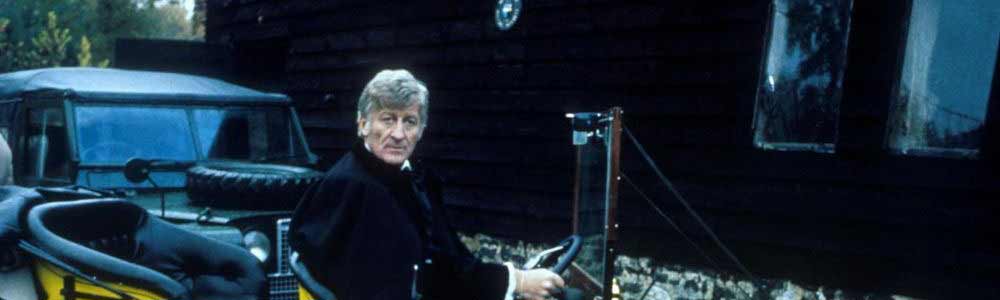



Jon Pertwee was my first Doctor, did not know of the others. Watched on an 11 inch black and white portable when our family became wealthy enough for a second TV. PBS station showed it right after suppertime, fell in love with Jo Grant.
I watch old shows, British and American, to recall a wonderful time in our lives. Great adults, survivors of the Depression and a horrible war and then enjoy life.
Thank you, Terry Nation and all the wits and creators. You are missed.
Comment by Pat McCracken — September 23, 2026 @ 21:36