
World War Two
Published 6 May 2023A command crisis in the Chinese Nationalist Army benefits the Japanese invaders, in Italy, Mark Clark spends his birthday planning new offensives, the Japanese are pushing for Imphal, and the Soviets for Sevastopol — another busy week of the war!
(more…)
May 7, 2023
Total Chaos on the Chinese Front! – WW2 – Week 245 – May 6, 1944
Comments Off on Total Chaos on the Chinese Front! – WW2 – Week 245 – May 6, 1944
May 5, 2023
Alligator Creek: America Learns to Fight the Japanese
Forgotten Weapons
Published 7 Jan 2023The Battle of Alligator Creek (aka Battle of the Tenaru) was a formative moment in the American World War Two psyche. After making an unopposed landing on Guadalcanal and taking its mostly-completed airfield at minimal cost, the US Marines had to defend their permitter on the night of August 21st, 1942.
Colonel Kiyonoa Ichiki was sent from the Japanese base at Truk with about 900 tough veteran soldiers to push the Marines off the airfield. These men had originally been slated to assault Midway Island, but the Japanese naval defeat there forced a change in plans. Ichiki was overconfident, and more concerned about retaking the islands of Tulagi, Gavutu, and Tanambogo across the straights, where Japan’s main base in the area had also been captured by Marine Raiders. Marching up the coastline towards Henderson Field, Ichiki’s men hit the thin single strand of Marine barbed wire about about 1:30am on the morning of there 21st. An intense firefight erupted, with the well dug-in Marine positions opening up with .30 caliber and .50 caliber machine guns, small arms, and 37mm canister rounds.
The fighting continued after daybreak, with Ichiki’s men digging in on the east bank of Alligator Creek. The Marines launched a two prong counterattack, with one force crossing the Creek inland and advancing down the east bank while a second group, including several Stuart light tanks, advanced across the sandbar. These two groups linked up in the early afternoon of the 21st, almost completely annihilating the Ichiki Detachment.
This was the first real land combat between American and Japanese forces in which American soldiers were able to report back on their experience. It was here that the US military as an institution learned that the Japanese would die rather than surrender, and this engagement set the American expectations for the rest of the Pacific campaign.
(more…)
Comments Off on Alligator Creek: America Learns to Fight the Japanese
May 3, 2023
Finland’s High Power Rig
Forgotten Weapons
Published 6 Jan 2023Finland used a variety of FN pistols prior to WW2, and had already evaluated the High Power when Russian invaded and the Winter War began. With an urgent need for more arms, Finland ordered a batch of High Power pistols, which FN was happy to include with the other arms orders already being delivered to Finland. In total, the Finns bought 2,400 of them, with 900 delivered in February 1940 and 1,500 in March 1940. All of them were bought as rigs with leather holsters riveted to flat board shoulder stocks (note that a Finnish pistol with a Finnish-contract original stock is exempted form the NFA in the US, and need not be registered as a short-barreled rifle).
This delivery schedule meant that only a few were available in time to be used in the Winter War, and they saw much greater use in the Continuation War. They were particularly appreciated by the Finnish Air Force as survival weapons. This is often misinterpreted to mean that they were exclusively used by the Air Force; in fact the quantity of Finnish aircraft was small enough that only a small fraction of the pistols were issued to pilots.
Finnish contract pistols have serial numbers falling between 11,000 and 15,000 (and not all guns in that range are Finnish). The stocks were marked in large numbers with the serial number of the gun, although matching rigs are quite scarce today. Some, but not all, were later marked “SA” by the Finnish Army. During the continuation War some of the holsters were separated from the stocks, and some of the pistols had new square front sights put on (a common Finnish preference, done to Lugers as well).
About 40% of the High Powers were lost or rendered unserviceable by the end of the Continuation War. The remainder were kept in service until the 1980s, when they were replaced by the Browning Double Action and slowly sold as surplus.
(more…)
Comments Off on Finland’s High Power Rig
May 2, 2023
Dad’s Army: What Was The Military Career of Lance Corporal Jones?
The History Chap
Published 25 Jan 2023Lance Corporal Jack Jones is one of the most loved characters in the classic British comedy Dad’s Army. Constantly referring to his exploits in the Sudan, the North West Frontier (India) and the First World War.
So I thought I would make a short video exploring his long (& fictitious) military career.
The local butcher, Jack Jones, is a member of Walmington-on-Sea Home Guard during World War Two. This fictitious Home Guard unit are the stars of the classic BBC comedy: Dad’s Army.
What I found amazing is that the BBC created a back story for the character of Lance Corporal Jones. researching the medal ribbons that Jones wears on his Home Guard uniform I have put together a timeline of his military career in the 1st battalion, Warwickshire Regiment.
The story starts when young Jack Jones joins the Royal Warwickshire’s in 1884 as a drummer boy. He is to spend 31 years serving in the British army where he participates in the Gordon Relief Expedition, the re-conquest of Sudan under General Kitchener, the Boer War, the North West Frontier of India, and the First World War.
Comments Off on Dad’s Army: What Was The Military Career of Lance Corporal Jones?
May 1, 2023
QotD: The Netherlands under Nazi occupation
Not that the Netherlands is completely at ease with its record under the Nazi occupation. Seven thousand Dutchmen volunteered for the SS, and a higher proportion of Dutch Jews died in the Holocaust — three-quarters of them, more than twice the proportion in Belgium, for example, and three times more than in France — than in any other occupied country of Western Europe. Whatever the reasons for this disproportion — the relatively unpropitious Dutch landscape for a life of clandestinity is surely one — unease about it is inevitable. According to one historian of the Holocaust in the Netherlands, Marnix Croes:
On the whole, the Dutch reacted to the German occupation, including the persecution of the Jews, with a high degree of cooperation, following their reputed tradition of deference to authority. This did not change when the deportations started, and it lasted until the beginning of 1943. … [T]here was for a long time little doubt that the bureaucracy would not sabotage German-imposed measures, and in fact these were thoroughly implemented.
As Croes observed, “the Dutch bureaucracy assisted the Germans, primarily through population registration; the Dutch police helped, and Dutch bounty hunters, lured by blood money, tracked down Jews in hiding”.
Theodore Dalrymple, “The Cheapest Insult: The reductio ad Hitlerum: a refuge of tired minds”, City Journal, 2017-06-19.
Comments Off on QotD: The Netherlands under Nazi occupation
April 30, 2023
Germany’s Existential Crisis – WW2 – Week 244 – April 29, 1944
World War Two
Published 29 Apr 2023The fighting at Kohima is up close, personal, and vicious, as it is at Imphal. The Allies consolidate their gains at Hollandia, the Japanese are advancing in Central China, and it seems like the Chinese Nationalist Army has lost the support of the civilian population. This might not surprise you when we take a closer look.
(more…)
Comments Off on Germany’s Existential Crisis – WW2 – Week 244 – April 29, 1944
April 29, 2023
Okinawa 1945: Planning Operation ICEBERG
Army University Press
Published 7 Dec 2021On 1 April 1945, U.S. forces invaded the Japanese home island of Okinawa. It was the largest joint amphibious assault mounted during World War II in the Pacific Theater. The invasion of Okinawa was the culmination of three years of operations in the Pacific against Imperial Japan. The film explores the planning and preparation for Operation ICEBERG from September 1944 to 1 April 1945.
“Okinawa 1945: Planning Operation ICEBERG” examines the U.S. Army operations process as well as planning by echelon from field army, corps, and division with special emphasis on current Joint doctrine. This film is the first in a two-part series covering Operation ICEBERG and the U.S. Tenth Army’s securing of Okinawa.
(more…)
Comments Off on Okinawa 1945: Planning Operation ICEBERG
April 28, 2023
QotD: The high-water mark of the Panzerarmee Afrika
Even here, however, let us be honest. Smashing 8th Army at Gazala and taking tens of thousands of prisoners at Tobruk did little to solve the strategic problem. Unless the British were destroyed altogether, they would reinforce to a level the Axis could not match. Many later analysts argue that the Panzerarmee should have paused now, waited until some sort of combined airborne-naval operation had been launched against Malta to improve the logistics, and only then acted. Such arguments ignore the dynamic of the desert battle, however; they ignore the morale imperative of keeping a victorious army in motion; above all they ignore the personality of Rommel himself.
Pause? Halt? Wait? Anyone who expected Rommel to ease up on the throttle clearly hadn’t been paying attention. Instead, the Panzerarmee vaulted across the border into Egypt with virtually no preparation. To Rommel, to his men, and even to Hitler and Mussolini, it must have looked like a great victory lay just over the next horizon: Cairo, Alexandria, the Suez Canal, the British Empire itself.
In reality, it is possible today to see what the great Prussian philosopher of war Karl von Clausewitz once called the “culmination point” — that moment in every campaign when the offensive begins to lose steam, run down, and eventually stop altogether. The Panzerarmee was exhausted, its equipment was worn out and in desperate need of repair. Captured British stores and vehicles had become its life-blood, Canadian Ford trucks in particular. The manpower was breaking down. A chronic shortage of potable water had put thousands of soldiers on the sick rolls. Colonel Siegfried Westphal, the Panzerarmee‘s operations chief (the “Ia”, in German parlance), was yellow with jaundice. The army’s intelligence chief (the “Ic”), Colonel Friedrich Wilhelm von Mellenthin, was wasting away with amoebic dysentery. Rommel had a little of both, as well as a serious blood-pressure problem (no doubt stress-induced) and a chronic and bothersome sinusitis condition. While it would be easy to view all these illnesses as simple bad luck, they were, in fact, the price Rommel and all the rest of them were paying for fighting an overseas expeditionary campaign with inadequate resources.
The same might be said for the rest of the campaign. The Panzerarmee made an ad hoc attempt to break thought the British bottleneck at El Alamein in July. It failed, coming to grief against British defenses on the Ruweisat ridge. There was a second, more deliberate, attempt in August. After an initial breakthrough, it crashed into strong British defenses at Alam Halfa ridge and it, too, failed. After yet another long pause, a “third battle of El Alamein” began in late October. This time, it was the well supplied British on the attack, however, and they managed to smash through the Panzerarmee and drive Rommel and company back, not hundreds of miles, but more than a thousand, out of the desert altogether and into Tunisia. There was still fighting to be done in Africa, but the “desert war” was over.
Robert Citino, “Drive to Nowhere: The Myth of the Afrika Korps, 1941-43″, The National WWII Museum, 2012. (Originally published in MHQ, Summer 2012).
Comments Off on QotD: The high-water mark of the Panzerarmee Afrika
April 24, 2023
Even fighter pilots and gunners have love lives
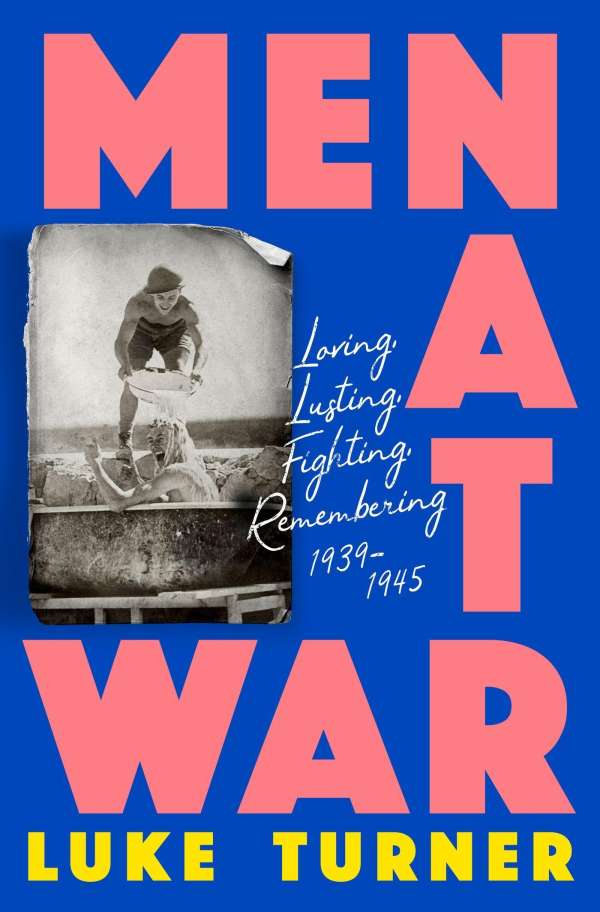
In The Critic, John Sturgis reviews a new book by Luke Turner titled Men at War: Loving, Lusting, Fighting, Remembering 1939-1945, which considers the myths and reality of wartime relationships during the Second World War:
Spitfire pilot Ian Gleed shot down five enemy aircraft in just a week in May 1940 — the fastest time in which this had ever been done, making him an official “ace” who would be quickly promoted to Wing Commander.
Gleed had become a poster boy for “the few”, the hero pilots of the Battle of Britain to whom so many would owe so much. He lived up to the popular image with his talk of “a bloody good show” and shooting down “damned Huns”, after which he’d sink a few warm beers and spend some “wizard” free time recuperating with his girlfriend Pam, whom he “loved now more than ever”.
Gleed’s luck finally ran out over Tunisia in April 1943 when his plane was hit by a German fighter and crashed into dunes. Gleed was killed. He was just 26.
It would only emerge decades later that much of the popular image he had cultivated simply wasn’t true. Gleed was gay. Pam was an imaginary character he had invented as a cover to keep his double life as a sexually active homosexual firmly secret.
Gleed’s story is one of many similar vignettes in this alternative history of the Second World War. Its author Luke Turner’s previous book was a memoir about his own grappling with issues around his identity as a bisexual. Here he takes up the question of how this would have played out for him and other sexual non-conformists in 1939–45.
Turner grew up obsessed with the war — everything from Airfix kits and Dad’s Army to Stalingrad and the Berlin bunker — and here he examines what it was to live through that period as a sexually active person of whatever hue. It proves a particularly rich subject matter as sex seems to have been everywhere in war time: everyone was sleeping with everyone else, apparently. It’s a perennial truth that you or I might be hit by a bus tomorrow — but make that bus a bomb, and suddenly this seems to create a sense of urgency which frequently manifests itself sexually, lending daily life what Turner calls “an aphrodisiac quality”. As Quentin Crisp put it when describing the shenanigans in blacked-out, Blitz London: “As soon as the bombs started to fall, the city became like a paved double bed.”
Whilst war may see an explosion of sex of all kinds, the establishment was not always comfortable with this. A Home Office report on public behaviour in London during the Blitz noted, “In several districts cases of blatant immorality in shelters are reported; this upsets other occupants of the shelters.”
One contemporary account suggests, “In wartime a uniform, whether of the Army, Navy or Air Force, to the average girl ranks as a fetish.” This had consequences in the field: Dear John letters from home could be a real problem in this regard. As an Army report in 1942 put it, morale is often damaged by “the suspicion, very frequently justified, of fickleness on behalf of wives and girls”.
Amongst all this sex was, of course, sex with Americans. Turner cites George Formby who captured this mood in the song “Our Fanny’s Gone All Yankee”: “She don’t wait for the dark when she wants to have a lark/In a bus or train she does her hanky panky.”
Then in a dark reversal of this two-nations-colliding-sexually motif, we get the horror of the Red Army’s organised rape of as many as 1.4 milllion German women during the Russian advance on Berlin, whose residents would later refer to the city’s grandiose monument to Soviet war dead as “the tomb of the unknown rapist”.
Comments Off on Even fighter pilots and gunners have love lives
April 23, 2023
The Biggest Offensive in Japanese History – WW2 – Week 243 – April 22, 1944
World War Two
Published 22 Apr 2023Japan Launches Operation Ichigo in China, their largest offensive of the war … or ever, but over in India things are not going well for the Japanese at Imphal and Kohima. The Allies also launch attacks on the Japanese at Hollandia, while over in the Crimea, the German defenses at Sevastopol are cracking under Soviet pressure.
(more…)
Comments Off on The Biggest Offensive in Japanese History – WW2 – Week 243 – April 22, 1944
April 22, 2023
Hitler’s Revenge on the Italian People – War Against Humanity 101
World War Two
Published 21 Apr 2023As the RAF closes in on Berlin and the German Army is running dangerously low on men, the Nazi leadership is determined to use their resources to spread their crimes deeper into Hungary and Italy.
(more…)
Comments Off on Hitler’s Revenge on the Italian People – War Against Humanity 101
April 21, 2023
Type 94 Japanese 37mm Antitank Gun on Guadalcanal
Forgotten Weapons
Published 30 Dec 2022The Type 94 was the standard infantry antitank gun of the Japanese Army during World Ware Two. It was developed in the early 1930s as tensions with the Soviet Union rose; there had not been much need for Japanese antitank weapons in China. However, high explosive ammunition was also made for the gun, and it was used in an infantry support role with HE in China as well as in the Pacific.
The Type 94 was small and light, and could be disassembled for transportation without vehicles — a very useful capability on islands like Guadalcanal. Against US M3 Stuart light tanks, the Type 94 was a reasonably potent weapon.
Note that the Japanese also had a Type 94 tank gun, which was not the same as this — and did not use the same 37mm cartridge.
(more…)
Comments Off on Type 94 Japanese 37mm Antitank Gun on Guadalcanal
April 19, 2023
World War 2 Ice Cream of the US NAVY
Tasting History with Max Miller
Published 18 Apr 2023
(more…)
Comments Off on World War 2 Ice Cream of the US NAVY
April 18, 2023
Guadalcanal’s Red Beach Landing: America’s First Offensive in WW2
Forgotten Weapons
Published 24 Dec 2022After (formally) joining World War Two in the wake of Pearl Harbor, the United States endured a series of defeats at the hands of the Japanese. The Philippines garrison fell, Wake Island fell, Guam fell. British possessions in Southeast Asia teetered and fell as well — the campaign was not going well for the Allies.
The first American offensive of the war would come on August 7th, 1942 with the landing of the 1st and 5th Marines at Red Beach on Guadalcanal. Part of a multi-prong assault (the nearby Japanese bases on Tulagi and Gavutu/Tanambogo were also captured at the same time), the attack on Guadalcanal was made to secure the airstrip under Japanese construction there. If the island became an operational Japanese air base, Allied supply shipping to Australia would come under threat, and this could imperil the whole area of operations.
Fortunately for the Marines, US intelligence massively overestimated the Japanese force on Guadalcanal. It was in fact only a few hundred infantry, leading a work force of about 3,000 laborers (mostly Koreans). They thought the US landings were just a small raid, and dispersed into the jungle to wait for the US departure. Instead, the Marines were there to take the airfield and hold it. They were not, however, very well prepared. The Navy suffered a massive defeat in the waters off Guadalcanal the very next night, and would pull out of the area August 9th, leaving the Marines with dangerously low supplies of food, ammunition, and other essentials.
(more…)
Comments Off on Guadalcanal’s Red Beach Landing: America’s First Offensive in WW2
April 17, 2023
Tank Chats Reloaded | Panzer IV | The Tank Museum
The Tank Museum
Published 30 Dec 2022Let’s go inside Panzer IV with another episode of Tank Chats Reloaded. Chris Copson takes a detailed look inside the tank which was considered the backbone of the Wehrmacht‘s Panzer force, uncovering the reality of what it might’ve been like to serve as a Panzer crew member in WW2.
(more…)
Comments Off on Tank Chats Reloaded | Panzer IV | The Tank Museum


