
H/T to Ghost of a Flea for the link. There are several episodes available, so do follow along. The first episode is a bit slow, but it picks up nicely in later episodes.
November 20, 2010
November 19, 2010
November 18, 2010
Put pressure on the airlines to rein in TSA
Megan McArdle writes a Dear John letter to her long-time airline:
Dear Airline, I’m Leaving You
But don’t feel too bad. It’s not you, it’s me. Or rather, it’s the TSA.
I’m not going to lie. It’s come between us. If I have to let someone else see me naked in order to be with you — well, I’m just not that kinky. And deep down, I don’t think you are either. I think it’s the TSA making you act like this. Frankly, you haven’t been the same since you started running around together.
But I can’t put all the blame on them. I think you went along because you thought I had to have you — that I couldn’t live without you. That no matter what you did, I’d stay. And it’s true, you had a pretty strong hold on me. Took away the food, and I still loved you — who wanted to eat a terrible, fattening meal anyway? Narrowed the distance between the seats, and still I stayed, using my airline miles to upgrade to first class. Charge me for baggage? I’m an economics writer — I love unbundled products. So I can see where you got the idea that I’d stick by you no matter what.
But the kinky stuff is just a bridge too far. I’m not saying I’ll never see you again: we can still meet up for a drink, or even a quick weekend trip to California. But our days are a regular item are through. I’m writing this letter because one of my commenters pointed out that it was only fair to let you know what was going on [. . .]
QotD: On the quality of writing, mediated through technology
I own a computer. I don’t use the Internet very much. I’m not a technophobe. It just doesn’t help me very much. Writing is a slow and a difficult process mentally. How you physically render the words onto a screen or a page doesn’t help you. I’ll give you this example. When words had to be carved into stone, with a chisel, you got the Ten Commandments. When the quill pen had been invented and you had to chase a goose around the yard and sharpen the pen and boil some ink and so on, you got Shakespeare. When the fountain pen came along, you got Henry James. When the typewriter came along, you got Jack Kerouac. And now that we have the computer, we have Facebook. Are you seeing a trend here?
P.J. O’Rourke, “Very Little That Gets Blogged Is Of Very Much Worth”, Radio Free Europe/Radio Liberty, 2010-11-18
Comments Off on QotD: On the quality of writing, mediated through technology
November 16, 2010
QotD: The true nature of parenthood
We have a name for people who pursue rare moments of bliss at the expense of their wallets and their social and professional relationships: addicts.
Children regularly give parents the kind of highs that only narcotics can rival. The unpredictability of those moments of bliss is an important factor in their addictiveness. If you give animals a predictable reward — say, a shot of sugar every time they press a lever — you can get them to press that lever quite regularly. But if you want irrational and addictive behavior, you make the reward unpredictable. Pressing the lever produces sugar, but only once every 10 tries. Sometimes, the animal might have to go 20 or 30 tries without a reward. Sometimes it gets a big jolt of sugar three tries in a row. If you train an animal to work for an unexpected reward, you can get it to work harder and longer than if you train it to work for a predictable reward.
[. . .]
I suspect oxytocin works the same way. The unexpected, kind, and loving things that children do produce chemical surges in their parents’ brains like the rush of the pipe or the needle. Like addicts, parents will sacrifice anything for the glimpses of heaven that their offspring periodically provide.
Shankar Vedantam, “Parents Are Junkies: If parenthood sucks, why do we love it? Because we’re addicted”, Slate, 2010-11-16
Comments Off on QotD: The true nature of parenthood
November 15, 2010
Iowahawk provides some suggested new slogans for the TSA

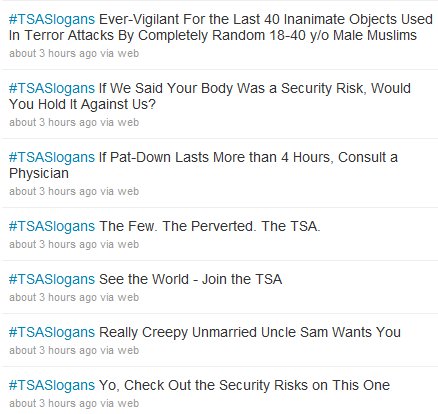
If you aren’t following Iowahawk on Twitter, you’re missing a lot of funny stuff.
Comments Off on Iowahawk provides some suggested new slogans for the TSA
November 14, 2010
QotD: The lost election
I think we lost the election on November 2. Every race was won by a politician. True, we elected some angry nuts. These are preferable to common politicians. Their anger provokes honesty, and their mental illness prevents honesty from being obscured by charm. [. . .] We also elected some amateur politicians. However, politics is like vivisection — disturbing as a career, alarming as a hobby. And we may have elected a few reluctant politicians. But not reluctant enough.
We will win an election when all the seats in the House and Senate and the chair behind the desk in the Oval Office and the whole bench of the Supreme Court are filled with people who wish they weren’t there.
In a free country government is a dull and onerous responsibility. It is a parent-teacher conference. The teacher is a pompous twit. Our child is a lazy pain in the ass. We undertake this social obligation with weary reluctance. And we only do it at all because the teacher (political authority) deserves cold stares, hard questions, and maybe firing, and the pupil (that portion of society which, alas, needs governing) deserves to be grounded without TV and have its Internet access screened and its allowance docked.
America’s elected and appointed officials ought to be longing to return to their personal lives and private interests. They should feel burdened by their powers, irked with their responsibilities, and embarrassed at their prominence in the public eye. When they say they want to spend more time with their families, they should mean it.
P.J. O’Rourke, “I Think We Lost the Election: How about politics without politicians?”, Weekly Standard, 2010-11-13
November 13, 2010
QotD: Drinker’s lesson
In “real life”, Amis was a no-nonsense drinker with little inclination to waste a good barman’s time with fussy instructions. However, there was an exception which I think I can diagnose in restrospect, and it is related to his strong admiration for the novels of Ian Fleming. What is James Bond really doing when he specifies the kind of martini he wants and how he wants it? He is telling the barman (or bartender if you must) that he knows what he is talking about and is not to be messed around. I learned the same lesson when I was a restaurant and bar critic for the City Paper in Washington, D.C. Having long been annoyed by people who called knowingly for, say, “a Dewar’s and water” instead of a scotch and water, I decided to ask a trusted barman what I got if I didn’t specify a brand or label. The answer was a confidential jerk of the thumb in the direction of a villainous-looking tartan-shaded jar under the bar. The situation was even grimmer with gin and vodka and became abysmal with “white wine”, a thing I still can’t bear to hear being ordered. If you don’t state a clear preference, then your drink is like a bad game of poker or a hasty drug transaction: It is whatever the dealer says it is. Please do try to bear this in mind.
Christopher Hitchens, “The Muse of Booze”, Everyday Drinking: The Distilled Kingsley Amis, 2008
Comments Off on QotD: Drinker’s lesson
Fly Lutheran Airlines, you betcha!
H/T to Jason Ciastko and John McCluskey for the link.
Comments Off on Fly Lutheran Airlines, you betcha!
November 12, 2010
New book for kids about to fly for the first time
Mark Frauenfelder has the book to give to your child before going to the airport:

Got to start ’em early . . . by the time they’re full-grown, they’ll accept any intrusion from government officials as a matter of course.
The original version (in French) is here.
Comments Off on New book for kids about to fly for the first time
November 10, 2010
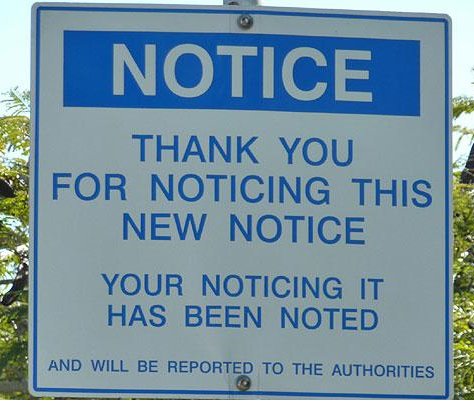
Sign of the times
Sue Barrett took a photo of this sign in Brisbane, Australia:
Comments Off on Sign of the times
November 9, 2010
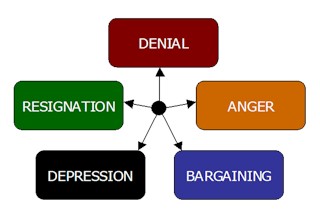
The five stages of grading
By way of Ilkka’s blog, a new look at the plight of the grad student:
Everyone is familiar with Elisabeth Kübler-Ross and her stage model of coping with grief popularly known as the five stages of grief. What you may not know is that Kübler-Ross actually developed her theory as a graduate student, basing her conception of the process of loss on the experiences one goes through over a grading weekend.
In coping with grading, it’s important for graduate students and young professors to know that they are not alone and that this process takes time. Not everyone goes through every stage or processes the reality of grading in this order, but everyone experiences some version of at least two of these steps.
Read the whole thing.
Comments Off on The five stages of grading
November 8, 2010
QotD: “Melticulturalism”
So, the majority of Canadians are in favour of a system that seeks to respect and preserve cultural differences, just as long as people from other cultures don’t actually preserve those differences but assimilate into Canadian society. Call it melticulturalism1: You can be as different as you want, just as long as you act like everyone else.
How Canadian can you get?
1 h/t to Tasha Kheiriddin for “melticulturalism”
Kelly McParland, “Canadians overwhelmingly favour melticulturalism”, National Post, 2010-11-08
Comments Off on QotD: “Melticulturalism”
November 5, 2010
Banned from visiting Afghanistan due to weight
John Turner sent me this link, which could be said to point out fitness requirements for lawmakers:
Britain’s defence ministry says two lawmakers from Northern Ireland have been barred from visiting troops in Afghanistan until they can find flak jackets big enough to fit their bellies.
The ministry says Ken Maginnis and David Simpson were scheduled to fly to Kabul this week, but army-issued body armour doesn’t exceed 49 inches (124.5 centimetres), too snug for both.
A ministry spokesman said Thursday the British army offers “a wide range of sizes but, regrettably, none was suitable on this occasion.”
Alternatively, you could just roll ’em up in kevlar carpets, or something . . .
Comments Off on Banned from visiting Afghanistan due to weight


