
Are you a motivated multitasker with extensive experience that has helped you become a results oriented team player?
Does your online resume say you have a dynamic and innovative skill set which has led to a proven track record of being entrepreneurial in a fast paced world?
Then congratulations, you’ve successfully used all 10 of the most overused buzzwords on LinkedIn in just two sentences.
[. . .]
And just so you know we tried, we did manage to get all 10 buzzwords into one single colossally cringe-worthy sentence sure to make any human resources manager’s skin crawl.
Heaven help the poor guy who has this phrase on his LinkedIn profile:
“Hi, I’m a motivated multitakser with extensive experience as an entrepreneurial and results oriented team player whose innovative and dynamic skills have helped me become adept at working in a fast paced world with a proven track record.”
Ta-da!
Matt Hartley, “The 10 most overused employment buzzwords on LinkedIn”, Financial Post, 2010-12-14
December 14, 2010
QotD: Buzzword Bingo, resumé edition
December 8, 2010
Worried about your upcoming citizenship test? Publius has the answers for you
Publius has done all the hard work for you so you can ace the new citizenship test:
So from the mouth of well meaning ignorance, how would a typical Canadian fare on Mr Kenney’s new immigration test? Thanks to the vast resources of this blog, and its network of agents and correspondents through out the Dominion, we have located the typical Canadian. He’s a male in his late thirties and lives in Kenora. Which I think is in Alberta. But from Toronto it’s hard to tell. We brought the typical Canadian to our high-tech testing center at the corner of Center St and Universe Ave, in downtown Toronto. Here is the test. And here is the typical Canadian’s answers:
– Identify four (4) rights that Canadians enjoy.
The right to complain about the weather. The right to complain about how taxes are too high. The right to complain that the government isn’t spending enough money on me or my community. The right to stand in the middle of the cookie aisle at Loblaws and block everybody’s way (I know who you are).
-Name four (4) fundamental freedoms that Canadians enjoy.
The freedom to speak, unless it offends a politically influential minority group. The freedom to own property, unless it offends a politically influential environmental group. The freedom to protest, unless it offends visiting dignitaries. The freedom to bitch about the weather, unless it offends a co-worker who is a ski-nut.
[. . .]
-What did the Canadian Pacific Railway symbolize?
That graft, corruption, political manipulation, juvenile anti-Americanism, and screwing over people who don’t live in Ontario and Quebec, has been a Canadian tradition since the beginning.
-What does Confederation mean?
Like federation but with more “con” in it. Like transfer payments.
[. . .]
-What is the role of the courts in Canada?
To uphold the laws of Canada, unless it conflicts with their personal political beliefs. At that point they just make stuff up, and then use some latin terms to cover their tracks.
-In Canada, are you allowed to question the police about their service or conduct?
Yes, but not during the APEC conference, the G20, or if you’re living in Caledonia.
Has anyone seen this Taser?
John Oates has a bit of fun at the expense of the Metropolitan Police:
Police appeal for missing Taser
Shocking loss, but stunning Christmas presentThe Metropolitan Police ia appealing for the return of a Taser and four cartridges that were left on the roof of a police car, which was then driven away…
A Met firearms officer attended an early morning briefing at Norfolk Row, Lambeth. After the briefing, possibly focussed on coffee and a bacon sandwich, the copper put the Taser on the roof of the marked police car and drove off.
An hour and a half later it dawned on the unfortunate officer what had happened, by which time the Taser was no longer on the roof.
December 4, 2010
Insults in other languages that don’t translate well
A fascinating thread on AskReddit asks “What are your favourite culturally untranslatable phrases?”
Language warning, so I’ve put it below the fold.
December 3, 2010
Tattoos and Parenting, by Dara O Briain
I’ve said for years I should have invested my retirement savings in tattoo removal businesses . . .
H/T to William Penman for the link.
Happy holiday travels!
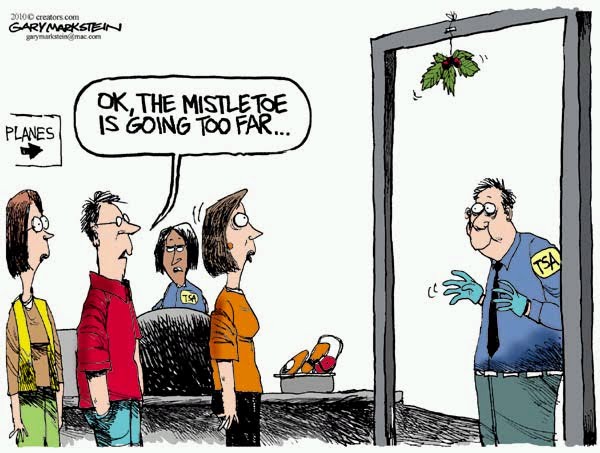
H/T to Economicrot. Many many more at the link.
December 2, 2010
The Two Scotts in a split decision
Scott Feschuk and Scott Reid like different results in this week’s matchup between Minnesota and Buffalo:
Buffalo (plus 6.5) at Minnesota
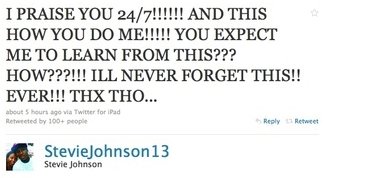
Feschuk: So Buffalo’s Steve Johnson butterfingered a game-winning pass against the Steelers and, naturally, rushed to Twitter to blame it all on God.
Good for Johnson. It’s about time someone had the courage to call out God for the terrible season He’s having. Dude is the Randy Moss of deities — totally going through the motions. Come on, God: we’ve seen you torment the Bills and Lions for the last eon. TRY SOMETHING NEW. And what were you thinking when you let Satan get away with working his evil magic so that both Matt Millen and Joe Theismann are calling the Thursday night games? Not cool, God. Not cool at all. Pick: Buffalo.
Reid: You mean God isn’t a Buffalo fan? This IS news!
Pick: Minnesota.
Feschuk also has an excellent question that the league hasn’t yet answered:
The league’s ruling on Andre Johnson warrants a revisiting of what occurred on the field. Responding to the trash talk and rough play of Cortland Finnegan — the only NFL player whose name sounds like an Irish hotel chain — the Texans’ receiver ripped off Finnegan’s helmet and punched him repeatedly in the head and face.
Johnson’s punishment? The exact same fine that Chad Ochocinco had to pay for tweeting too close to game time. It raises the question: what do you have to do to get suspended by the NFL? Do you have to actually murder a linebacker? Defile the corpse of a Hall of Famer? Fail to gently lower Tom Brady to the ground and tenderly kiss him on the forehead while sacking him?
November 30, 2010
Ireland’s debt problem
James Howard Kunstler looks at Ireland’s plight:
When you’re out of the country, as I was last week, it’s good to know that the home folks are keeping up with the Kardashians and bravely venturing into the blood-splattered chambers of cable TV’s latest hit, Bridal Plasty — where candidates for marriage are transformed from Holstein cows into inflatable sex toys by magic surgical technology — not to mention all those humble guardians of freedom who kept the parking lots of WalMart safe for consumerism in the wee small hours of Black Friday. These are, after all, perilous times.
Elsewhere, Ireland and the rest of Europe wore themselves out with soul-searching all week over how to handle national bankruptcy within a currency system that bears only a schematic relation to reality. Does the bankruptee go broke all at once, or is she recruited into permanent debt slavery so that the bond-holders of various banks can keep their loved ones in marzipan and Fauchon’s wonderful marrons glacés for one more holiday season? As of Monday morning, Ireland has been commanded to, er, bend over and pick up the soap, shall we say, for about a hundred billion euros in loans that will not be paid back until a mile-high ice-sheet covers Dublin (something that might happen sooner rather than later if the climate mavens are right).
We’ll see how this bail-out goes down with the French and German voters, too, who have to pay for it, after all, especially as Portugal, Spain, and Italy line up at the cash cage for their cheques (and bars of soap). Of course, a few more basis points in the interest rate spreads could prang the whole Euro soap opera — does anybody really believe this game of kick-the-can will go on after New Years? I’m not even sure it goes on past this Friday, but I am a notoriously nervous fellow.
This is almost as good as the (temporarily discontinued) daily Financial Briefings from Monty.
H/T to Terry Kinder for the link.
November 28, 2010
Spendy speaker wires
If you’re a true audiophile, this kind of price may not make you blink, but the rest of us are led to wonder about you:
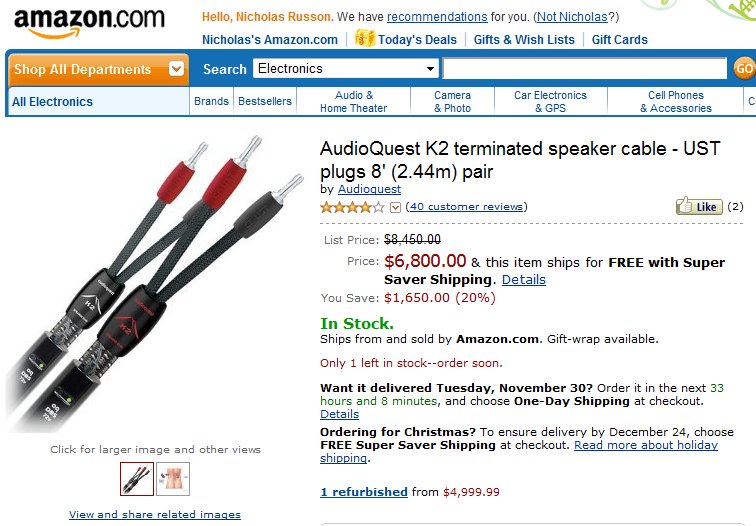
Cory Doctorow would like you to read one of the reviews for this amazing product — a brilliantly crafted science fiction short story:
We live underground. We speak with our hands. We wear the earplugs all our lives.
PLEASE! You must listen! We cannot maintain the link for long… I will type as fast as I can.
DO NOT USE THE CABLES!
We were fools, fools to develop such a thing! Sound was never meant to be this clear, this pure, this… accurate. For a few short days, we marveled. Then the… whispers… began.
November 27, 2010
November 23, 2010
Succinct summary of Irish situation
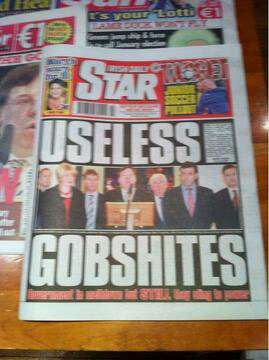
From Andrew Bloch’s Twitpic page and brought to my attention by Damian Penny.
Don’t print these off and attach them to your luggage
A few bumper stickers/luggage tags from Hit and Run:

November 22, 2010
The Register reports on Erotica 2010
If there was one trade show in Britain you’d be certain that The Register would cover, it would have to be Erotica 2010:
Whether it was the cold or the recession, Erotica 2010 – the 15th year of the international sex exposition – appears to have ever so slightly wilted.
It is not exactly shrivelled, but is a little smaller; not the proud, thrusting standard-bearer of the UK’s adult erotic industry it once was.
A quick totting up through the programme suggests around 20 fewer exhibitors than two years ago.
[. . .]
Yet again, a glittering procession of acts — from pole dancers to zentai dolls — took to the stage at the heart of the show, with pride of place for the inimitable Dita von Teese. Sadly, we are unable to bring you any pictures of her act, under pain of a penalty fee of $1m, which all journalists were required to agree to before entering the hall!
Tintin adventures I’d like to read
Murray Groat illustrated some covers to Tintin adventures that don’t, but should, exist:
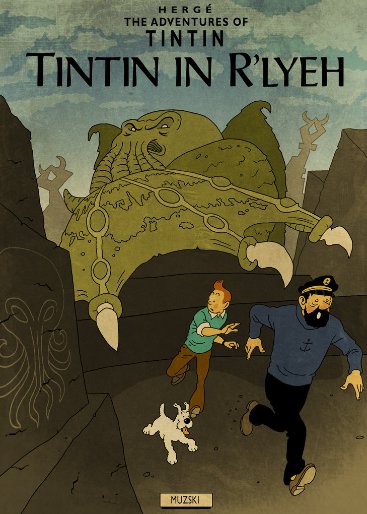
H/T to BoingBoing.


