If you hurry, you can just get your Santa’s Visit Application in before the deadline tonight!


If you hurry, you can just get your Santa’s Visit Application in before the deadline tonight!
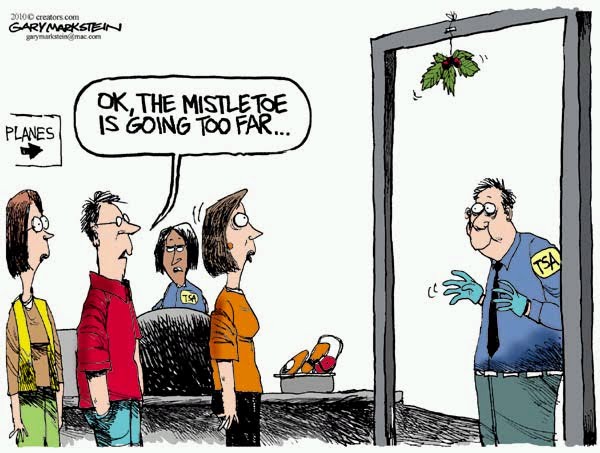
H/T to Economicrot. Many many more at the link.
ReasonTV
Published on 12 Dec 2018Left-leaning politicians of the 1970s understood that red tape punishes consumers and protects big business. The leading deregulator of that era was none other than Jimmy Carter.
————————
Follow us on Twitter: https://twitter.com/reasonReason is the planet’s leading source of news, politics, and culture from a libertarian perspective. Go to reason.com for a point of view you won’t get from legacy media and old left-right opinion magazines.
————————
When President Donald Trump bragged in his first State of the Union address about cutting red tape, the Democratic response was no surprise. “Deregulation,” warned Center for American Progress Senior Advisor Sam Berger in Fortune, “is simply a code word for letting big businesses cut corners at everyone else’s expense.”But many leading Democrats had the opposite view in the 1970s. Then, at the dawn of the deregulation era, left-leaning politicians and economists understood that excessive government management of industry let the big-business incumbents get away with lousy performance at the expense of competitors, taxpayers, and consumers. The leading figure in that fight to cut red tape and shut down entire federal agencies was none other than Jimmy Carter.
It was Sen. Ted Kennedy who held extensive Senate hearings in the early ’70s, with testimony from the likes of Ralph Nader and liberal economist Alfred Kahn, about the benefits of lifting state controls on the airline industry. The resulting Airline Deregulation Act of 1978, signed by Carter, killed the Civil Aeronautics Board — a federal agency that decided which airlines could fly where, and even what they could charge. The new competition to the old airline cartel reduced fares, expanded destinations, increased safety, and made air travel an option for those of us who aren’t rich.
Carter also lifted stifling government oversight of the rail and trucking industries under a Democrat-controlled House and Senate. The result? Competition intensified, prices dropped, and consumers saved more money on everyday products.
In 1978, President Carter signed a bill that lifted Prohibition-era criminal restrictions on home brewing. The legalization of do-it-yourself beer production unleashed a boom of experimentation, paving the way for the craft beer revolution that is ongoing to this day. The year that Carter loosened the rules, the U.S. was home to a mere 50 breweries. Today there are well over 5,000. In two generations of beermaking, America went from global laughingstock to world leader.
The governor of California during Carter’s presidency was none other than Jerry Brown, then known as “Governor Moonbeam” for his far-out musings, glittery social life, and lefty politics. Yet Brown, too, could be a fiery skeptic of government. In his terrific second inaugural address in 1979, Brown stated that “many regulations primarily protect the past, prop up privilege or prevent sensible economic choices.”
But even while some sectors were unleashed four decades ago by far-seeing Democrats and Republicans alike, too many governments at the local, state, and federal levels have forgotten those lessons, and instead imposed entirely new categories of regulations. Occupational licensing, which applied to about one in 10 jobs 40 years ago, now impacts one in three.
So how did the party of Jimmy Carter and sideburns-era Jerry Brown become the ideological home of Elizabeth Warren and Alexandria Ocasio-Cortez? One explanation may be that Democratic support for deregulation back then was born out of a sense of nearly hopeless desperation in the face of stagflation. Cutting red tape to foster dynamism was about the last move politicians had left.
Our long economic expansion and stock-market boom will soon come to an end, imposing limits on government precisely at the moment when it’s asked to do more. When that day of reckoning comes, the best questions for lawmakers of both parties to ask may just be: What would Jimmy Carter do?
Photo credits: Jimmy Carter Library, Arthur Grace/ZUMA Press/Newscom, Dennis Brack/Newscom, Everett Collection/Newscom, Ron Sachs/CNP/MEGA/Newscom, Brian F. Alpert/ZUMA Press/Newscom, Paul Harris/Pacific Coast Nes/Newscom, Bee Staff Photo/ZUMA Press/Newscom, Dennis Brack/bb51/Newscom, Jonathan Bachman/REUTERS/Newscom, Rick Friedman/Polaris/Newscom
While it’s hard to argue against safer playgrounds, it’s also true that by design the transparent playground offers kids no privacy. “As [playgrounds] were childproofed to improve safety, they inadvertently reduced the opportunities for the young to take part in forms of fantasy, sensory, and exploratory play, and construction activities apart from adults,” writes historian Mintz. “Unstructured, unsupervised free play outside the home drastically declined for middle-class children. As more mothers joined the labor force, parents arranged more structured, supervised activities for their children. Unstructured play and outdoor activities for children 3 to 11 declined nearly 40 percent between the early 1980s and the late 1990s. Because of parental fear of criminals and bad drivers, middle-class children rarely got the freedom to investigate and master their home turf in ways that once proved a rehearsal for the real world.”
So much for the roving pack of kids each block boasted during Mintz’s childhood, and my own. “The empty lot has disappeared,” he quips. “And we are so concerned with legal liability that if kids do find one, you’d better be sure you’ll get a call from the police.”
Beth Hawkins, “Safe Child Syndrome: Protecting kids to death”, City Pages, Volume 26 – Issue 1267.
“Stasi” was the abbreviation for the German Democratic Republic’s State Security Service, East Germany’s successor to the Gestapo. Not only did they perform similar functions to the Gestapo, they were even more involved in spying on Germans than their Nazi predecessors had been. Wikipedia says that “the Stasi employed one secret policeman for every 166 East Germans; by comparison, the Gestapo deployed one secret policeman per 2,000 people. As ubiquitous as this was, the ratios swelled when informers were factored in: counting part-time informers, the Stasi had one agent per 6.5 people. This comparison led Nazi hunter Simon Wiesenthal to call the Stasi even more oppressive than the Gestapo.” Statistics Canada doesn’t want to get the full story on us by physically spying — that’s the RCMP’s job — but they do want to grab huge amounts of our personal financial data to “ensur[e that] government programs remain relevant and effective for Canadians”. Terence Corcoran explains why this might not be such a good idea:

When news broke earlier this year that the accounts of maybe 600,000 Canadian Facebook users had been compromised, Ottawa swung into action to shut down this alarming example of creeping surveillance capitalism. Scott Brison, then acting minister of democratic institutions, said his government had dispatched Canada’s national spy agency to make sure the privacy of Canadians had not been compromised. “Social media platforms have a responsibility to protect the privacy and personal data of citizens,” said Brison.
But when news broke last week that Statistics Canada wants to expand its inventory of data on Canadians by collecting real hard-core personal information on the banking activities of 500,000 Canadians annually, the Trudeau government was suddenly not at all concerned about privacy breaches or even the principle of privacy protection. Instead of waving a red flag over the prospect that StatCan would end up with computers full of private financial details on millions of citizens, Prime Minister Justin Trudeau brushed off privacy concerns, which he implied take a back seat to the government’s need for “high quality and timely data.” Such data, he said, are “critical to ensuring government programs remain relevant and effective for Canadians.”
Spoken like a true central planner and enthusiastic purveyor of policy-based evidence making. Nobody seems to know why StatCan wants to begin collecting personal banking information on individual Canadians, information that Canada’s bankers are rightly reluctant to provide. In the all-new era of fintech and blockchain, the great concern among regulators is how data privacy will be protected. At StatCan, the concern is: “How do we get our hands on the data?”
[…]
StatCan’s assurances on privacy protection are not all that reassuring. In a document dated October 2018 — obtained by David Akin at Global News— the chief statistician describes his agency’s “Generic Privacy Impact Assessment related to the acquisition of financial transactions information.” It is clear that the names of millions of Canadians, their bank account numbers and transactions, their bill payments and personal activities, will be collected and stored in government computers. StatCan is not merely getting useful generic data on the spending and banking habits of Canadians, it is collecting the actual spending and banking habits and names of individual Canadians.
It is one thing to collect and analyze statistics based on anonymous data. It is quite another to “require” — Arora’s word — that the banks provide “individual payments and income history.” Even though billions of bits of private, individual and personal information will be collected, StatCan says that, “Under no circumstances will the personal information obtained from financial institutions be used to perform credit, expenditure or income checks on individual Canadians.” He said none of the resulting statistical reports will include any personal data.
That’s not good enough.
I am not religious but am fascinated by the comparisons at times between religion and environmentalism. Here is the LEED process applied to religion:
- 1 point: Buy indulgence for $25
- 1 point: Say 10 Our Fathers
- 1 point: Light candle in church
- 3 points: Behave well all the time, act charitably, never lie, etc.
It takes 3 points to get to heaven. Which path do you chose?
Warren Meyer, “When Sustainability is not Sustainable”, Coyote Blog, 2013-07-30.
In Forbes, John Berlau details how expansive regulatory powers and vindictive bureaucrats make doing business in the United States less “free enterprise” and more “shame if something were to happen to it”:
Every Halloween, there exists the temptation for bloggers, pundits, and commentators to describe routine events in the news with adjectives like “scary” and “frightening.” Sensitive to sounding clichéd or inflammatory, I try usually to avoid using such terminology in my descriptions of the policy process.
Yet after reading through new documents introduced into a lawsuit stemming from the Obama administration’s “Operation Choke Point,” I find that “scary” and “frightening” actually fit. These documents show that powerful bank regulatory agencies engaged in an effort of intimidation and threats to put legal industries they dislike out of business by denying them access to the banking system.
While I am often outraged about things the government does, now I am truly scared and frightened about the ability of government bureaucrats to shut down arbitrarily whole classes of businesses they deem to be “politically incorrect.” As one who champions the FinTech sector and the benefits it can bring, I also worry that such powers may be uses to shut down innovative new industries, such as cryptocurrency, that carry some perceived or real risks.
Choke Point was a multi-agency operation in which several entities engaged in a campaign of threats and intimidation to get the banks that they regulate cut off financial services – from providing credit to maintaining deposit accounts — to certain industries regulators deemed harmful a bank’s “reputation management.” The newly released documents – introduced in two court filings in a lawsuit against Choke Point — show that the genesis of Choke Point actually predated Barack Obama’s presidency, and began when President George W. Bush was in power.
[…]
When the Obama administration came into power, the FDIC would expand the definition of “reputation risk” even further, and other federal agencies, bureaus, and departments would soon jump on the proverbial bandwagon. Much of Operation Choke point would again be accomplished by “guidance documents,” which my Competitive Enterprise Institute colleague Wayne Crews refers to as “regulatory dark matter,” since they have legal force but allow regulators to bypass the sunlight of the notice-and-comment process of a formal rule.
In 2011, an FDIC guidance document featured a chart of business categories engaged in what it called “high-risk activity.” These included “dating services,” “escort services,” “drug paraphernalia,” “Ponzi schemes,” “racist materials,” “coin dealers,” “firearm sales,” and “payday loans.” The FDIC would post this and similar lists in other guidance documents and on its web site.
A staff report of the House Government Reform and Oversight Committee puzzled over many of these categories. “FDIC provided no explanation or warrant for the designation of particular merchants as ‘high-risk,’” the report observed. “Furthermore, there is no explanation for the implicit equation of legitimate activities such as coin dealers and firearm sales with such patently illegal or offensive activities as Ponzi schemes, racist materials, and drug paraphernalia.”
In the Financial Post, William Watson points out the weirdness of Ontario’s decision to delay the opening of legal cannabis stores until next Spring:

For several years now, dozens of dispensaries have been operating quite openly. (They call themselves dispensaries to further the narrative that, like your grandmother’s rye, marijuana is for medicinal purposes.) Only now, with pot use becoming legal, are these dispensaries being shut down — although Toronto’s chief of police says not right away, as he doesn’t have [the] person power to do it all at once.
If they don’t shut down, they may forfeit their chance at a licence to sell pot legally once licensed retail operations do finally start in the province on (when else?) April 1st of next year — 166 days after legalization. Why would they not be granted a licence? Not because they trafficked in marijuana when its use was strictly illegal, if seldom prosecuted. But because they continued to traffic in marijuana after it became legal but before the government gave them a licence, an offence that will be prosecuted slowly, if at all.
Silly me. I thought marijuana legalization would simply say that after a certain date the police wouldn’t arrest you for having such-and-such an amount of marijuana in your possession. End of story.
[…]
Countrywide, as the Financial Post’s Vanmala Subramaniam recently reported, a big roadblock to timely legal supply has been the need to seal products with federal excise revenue stamps. But there’s only one supplier and the stamps come without adhesive. Stamps! In 2018!
In American movies of the 1930s and 1940s, moonshiners and bootleggers waged war against “revenuers,” federal agents charged with levying excise taxes on booze. It seems the revenuers have now taken charge of Canada’s marijuana industry. You might plausibly argue that the former illegal market operated in the interests of consumers. There seems little doubt the new legal market will operate in the interest of governments, their unions and their revenue departments.
When cops did enforce the country’s no-toking laws, they could plausibly tell themselves they were doing it to protect young people and other innocents. Now when they enforce the laws they’re doing it to protect legally privileged producers against producers who find themselves offside with often arbitrary licensing laws. Protecting kids was one thing. Protecting cartels is quite another.
… bureaucracies have lives and characters of their own, irrespective of the sort of men they employ. The public schools are made up mostly of good people, but they don’t work very well. One imagines that most IRS agents are scrupulous and dedicated. (The DMV people just hate us.)
Kevin D. Williamson, “Agents and Agencies: Donald Trump should push for intelligence reform”, National Review, 2017-01-06.
I think it was at the 1983 Usenix/UniForum conference (there is an outside possibility that I’m off by a year and it was ’84, which I will ignore in the remainder of this report). I was just a random young programmer then, sent to the conference as a reward by the company for which I was the house Unix guru at the time (my last regular job). More or less by chance, I walked into the meeting where the leaders of IETF were meeting to finalize the design of Internet DNS.
When I walked in, the crowd in that room was all set to approve a policy architecture that would have abolished the functional domains (.com, .net, .org, .mil, .gov) in favor of a purely geographic system. There’d be a .us domain, state-level ones under that, city and county and municipal ones under that, and hostnames some levels down. All very tidy and predictable, but I saw a problem.
I raised a hand tentatively. “Um,” I said, “what happens when people move?”
There was a long, stunned pause. Then a very polite but intense argument broke out. Most of the room on one side, me and one other guy on the other.
OK, I can see you boggling out there, you in your world of laptops and smartphones and WiFi. You take for granted that computers are mobile. You may have one in your pocket right now. Dude, it was 1983. 1983. The personal computers of the day barely existed; they were primitive toys that serious programmers mostly looked down on, and not without reason. Connecting them to the nascent Internet would have been ludicrous, impossible; they lacked the processing power to handle it even if the hardware had existed, which it didn’t yet. Mainframes and minicomputers ruled the earth, stolidly immobile in glass-fronted rooms with raised floors.
So no, it wasn’t crazy that the entire top echelon of IETF could be blindsided with that question by a twentysomething smartaleck kid who happened to have bought one of the first three IBM PCs to reach the East Coast. The gist of my argument was that (a) people were gonna move, and (b) because we didn’t really know what the future would be like, we should be prescribing as much mechanism and as little policy as we could. That is, we shouldn’t try to kill off the functional domains, we should allow both functional and geographical ones to coexist and let the market sort out what it wanted. To their eternal credit, they didn’t kick me out of the room for being an asshole when I actually declaimed the phrase “Let a thousand flowers bloom!”.
[…]
The majority counter, at first, was basically “But that would be chaos!” They were right, of course. But I was right too. The logic of my position was unassailable, really, and people started coming around fairly quickly. It was all done in less than 90 minutes. And that’s why I like to joke that the domain-name gold rush and the ensuing bumptious anarchy in the Internet’s host-naming system is all my fault.
It’s not true, really. It isn’t enough that my argument was correct on the merits; for the outcome we got, the IETF had to be willing to let a n00b who’d never been part of their process upset their conceptual applecart at a meeting that I think was supposed to be mainly a formality ratifying decisions that had already been made in working papers. I give them much more credit for that than I’ll ever claim for being the n00b in question, and I’ve emphasized that every time I’ve told this story.
Eric S. Raymond, “Eminent Domains: The First Time I Changed History”, Armed and Dangerous, 2010-09-11.
In the latest issue of Reason, Stan Liebowitz and Matthew L. Kelly explain why you should ignore those “authoritative” rankings published by U.S. News and World Report and others:
You probably think you know which states have the best and worst education systems in the country. If you regularly dip into rankings such as those published by U.S. News and World Report, you likely believe schools in the Northeast and Upper Midwest are thriving while schools in the Deep South lag. It’s an understandable conclusion to draw from those ubiquitous “Best Schools!” lists. It’s also wrong.
The general consensus on education, retold every few news cycles, is that fiscally conservative states are populated by cheapskates. In those necks of the woods, people are too ignorant to vote in favor of helping their illiterate and innumerate children. Intelligent people understand that high taxes and generous pensions for public school teachers are the recipe for an efficient and smoothly functioning education system. If skinflint voters would just lighten up, the story goes, they too could become erudite and sophisticated.
Paul Krugman rehashes this narrative regularly in his New York Times column, frequently bemoaning the country’s purportedly miserly education budgets. Increasingly, he perceives libertarian barbarians at the gates of state governments, brandishing axes for dreaded spending cuts. In April, he wrote that “we’re left with a nation in which teachers, the people we count on to prepare our children for the future, are starting to feel like members of the working poor.… One way to think about what’s currently happening in a number of states is that the anti-Obama backlash, combined with the growing tribalism of American politics, delivered a number of state governments into the hands of extreme right-wing ideologues. These ideologues really believed that they could usher in a low-tax, small-government, libertarian utopia.”
In Krugman’s view, which reflects the education establishment’s view as well, those attempting to keep the size of government in check are a danger to your child. To support this claim, education wonks and activists point to state rankings in U.S. News, Education Week, or WalletHub — outlets that grade states according to a few key measures, such as graduation rates, education spending, and test scores. When education is discussed in the news, these rankings are often cited to illustrate the havoc that restrained budget growth and right-to-work laws can wreak.
Indeed, such rankings do seem to show that the highest-quality state educational systems tend to be in big-spending states in the Northeast or Upper Midwest. These places apparently honor and respect teachers, while Southern states inexplicably abhor them. But the cheapskates in cheap states get their just deserts: Sophisticated northern jurisdictions grow ever smarter, while stingy conservative backwaters sink into ever-lower depths of ignorance. The solution is obvious: Pay up or your kids will suffer.
There’s just one problem with this narrative: Traditional rankings are riddled with methodological flaws.
An old friend of mine, among my bosses in late ’seventies Bangkok — Antoine van Agtmael, genuinely admired and loved — was the genius who invented the expression “emerging markets,” to replace that downer, “developing countries.” (Which in turn had been the euphemism for “backward countries.”) It was by such creative hocus-pocus that attitudes towards “Third World” investment were dramatically changed, in the era of Thatcher and Reagan. A man of indomitably good intentions; charitable, selfless, and a brilliant merchant banker; a little leftish in his social and cultural outlook — I give Antoine’s phrase as an example of the sort of poetry that changes the world. I took pride, once, in editing a book of his astute investment “case studies.”
Thirty-six years have passed, since in my youth and naiveté I was draughting a book of my own on what is still called “development economics.” (I was a business journalist in Asia then, who did a little teaching on the side.) It seemed to me that “free enterprise” should be encouraged; that “government intervention” should be discouraged; but that the aesthetic, moral, and spiritual order in one ancient “developing country” after another was being undermined by the success, as also by the frequent failures, not only of foreign but of domestic investors. This bugged me because, like my father before me (who had worked and taught westernizing subjects in this same Third World), my well-intended efforts on behalf of “progress” were ruining everything they touched; everything I loved.
My attempt to explain this, if only to myself, ended in abject failure to answer my central question: “Why does capitalist success make the world ugly and its people sad?”
Only now do I begin to glimpse an answer; and that part of it could be expressed in the imperative, “Let us abandon Capitalism, and go back to Adam Smith.”
David Warren, “In defence of economic backwardness”, Essays in Idleness, 2016-12-01.
Ted Campbell on the desire of the Royal Canadian Legion and Veterans Affairs Canada to change Remembrance Day to focus on veterans, rather than the war dead:
… given its mandate and, indeed, its very name, Veterans Affairs Canada manages, again, to totally misrepresent Remembrance Day, according to a report by CBC News. I’m not concerned that “at least half the participants in the English sessions did not recognize In Flanders Fields, nor did any of the Montreal participants.” Perhaps it is only right and proper that we have stopped teaching a poem that was intended to challenge those who, over 100 years ago, could still join the fight.
But the ‘message’ that Veterans Affairs seems, to me, to be trying to propagate, again, is that Remembrance Day is, somehow, all about veterans … that’s arrant nonsense. We veterans, I guess I count as one although it is not how I define myself, are there, as we should be, only to honour those who died, those who never got a chance to become veterans because they were blown to bits or died in a burning aircraft or drowned at sea or lay for hours, in no-man’s-land, wracked with pain, waiting for the blessed relief of death. That’s why we go to the cenotaph, once a year: to remember the 100,000+ Canadian men and women who were killed in our wars, large and small, from South Africa in 1899 (arguably, from North West Canada in 1885) until today. But, today, there is a movement, spearheaded by civil servants and the Royal Canadian Legion, to change the focus to honour their clients: veterans, like me … even at the expense of remembering our dead.
[…]
For myself, no matter what anyone else decides, I will continue to observe Remembrance Day for what it is meant to be, not what the bureaucrats and the Legion’s management want it to become; and if we have a Veterans’ Day I will stay home … I don’t need anyone’s thanks for my service; you paid me well enough, as much as your elected representatives thought fair, anyway, and I always tried my best to be worthy of my hire.
To do our work, we all have to read a mass of papers. Nearly all of them are far too long. This wastes time, while energy has to be spent in looking for the essential points.
I ask my colleagues and their staffs to see to it that their Reports are shorter.
- The aim should be Reports which set out the main points in a series of short, crisp paragraphs.
- If a Report relies on detailed analysis of some complicated factors, or on statistics, these should be set out in an Appendix.
- Often the occasion is best met by submitting not a full-dress Report, but an Aide-mémoire consisting of headings only, which can be expanded orally if needed.
- Let us have an end of such phrases as these: “It is also of importance to bear in mind the following considerations…”, or “Consideration should be given to the possibility of carrying into effect…”. Most of there woolly phrases are mere padding, which can be left out altogether, or replaced by a single word. Let us not shrink from using the short expressive phrase, even if it is conversational.
Reports drawn up on the lines I propose may at first seem rough as compared with the flat surface of officialese jargon. But the saving in time will be great, while the discipline of setting out the real points concisely will prove an aid to clearer thinking.
Winston Churchill, memorandum to the War Cabinet, 1940-08-09.
Tim Worstall linked to his 2016 post at the Adam Smith Institute that nicely summarizes the best post-Brexit farm policy for Britain:

We have an alternative policy framework to suggest. Let’s just not have a policy. No subsidies, no payments, no department, no Minister, nothing, nowt, zippedy dooh dah. The New Zealand option. You’ve had it good for a century or more now there’s yer bike and have a nice ride.
We would not swear that this is true but we have heard that it is so — British farming has long passed Parkinson’s Event Horizon. There are now more bureaucrats “managing” farming than there are farmers farming. Let’s not pay the farmers anything and thus we don’t need the bureaucrats paying it — a double saving. Instead of £2 to £3 billion a year in taxes going to the farmers, plus whatever the amount again to pay it to them, we could just keep that what, £5 billion? And go and buy food from whomever.
Sounds like a plan really and we recommend it to all. Let’s use Brexit to right some of the wrongs of our current system. One of those wrongs being the incessant whining and demands for bribery from the farming sector.
The correct design of the new domestic agriculture policy is that there isn’t one. And nor is there any funding for either it or its absence. In short Meurig, go away.



Powered by WordPress