
There’s a story about a TV guide that summarized The Wizard of Oz as “Transported to a surreal landscape, a young girl kills the first woman she meets, then teams up with three complete strangers to kill again.”
It’s funny because it mistakes a tale of wonder and adventure for a crime spree. Jack Kerouac’s On the Road is the opposite; a crime spree that gets mistaken for a tale of wonder and adventure.
On The Road is a terrible book about terrible people. Kerouac and his terrible friends drive across the US about seven zillion times for no particular reason, getting in car accidents and stealing stuff and screwing women whom they promise to marry and then don’t.
But it’s okay, because they are visionaries. Their vision is to use the words “holy”, “ecstatic”, and “angelic” at least three times to describe every object between Toledo and Bakersfield. They don’t pass a barn, they pass a holy vision of a barn, a barn such as there must have been when the world was young, a barn whose angelic red and beatific white send them into mad ecstasies. They don’t almost hit a cow, they almost hit a holy primordial cow, the cow of all the earth, the cow whose dreamlike ecstatic mooing brings them to the brink of a rebirth such as no one has ever known.
[…]
Even more interesting than their ease of transportation to me was their ease at getting jobs. This is so obvious to them it is left unspoken. Whenever their money runs out, be they in Truckee or Texas or Toledo, they just hop over to the nearest farm or factory or whatever, say “Job, please!” and are earning back their depleted savings in no time. This is really the crux of their way of life. They don’t feel bound to any one place, because traveling isn’t really a risk. Be it for a week or six months, there’s always going to be work waiting for them when they need it. It doesn’t matter that Dean has no college degree, or a criminal history a mile long, or is only going to be in town a couple of weeks. This just seems to be a background assumption. It is most obvious when it is violated; the times it takes an entire week to find a job, and they are complaining bitterly. Or the time the only jobs available are backbreaking farm labor, and so Jack moves on (of course abandoning the girl he is with at the time) to greener pastures that he knows are waiting.
Even more interesting than their ease of employment is their ease with women. This is unintentionally a feminist novel, in that once you read it (at least from a modern perspective) you end up realizing the vast cultural shift that had to (has to?) take place in order to protect women from people like the authors. Poor Galatea Dunkel seems to have been more of the rule than the exception – go find a pretty girl, tell her you love her, deflower her, then steal a car and drive off to do it to someone else, leaving her unmarriageable and maybe with a kid to support. Then the next time you’re back in town, look her up, give her a fake apology in order to calm her down enough for her to be willing to have sex with you again, and repeat the entire process.
Scott Alexander, “Book Review: On The Road“, Slate Star Codex, 2014-12-02.
February 29, 2016
QotD: Kerouac’s On the Road as an unintentionally feminist novel
February 25, 2016
QotD: Elements of dramatic storytelling
To be a satisfying drama, certain basic elements must be present, either in large or in small:
- A protagonist with a goal or dream or need or mission, who is facing…
- An obstacle (it can be a person, as an evil villain, or a situation, as life in an evil village) presenting a real challenge, perhaps an overwhelming challenge, blocking the protagonist’s achievement of this goal. Facing this challenge initiates…
- Rising action, perhaps with unexpected yet logical plot-turns to astonish the reader’s expectations, leading to…
- A climax, a crescendo or catharsis, which in turn brings about…
- A resolution that not only…
- Makes intellectual sense, with no plot threads forgotten and no plot holes showing but also…
- Makes moral and emotional sense, it shows the cosmos the way it is or the way it should be, but also…
- Makes thematic sense, such that it can be used as an example, or a model, or a reflection of life or some aspect of life.
Other aspects of storytelling (such as ornamental language or proper pacing, or the use of humor, pathos, satire, insight into human nature, or character development) are needed at least in some degree, but this varies so greatly from genre to genre and tale to tale that it cannot be simplified to a general rule.
There are five dimensions to any story: plot, characters, setting, style, and theme. Philosopher and theologian Peter Kreeft, writing about the philosophy in Tolkein’s LORD OF THE RINGS, re-words these five as dimensions into work, workers, world, words, and wisdom.
The plot is the work to be done, and a dramatic story gains stature if the work is hard, the cost is high, and the reward immense. This is why Robert Heinlein listed only three basic types of stories 1. Boy-meets-girl 2. The Little Tailor 3. The Man Who Learns Better.
What is at stake in a boy-meets-girl story is the future happiness of the couple; nothing is more immense than love. Stories involving any deep emotional relationship fall into this category, not exclusively romance. Stories of this type are about people and passions, honor and attachment: the boy is changed because he falls in love.
The Little Tailor (if I may remind any reader who don’t read fairy stories) tells of a man whose boast of swatting flies gives him a reputation as a giant killer. Then a real giant shows up. Stories of this type are about people and challenges. Facing the giant changes the tailor. What is at stake here is life and death.
Man Learns Better is an inverse of the second plot. The Man finds his fixed ideas or his innate character, when played out, leads to ruin, and this leaves him sadder but wiser, or humbler but wiser. He changes because he learns and grows. If learning your lesson carries a heavy price, the drama is greater. What is at stake here is the man’s soul.
If the hero fails, he loses his heart, or his life, or his soul.
From these three all basic variations of plots can spring: the chase, the quest, the competition, the sacrifice, or tales of revenge, escape, enlightenment, victory and defeat, but in order for the plot to be a plot something has to be at stake and it has to be meaningful to you and to your readers. The work must be a great work.
John C. Wright, “Supermanity and Dehumanity (Complete)”, John C. Wright’s Journal, 2014-12-13.
February 19, 2016
QotD: Art, taste, and judgment
All of us, if we are not merely children or possessed of childlike tastes, recall works that we had to work to learn to love, such as obtuse poems which has to be explained before they were beautiful, words of archaic or foreign cant, or novels referring to experiences in life we were too young, on first reading, to recognize or know. Even science fiction and fantasy has some introductory learning that needs be done, a certain grasp of the scientific world view or the conventions of fantastic genre that must be gained, before the work is loveable. The only art I know that has no introductory effort at all is comic books, but even they, in recent years, now require introduction, since no one unaware of the decades of continuity can simply pick up a comic book and read it with pleasure: they are written for adults, these days, not kids, and adults expect and are expected to try harder to get into the work before getting something out of it.
The reason why modern art can pass for art is that the Tailors of the Emperor’s New Clothes can claim, and the claim cannot be dismissed unexamined, that modern art merely is has a steeper learning curve than real art. Once you get all the in-jokes and palindromes and Irish and Classical references in James Joyce (so the Tailors say) you can read ULYSSES with the same pleasure that a student, once he learns Latin, reads Virgil. And as long as you are in sympathy with the effort at destruction and deconstruction, this modern art has the same fascination as watching a wrecking crew tear down a fair and delicate antique fane with fretted colonnades and an architrave of flowing figures recalling forgotten wars between giants and gods. What child will not cheer when he sees a wrecking ball crash through the marble and stained glass of old and unwanted beauty? How he will clap when the dynamite goes off, and squeal, and hold his ears! I am not being sarcastic: there is something impressive in such acts.
Let us add a second observation: great novels and great paintings, symphonies, even great comic books, are ones that reward a second rereading or heeding or viewing. A book is something you read once and enjoy and throw away. A good book is one you read twice, and get something out of it a second time. A great book is one that has the power to make you fall in love, and each time you reread it, it is as new and fresh as Springtime, and you see some new nuance in it, the same way you see more beauty each time you see your wife of many years, and will forever, no matter how many years you see her face. (Those of you who are not in love, or not happily married, or who have never read a truly great book, will not know whereof I speak. Alas, I cannot describe the colors of a sunrise to a man born blind.)
Let us assume that there is no beauty in art, no objective rules. If that were so, how do we explain the two observations noted above, first, that some art must be learned before it is loved, and second, that some art rewards additional scrutiny indefinitely, a fountainhead that never runs dry. The explanation that the learning is not learning but merely acclamation, an Eskimo learning to tolerate the tropics, a Bushman growing to enjoy the snow, would make sense if and only if any art or rubbish would reward equal study with equal pleasure.
If the pleasure I get out of a work of art I had to grow and learn to like was merely due to me and my tastes, and the learning was not learning at all, but merely an adjustment of taste from one arbitrary genre convention to another, then the outcome or result could not differ from artwork to artwork, as long as I were the same.
If I can see more rich detail each time I reread Tolkien’s Lord of the Rings, and if indeed there are beauties that pierce like swords, and if this were due to me and only to me, and not due to something in the work, I should be able to study a pile of rocks besmirched with stains of oil and offal in a rubble heap, and with the same passage of time and effort, force myself to see equal beauty within.
But I cannot, nor can any man. Therefore the sublime is not just in me the observer; logically, it must be in the thing observed. There must be something really there.
If this argument satisfies, it tells us, with the clarity of a Deist argument, that there is an objective beauty in the world, but not what it is.
As in theological argument, in aesthetics we can only know more of the beauty of the universe if it comes to us in the artistic equivalent of revelation. We have to look at beauty in nature and see what is there, and what its rules are, before we look at beauty in human handiwork.
John C. Wright, “Supermanity and Dehumanity (Complete)”, John C. Wright’s Journal, 2014-12-13.
February 17, 2016
QotD: “Hegel is really interesting”
I’m reading through Marx: A Very Short Introduction, and one of its best features is its focus on Marx’s influence from Hegel. Hegel is really interesting.
I should rephrase that. Hegel is famously boring. His books are boring. His ideas are boring. He was even apparently a boring person — a recent biography of him was criticized on the grounds that “Hegel’s life was really not eventful enough to support a graceful biography of eight hundred pages”. But the phenomenon of Hegel is interesting. I don’t know of any other philosopher with such high variance.
[…]
to merge all of these together, it is “difficult for us to appreciate” and “now difficult to comprehend” how Hegel “dominated”, “defined”, “overshadowed”, and “reigned” in “Germany”, “England”, “American universities”, and “the philosophical world” in “the beginning of the nineteenth century”, “from 1818 until his death in 1831″, “the time from 1830 to 1840″, “the second quarter of the nineteenth century”, “the end of the nineteenth century”, and “the time Freud’s thinking developed” (Freud was born 1856 and would have been in university in the 1870s).
I will take this as evidence that Hegel was really really important for the entire nineteenth century.
On the other hand, it’s hard to find many people who will put in good words for him now. In fact, hilarious pithy denunciations of Hegel are an entire sub-genre. Hegel’s Wikiquote page, among other sources, includes:
“Hegel’s philosophy illustrates an important truth, namely, that the worse your logic, the more interesting the consequences to which it gives rise.” – Bertrand Russell
“When I was young, most teachers of philosophy in British and American universities were Hegelians, so that, until I read Hegel, I supposed there must be some truth to his system; I was cured, however, by discovering that everything he said on the philosophy of mathematics was plain nonsense. Hegel’s philosophy is so odd that one would not have expected him to be able to get sane men to accept it, but he did. He set it out with so much obscurity that people thought it must be profound. It can quite easily be expounded lucidly in words of one syllable, but then its absurdity becomes obvious.” – Bertrand Russell
“Among Noah’s sons was one who covered the shame of his father, but the Hegelians are still tearing away the cloak which time and oblivion had sympathetically thrown over the shame of their Master.” – Heinrich Schumacher
“Hegel’s was an interesting thesis, giving unity and meaning to the revolutions of human affairs. Like other historical theories, it required, if it was to be made plausible, some distortion of facts and considerable ignorance. Hegel, like Mane and Spengler after him, possessed both these qualifications.” – Bertrand Russell (are you starting to notice a trend here?)
“While scientists were performing astounding feats of disciplined reason [during the Enlightenment], breaking down the barriers of the “unknowable” in every field of knowledge, charting the course of light rays in space or the course of blood in the capillaries of man’s body — what philosophy was offering them, as interpretation of and guidance for their achievements was the plain Witchdoctory of Hegel, who proclaimed that matter does not exist at all, that everything is Idea (not somebody’s idea, just Idea), and that this Idea operates by the dialectical process of a new “super-logic” which proves that contradictions are the law of reality, that A is non-A, and that omniscience about the physical universe (including electricity, gravitation, the solar system, etc.) is to be derived, not from the observation of facts, but from the contemplation of that Idea’s triple somersaults inside his, Hegel’s, mind. This was offered as a philosophy of reason.” – Ayn Rand (unsurprisingly)
Scott Alexander, “What The Hell, Hegel?”, Slate Star Codex, 2014-09-12.
February 9, 2016
QotD: Aristocrats
“So Sybil’s ancestors used to come along and talk to the hermit whenever they were faced with a philosophical conundrum, yes?”
Willikins looked puzzled. “Good heavens, no, sir, I can’t imagine that any of them would ever dream of doing that. They never had any truck with philosophical conundra.* They were aristocrats, you see? Aristocrats don’t notice philosophical conundra. They just ignore them. Philosophy includes contemplating the possibility that you might be wrong, sir, and a real aristocrat knows that he is always right. It’s not vanity, you understand, it’s built-in absolute certainty. They may sometimes be as mad as a hatful of spoons, but they are always definitely and certainly mad.
Vimes stared at him in admiration. “How in the hell do you know all this, Willikins?”
“Watched them, sir. In the good old days when her ladyship’s granddad was alive he made certain that the whole staff of Scoone Avenue came down here with the family in the summer. As you know, I’m not much of a scholar and, truth to tell, neither are you, but when you grow up on the street you learn fast because if you don’t learn fast you’re dead!”
They were now walking across an ornamental bridge, over what was probably the trout stream and, Vimes assumed, a tributary of Old Treachery, a name whose origin he had yet to comprehend. Two men and one little boy, walking over a bridge that might be carrying crowds, and carts and horses. The world seemed unbalanced.
“You see, sir,” said Willikins, “being definite is what gave them all this money and land. Sometimes it lost it for them as well, of course. One of Lady Sybil’s great-uncles once lost a villa and two thousand acres of prime farmland by being definite in believing that a cloakroom ticket could beat three aces. He was killed in the duel that followed, but at least he was definitely dead.
* Later on Vimes pondered Willikins’ accurate grasp of the plural noun in the circumstances, but there you were; if someone hung around in houses with lots of books in them, some of it rubbed off just as, come to think of it, it had on Vimes.
Terry Pratchett, Raising Steam, 2013.
February 4, 2016
Goodreads interviews Lois McMaster Bujold
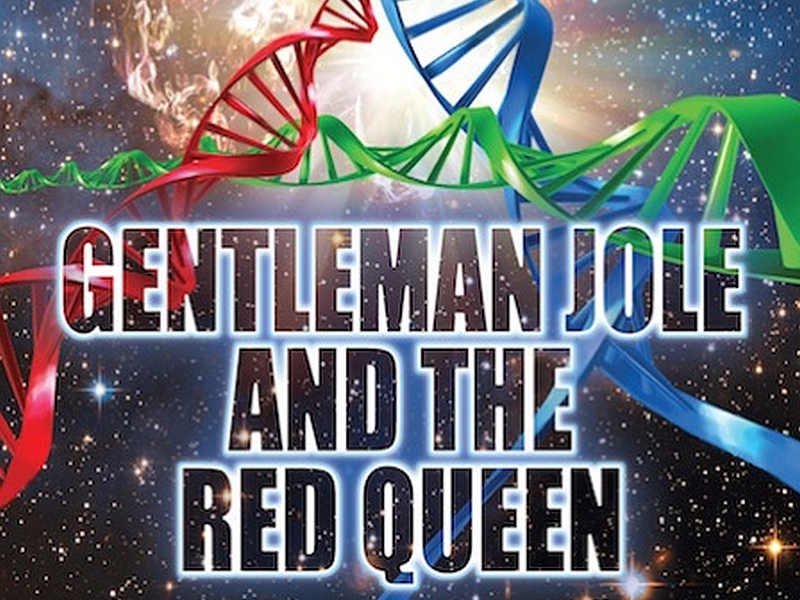
Lois’s latest book in the long-running Vorkosigan series, Gentleman Jole and the Red Queen, has just been published (my copy arrived at lunchtime on Wednesday), and she talked to Janet Potter at Goodreads about the book, the series, and other topics:
GR: Goodreads member Wendy asks whether you have considered a book that features the next generation?
LMB: Not at this time.
GR: You deal with social justice issues in a lot of your work. Goodreads member Becca asks how new perspectives on social justice issues (particularly gender and sexuality) have affected the worlds you describe in your writing? In particular, how have they affected Beta Colony and Cordelia?
LMB: It’s a little hard to figure out how to answer that question. These books were written over a 30-year span, and each one is now fixed like an insect in amber. Whatever new perspectives may arise in our world, these pieces of art are finished. Current events cannot affect them because time does not run backward. How the old stories will be received by new readers going forward will surely shift, but that’s not under my control.
GR: Tell us about your writing process.
LMB: My writing process has evolved over the years as my context has changed. I began writing in pencil in a spiral notebook, retyped on my old college report typewriter; advanced to a three-ring binder; acquired my first computer (it had a cassette-tape drive); traded up to my second computer; the Internet was invented, and so on. Small children grew to large children, we moved to a new state, kids moved out, back, out again, career-maintenance chores multiplied, and so on. A couple of aspects have persisted over the years.
“Making it up” and “writing it down” remain two different phases for me. I still capture the ideas for a story or a scene in penciled notes, as an organizational and memory aid. These could be thought of as a very rough draft or as a (quite mutable) outline. But in thoughts and visualizations (walking is good for this) and in pencil on paper is where I munge things around till they seem to work. Only then do I take the notes to the computer and bang out the first typed draft, usually in scene-sized units. One such bite at a time, chew well, swallow, making room for the next scene to form. Each scene written alters the ideas for what could come next, sometimes by a lot, sometimes by very little. Lather, rinse, pause to whine at my test readers, repeat until the tale is told.
Formerly, as I went along I would print out each chapter and put it in a binder, freezing it till a final edit. Lately I’ve switched to working paperless. It hasn’t made the process any faster — “thinking it up” is still the main bottleneck — but I find I do more micro-editing.
GR: What books have inspired or influenced you as a writer?
LMB: The books and writers who have the most impact are inevitably those one reads first, at a young age. In science fiction and fantasy, they were mostly the books I could find in school and public libraries in the 1960s, thus a trifle out of date for the modern reader. Not necessarily the most famous, but the writers whose stories got into my head and took root include: Poul Anderson, Cordwainer Smith, Randall Garrett, Lloyd Biggle, Jr., L. Sprague de Camp with Fletcher Pratt, Zenna Henderson, Roger Zelazny, Fritz Leiber, Anne McCaffrey, and James H. Schmitz. Outside F&SF I could name Arthur Conan Doyle, Georgette Heyer, Rudyard Kipling, Dorothy Sayers, and Alexander Dumas. I read, and still read, piles of nonfiction, of course, but that tends to be memorable for the subject matter rather than the author.
January 18, 2016
“Prohibition, in its essence, was a deeply progressive movement”
Joseph Bottum reviews Lisa McGirr’s The War on Alcohol:
We all know the story: At the beginning of the 20th century, a handful of killjoys, prudes, and pinch-faced puritans began to campaign against liquor. And in 1920, against all odds, they managed to sneak through a law that banned alcohol in the United States. Thirteen years, it took, before we managed to rid ourselves of the absurd regulation, as the corrupting money of gangsters and the intransigence of true-believers — the famous pro-regulation combination of Bootleggers and Baptists — colluded to keep the nation in loony land.
At last, however, we did return to sanity. The forces of right-thinking liberalism in America finally shook off the influence of its nativist bigots and pleasure-hating schoolmarms, and Prohibition was overturned in 1933 to great celebration — celebration so great, so overwhelming, that never again have the conservative know-nothings and religious troglodytes succeeded in forcing the nation to take such an enormous step backward.
It’s a great story, both a cautionary tale in its beginning and uplifting proof of liberation in its conclusion. The only trouble is that it’s completely wrong. Is there another American story, another account of a major American era, that has been so completely hijacked and turned against its actual history?
The truth is that Prohibition, in its essence, was a deeply progressive movement. Thus, for example, the forces of women’s liberation backed Prohibition — and the suffragettes were backed in turn by the Temperance Union, whose support (in the certainty that women would vote to outlaw liquor) helped gain women the vote. The goo-goos, the good-government types, similarly aided Prohibition, seeking to purge the rows of rowdy saloons that cluttered the major cities of America — and they enlisted the help of the Prohibitionists to create a national income tax, ending the federal government’s dependence on liquor taxes.
The health fanatics, the social-service providers in the churches and city governments, the Protestant elite of the Social Gospel movement: Prohibition was supported by majorities in all the social groups who today would be faithful allies of the left. Combine that with rural Protestants, who saw the big cities as dens of Satan, and nativists, who saw drunkenness as an Irish sin, and Prohibition was a moral juggernaut rolling through the nation — as unfathomable as it was unstoppable.
January 3, 2016
QotD: Another ten selected Terry Pratchett quotes
41 Most gods throw dice, but Fate plays chess, and you don’t find out til too late that he’s been playing with two queens all along.
42 Pets are always a help in times of stress. And in times of starvation, too, of course.
43 Captain Quirke was not actually a bad man; he didn’t have the imagination; but he dealt more in the generalised low-grade unpleasantness which slightly tarnishes the soul of all who come into contact with it – rather like British Rail.
44 Goodness is about what you do. Not what you pray to.
45 The intelligence of that creature known as a crowd is the square root of the number of people in it.
46 They say a little knowledge is a dangerous thing, but it’s not one half so bad as a lot of ignorance.
47 Time is a drug. Too much of it kills you.
48 It occurred to me that at one point it was like I had two diseases – one was Alzheimer’s, and the other was knowing I had Alzheimer’s.
49 I commend my soul to any God that can find it.
50 So much universe, and so little time.
Selected by Martin Chilton for The Telegraph, 2015-08-27.
December 27, 2015
QotD: Ten more selected Terry Pratchett quotes
31 Fantasy is an exercise bicycle for the mind. It might not take you anywhere, but it tones up the muscles that can.
32 The presence of those seeking the truth is infinitely to be preferred to the presence of those who think they’ve found it.
33 It’s still magic even if you know how it’s done.
34 There are times in life when people must know when not to let go. Balloons are designed to teach small children this.
35 The entire universe has been neatly divided into things to (a) mate with, (b) eat, (c) run away from, and (d) rocks.
36 Here’s some advice boy. Don’t put your trust in revolutions. They always come around again. That’s why they’re called revolutions.
37 If you don’t turn your life into a story, you just become a part of someone else’s story.
38 Evil begins when you begin to treat people as things.
39 Inside every sane person there’s a madman struggling to get out.
40 I’m not writing ‘The A-Team’ – if there’s a fight going on, people will get hurt. Not letting this happen would be a betrayal.
Selected by Martin Chilton for The Telegraph, 2015-08-27.
December 26, 2015
QotD: Progress
Yes, Moist thought, there would be changes. You’d still find horses in town and Iron Girder couldn’t plough, although for a certainty Mr Simnel could make her do so. “Some people will lose out and others will benefit, but hasn’t that been happening since the dawn of time?” he said out loud. “After all, at the beginning there was the man who could make stone tools, and then along came the man who made bronze and so the first man had to either learn to make bronze too, or get into a different line of work completely. And the man who could work bronze would be put out of work by the man who could work iron. And just as that man was congratulating himself for being a smarty-pants, along came the man who made steel. Its like a sort of dance, where no one dares stop because if you did stop you’d be left behind. But isn’t that just the world in a nutshell?”
Terry Pratchett, Raising Steam, 2013.
December 23, 2015
QotD: The gamekeeper
Although written many years ago, Lady Chatterley’s Lover has just been reissued by the Grove Press, and this pictorial account of the day-to-day life of an English gamekeeper is full of considerable interest to outdoor minded readers, as it contains many passages on pheasant-raising, the apprehending of poachers, ways to control vermin, and other chores and duties of the professional gamekeeper.
Unfortunately, one is obliged to wade through many pages of extraneous material in order to discover and savour those sidelights on the management of a midland shooting estate, and in this reviewer’s opinion the book cannot take the place of J. R. Miller’s Practical Gamekeeping.
Ed Zern, Field and Stream, 1959-11. (via BookTryst)
December 21, 2015
Monty on “the book fetish”
Marking his return from a long absence, Monty posts some thoughts on books and reading at Ace of Spades H.Q.:
What happens when homes have no books? (You’ll have to imagine me saying these words in a rather aghast tone, much as one might use when asking what happens in homes that don’t have flush toilets.)
Well, fear not. The question is misphrased. The problem is not houses without books, as it turns out — the problem is houses without engaged parents.
[…]
It bugs me when people substitute the word “book” for “reading”. I do a lot of reading — a LOT of reading — but I rarely crack an actual book these days unless I absolutely cannot find it for my Kindle. (As happened with Orlando Figes’ A People’s Tragedy, alas.) The problem besetting poor kids is not so much a lack of books as it is a lack of responsible adults in the house who invest the time and effort to engage them in reading — whether the written words are in book or on an LCD screen. What’s lacking here are not bound slabs of paper, but engaged parents.
And for adults? Reading of so-called “serious literature” has declined in recent decades because a lot of so-called “serious literature” is shit. The general cultural debasement started to exhibit first in the turgid academic book field, and since has metastasized out into every field of literary endeavor. Even the sci-fi and mystery ghettos have been infested with the rot of post-modernism and race/class/gender nonsense. And where that has not happened, we get the sub-adolescent rot of stuff like Twilight or its many imitators. This is the modern equivalent of the penny-dreadful, and serves as proof that just because it’s a book, that doesn’t mean the words inside of it are any guarantee of quality or even coherence.
It may be that most people these days eschew books for more engaging audio/visual entertainment, but that’s hardly surprising: that’s been the norm for most of our tenure on earth. Human beings are geared to prefer direct audio/visual stimulus over abstract symbolic input. The ability of common people to buy and consume printed books is a fairly recent one in human history — until the 18th century, most common folk couldn’t afford many books, and probably couldn’t read them either (literacy being nowhere near as universal as today). And in any case most of them wouldn’t have the time to while away reading — it was an age of manual labor and no electric light. You worked the daylight hours away, and when it got dark you went to bed.
I guess what I’m saying is: there are certainly worse things than being a lover of books, but be sure you’re loving the content of the book. (You can love the actual book as well, I guess, as an object of pure art or craft, but that’s a different thing.) And remember that the content of the book can be delivered in any number of ways. Don’t fetishize the delivery vehicle.
December 20, 2015
QotD: More selected Terry Pratchett quotes
21 It is well known that a vital ingredient of success is not knowing that what you’re attempting can’t be done.
22 Human beings make life so interesting. Do you know, that in a universe so full of wonders, they have managed to invent boredom.
23 Some humans would do anything to see if it was possible to do it. If you put a large switch in some cave somewhere, with a sign on it saying ‘End-of-the-World Switch. PLEASE DO NOT TOUCH’, the paint wouldn’t even have time to dry.
24 Wisdom comes from experience. Experience is often a result of lack of wisdom.
25 Personally, I think the best motto for an educational establishment is: ‘Or Would You Rather Be a Mule?’
26 The whole of life is just like watching a film. Only it’s as though you always get in ten minutes after the big picture has started, and no-one will tell you the plot, so you have to work it out all yourself from the clues. — from Moving Pictures.
27 It’s not worth doing something unless someone, somewhere, would much rather you weren’t doing it.
28 People don’t alter history any more than birds alter the sky, they just make brief patterns in it.
29 I’d rather be a rising ape than a falling angel.
30 If there was anything that depressed him more than his own cynicism, it was that quite often it still wasn’t as cynical as real life.
Selected by Martin Chilton for The Telegraph, 2015-08-27.
December 19, 2015
Comparing Starship Troopers to Starship Troopers
Jason Fuesting compares Robert Heinlein’s novel with Paul Verhoeven’s movie “adaptation” (scare quotes here because Verhoeven never read more than the first two chapters of the book). I’ve never seen the movie, but the book is one of my favourites.
Taken in a vacuum, the film itself is passable for its time. Despite being released in November, the film clearly fits the summer action film niche and summer action films are not frequently known for in-depth intellectual dialog or for exceptional acting. Verhoeven’s work does not disappoint that expectation in the least. What effort is evident in the film remains focused primarily on either the fight scenes, particularly in special effects and explosions, or in finding ways to justify having the actresses expose some amount of skin in some form or fashion as frequently as possible. As such, Verhoeven’s film comes off not too dissimilarly from what one might expect of a Michael Bay film, except less subtle in every way.
Cinematography, editing, and score were not exceptional, but quite passable. The film remained fast paced and for multiple scenes camera placement complimented the special effects and other elements quite well. The effects themselves were as I remembered, great for the time period. As far as the individual components of the film in terms of film making are concerned, outside of the acting, the film is quite well done. As for the acting, what I remembered as campy and otherwise forgettable as a teen turned out to be far worse than I remembered.
When one steps back out of the vacuum, the film ultimately falls apart entirely on writing. Many would likely ponder how a summer action movie that has managed to succeed on the other points could ultimately be deemed a failure based solely off a feature movies of its kind almost universally ignore. For Heinlein fans, the film is unequivocally a thumb in the eye. From that perspective, the director took the author’s creation, fed just enough of it through a sausage grinder to get the flavor out, mixed in his own recipe of inanity, and laid out the resulting abomination in precisely the exact opposite direction. For those not particularly attached to Heinlein’s novel but still fans of decent writing, a multitude of plot holes and grave inconsistency errors abound, all of which were introduced by the writers meddling in Heinlein’s construct like children run amok.
Amok is sadly an understatement. The film and the book are two wholly different entities. A Joking comment along the lines of the script used by Verhoeven being the result of the soulless Hollywood machine itself parodied in Robert Altman’s 1992 film The Player might be closer to the truth. Simply put, Verhoeven’s script shares names with the book.
[…]
Ultimately, the book’s message is one that stresses responsibility, personal, to one’s family, and to one’s nation. Heinlein repeatedly highlights how military service is not easy, that life is a lot harder than we think it is when we’re young, how war is not the cool thing most children believe. Verhoeven steadfastly ignores every bit of that and takes every point Heinlein made and twisting it to its opposite: war is great, service is so easy any idiot can do it, the military is filled with unthinking robotic idiots and evil right-wing fascists, and the only people who are held responsible are the ones who get caught without an excuse. Instead of a story that is more or less a post-hoc biography of a soldier, complete with his regrets, Verhoeven’s adaptation is little more than modern actors in remade Nazi uniforms acting out nonsense between scenes further adapted from Nazi propaganda films. Verhoeven is so over-the-top in his use of Nazi imagery and defacing the concept of patriotism that his attempted smear against the right-wing gets lost in the noise.
The film is offensive on multiple levels. First, as a veteran, the book is easily realistic science-fiction that carries multiple very pertinent messages and warnings, especially in today’s society. Many of these were messages I needed to hear when I was younger, but I had neither the maturity nor the experience to truly understand at the time. Second, as an author, I am utterly horrified at the wholesale gutting the film makers and their writers gleefully engaged in and the complete mockery of their creation. The idea that one of my prospective works could receive similar treatment sickens me. Third, as a Conservative leaning libertarian, Verhoeven’s film lampoons ideas central to the survival of any state, left leaning or right, and does so in such a poor fashion that it fails at being even amateur-level propaganda. Admittedly, hyperbole is a valid tool; however, when using hyperbole one must ensure both that one’s point is valid and that the use of hyperbole does not destroy your message. Verhoeven fails on both accounts.
Update, 20 December: Just realized I hadn’t included the original link to this review. My belated apologies to Jason Fuesting and Cedar Sanderson for the oversight.
December 18, 2015
Camille Paglia on “Feminist trouble”
In Spiked, Camille Paglia talks to Ella Whelan:
It’s doubtful whether Camille Paglia – cultural critic, academic and the author of several acclaimed books including, most recently, Glittering Images: A Journey Through Art from Egypt to Star Wars – has ever pulled a punch. Since she burst on to the cultural scene in the 1990s, following the publication of Sexual Personae: Art and Decadence from Nefertiti to Emily Dickinson – as she put it, the ‘most X-rated academic book ever written’ – Paglia has been a trenchant, principled voice in the Culture Wars, attacking, with one hand, the anti-sex illiberalism of her feminist peers, while, with the other, laying waste to the trendy, pomo relativism infecting the academy.
Above all, Paglia, who some have called the anti-feminist feminist, has remained a staunch defender of individual freedom. She has argued against laws prohibiting pornography, drugs and abortion. And, when political correctness was cutting a swathe through a host of institutions during the 1990s, she stood firmly on the side of free speech. So, what does she make of the political and cultural state of feminism today? What does she think of the revival of anti-sex sentiment among young feminists, their obsession with policing language, and their wholehearted embrace of victimhood? As spiked’s Ella Whelan discovered, Paglia’s convictions burn as brightly as ever…


