
In The Critic, Henry Jeffreys sings the praises for some of the greatest names in British brewing … while waving goodbye as they disappear one after another into international beverage behemoths who care nothing at all for history and tradition if it doesn’t add value to the stock price:
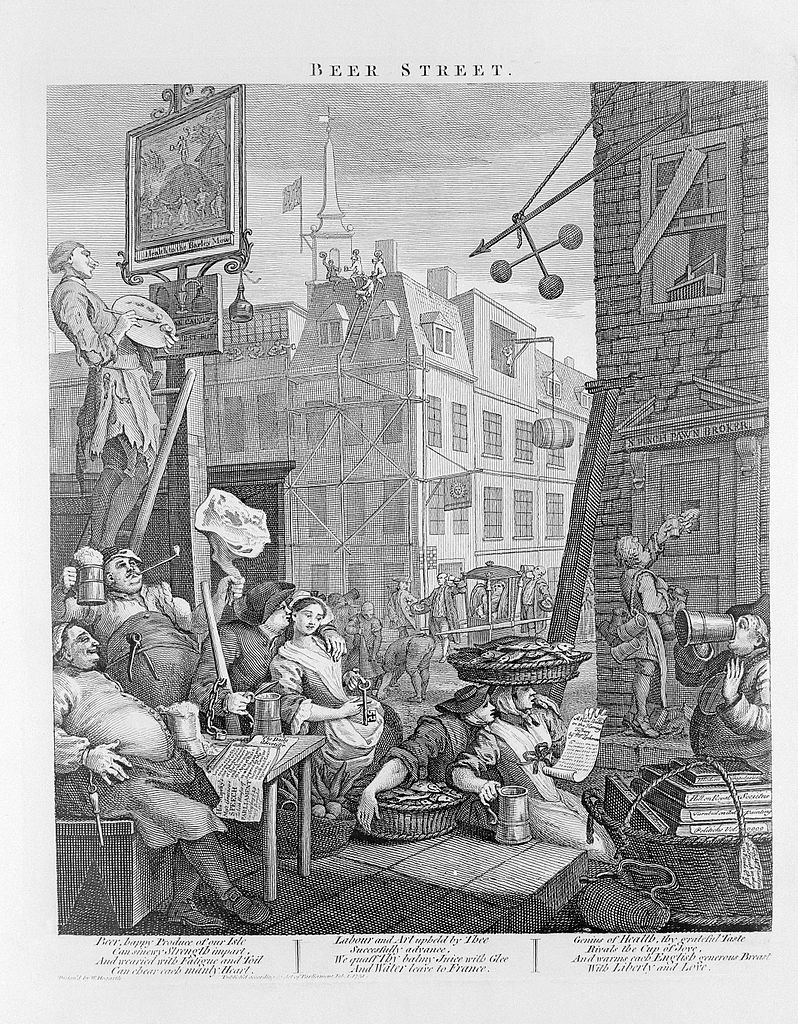
Beer Street, from Beer Street and Gin Lane by William Hogarth. The picture is a counterpoint to the more powerful Gin Lane — Hogarth intended Beer Street to be viewed first to make Gin Lane more shocking — but it is also a celebration of Englishness and depicts of the benefits of being nourished by the native beer.
Wikimedia Commons.
Burton-on-Trent was once the brewing capital of the world, home to such famous names as Bass, Allsopp’s and the famous “Burton snatch”. Stop giggling at the back, Jenkins! I’m talking, of course, about the refreshing sulphurous tang imparted by the high levels of calcium sulphate in the town’s water. By the 1890s, it boasted thirty-one breweries producing over three million barrels a year, providing a quarter of Britain’s beer. Sadly, it has fallen a long way from there.
While Burton’s most famous beer, Bass, is enjoying a modest revival at the moment with increased distribution and marketing, things aren’t looking so rosy for the brewery that makes it, Marston’s. For those not familiar with the Byzantine ways of big beer, a little explainer. Bass the brand is owned by AB InBev, the corporate behemoth behind Budweiser. But the beer is brewed at Marston’s Brewery, owned by Carlsberg Britvic, which has now announced plans to close the historic site, with around 310 jobs at risk.
Carlsberg has a woeful record as a custodian of English beer. In 2024 it removed the traditional wooden Burton Union system from Marston’s, switching to stainless steel for fermentation. In the past 15 years, it has closed Tetley’s in Leeds, ending nearly 200 years of history, Jennings in the Lake District, Ringwood in Hampshire, Wychwood in Oxfordshire, and Banks’s in the West Midlands. A roll call of shame. But Carlsberg is no outlier. The British beer industry has been cannibalising itself for years. Regional breweries were gobbled up by national companies, which in turn were swallowed whole by multinationals. Great names either disappeared or were kept as brands, like Bass, to be shunted around, unloved, on the spreadsheets of companies headquartered in America or Belgium. In 2023 Molson Coors “paused” production of another Burton classic, Worthington’s White Shield, perhaps the greatest of all bottled beers. This year it announced that it will close Sharps and move production of Doom Bar Cornish ale to Hartlepool.
[…]
While we shouldn’t let Carlsberg, Molson Coors and others off the hook for their cavalier attitude to Britain’s great brewing heritage, we are to blame as well. We’re letting a unique beer style die out. Maybe it’s already too late and real ale is already a specialist drink. But there are still great brewers who care, from newer names like Gadds in Ramsgate to historic independents like Harvey’s of Lewes or Timothy Taylor of Keighley. Go to the pub and drink their beers regularly, because if you don’t they will go the way of Worthington’s White Shield and countless others.


