
In The Freeman, Erik W. Matson pleads with the Virginian government not to “California our Commonwealth”, as the new governor keeps cribbing tax policies from Gavin Newsom’s playbook:
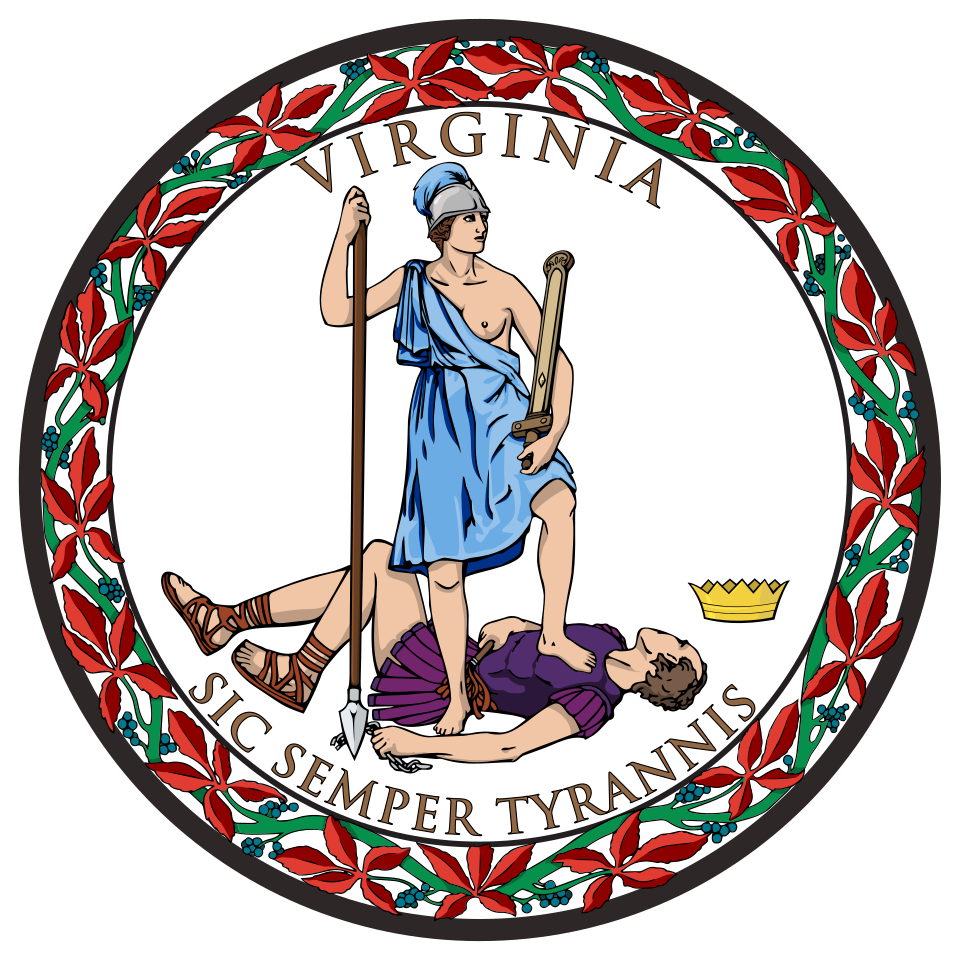
The state seal of Virginia. I am told that the motto Sic semper tyrannis does not actually stand for “Thus always to taxpayers”, all appearances to the contrary.
In 1966, fresh off four busy years of touring, the Beatles returned to the UK to discover they were on the brink of bankruptcy. Their earnings had placed them in the top tax bracket, putting them at the mercy of the Labour government’s 95% supertax. George Harrison, in response to this tyranny, penned the lyrics to what became the first track on their next album Revolver: “Taxman”.
Let me tell you how it will be
There’s one for you, nineteen for me
‘Cause I’m the taxmanHarrison’s words resonate across the pond today, especially for those living and working in the state of California. Consider the recent case of Sam Darnold, quarterback of the Seattle Seahawks. Darnold earned $178,000 for winning Super Bowl LX in February 2026, which was played in Santa Clara — and promptly found himself owing California $249,000, thanks to the state’s so-called “jock tax“. For almost three decades, the state has had the highest top marginal income tax rate in the US. Capital gains in California are treated — and taxed — as ordinary income, pushing many into higher tax brackets. At the state and local level, California features a garden variety of invasive taxes and surcharges to fund everything from tourism to mental health support initiatives. Add to this the recently proposed 2026 Billionaire Tax Act, which would impose a one-time 5% tax on the worldwide net worth of California residents worth more than $1 billion. The act would also amend the state constitution to remove the cap on taxes on intangible property (and likely cost the state $25 billion!).
California’s predatory tax regime, sadly, seems increasingly familiar to those of us living in the Commonwealth of Virginia. Thanks to the initiatives of the new governor Abigail Spanberger, Virginia is barreling down a trail of “California-ization.” In some sense, as Adam Johnston has recently discussed, our California-ization has been underway for over a decade, largely due to the influx of legal and illegal immigrants to the deep-blue suburbs in Northern Virginia. But it has entered a new and more aggressive phase under Spanberger, a former member of Congress’s Blue Dog Coalition who, two months in, is governing like anything but. Spanberger and her administration are openly attempting to gerrymander the Commonwealth’s congressional map in an effort to wipe out the state’s Republicans. They have also proposed an expansive set of truly California-esque taxes, subsidies, and regulations antithetical to liberty, prosperity, and “affordability.”
In January, City Journal‘s Judge Glock catalogued some of Spanberger’s initial ideas for governance, including her desire to subsidize housing for state employees and low-income residents and regulate the Commonwealth towards carbon neutrality. Unsurprisingly, the bulk of her ideas would, as Glock says, “drive up expenses for one group of consumers in order to benefit another group deemed more deserving”. If Spanberger’s officially announced agenda from November 2025 is any indication, the “more deserving” include smokers (taking a tactic straight from California’s playbook), solar farms, and scofflaw tenants (compare California’s 2019 Tenant Protection Act!).
Since the convening of the General Assembly, Virginia Democrats’ wildest dreams have metastasized into a concrete body of legislative proposals that promise at once to limit Virginians’ freedoms and nickel-and-dime us into oblivion. House Bill 978, for example, introduces new taxes on:
recreation, fitness, or sports facilities; nonmedical personal services or counseling; dry cleaning and laundry services; companion animal care; residential home repair or maintenance, landscaping, or cleaning services when paid for directly by a resident or homeowner; vehicle and engine repair; repairs or alterations to tangible personal property; storage of tangible personal property; delivery or shipping services; travel, event, and aesthetic planning services; and digital services.
Building on the architecture of the widely unpopular vehicle tax (which, despite what Spanberger proposed during her campaign, is likely here to stay), House Bill 557 proposes local personal property taxes on electric-powered lawn equipment — including mowers, trimmers, blowers, and chainsaws — used to maintain “commercial, public, or private gardens, lawns, trees, shrubs, or other plants”. These suggested taxes on electric-powered equipment complement a proposal in House Bill 881 encouraging the regulation and even outright banning of gas-powered leaf blowers — again following the lead of California.


