
Quotulatiousness

January 23, 2026

“Functional illiteracy was once a social diagnosis, not an academic one”

Filed under: Education, History, Media, Politics, Technology — Tags: , , , , , — Nicholas @ 05:00

On Substack, Maninder Järleberg illuminates the problem of functional illiteracy in higher education in the west:
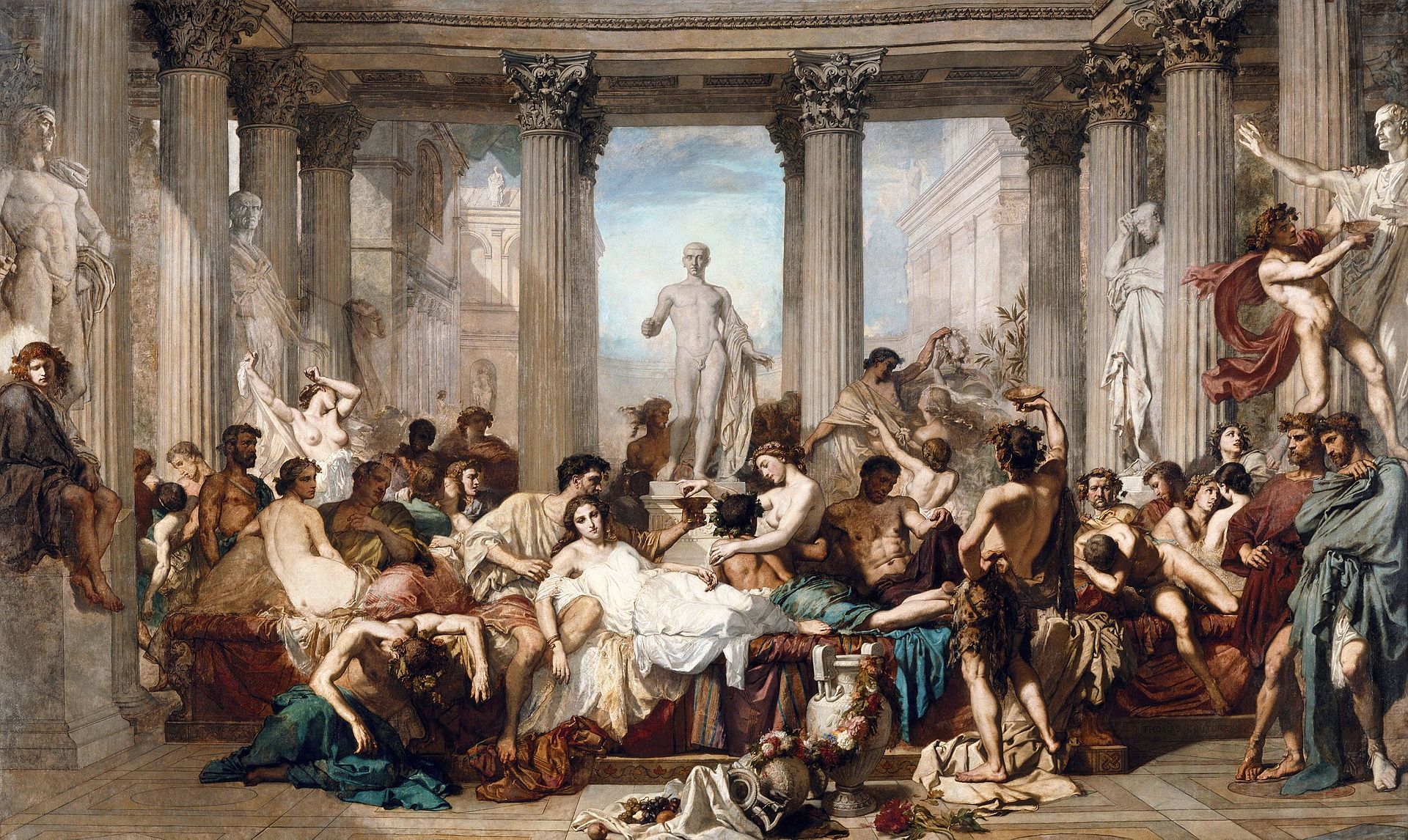
The Age of Functional Illiteracy

Functional illiteracy was once a social diagnosis, not an academic one. It referred to those who could technically read but could not follow an argument, sustain attention, or extract meaning from a text. It was never a term one expected to hear applied to universities. And yet it has begun to surface with increasing regularity in conversations among faculty themselves. Literature professors now admit — quietly in offices, more openly in essays — that many students cannot manage the kind of reading their disciplines presuppose. They can recognise words; they cannot inhabit a text.

The evidence is no longer anecdotal. University libraries report historic lows in book borrowing. National literacy assessments show long-term declines in adult reading proficiency. Commentators in The Atlantic, The Chronicle of Higher Education, and The New York Times describe a generation for whom long-form reading has become almost foreign. A Victorian novel, once the ordinary fare of undergraduate study, now requires extraordinary accommodation. Even thirty pages of assigned reading can provoke anxiety, resentment, or open resistance.

It would be dishonest to ignore the role of the digital world in this transformation. Screens reward speed, fragmentation, and perpetual stimulation; sustained attention is neither required nor encouraged. But to lay the blame solely at the feet of technology is a convenient evasion. The crisis of reading within universities is not merely something that has happened to the academy. It is something the academy has, in significant measure, helped to produce.

The erosion of reading was prepared by intellectual shifts within the humanities themselves—shifts that began during the canon wars of the late twentieth century. Those battles were never only about which books should be taught. They were about whether literature possessed inherent value, whether reading required discipline, whether difficulty was formative or oppressive, and whether the humanities existed to shape students or merely to affirm them. In the decades that followed, entire traditions of reading were dismantled with remarkable confidence and astonishing speed.

The result is a moment of institutional irony. The very disciplines charged with preserving literary culture helped undermine the practices that made such culture possible. What we are witnessing now is not simply a failure of students to read, but the delayed consequence of ideas that taught generations of readers to approach texts with suspicion rather than attention, critique rather than encounter.

This essay is part of a larger project to trace that history, to explain how a war over the canon helped usher in an age in which reading itself is slipping from our grasp, and why the consequences of that war are now returning to the academy with unmistakable force.

The Canon Wars: A Short Intellectual History

To understand the present state of literary studies, one must return to the canon wars of the 1980s and 1990s — a conflict that reshaped the humanities with a speed and finality few recognised at the time. Although remembered now as a dispute about which books deserved a place on the syllabus, the canon wars were in truth a contest over the very meaning of literature and the purpose of a humanistic education.

In the decades after the Second World War, the curriculum in most Western universities still rested upon a broadly shared assumption: that certain works possessed enduring value, that they spoke across time, and that an educated person should grapple with them. This conviction, however imperfectly applied, formed the backbone of the humanities. It was also increasingly at odds with a new intellectual climate shaped by post-1968 radicalism, the rise of identity politics, and the importation of French theory.

By the early 1980s, tensions that had simmered beneath the surface erupted into public view. The most emblematic flashpoint came at Stanford University in 1987–88, when student demonstrators chanted, “Hey hey, ho ho, Western Culture’s got to go!” in protest of the university’s required course on Western civilisation. The course was soon dismantled, replaced by a broader, more ideologically framed program. What happened at Stanford quickly reverberated across the country. Departments revised reading lists, restructured curricula, and abandoned long-standing core requirements.

On one side of the debate stood defenders of the canon—figures such as Harold Bloom, Allan Bloom, E.D. Hirsch, and Roger Kimball—who argued that the great works formed a kind of civilisational inheritance. The canon, they insisted, was not a museum of privilege but a record of human striving, imagination, and achievement. On the other side were scholars like Edward Said, Toni Morrison, Henry Louis Gates Jr., Gayatri Spivak, and Homi Bhabha, who contended that the canon reflected histories of exclusion and domination, and that expanding or dismantling it was a moral imperative.

But beneath these arguments lay a deeper philosophical rift. The defenders assumed that literature possessed intrinsic value, that texts could be read for their beauty, their insight, or their power. The critics, armed with concepts drawn from Foucault, Derrida, and Barthes, argued that literature was inseparable from structures of power, that meaning was unstable, and that reading was less an act of discovery than an exposure of hidden ideological operations.

The canon wars ended not with a negotiated peace but with a decisive transformation. The traditional canon was not merely expanded; its authority was dissolved. And with it dissolved a set of shared assumptions about why we read at all.

The Rise and Fall of Watneys – human-created video versus AI slop

YouTuber Tweedy Misc released what he believed was the first attempt to discuss Watneys Red Barrel, the infamous British beer that triggered the founding of the Campaign for Real Ale (CAMRA). His video didn’t show up in my YouTube recommendations, but a later AI slop video that clearly used Tweedy’s video as fodder did get recommended and I even scheduled it for a later 2am post because it seemed to be the only one on the topic. I’m not a fan of clanker-generated content, but I was interested enough to set my prejudices aside for a treatment of something I found interesting. Tweedy’s reaction video, on the other hand, did appear in my recommendations a few weeks later, and I felt it deserved to take precedence over the slop:

And here’s the AI slop video if you’re interested:

Dear Old Blighty
Published Dec 20, 2025

Discover how Watneys Red Barrel went from Britain’s biggest-selling beer to its most hated pint in just a few short years. This video explores how corporate brewing, keg beer, and ruthless pub control nearly destroyed traditional British ale, sparked a nationwide consumer revolt, and gave birth to CAMRA. From Monty Python mockery to boycotts in local pubs, Watneys became a national punchline and a cautionary tale in business failure. Learn how one terrible beer accidentally saved British brewing culture, revived real ale, and reshaped how Britain drinks forever.

#Watneys #BritishBeer #UKNostalgia #RealAle #CAMRA #BritishPubs #RetroBritain #LostBrands #BeerHistory #DearOldBlighty

Canadian schizophrenia: “Resist US aggression!” but also “Disarm law-abiding civilians!”

Filed under: Cancon, Government, Military, USA, Weapons — Tags: , , , , — Nicholas @ 03:00

Returning to a topic I’ve been mocking all week on the socials, in The Line, Matt Gurney gently suggests to the Canadian government that it’s just not reasonable to expect Canadian civilians to wage some kind of fierce guerilla war against a feared American invasion while actively disarming Canadians who legally own guns:

A lot has happened, is the thing. A lot is still happening. And it all seems to be happening faster.

But it’s still worth slowing things down just a little bit when the news stories arrive in particularly baffling sequences. Consider just two you may have seen this week: Canada is thinking about fighting an insurgency in case the Americans invade us, and Canada is also working hard to disarm its civilian population. Can I just interject here a moment and suggest that these goals are at odds? That this might be a stupid way of doing things? That the Canadian federal right hand would be shocked and appalled to discover what the left hand was doing?

Let’s take a minute and set up the insurgency thing. It comes from an article published this week in The Globe and Mail. Canadian soldiers are not frantically digging trenches quite yet. The overall consensus is that a U.S. invasion of Canada is unlikely. But clearly, the current trajectory of U.S. geopolitics has shifted the prospect from “batshit crazy” to “it would be weird but we should probably think about it”. So the military is thinking about it — it’s now a contingency being considered, just like the military plans for natural disasters or less bizarre military scenarios, like a war requiring a mobilization or an attack by a terror group or hostile nation on Canadian soil.

And what is the military thinking? Allow me to quote from the Globe:

    The two senior government officials said military planners are modelling a U.S. invasion from the south, expecting American forces to overcome Canada’s strategic positions on land and at sea within a week and possibly as quickly as two days.

    Canada does not have the number of military personnel or the sophisticated equipment needed to fend off a conventional American attack, they said. So, the military envisions unconventional warfare in which small groups of irregular military or armed civilians would resort to ambushes, sabotage, drone warfare or hit-and-run tactics.

    One of the officials said the model includes tactics used by the Afghan mujahedeen in their hit-and-run attacks on Russian soldiers during the 1979-1989 Soviet-Afghan War. These were the same tactics employed by the Taliban in their 20-year war against the U.S. and allied forces that included Canada. Many of the 158 Canadian soldiers killed in Afghanistan from 2001 to 2014 were struck by improvised explosive devices or IEDs.

Mmm. This yogurt is tasty.

Let me say three things here: first, I can confirm some of the Globe‘s reporting via my own sources. I know for a fact that members of the Canadian Armed Forces are talking, in a very conceptual, high-level way, about what an insurgency against an invader could and would look like in Canada. I do not know of any serious plans or preparations. But discussions? Absolutely. Second, the plan above, in very vague terms, is probably about correct, in terms of how the Canadian population could resist an invader. The actual shooting war would be over almost immediately — the U.S.’s military advantage would be overwhelming. I think two days is optimistic, frankly. I’m not sure it would take much more than two hours to smash any meaningful military resistance.

So, longer term insurgency against a larger and more advanced force would be the only real option, and in that kind of fight, we’d have some real advantages. We’d be a tougher nut to crack, in many ways, than either Iraq or Afghanistan.

But only if we don’t hobble ourselves first. And this brings us to the third point I’d like to make: did you notice the part about “armed civilians”? Because I sure did.

Civilians, sometimes augmented by experienced military personnel in technical and leadership roles, are always the backbone of an insurgency. They have to be. Insurgencies are hit-and-run affairs, and you can’t do that if you’re driving a tank back to a base. In order to be effective, the population must be armed, or somehow have the means to arm itself. Not to be cute, but the resistance being armed is a necessary precondition for a successful armed resistance.

And we are disarming ourselves.

For the record, Canada and the US have historically had plans to defend against one another even at times we’ve otherwise been very peaceful and friendly. About a year ago, Big Serge suggested updates to the old US “War Plan Red” scenario invasion of Canada:

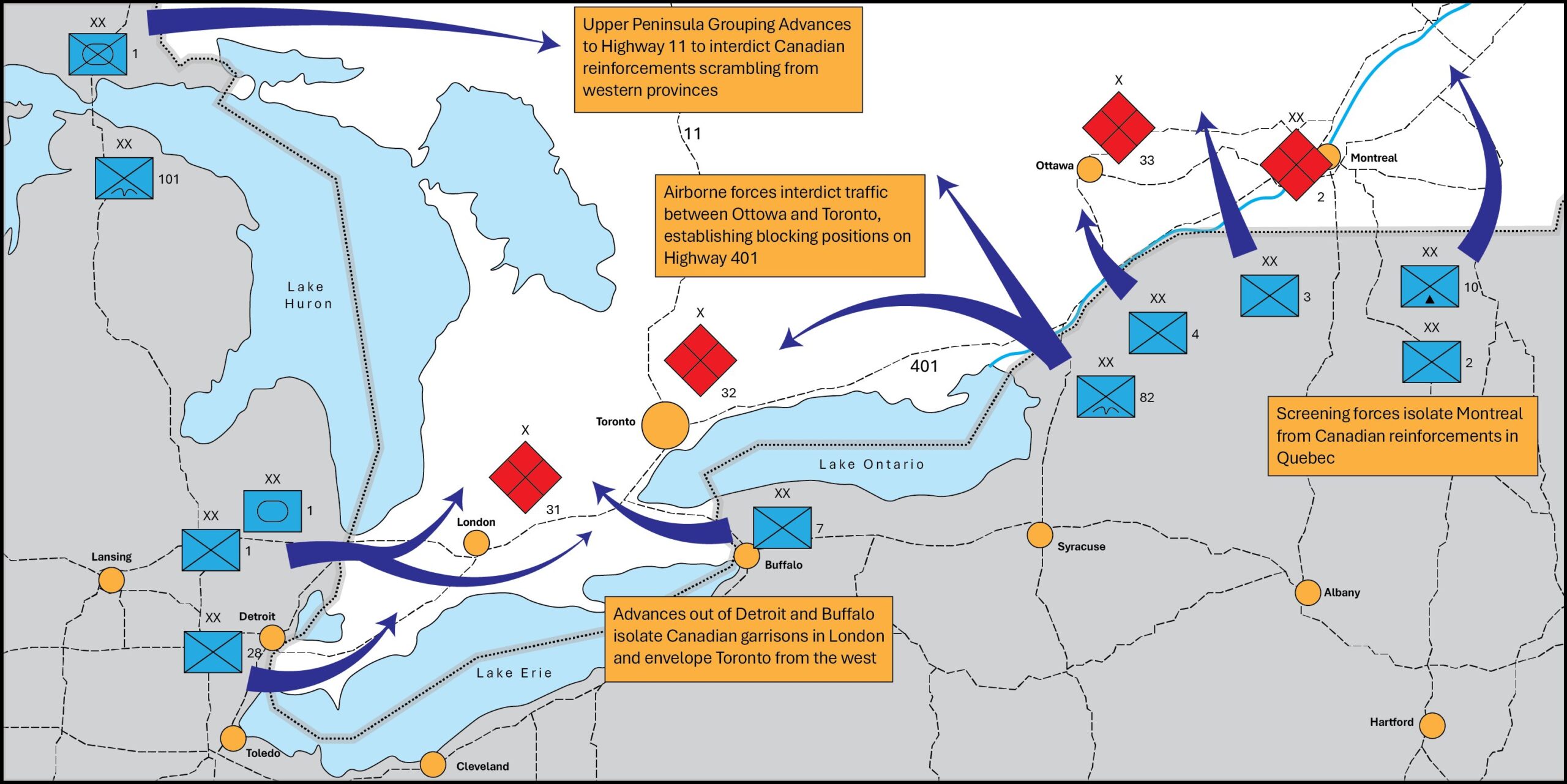
The country’s political and economic center of gravity is the urban corridor from Toronto to Montreal, but a significant share of the Canadian Army is dispersed, with large garrisons in Quebec, Halifax, and the western provinces. Only handful of brigades are garrisoned in the critical theater.

Manifest Destiny, 2025? Big Serge’s updated map for the old US War Plan Red for a military invasion of Canada.

The war will be won quickly and decisively, without massive destruction of Canadian cities, if American forces can establish blocking positions to isolate the urban corridor from peripheral Canadian garrisons. In this maneuver scheme, we utilize highly mobile elements including 1st Cavalry Division and airborne forces to block the highways into Toronto, while an eastern screening group isolates the urban centers from reinforcements scrambling in from Quebec.

Proving my near-Nostradamus-level ability to foresee the future, I remarked that “As to why Trump would want to invade a frozen failed state on the brink of bankruptcy, even Big Serge doesn’t have an answer”. Now, of course, the biggest risk to US security would come from Canadian “snowbirds” in Florida, Texas, and Arizona, who may be prone to driving their motor homes or golf carts to attack ICE and US Border Patrol facilities before the Bingo games start at 8.

WW1: 1 Million Vs 1 Million at the Marne | EP 3

The Rest Is History
Published 1 Sept 2025

What extraordinary events saw the French — already on the brink of defeat — take on the formerly formidable German army in a remarkable counter-offensive on the 4th of September, in France, in a clash that would later become known as the Miracle on the Marne? Why was this such a decisive moment in the events of the First World War How did it relate to the famous Schlieffen plan? Did it really see the French charging into battle in Renault taxis? And, why did it become one of the most legendary moments in all of French history?
(more…)

QotD: The peasant – historically, the overwhelming majority of humanity

Prior to the industrial revolution, peasant farmers of varying types made up the overwhelming majority of people in settled societies (the sort with cities and writing). And when I say overwhelming, I mean overwhelming: we generally estimate these societies to have consisted of upwards of 80% peasant farmers, often as high as 90 or even 95%. Yet when we talk about these periods, we are often focused on aristocrats, priests, knights, warriors, kings and literate bureaucrats, the sort of folks who write to us or on smiths, masons and artists, the sort of folk whose work sometimes survives for us to see. But this series is going to be about what life was like for the great majority of people who lived in small farming households.

We’re actually doing two things in this series. First, of course, we’ll be discussing what we know about the patterns of life for peasant households. But we’re also laying out a method. The tricky thing with discussing peasants, after all, is that they generally do note write to us (not being literate) and the writers we do have from the past are generally uninterested in them. This is a mix of snobbery – aristocrats rarely actually care very much how the “other half” (again, the other 95%) live – but also a product of familiarity: it was simply unnecessary to describe what life for the peasantry was like because everyone could see it and most people were living it. But that can actually make investigating the lives of these farming folks quite hard, because their lives are almost never described to us as such. Functionally no one in antiquity or the middle ages is writing a biography of a small peasant farmer who remained a peasant farmer their whole life.1 But the result is that I generally cannot tell you the story of a specific ancient or medieval small peasant farmer.

What we can do, however is uncover the lives of these peasant households through modelling. Because we mostly do have enough scattered evidence to chart the basic contours, as very simply mathematical models, of what it was like to live in these households: when one married, the work one did, the household size, and so on. So while I cannot pick a poor small farmer from antiquity and tell you their story, I can, in a sense, tell you the story of every small farmer in the aggregate, modelling our best guess at what a typical small farming household would look like.

So that’s what we’re going to do here. This week we’re going to introduce our basic building blocks, households and villages, and talk about their shape and particularly their size. Then next week (hopefully), we’ll get into marriage, birth and mortality patterns to talk about why they are the size they are. Then, ideally, the week after that, we’ll talk about labor and survival for these households: how they produce enough to survive, generation to generation and what “survival” means. And throughout, we’ll get a sense of both what a “typical” peasant household might look and work like, and also the tools historians use to answer those questions.

But first, a necessary caveat: I am a specialist on the Roman economy and so my “default” is to use estimates and data from the Roman Republic and Roman Empire (mostly the latter). I have some grounding in modelling other ancient and medieval economies in the broader Mediterranean, where the staple crops are wheat and barley (which matters). So the models we’re going to set up are going to be most applicable in that space: towards the end of antiquity in the Mediterranean. They’ll also be pretty applicable to the European/Mediterranean Middle Ages and some parts – particularly mortality patterns – are going to apply universally to all pre-modern agrarian societies. I’ll try to be clear as we move what elements of the model are which are more broadly universal and which are very context sensitive (meaning they differ place-to-place or period-to-period) and to the degree I can say, how they vary. But our “anchor point” is going to be the Romans, operating in the (broadly defined) iron age, at the tail end of antiquity.

Bret Devereaux, “Collections: Life, Work, Death and the Peasant, Part I: Households”, A Collection of Unmitigated Pedantry, 2025-07-11.


  1. And, as we’ll see, these societies generally have almost no social mobility, so extremely few – functionally none – of the sort of people who write to us will have ever been peasant farmers.

Powered by WordPress



