In the National Post, Chris Selley profiles my local MP, Jamil Jivani:
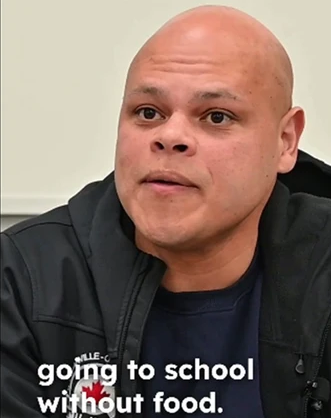
A screengrab from MP Jamil Jivani’s video that is critical of the Liberals’ national school-lunches program. Photo by Jamil Jivani/X
A few eyebrows raised earlier this year when Toronto-area MP Jamil Jivani, long heralded as an essential younger voice in the Canadian conservative movement, wasn’t offered a critic role by party leader Pierre Poilievre. There are 74 official Opposition critics, which is more than half the Conservative caucus. And if Poilievre and Jivani don’t see eye to eye, one might still have thought Jivani’s relationship with U.S. Vice-President JD Vance would be a useful resource.
There’s also the fact that Jivani is rather good at defending conservative policy, especially on the social side — better, one might argue, than Poilievre. On Monday, Jivani posted a video of himself arguing that Canadian children should go hungry at school. Or at least, that’s how certain hysterics chose to interpret his opposition to the Liberals’ national school-lunches program.
“It should frighten us that there are parents who can’t buy their own kids lunch,” he tells a constituent in the video. “(But) the government shouldn’t be your daddy; the government shouldn’t be your mother. We have families, and families should be strong enough to provide for their children, and when they’re not that should break our hearts. … It should not be used as a justification for the government to have even more influence, even more input, even more control over our lives.”
The program is already underway, with $1 billion in funding over five years committed as transfers to the provinces in 2024 — three years after the Liberals first promised it. And the Liberals recently announced plans for more. “Permanent” funding of more than $200 million is set to kick in in 2029.
The response anywhere to Jivani’s intervention, anywhere to his left, in a nutshell: “Oh my God, the Conservatives support children starving at school”. Even among some conservatives we hear the traditional timid refrain: Is this a “winning issue”? Or is the party just making itself look callous? What will the media think? Jivani, unlike many more seasoned Conservatives, seems not to care so much about the potential blowback.
Lunches served at school — paid or subsidized — are hardly a brand-new statist invention. They’ve been around forever, although they’re more common in certain kinds of schools than others. A 2013 Queen’s University study looked at 436 Canadian schools and found only 53 per cent had a cafeteria. (When I was a kid, many of my friends walked home for lunch and back afterwards.) And Jivani concedes in the video that many Canadians will like the sound of a national school-lunch program. Who would argue against it? It’s obviously far more important that kids eat breakfast and lunch (and dinner) than it is who provides it.
But that assumes a national school-lunch program, or even a provincial or local school-lunch program, is the quickest and easiest way to make sure kids are fed. It obviously isn’t, but trust in government, somehow, is a tough nut to crack in this country. Mass pandemic-era supports like CERB weren’t unalloyed successes, but they proved governments at least know how to shovel money out the door when they feel it absolutely necessary.
Especially since so many Canadian schools don’t have cafeterias — 53 per cent of elementary schools in the Queen’s study, and 82 per cent of combined elementary-secondary schools — it would make much more sense just to mail every parent who needs one a subsidy and let them pack the lunch, or the lunch money, that their kids need.
I’ve mentioned many times that I’m not a Conservative, but I don’t mind Mr. Jivani as my Member of Parliament because he doesn’t seem to me to be a typical Canadian Conservative (I thought it was significant that the PPC chose not to run against him once he became the Conservative candidate). In my YouTube recommendations, this video appeared with some sensible views from the Deputy Leader of His Majesty’s Loyal Opposition, Melissa Lantsman:
The trouble, as always with parties in opposition, is that they can sound like they’ve got great ideas and will energetically address the problems they identify while not in government … but once they go into office, sound remarkably like the government they just defeated and little or nothing actually changes.