
Quotulatiousness

July 25, 2025

The Royal Canadian Navy announces eight of the Kingston-class ships will be retired this year

Filed under: Cancon, Military — Tags: , , — Nicholas @ 05:00

The Kingston-class Maritime Coastal Defence Vessel (MCDV) has been in RCN service starting in the mid-1990s and they’ve apparently done well for the navy in their intended role. Unfortunately, naval ships have a normal working life expectancy of 20-30 years, and the Kingstons are at the upper end of that range, so it’s not surprising that they will be taken out of service. It is a bit of a surprise that the announcement came on Thursday and two-thirds of the class will be paid off this fall, without a direct successor class of ships on the slipways:
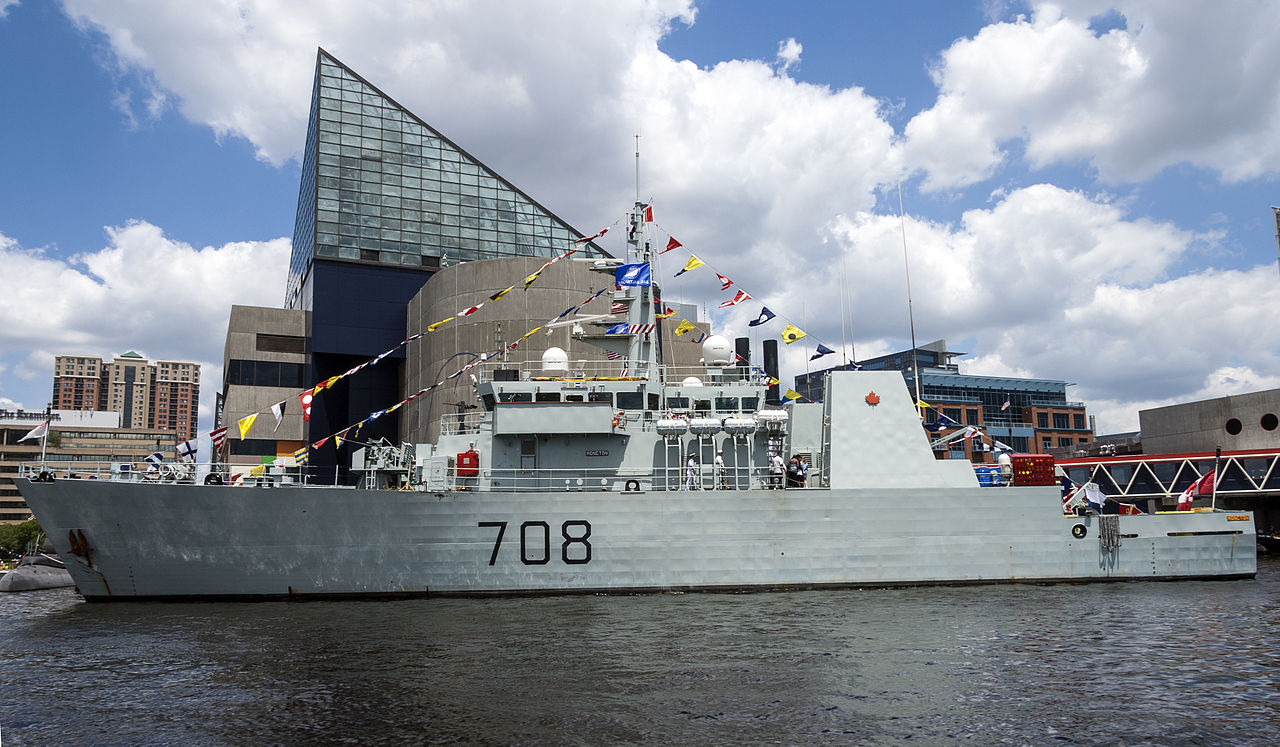
The Kingston-class Maritme Coastal Defence Vessel (MCDV) HMCS Moncton in Baltimore harbour for Sailabration 2012.
Photo by Acroterion via Wikimedia Commons.

Starting this fall the Royal Canadian Navy will begin divesting of the Kingston-class vessels. Eight of the Kingston will be divested while four, Moncton, Yellowknife, Edmonton, and Nanaimo will remain in service for the time being.

Formal ceremonies will take place in Halifax for Shawinigan, Summerside, Goose Bay, Glace Bay and Kingston. Ceremonies in Esquimalt, B.C. will be held for Saskatoon, Whitehorse and Brandon.

The remaining four will be divested over the next three years:

  • Yellowknife in 2026
  • Edmonton in 2027
  • Moncton and Nanaimo in 2028.

The duties of the Kingstons will be transferred to other vessels in the fleet. The AOPS have already taken over the OP CARRIBE and Patrol roles the last few years, while training duties will be moved fully to the Orca [class].

The new Remote Minehunting and Disposal Systems, being containerized can theoretically be deployed on any available vessel, and will be another role taken by the AOPS and the Kingston divest. They’ve already been doing MCM testing so that shouldn’t be a surprise to anyone.

The remaining four Kingstons will likely continue to participate on things like OP REASSURANCE, which Yellowknife and Edmonton are currently deployed on until October as part of SNMCMG1.

In basic terms the AOPS will be taking over a majority of the Kingston‘s tasks, which they have been slowly adding to their belt already. To say there hasn’t been a slow transition would be ignorant of me.

Nor is this surprising. We knew this was coming. Its been an open discussion for a while. I expected we would hear something this year about the divestment plan, however I didn’t expect eight to be paid off right away.

That comes as a surprise to me, also dropping it out of the blue. I wasn’t expecting this to come at this time, so this is a rare moment of genuine shock for me. Of course the Kingston fleet isn’t in the greatest of shape.

Several haven’t sailed in years (I believe Whitehorse is on almost five?) and the decision to not do another refit was basically the death blow to the class as a whole.

Things get harder before they get better. It is better to divest now and have people available for the platforms that are working and in greater need than it is to try and stretch the Kingstons for a few extra years, nor was it deemed worth the ever-increasing cost to keep them in service.

The Kingstons will be replaced by the future Continental Defence Corvette. I expect as the fall comes that we will be hearing more publicly about the project. I was a bit surprised they didn’t bring it up in the Press Release given it’s not exactly a secret, although it was teased a bit.
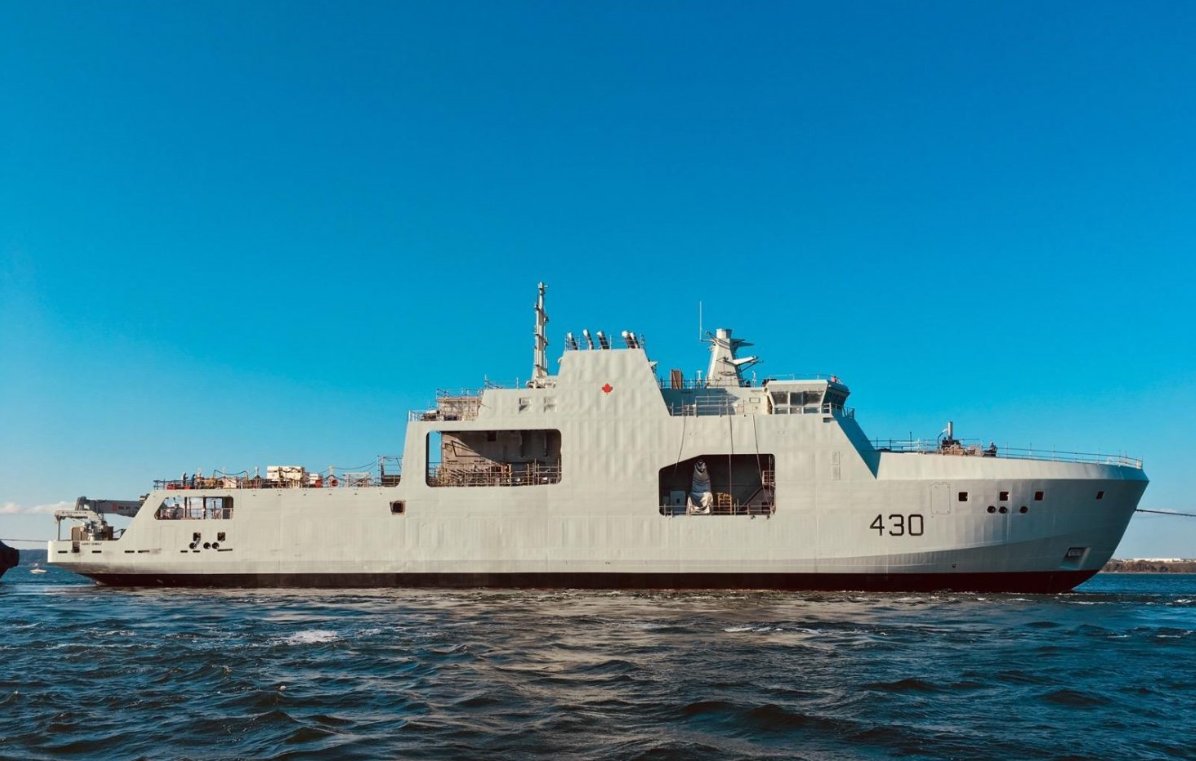
Arctic Offshore Patrol Ship (AOPS) HMCS Harry DeWolf shortly after launch in 2018. The ship was commissioned into the Royal Canadian Navy in June, 2021.

Autism, then and now

Filed under: Education, Health, Media — Tags: , , , , — Nicholas @ 04:00

At Psychobabble, Hannah Spier traces the rise of autism from its first formal definition to something that 1 in 36 kids is diagnosed with:

When Leo Kanner first defined autism in 1943, it was estimated that 4 to 5 children per 10,000 were affected. Today, the CDC puts that number at 1 in 36, almost one child in every classroom. If any other medical condition, blindness, epilepsy or paralysis showed a spike like this, it would trigger a pandemic-level outcry. But with autism, we see at best a curious murmuring as to what this is, and at worst, a growing chorus of people insisting, they too, belong in the group.

From experts, instead of raised alarms or calls for serious public health investigation (as would be expected for any other childhood disorder) we get calls for inclusivity and a self-congratulatory attitude toward their advancement in diagnostic understanding and tools. Another example of ideological capture of psychiatry by cultural sentiment.

Characters like Sheldon Cooper and Sherlock Holmes have helped turn the image of autism into a badge of honour. It means you’re socially odd, intellectually superior, and emotionally detached in an edgy and endearing way. For many, especially mothers with narcissistic tendencies hungry for a narrative of exceptionalism, this offered a seductive reframing of their child’s misbehaviour and non-conformity as evidence of giftedness. She could thus become the one who gave birth to the quirky but special genius. She alone saw the hidden brilliance beneath the “weird” behaviour. She became the martyr and the insider to an elite subculture. It’s Munchausen by proxy, 2025 edition.

People with narcissism and psychopathic traits exploit wherever they can, we know this. And yet again, psychiatry, the ones who should be the best at recognizing these, made it easy pickings by flinging the diagnostic gates wide open. Longtime readers will recognize the pattern: I’ve written before about the diagnostic creep in trauma, expanding definitions that blur the line between disorder and ordinary variation. The same diagnostic creep has unfolded here. Autism, once narrowly defined, was steadily loosened through each revision of the DSM.

The Great Diagnostic Expansion

Originally, Kanner’s autism was unmistakable: nonverbal children, socially disconnected, cognitively impaired, often with seizures. These were not quirky introverts. These were children who required full-time care and specialized schooling. In the DSM-III of the 1980s, it was called infantile autism. The criteria required clear onset before 30 months, marked language delays, gross deficits in social interaction, and repetitive behaviours. These were developmental dysfunctions, not misunderstood personalities. And neither clinicians nor parents had a problem naming them as such.

Then came the DSM-III-R in 1987, which introduced pervasive developmental disorder not otherwise specified (PDD-NOS) and broadened the field significantly. Suddenly, language delay and intellectual disability were no longer central. Subclinical cases were included. Asperger’s Syndrome followed in the DSM-IV in 1994, adding high-IQ individuals with no language delays but poor social functioning. A child who spoke on time but didn’t understand jokes, had poor eye contact, and rigid routines was now also autistic.

But the most dramatic change came with DSM-5 in 2013. The subtypes were eliminated. Autism became one spectrum. The criteria were thinned down to two domains: social communication difficulties and restrictive, repetitive behaviours. A person needed to meet just six out of twelve traits, spread across these two clusters. Language and cognitive delay? Optional. Even the requirement for early onset was removed. A diagnosis could now be given based on historical symptoms. Questionnaires like the Autism Spectrum Quotient (AQ) are so broad and subjective they can be easily gamed. This made it possible for 30-year-olds to recall feeling “socially overwhelmed” in school and not liking itchy clothing to receive the same diagnosis as a nonverbal child requiring lifelong care.

The diagnostic category has become a black hole, pulling in people with no clinical resemblance, collapsing distinction into sameness. From what I’ve observed, three distinct autism “patients” now account for much of the increased prevalence, none of whom would have qualified under the original criteria.

The ongoing conflict in Gaza

Filed under: Media, Middle East, Politics — Tags: , , , , , , , — Nicholas @ 03:00

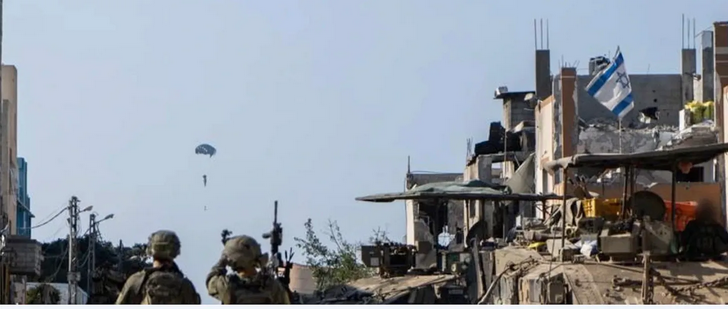
On his Substack, John Spencer responds to a New York Times op-ed that claims Israeli forces in Gaza are engaged in genocide:

In his New York Times op-ed titled “I’m a Genocide Scholar. I Know It When I See It“, Omer Bartov accused Israel of committing genocide in Gaza. As a professor of genocide studies, he should know better. Genocide is not defined by a few comments taken out of context, by estimates of casualties or destruction, or by how war looks in headlines or on social media. It is defined by specific intent to destroy a national, ethnic, racial, or religious group in whole or in part. That is a high legal bar. Bartov did not meet it. He did not even try.

I am not a lawyer or a political activist. I am a war expert. I have led soldiers in combat. I have trained military units in urban warfare for decades and studied and taught military history, strategy, and the laws of war for years. Since October 7, I have been to Gaza four times embedded with the Israel Defense Forces. I have interviewed the Prime Minister of Israel, the Defense Minister, the IDF Chief of Staff, Southern Command leadership, and dozens of commanders and soldiers on the front lines. I have reviewed their orders, watched their targeting process, and seen soldiers take real risks to avoid harming civilians. Nothing I have seen or studied resembles genocide or genocidal intent.

Bartov claims that five statements by Israeli leaders prove genocidal intent. He begins with Prime Minister Netanyahu’s comment on October 7 that Hamas would “pay a huge price”. That is not a call for genocide. It is what any leader would say after the worst terrorist attack in the nation’s history. He also cites Netanyahu’s statements that Hamas would be destroyed and that civilians should evacuate combat zones. That is not evidence of a desire to destroy a people. It is what professional militaries do when fighting an enemy that hides among civilians.

Bartov presents Netanyahu’s reference to “remember Amalek” as a smoking gun. But this is a phrase from Jewish history and tradition. It is engraved at Israel’s Holocaust memorial, Yad Vashem, and also appears on the Holocaust memorial in The Hague. In both places, it serves as a warning to remain vigilant against threats, not as a call for mass killing.

He also highlights Defense Minister Gallant’s use of the term “human animals” to describe Hamas fighters. That is not a war crime. After the slaughter, rape, and kidnapping of civilians on October 7, many would understand or even share that reaction.

Unable to find intent among those actually directing the war, Bartov turns to far-right politicians like Bezalel Smotrich and Nissim Vaturi. These individuals do not command troops, issue orders, or shape battlefield decisions. I have studied the actual orders. They focus on destroying Hamas, rescuing hostages, and protecting civilians whenever possible. Their rhetoric is irrelevant to the legal case.

Israel has taken extraordinary steps to limit civilian harm. It warns before attacks using text messages, phone calls, leaflets, and broadcasts. It opens safe corridors and pauses operations so civilians can leave combat areas. It tracks civilian presence down to the building level. I have seen missions delayed or canceled because children were nearby. I have seen Israeli troops come under fire and still be ordered not to shoot back because civilians might be harmed.

Israel has delivered more humanitarian aid to Gaza than any military in history has provided to an enemy population during wartime. More than 94,000 trucks carrying over 1.8 million tons of aid have entered the territory. Israel has supported hospitals, repaired water pipelines, increased access to clean water, and enabled over 36,000 patients to leave Gaza for treatment abroad.

How to make square stock straight, smooth and square (stock preparation part 1) | Paul Sellers

Filed under: Tools, Woodworking — Tags: , , , — Nicholas @ 02:00

Paul Sellers
Published 8 Apr 2013

Paul Sellers shows how to prepare wood from its rough sawn state into useable stock. He goes into detail about how to remove twist from a square piece of wood and make it “four square”. He does all of this with hand tools. Specifically the plane, square and winding sticks. The video was first posted on https://woodworkingmasterclasses.com

To find out more about Paul Sellers and the projects he is involved with go to http://paulsellers.com

QotD: Evolved threat display mechanisms

Filed under: Government, History, Liberty, Quotations, Science, Weapons — Tags: , , , , — Nicholas @ 01:00

Every single bird and mammal I can think of, even some reptiles and fish, will exhibit something that ethologists call “threat display” whenever it feels menaced. Dogs and cats, horses and cattle, geese and pigs all engage in what amounts to a form of violence reducing behavior, growling, snarling, puffing up with poison spines, spitting, and assuming various combative postures that tell an enemy, a rival, or a predator, “Better back off, or you’re gonna get hurt”. I even had a cuddly big pet rabbit once, who would snort, bare his teeth, and charge you with his big front claws if he didn’t like the cut of your jib.

Animals, especially predators, are all pretty good at risk assessment. I’m absolutely certain, as an enthusiastic student of evolution, that dinosaurs had different kinds of threat display mechanisms, too. Maybe even trilobites. They do their thing and they stay alive.

On the other hand, just suppose you’re walking down a badly-lit sidewalk in any town or city in this or practically any other country, when you’re suddenly approached by half a dozen tough-looking young punks. They could be a murderous gang of thugs out to “make their bones” or just the local hockey team. But if you pull out your 6 1/2 inch nickel-plated Smith & Wesson Model 29 .44 Magnum, and simply hold it down beside your leg, you could be arrested for “brandishing” and your attractive, shiny, valuable weapon stolen from you by sticky-fingered cops.

When it comes to threat display — which could save your life as well as the lives of those who make you feel uneasy — you don’t have the rights of a lowly blow-fish. The insanity of ignorant government pencil-necks forbidding four billion year old violence-reducing behavior cannot be overstated.

L. Neil Smith, “Maybe Even Trilobites”, Libertarian Enterprise, 2018-10-14.

Powered by WordPress



