
Quotulatiousness

June 24, 2025

Political violence increases as the power of the state increases

Filed under: Government, Media, Politics, USA — Tags: , , , , — Nicholas @ 05:00

Many people note that they don’t remember political conflicts being quite so nasty in years past as they are now, but the more power that accretes to the state the higher the perceived — and actual — risk of allowing the state to fall into the hands of your opponents. We’d be far better off if partisans would consider the possibility that the latest addition to state power they support will be used by their political opponents after the next partisan shift in electoral fortunes … if you fear this power in the hands of a Trump, you shouldn’t put it in the hands of a Biden.

As should be obvious to anybody following news about riots, assassinations, and arson attacks, politics have become far too important in America. With government large, growing, and reaching into every nook and cranny of our lives, Americans perceive politics as too much of a high-stakes game to lose. And so, they have divided into hostile camps to make sure their side comes out on top — and some turn ideological conflict into literal war.

A Surge in Political Violence

That point came home to me after Israel launched its preemptive attacks against Iran’s nuclear facilities. My wife’s rabbi (she’s Jewish and I’m not) called me and asked if I was willing to work security during services on Saturday. “No Kings” protests were planned across the country for the day, with the potential to turn nasty at the hands of people who insist anybody wearing a Star of David bears responsibility for the Israeli government’s actions. Tensions were already high after the Molotov cocktail attack on Jews in Boulder, the murder of two Israeli embassy staffers in Washington, D.C., and the firebombing of Pennsylvania Gov. Josh Shapiro’s official residence on the first night of Passover.

So, I spent much of Saturday standing in front of the synagogue, wearing a ballistic vest, with a pistol holstered on one hip and pepper spray on the other.

Underlining the point was that two Minnesota state lawmakers were targeted by an assassin the same Saturday — fatally in the case of one legislator and her husband. The day’s protests were predominantly, but not entirely, peaceful. That’s better than we’ve seen at recent protests against immigration enforcement that turned violent in Los Angeles and Portland, and at some pro-Palestine demonstrations.

That’s all recent. If we go back in time just a little, there’s the bombing of a fertility clinic by an “anti-natalist”; attacks on Tesla cars, dealerships, chargers, and owners by people opposed to Elon Musk’s temporary role in the Trump administration; and, notably, the murder of Brian Thompson, the CEO of UnitedHealthcare. The alleged assassin, Luigi Mangione, has become something of a celebrity.

“Targeted violence is becoming normalized online and in the real world,” warned a December 2024 report from the Network Contagion Research Institute, affiliated with Rutgers University. “Memes, viral content, gamification and the lionization of Luigi Mangione are constructing frameworks that endorse and legitimize violence, encouraging harassment and further acts of violence against corporate figures.”

The report added that “the spread and scope of justifications for murder have significantly eroded what was once a barrier between mainstream society and fringe online communities that supported violence and glorified killers.”
Fandom Has Always Been UNHINGED

Jill Bearup
Published 23 Jun 2025

Listen, nobody asked for a history of fanfiction but here we are regardless. From Helen of Troy fix-it fic to Holmes fans unsubscribing en masse when the detective was killed in The Final Problem, fandom has always been this chaotic, and fanfiction has always been with us. In one form or another.

00:00 Did you ask for this? Nah.
01:20 Ancient authors ripping off other ancient authors
03:06 Virgil was a Homer fanboy
04:10 Dante was a Virgil fanboy
05:18 Don Quixote and the Case of the Unauthorised Sequel
08:01 The Statute of Anne
12:35 Gulliver’s Travels NSFW fanart
14:40 Geniuses and Originality
16:51 The Berne Convention
17:20 Character Vibes are not Copyrightable
20:46 The First Modern Fandoms (were Genuinely Unhinged)

Link to Der Spiegel article on copyright and innovation: https://www.spiegel.de/international/…

“Britain’s bill for Caribbean slavery comes to £19 trillion – fifteen times the current annual budget of the UK government”

Filed under: Africa, Britain, Economics, Government, History, Media, Politics — Tags: , , , — Nicholas @ 03:00

The demands for reparations for historic wrongs will continue to grow, but the chances of any of the hustlers making the demands are remarkably slim, and thank goodness for that, because if the principle ever gets established we’ll be on a never-ending beggar-my-neighbour jag:

Britain’s bill for Caribbean slavery comes to £19 trillion — fifteen times the current annual budget of the UK government — according to the 2023 Brattle Report. And if the “Glasgow — City of Empire” display at the Kelvingrove Museum is anything to go by, Scotland owns a large share of that, since Glasgow was “one of the major port cities” involved in the slave-trade, whose profits played “a crucial role” in its economic development and prosperity.

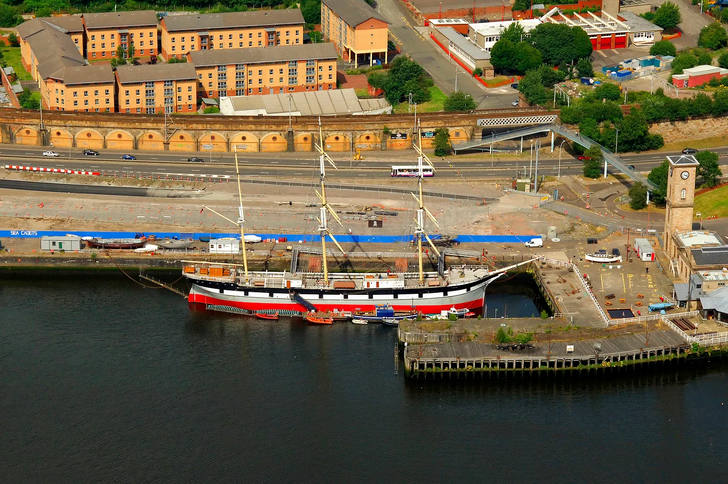
The Tall Ship in Glasgow Harbour

The debt-collectors are already knocking at the door. In March 2023, Clive Lewis, MP and shadow Foreign Secretary under Jeremy Corbyn, called for the UK government to start “meaningful negotiations” over reparations with Caribbean countries. The following autumn, Lewis’s parliamentary office became the centre of a reparations-campaign, funded by Irish billionaire Denis O’Brien. And in April this year, Sir Keir Starmer received the Prime Minister of Barbados, Mia Mottley, into No. 10. “We’ve known each other many years as good colleagues and now as leaders who think alike”, said Starmer. Mottley has stated that Britain owes Barbados £3.9 trillion and it was she who pushed for reparations onto the agenda of the Commonwealth Heads of Government summit last year.

But the case for reparations doesn’t add up. Yes, some Britons were involved in inhumane slave-trading and slavery, mainly from about 1650 to the early 1800s, when they transported over 3.2 million slaves from Africa to the Americas. Yet, while campaigners portray British involvement as uniquely dreadful. It wasn’t.

Up until the end of the 18th century AD slavery and slave-trading were universal institutions, practised since the dawn of time on every continent by peoples of every skin colour. In North America, indigenous societies in the Pacific North-West were built on slave-labour, since subsistence required the rapid processing of salmon, and the quantity of work outstripped the supply of female labour. So, raiding for slaves was endemic. Thousands of miles to the south, the Comanche ran “the largest slave economy” in the 1700s — according to Oxford’s Pekka Hämäläinen. Meanwhile, on the other side of the Atlantic, Arabs had been busy slave-raiding and -trading since at least the 7th century AD. According to one authority, the Muslim trade transported 17 million slaves mainly from Africa, but also from Europe, to the southern and eastern coasts of the Mediterranean. This is one context out of which reparations-advocates like to abstract British slavery.

Another is African complicity. British slave-ships off the coast of West Africa didn’t have to raid inland to obtain their slaves. They just waited on the coast for them to be brought. Africans had been busy enslaving and trading other Africans for centuries, first to the Romans, then to the Arabs, and finally to the Europeans. As early as 1550 the Kingdom of the Kongo was exporting up to 8,000 African slaves annually to the Portuguese.

The final context that campaigners studiously ignore is the fact that Britain was among the first states in the history of the world to abolish slave-trading (in 1807) and slavery (in 1833) throughout its territories. It then used its dominant power to suppress both slave-trading and slavery from Brazil, across Africa and India, to New Zealand for the second half of the British Empire’s life. In the 1820s and ’30s, the Slave Trade Department was the Foreign Office’s largest unit. By mid-century the Royal Navy was devoting over 13 per cent of its total manpower to stopping transatlantic slave-trading. The cost of this alone to British taxpayers was at least the equivalent of up to £1.74 billion today or 12.7 per cent of the UK’s current expenditure on development aid — for half a century. According to the eminent historian, David Eltis, the nineteenth-century costs of slavery-suppression exceeded the eighteenth-century benefits.

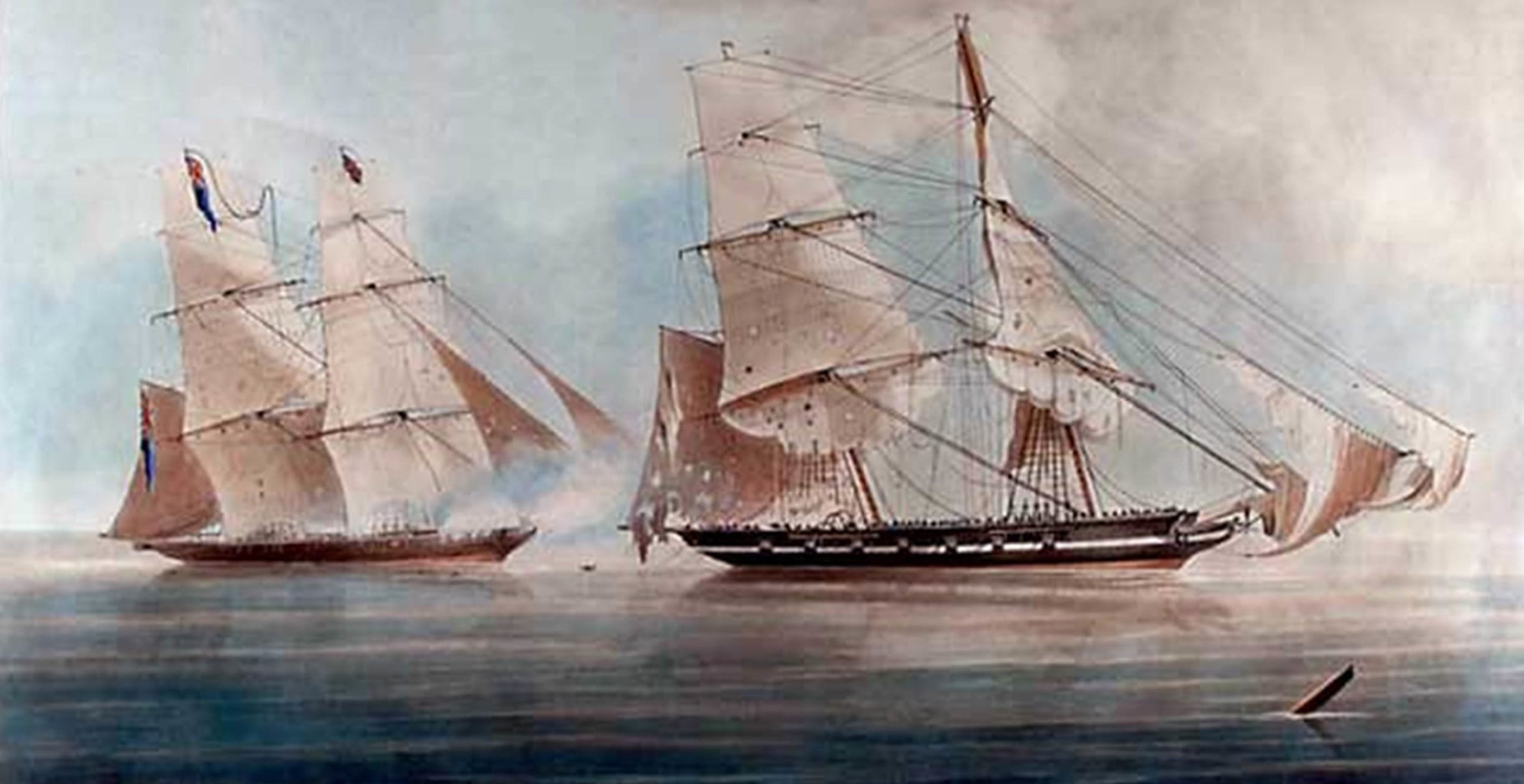
The West Africa Squadron, which freed 150,000 African slaves.

Praga I-23: Prototype Belt-Fed Predecessor of the ZB26

Filed under: Europe, History, Military, Weapons — Tags: , , , , , — Nicholas @ 02:00

Forgotten Weapons
Published 3 Feb 2025

Vaclav Holek’s first machine gun design for the Czech military was the Praga I, built in 1922 and based heavily on the Vickers/Maxim system. However, it became clear that the military wanted something lighter and more portable, and so the next year he heavily updated the design to this, the Praga I-23 (for 1923). It remains a belt-fed weapon chambered for the 8mm Mauser cartridge, but the locking system has been much simplified into a tilting bolt arrangement. The recoil operation from the earlier model is also gone, now replaced by a long stroke gas piston. Some elements of the Maxim remain in the belt feeding elements, but the overall gun is much more a light machine gun than the mounted heavy machine gun that was his first design.

A total of 40 of the Praga I-23 were ordered by the Czechoslovak military, and they were tested in 1924 (only 20 examples were actually delivered of the 40). The I-23 performed well, but it was again clear that it wasn’t quite what the military really wanted. Holek revised the design again to the model 1924, using a box magazine instead of a belt feed — and that is the gun that continued the path to the ZB-26.

Video on the Praga I machine gun that came immediately before this model: Praga I: A Blow-Forward Bullpup Semi-…

Many thanks to the VHU — the Czech Military History Institute — for giving me access to this fantastic prototype to film for you. The Army Museum Žižkov is a part of the Institute, and they have a three-story museum full of cool exhibits open to the public in Prague. If you have a chance to visit, it’s definitely worth the time! You can find all of their details (including their aviation and armor museums) here:

https://www.vhu.cz/en/english-summary/
(more…)

QotD: Trade-offs

Filed under: Economics, Quotations — Tags: — Nicholas @ 01:00

Among the oddments that sometimes appear in opinion polls are questions like, “Would you accept a lower standard of living in exchange for” … whatever policy is currently on offer. That policy might range from a climate-change shutdown of all carbon-based energy production, to reduced levels of immigration and foreign trade.

In principle, I approve this recognition of policy trade-offs, and every acknowledgement that, in the red-pilled world beyond political phantasy, “you can’t have your diamond-studded hand-sculptured fondant wedding cake, and eat it, too”. Or in the more modest, Yorkshire form of this important cliché: “You can’t have the penny and the bun”.

Any concession towards what I remember as reality is welcome at the present day, to me. As a non-economist, however, I regret that the trade-offs are only expressed in money. They apply also, and frequently instead, to things the modern world doesn’t count, because they are intangibles.

David Warren, “On juvenile delinquency”, Essays in Idleness, 2020-05-22.

Powered by WordPress



