
When Chinese premier Zhou Enlai famously said it was “too early” to assess the implications of the French revolution, he was referring to turmoil in France in 1968 and not — as is commonly thought — to the more distant political upheaval of 1789.
So says a retired American diplomat, Charles W. (Chas) Freeman Jr., who was present when Zhou made the comment during President Richard Nixon’s visit to China in February 1972.
Freeman, who was Nixon’s interpreter during the historic, weeklong trip, made the disclosure last week during a panel discussion in Washington about On China, the latest book by former Secretary of State Henry Kissinger.
The discussion was moderated by Richard McGregor, a journalist and China expert who wrote about Freeman’s comments for the Financial Times of London.
In an interview yesterday, Freeman elaborated on his recollection about Zhou’s comment, the conventional interpretation of which is frequently offered as evidence of China’s sage, patient, and far-sighted ways. Foreign Policy magazine, for example, referred last month to that interpretation, saying the comment was “a cautionary warning of the perils of judgments made in real time.”
The Washington Post‘s recent review of Kissinger’s book likewise referred to the conventional understanding of Zhou’s remark.
Freeman described Zhou’s misconstrued comment as “one of those convenient misunderstandings that never gets corrected.”
He said Zhou’s remark probably was made over lunch or dinner, during a discussion about revolutions that had succeeded and failed. They included, Freeman said, the Prague Spring of 1968 and the Hungarian uprising of 1956, both of which the Soviet Union crushed.
He said it was clear from the context and content of Zhou’s comment that in saying it was “too early to say” the Chinese leader was speaking about the events in France in May 1968, not the years of upheaval that began in 1789.
Freeman acknowledged that the conventional interpretation makes for a better story but added that it was “absolutely clear” from the context of the discussion that Zhou was speaking about 1968.
W. Joseph Campbell, “‘Too early to say’: Zhou was speaking about 1968, not 1789”, Media Myth Alert, 2011-06-14.
April 11, 2020
QotD: Zhou Enlai’s famous “too early to say” comment on the French Revolution
January 21, 2020
Amity Shlaes’ Great Society: A New History
In City Journal, Edward Short reviews the latest American economic history book by Amity Shlaes:
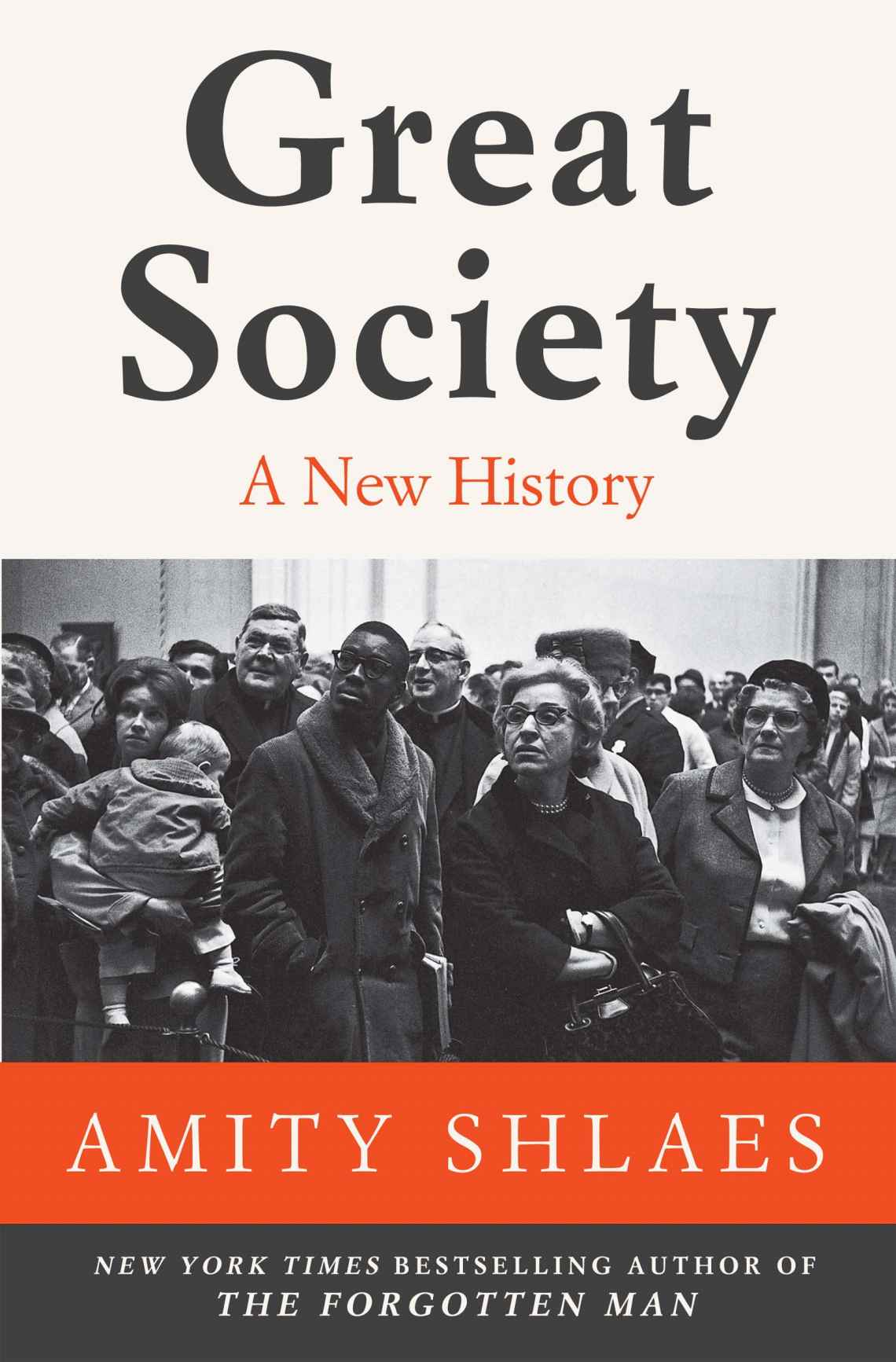
In Great Society: A New History, Amity Shlaes revisits the welfare programs of the Kennedy, Johnson, and Nixon administrations to show not only how misguided they were but also what a warning they present to those who wish to resurrect and extend such programs. “The contest between capitalism and socialism is on again,” the author writes in her introduction. Despite the Trump administration’s thriving economy, or perhaps because of it, Democratic Party progressives are calling for new welfare programs even more radical than those advocated in the 1960s by the socialist architect of Lyndon Johnson’s War on Poverty, Michael Harrington. In the new schemes for wealth redistribution, student debt relief, socialized medicine, and universal guaranteed income that make up the Democrats’ political platform in 2020, Shlaes rightly sees a recycling of Great Society hobby horses — and she worries that a good portion of the electorate may be taken in by them. “Once again many Americans rate socialism as the generous philosophy,” she observes, and she has written her admirable, sobering study to make sure that readers realize that the “results of our socialism were not generous.”
Reviewing how ungenerous makes for salutary reading. After all, socialism of any stripe, whether in Russia, South America, Europe, or America, has always been an inherently deceitful enterprise. Shales captures the essence of this imposture when she describes one of its manifestations as “Prettifying a political grab by dressing it up as an economic rescue.” In totting up these receipts for deceit, Shlaes has done a genuine public service. […]
On display here are all of Shlaes’s strengths as an author: her clear and unpretentious prose, sound critical judgment, readiness to enter into the thinking of her subjects with sympathy (even when she regards it as mistaken), and, perhaps most impressively, understanding how history can help us fathom what might otherwise be obscure in our own more immediate history.
Accordingly, she describes the influence that Roosevelt’s New Deal had on Johnson, who saw it as a model for maintaining and consolidating his Democratic majorities, as well as focusing his Cabinet’s talents. “The men around Johnson,” Shlaes points out, including Robert McNamara, McGeorge Bundy, Richard Goodwin, and Sargent Shriver, “felt the weight of his faith on them, and strove hard. Vietnam would be sorted out. There would be a Great Society. Poverty would be cured. Blacks of the South would win full citizenship. The Great Society would succeed.” Yet the president’s men could not help asking “by what measures” it would succeed.
Moynihan’s answer to this question is one that still mesmerizes social-engineering elites. The Great Society would be achieved by social science. “Progress begins on social problems when it becomes possible to measure them,” Moynihan declared. Improved quantitative analysis would give the centralized power of planners a new credibility.
Whether Johnson himself ever truly believed in such claims is questionable. When aides asked the exuberant Texan what he thought of the risks of going forward with his wildly ambitious program, his reply epitomized the hubris at the heart of his Great Society: “Well, what the hell’s the presidency for?”
August 3, 2019
QotD: The 1968 election and the schizoid break of the American media
Fortunately for the Democrats, what The Media wanted and what the Democratic Party wanted were in the same ballpark for most of the next three decades. But then Bill Clinton happened, as my students would write. He played The Media’s Messiah fantasies for all they were worth, such that every bobblehead in the country was still defending him as Liberalism’s avatar even as he was governing (in the few odd moments he bothered) as Newt Gingrich’s mini-me and acting like a frat boy on nickel beer night at the strip club.
You just don’t get over something like that.
Which brings us to the elections of 2000 and 2004. Boy do these look different in hindsight! […] I knew The Media was all-in on the Democrat, like they always are. But at the time, I thought that was a tactical decision. That is, I really believed that their attacks on W. were calculated political moves, designed to drag Gore and especially Kerry over the finish line. I thought that only the Mother Jones types were delusional, Iranian mullah-style fanatics.
Nope. The Media — ALL of them — really did see W. as the antichrist, the Twelfth Invisible Hitler (as the Z Man likes to put it) come to destroy the world. So when despite all their sacrifices to Moloch the Chimperor won, The Media went full retard. Like UFO cultists who keep the faith by telling themselves only their fervent prayers staved off the apocalypse, The Media convinced themselves that only more Social Justice would do …
Severian, “The Spirit of ’68”, Rotten Chestnuts, 2019-07-01.
May 21, 2019
May 16, 2018
QotD: The presidency and the Supreme Court
… I also like Jerry Jeff Walker, the Scofflaw King of New Orleans and a lot of other people I don’t necessarily believe should be president of the United States. The immense concentration of power in that office is just too goddamn heavy for anybody with good sense to turn his back on. Or her back. Or its back…. At least not as long as whatever lives in the White House has the power to fill vacancies on the U.S. Supreme Court; because anybody with that kind of power can use it – like Nixon did – to pack-crowd the Court of Final Appeal in this country with the same kind of lame, vindictive yo-yos who recently voted to sustain the commonwealth of Virginia’s antisodomy statutes……. And anybody who thinks that 6-3 vote against “sodomy” is some kind of abstract legal gibberish that doesn’t really affect them had better hope they never get busted for anything the Bible or any local vice-squad cop calls an “unnatural sex act.” Because “unnatural” is defined by the laws of almost every state in the Union as anything but a quick and dutiful hump in the classic missionary position, for purposes of procreation only. Anything else is a felony crime, and people who commit felony crimes go to prison.
Hunter S. Thompson, “Fear and Loathing on the Campaign Trail ’76: Third-rate romance, low-rent rendezvous — hanging with Ted Kennedy, Jimmy Carter, and a bottle of Wild Turkey”, Rolling Stone, 1976-06-03.
April 28, 2018
QotD: Nixon’s final days in the White House
The sudden, hellish reality of a nuclear war with either Russia or China or both was probably the only thing that could have salvaged Nixon’s presidency after the Supreme Court ruled that he had to yield up the incriminating tapes that he knew would finish him off. Would the action-starved generals at the Strategic Air Command Headquarters have ignored an emergency order from their commander-in-chief? And how long would it have taken Pat Buchanan or General Haig to realize that “The Boss” had finally flipped? Nixon spent so much time alone that nobody else in the White House would have given his absence a second thought until he failed to show up for dinner, and by that time he could have made enough phone calls to start wars all over the world.
A four-star general commandant of the U.S. Marine Corps with three wars and 35 years of fanatical devotion to duty, honor and country in his system would hack off his own feet and eat them rather than refuse to obey a direct order from the president of the United States – even if he thought the president was crazy.
The key to all military thinking is a concept that nobody who ever wore a uniform with even one stripe on it will ever forget: “You don’t salute the man, you salute the uniform.” Once you’ve learned that, you’re a soldier – and soldiers don’t disobey orders from people they have to salute. If Nixon’s tortured mind had bent far enough to let him think he could save himself by ordering a full-bore Marine/Airborne invasion of Cuba, he would not have given the Boom-Boom order to some closet-pacifist general who might be inclined to delay the invasion long enough to call Henry Kissinger for official reassurance that the president was not insane.
No West Pointer with four stars on his hat would take that kind of risk anyway. By the time word got back to the White House, or to Kissinger, that Nixon had given the order to invade Cuba, the whole Caribbean would be a sea of fire; Fidel Castro would be in a submarine on his way to Russia, and the sky above the Atlantic would be streaked from one horizon to the other with the vapor trails of a hundred panic-launched missiles.
***
Right. But it was mainly a matter of luck that Nixon’s mental disintegration was so obvious and so crippling that by the time he came face to face with his final option, he was no longer able to even recognize it. When the going got tough, the politician who worshiped toughness above all else turned into a whimpering, gin-soaked vegetable……. But it is still worth wondering how long it would have taken Haig and Kissinger to convince all those SAC generals out in Omaha to disregard a Doomsday phone call from the president of the United States because a handful of civilians in the White House said he was crazy.
Hunter S. Thompson, “Fear and Loathing on the Campaign Trail ’76: Third-rate romance, low-rent rendezvous — hanging with Ted Kennedy, Jimmy Carter, and a bottle of Wild Turkey”, Rolling Stone, 1976-06-03.
September 14, 2017
Ken Burns and Lynn Novick: The Vietnam War Is the Key to Understanding America
Published on 13 Sep 2017
Nick Gillespie interviews Ken Burns and Lynn Novick about their new documentary series: The Vietnam War.
The Vietnam War led to more than 1.3 million deaths and it’s one of the most divisive, painful, and poorly understood episodes in American history.
Documentarians Ken Burns and Lynn Novick have spent the past decade making a film that aims to exhume the war’s buried history. Their 10-part series, which premieres on PBS next week, is a comprehensive look at the secrecy, disinformation, and spin surrounding Vietnam, and its lasting impact on two nations. The 18-hour film combines never-before-seen historical footage, with testimonies from nearly 80 witnesses, including soldiers on both sides of the conflict, leaders of the protest movement, and civilians from North and South Vietnam.
A two-time Academy Award winner, Burns is among the most celebrated documentary filmmakers of our time, best-known for the 1990 PBS miniseries The Civil War, which drew a television viewership of 40 million. He and Novick are longtime collaborators, and in 2011 she co-directed and produced Prohibition with Burns. In 2011, Reason’s Nick Gillespie interviewed Burns that film and the role of public television in underwriting his work.
With the release of The Vietnam War, Gillespie sat down with Burns and Novick to talk about the decade-long process of making their new film, and why understanding what happened in Vietnam is essential to interpreting American life today.
Produced by Todd Krainin. Cameras by Meredith Bragg, Mark McDaniel, and Krainin.
Full interview transcript available at http://bit.ly/2x0e5U4
May 26, 2017
A Brief History of Politicians Body-Slamming Journalists
Published on 25 May 2017
In the twilight hours of a special election to replace Montana’s lone congressman, Republican hopeful Greg Gianforte reportedly “body slammed” and punched a Guardian reporter after the journalist tried to ferret out an answer about GOP health care plans. In this video Reason TV imagines a world in which other, high profile politicians give into violent impulses when confronted by the press.
Polls opened in Montana less than twenty-four hours after Gianforte’s confrontation with Guardian reporter Ben Jacobs, and his subsequent assault charge. In the event that Mr. Gianforte is elected to Congress there is a reasonable chance he will interact with more journalists in the future, and possibly even have to formulate responses to Republican legislation at some point.
Written by Andrew Heaton, Austin Bragg, and Meredith Bragg
Performed by Andrew Heaton and Austin Bragg
Produced by Meredith Bragg and Austin Bragg
April 19, 2017
QotD: Hubris and Nemesis, or pride goeth before the fall
Few things are more likely to precede defeat than the conviction that you are on the verge of victory. One hundred years ago, in the spring of 1917, Germany had every reason to believe that it would triumph over its enemies in the First World War. France had been bled white in repeated attacks on the German army’s fortified lines, England was suffering from shortages of both munitions and military manpower, and Russia was descending into a revolution that would, within a year, enable Germany and its Austro-Hungarian allies to shift enormous numbers of troops and guns to the Western Front. Yet the entry of the United States into the war on April 6, 1917, proved to be the counterweight that shifted the balance. By the autumn of 1918, the fond hope of Germany victory had been exposed as a delusion. The ultimate result of the Kaiser’s war was the destruction of the Kaiser’s empire, and of much else besides.
What is true in war is true also in politics. Hubris is nearly always the precedent to unexpected defeat. In 1964, Lyndon Johnson won a landslide victory; less than four years later, LBJ could not even win his own party’s nomination for re-election. In 1972, Richard Nixon was re-elected in a landslide; less than two years later, he was forced to resign from office. More recently, after George W. Bush’s 2004 re-election, some imagined that this victory was the harbinger of a “permanent Republican majority” — a GOP electoral hegemony based on a so-called “center-right” realignment — but two years later, Democrats captured control of Congress and in 2008 Barack Obama was elected president. Obama’s success in turn led Democrats to become overconfident, and Hillary Clinton’s supporters believed they were “on the right side of history,” as rock singer Bruce Springsteen told a rally in Philadelphia on the eve of the 2016 election. Unfortunately for Democrats, history disagreed.
Robert Stacy McCain, “Why Is the ‘Right Side of History’ Losing?”, The American Spectator, 2017-04-05.
October 25, 2015
Small talk in pubs
David Warren admits he’s not welcome at a few local drinking establishments nowadays:
There are at least two tables, within pubs in the Greater Parkdale Area, where, notwithstanding I was once quite welcome, I am not today. Some think this is because of my opinions, which are those of a rightwing fanatic and religious nutjob. But no: it is because I am willing to express them. This is a form of incontinence, one might argue; and like other forms, it may accord with increasing age. Yet I do not think that silence is invariably golden.
To hear me tell it — and whom else were you expecting, gentle reader? — it goes like this. In years past, I would sit quietly and ignore nonsense, especially political nonsense, spoken by my fellow imbibers. I can still do this. Many of the most ludicrous remarks, on any passing issue, are not actually opinions of the speaker. He simply echoes or parrots the views of the media and his own social class. I’ve been absorbing this “background music” for years; why revolt now? The noise is anyway not arguments but gestures.
Say, “Stephen Harper,” and watch the eyeballs roll. Say, “George Bush,” and still, ditto. Say “Richard Nixon,” however, and you don’t get much of a rise any more, for memories out there are short, very short.
(A Czech buddy, in the olden days, once performed this experiment in a pub. “I just love that Richard Nixon!” he declared, in his thick, Slavic accent, loud enough to afflict the Yankee draft-dodgers at the next table, who’d been prattling about Watergate too long. “Gives those liberals heart attacks,” he added. … Some bottle-tossing followed from that, and we were all banned together, so ended up as friends.)
On the other hand say, “Barack Obama,” and they will focus like attentive puppies. Or, “Justin Trudeau” to the ladies, to make them coo.
It is a simple Pavlovian trick, and might be done in reverse in a rightwing bar, except, there are no rightwing bars in big cities.
Yet everyone knows there are rightwing people, even in Greater Parkdale. And they are welcome anywhere they want to buy a pint, the more if they’re buying for the whole table. The one condition is that they must keep their “divisive” opinions to themselves.
October 13, 2015
August 3, 2015
Why Do Governments Enact Price Controls?
Published on 25 Feb 2015
If price controls have negative consequences, why do governments enact them? Let’s revisit our example of President Nixon’s wage and price controls in the 1970s. These price controls were popular, as is demonstrated by Nixon being re-elected after they went into effect. The public didn’t think that the price controls were to blame for things such as long lines at the fuel pump. Without knowledge of the economics behind price controls, the public blamed foreign oil cartels and oil companies for the shortages.
In this video we’ll also address questions such as: do price controls — like rent controlled apartments and the minimum wage — help the poor? Are there better ways to help the poor? If so, what are they? Let’s find out.
June 27, 2015
Price Ceilings: The US Economy Flounders in the 1970s
Published on 25 Feb 2015
In 1971, President Nixon, in an effort to control inflation, declared price increases illegal. Because prices couldn’t increase, they began hitting a ceiling. With a price ceiling, buyers are unable to signal their increased demand by bidding prices up, and suppliers have no incentive to increase quantity supplied because they can’t raise the price.
What results when the quantity demanded exceeds the quantity supplied? A shortage! In the 1970s, for example, buyers began to signal their demand for gasoline by waiting in long lines, if they even had access to gasoline at all. As you’ll recall from the previous section on the price system, prices help coordinate global economic activity. And with price controls in place, the economy became far less coordinated. Join us as we look at real-world examples of price controls and the grave effects these regulations have on trade and industry.
June 15, 2015
The “Kitchen Debates” of 1959
B.K. Marcus explains how ice cream was the secret weapon that won the Cold War:
Richard Nixon stood by a lemon-yellow refrigerator in Moscow and bragged to the Soviet leader: “The American system,” he told Nikita Khrushchev over frosted cupcakes and chocolate layer cake, “is designed to take advantage of new inventions.”
It was the opening day of the American National Exhibition at Sokol’niki Park, and Nixon was representing not just the US government but also the latest products from General Mills, Whirlpool, and General Electric. Assisting him in what would come to be known as the “Kitchen Debates” were attractive American spokesmodels who demonstrated for the Russian crowd the best that capitalism in 1959 had to offer.
[…]
“Don’t you have a machine,” he asked Nixon, “that puts food in the mouth and presses it down? Many things you’ve shown us are interesting but they are not needed in life. They have no useful purpose. They are merely gadgets.”
Khrushchev was displaying the behavior Ludwig von Mises described in The Anti-Capitalistic Mentality. “They castigate the luxury, the stupidity and the moral corruption of the exploiting classes,” Mises wrote of the socialists. “In their eyes everything that is bad and ridiculous is bourgeois, and everything that is good and sublime is proletarian.”
On display that summer in Moscow was American consumer tech at its most bourgeois. The problem with “castigating the luxury,” as Mises pointed out, is that all “innovation is first a luxury of only a few people, until by degrees it comes into the reach of the many.”
It is appropriate that the Kitchen Debate over luxury versus necessity took place among high-end American refrigerators. Refrigeration, as a luxury, is ancient. “There were ice harvests in China before the first millennium BC,” writes Wilson. “Snow was sold in Athens beginning in the fifth century BC. Aristocrats of the seventeenth century spooned desserts from ice bowls, drank wine chilled with snow, and even ate iced creams and water ices. Yet it was only in the nineteenth century in the United States that ice became an industrial commodity.” Only with modern capitalism, in other words, does the luxury reach so rapidly beyond a tiny elite.
“Capitalism,” Mises wrote in Economic Freedom and Interventionism, “is essentially mass production for the satisfaction of the wants of the masses.”
April 7, 2015
Senator Moynihan
In City Journal, Fred Siegel looks at some recent books about the late Democratic Senator Daniel Patrick Monihan:
Daniel Patrick Moynihan, the four-term senator from New York who died in 2003, was that rare soul who was both a political and intellectual giant. Stephen Hess, who worked in the early Nixon White House as an aide to Moynihan, was the rare individual friendly with both Moynihan and Richard Nixon. The Professor and the President is a short but revealing memoir-cum-narrative of Moynihan’s service in the executive branch.
What brought Nixon and Moynihan together was a tectonic shift of the political plates. Nixon won the presidency in 1968 thanks to the backlash against the riots that had ripped through America’s cities. What made Moynihan a Democrat of extraordinary insight, willing to serve a Republican president, were his reactions to those riots — and to the excesses and wrong turns of American liberalism.
Today, 50 years after its issuance, some liberals “bravely” acknowledge that 1965’s so-called Moynihan Report, in which the future senator warned about the dire future consequences of the collapse of the black family, was a fire bell in the night. But at the time, and for decades to come, Moynihan was branded as a racist by civil rights leaders, black activists, and run-of-the-mill liberals. “One began to sense,” Moynihan wrote, that “a price was to be paid even for such a mild dissent from conventional liberalism.”
His capacity for irony notwithstanding, Moynihan came close to a nervous breakdown and “emerged changed” from the experience. He came to feel “that American liberalism had created its own version of a politique du pire (i.e., the worse the better) … in which evidence had been displaced by ideology.” His fear that the empirically oriented liberalism of his youth was under assault from racial and cultural nihilists intensified after the 1967 riots that burned through Cleveland, Newark, and Detroit, where 43 died. “The summer of 1967,” Moynihan wrote at the time, “came in the aftermath of one of the most extraordinary periods of liberal legislation, liberal electoral victories and the liberal dominance of the media … that we have ever experienced. The period was, moreover, accompanied by the greatest economic expansion in human history. And to top it all, some of the worst violence occurred in Detroit, a city with one of the most liberal and successful administrations in the nation; a city in which the social and economic position of the Negro was generally agreed to be far and away the best in the nation.”


