If it’s sexy, it’s probably fake.
“Sexy” means “likely to get published in the New York Times and/or get the researcher on a TEDx stage”. Actual sexiness research is not “sexy” because it keeps running into inconvenient results like that rich and high-status men in their forties and skinny women in their early twenties tend to find each other very sexy. The only way to make a result like that “sexy” is to blame it on the patriarchy, and most psychologist aren’t that far gone (yet).
[…]
Anything counterintuitive is also sexy, and (according to Rule 2) less likely to be true. So is anything novel that isn’t based on solid existing research. After all, the Times is the newspaper business, not in the truthspaper one.
Finding robust results is very hard, but getting sexy results published is very easy. Thus, sexy results generally lack robustness. I personally find a certain robustness quite sexy, but that attitude seems to have gone out of fashion since the Renaissance.
Jacob Falkovich, “The Scent of Bad Psychology”, Put a Number On It!, 2018-09-07.
December 13, 2020
QotD: The statistical “Rule of Silicone Boobs”
December 3, 2020
Modern narcissism
In Quillette, Marilyn Simon discusses a song her daughters learned in school and what it reveals about modern thought:
There is a pop song by Canadian artist Alessia Cara that my daughters have learned to sing in their school choir. The song is “Scars to Your Beautiful.” It is a catchy, simple song. Many readers probably know it. The message it promotes is, by all accounts, a positive one, which is presumably why it’s being taught to children at school. The chorus goes like this:
There’s a hope that’s waiting for you in the dark,
You should know you’re beautiful just the way you are,
And you don’t have to change a thing,
The world could change its heart,
No scars to your beautiful,
We’re stars and we’re beautiful.In spite of my girls’ sweet singing voices, and the intention of the lyrics, I think it is one of the most disturbing songs my kids have ever learned in school (right up there with Lennon’s insipid and juvenile “Imagine”). It is a narcissistic anthem painfully unaware of its hypocrisy. It reinforces the notion that beauty is rightfully a girl’s desirable goal, and that her aspiration to be “a star” is not only attainable — without any corresponding effort or talent on her part, naturally — but also the world’s ethical responsibility to ensure. In other words, there are no standards, ideals, nor any objectivity; instead the world needs to change its heart in order to conform to an individual’s subjective self-desiring.
Narcissism isn’t merely an issue of having an inflated ego. It is the condition of being enamored with one’s idealized projection of oneself to the exclusion of reality and of one’s real self. This occurs not because one is vain, but because one is too fragile to admit failings or fault. It has nothing to do with self-love, but rather with being locked in a solipsistic gaze with a fantasy of one’s self. Contemporary culture has taken classic narcissism and turned it into a new moralism. What we deem goodness now is that everyone else affirms the delusions of one’s wishful thinking as objective truth. Cara’s song, for instance, first reinforces the fantasy that each one of us is equally beautiful, and then makes the claim that the world must “change its heart” and endorse the image of oneself that is, in the first place, a self-interested desire. In other words, the mythology of “Scars to Your Beautiful,” and of our self-positive, identity-affirming culture as a whole, would suggest that not only is Narcissus correct in falling in love with a projection, an unreal and unreachable image of himself in a pond — something the Greeks thought was quite bad enough — but also that the rest of world must affirm his reflection as the real thing and celebrate his dead-end obsession with it.
So, positive reinforcement of self delusion is now a social good. The individual and society reject what is objectively real and instead embrace infantile narcissism, where the self’s fantasy of its own perfection is reaffirmed by the uncritical and unconditional love of a universal parent. Cara’s song intends to be encouraging, and in some ways it is (I’m not entirely deaf to my pre-teens’ rebuttals of “Mommm! You’re so depressing. It’s just a song to make us feel good!” and I will assent to the wisdom of my 12-year-old that healthy self-esteem is a good thing). But at its core, the song is self-delusion dressed in the garb of pop psychology. This is an accurate picture of our contemporary moral code: Everyone’s ideal projection of her or himself must be coddled and adored by a soft and nurturing world. Only a bad person would suggest that not everyone is equally beautiful, that not everyone is the “star” she imagines herself to be. (And only a monster would suggest that some people don’t even have inner beauty, either.)
“Competitive individualism,” writes Christopher Lasch, has channeled “the pursuit of happiness to the dead end of a narcissistic preoccupation with the self. Strategies of narcissistic survival now present themselves as emancipation from the repressive conditions of the past, thus giving rise to a ‘cultural revolution’ that reproduces the worst features of the collapsing civilization it claims to criticize.” Lasch’s words, written in 1979, predict so much of our contemporary upheaval — in our efforts to overcome racism, we have fallen into the trap of making (almost) everything about race. In our efforts to end sexual harassment, we have traded natural, often playful, interactions between women and men for institutional policies, while simultaneously treating women as somehow less than fully human, incapable of deceit and of misreading situations, and incapable of deftly handling sexual innuendo and sexual tension. The same thing has occurred with our culture’s criticism of our esteem for idealized physical beauty, particularly female beauty, while we make the contradictory insistence that we are all ideally beautiful, and should be admired accordingly. Beauty, we say, shouldn’t be venerated. That’s shallow. But we should also all believe that “we’re stars, and we’re beautiful.” That’s virtue.

November 27, 2020
QotD: Popular music and survivorship bias
Man, I just {LISTENED_TO_ALBUM/WENT_TO_CONCERT} by {$GROUP_FROM_MY_TEENS/EARLY_TWENTIES} and they still kicked ass just like they did when they were new.
{$GROUP_LIKED_BY_KIDS_WHO_SHOULD_GET_OFF_MY_LAWN} just won’t have that same kind of staying power.”
Part of that phenomenon is that we’re less likely to form strong emotional connections to specific pieces of music the way we were when we were younger, and part of it is that the music that gets remembered from the good ol’ days is just the good stuff. The year 1968, for instance, had huge chart hits from The Beatles and The Rolling Stones, but also from 1910 Fruitgum Company and Tiny Tim.
The airwaves had plenty of crap in my teens and early twenties, but I prefer to forget that. Say what you will about the Kids These Days, but they aren’t listening to Milli Vanilli … of course, as it turned out, neither were kids back then.
Survivorship Bias is baked right into a lot of hobbies that interface with older things. “Man, they really knew how to build [cameras/pocket knives/watches/revolvers] in the old days!” is skewed by the fact that only the well-built stuff has survived. The handgun counter at the hardware store in a hypothetical Old West town had Colts and Smith & Wessons and Remingtons, and plenty of cheaply-made Victorian equivalents of Hi Points and Jennings, too.
Tamara Keel, “Survivorship Bias”, View From The Porch, 2020-08-24.
November 23, 2020
QotD: The social poison of hypersensitivity
And yet, this hypersensitivity is absolute and complete social poison.
Read that again, please. This is a poison pill. When you read Drew’s piece, you will notice how everything is colored through the lens of racism. He literally cannot see anything without suspecting secret racism behind it. And, furthermore, I have no doubt his friends are fully cognizant of this. They, not wishing to anger him or appear racist themselves (who does?), almost assuredly feel a constant social pressure to micromanage their words, gestures, and behavior around their friend. This, in turn, makes interacting with him less pleasant. This becomes self-reinforcing. Drew detects his friends act different about him, which fuels an assumption that the difference is due to racism, which in turn is detected by the friends, who now act even more different in an effort to avoid this very thing.
Everybody gets caught in a spiral of stupidity that no one can escape from.
All until somebody, in the heat of the moment, not thinking, breaks out a slur. Whether driven by bad luck, too much to drink, or some other mechanism, the micromanagement of offense is broken. And not even knowing how to handle this, the relationship of the man and his friends entirely breaks down, requiring him to write a letter to his friend, and considering abandoning the friendship altogether.
See how this works? Drew, like many American blacks, has a wall between him and the rest of us. Piercing that wall takes extra effort. He may even be entirely justified in how he arrived at the notion that the wall was necessary, just as a Jewish person is quite justified in worrying about pogroms and other such things, given the course of history.
However justified, though, the hypersensitivity works against healing and normalization of relations. It poisons relationships.
Thales, “Hypersensitivity and Race”, Declination, 2018-08-08.
November 9, 2020
QotD: The Children of Men becomes disturbingly real in Japan
In Lady James’ speculative fiction, pets are doted on as child-substitutes, and churches hold christening ceremonies for cats. In contemporary Japanese reality, Tokyo has some 40 “cat cafés” where lonely solitary citizens can while away an afternoon by renting a feline to touch and pet for a couple of companiable hours.
In Lady James’ speculative fiction, all the unneeded toys are burned, except for the dolls, which childless women seize on as the nearest thing to a baby and wheel through the streets. In contemporary Japanese reality, toy makers, their children’s market dwindling, have instead developed dolls for seniors to be the grandchildren they’ll never have: You can dress them up, and put them in a baby carriage, and the computer chip in the back has several dozen phrases of the kind a real grandchild might use to enable them to engage in rudimentary social pleasantries.
P.D. James’ most audacious fancy is that in a barren land sex itself becomes a bit of a chore. The authorities frantically sponsor state porn emporia promoting ever more recherché forms of erotic activity in an effort to reverse the populace’s flagging sexual desire just in case man’s seed should recover its potency. Alas, to no avail. As Lady James writes, “Women complain increasingly of what they describe as painful orgasms: the spasm achieved but not the pleasure. Pages are devoted to this common phenomenon in the women’s magazines.”
As I said, a bold conceit, at least to those who believe that shorn of all those boring procreation hang-ups we can finally be free to indulge our sexual appetites to the full. But it seems the Japanese have embraced the no-sex-please-we’re-dystopian-Brits plot angle, too. In October, Abigail Haworth of The Observer in London filed a story headlined “Why Have Young People in Japan Stopped Having Sex?” Not all young people but a whopping percentage: A survey by the Japan Family Planning Association reported that over a quarter of men aged 16–24 “were not interested in or despised sexual contact.” For women, it was 45 per cent.
Mark Steyn, The [Un]documented Mark Steyn, 2014.
November 6, 2020
QotD: When you use a racist lens, everything looks like racism
If DiAngelo’s friends had told her not to live in the neighborhoods because they had black and brown residents, she could call them out for overt racism. But even when her friends made no mention of race whatsoever, DiAngelo attributed their warnings to racism as well. There was no way for her friends to mention the neighborhood’s high crime rates without DiAngelo finding them guilty of racism.
DiAngelo also supports her theory that all white people are racist by interpreting ambiguous events to support her conclusions, despite other plausible explanations. In one anecdote, DiAngelo describes an incident in which a white female teacher had two black students at her desk. The teacher prefaced something she said with the word “girl.” One student felt that the use of the word “girl” was racist. The other student disagreed, saying that the teacher called all her students “girl” regardless of their race.
Any reasonable person would conclude that if the teacher called every student — white, black, Asian, Latinx — “girl,” the teacher’s use of the word resides somewhere between “not racist” and “open to interpretation.” But DiAngelo reached a different conclusion, demonizing the teacher’s lack of concern for the offended student’s feelings, and calling the teacher arrogant for thinking the use of “girl” was not racist. To be clear, while teachers should listen to their students’ concerns, there is no proof this teacher’s word choice was racially motivated. And ironically, DiAngelo is guilty of everything she criticizes the teacher for because DiAngelo arrogantly ignores the other black student who did not think the comment was racist.
David Edward Burke, “The Intellectual Fraud of Robin DiAngelo’s White Fragility“, The Logical Liberal, 2020-06-13.
November 2, 2020
In the University of Michigan’s Sexual Health Certificate Program, “mainstream sexual health issues that affect wide swaths of the population, such as marriage, reproduction, and family life, were treated as niche topics”
In Quillette, Tim Courtois explains what the University of Michigan’s Sexual Health Certificate Program is actually intended to teach:

When I signed up for the University of Michigan’s unique, year-long “Sexual Health Certificate Program” (SHCP), however, I truly did believe the experience would be both professionally and intellectually rewarding. I care about sexuality. I know that it is a fundamental component of the human search for joy and meaning. As a Michigan-based psychotherapist and licensed professional counselor, I wanted to deepen my understanding of sexuality, and become better equipped to provide care for the many clients who come to me with issues related to sexual health. The American Association of Sexuality Educators, Counselors, and Therapists sounded like the perfect fit for me, and the idea of becoming an AASECT-certified sex therapist appealed to me. I applied and was accepted for the 2019-2020 cohort. When I showed up, my class included participants from around the world — including Iceland, Egypt, Lebanon, and China — just as you’d expect at the kind of high-value, authoritative program that we all believed we’d signed up for.
The doubts started to creep in early, though — on day one, to be exact. Our first classroom module was titled “Sexual Attitude Reassessment.” I amused myself with the thought that this sounded like an unsettling euphemism for a brainwashing session. Sadly, that’s what it was.It quickly became clear that the issue of sexuality — the ostensible subject — often would serve merely as a pretext for more general harangues about society, and the urgent need to remake it according to AASECT’s ideological blueprint. In a keynote lecture entitled “Why Fetishism Matters,” the speaker argued that the world we inhabit is socially constructed, and told us (with what now seems like admirable candor), “I’m not neutral. I’m here to recruit you to a particular point of view about how kink should be valued.” The same speaker said that he’d been accused of teaching students that any form of sexual behavior is acceptable as long as there is consent from all parties. “Yes, that’s exactly right,” he said. Clearly, our attitude “reassessment” was well underway.
From the get-go, the scientific content was mostly superficial, and was often undercut by claims that the very idea of truth is a harmful (and even oppressive) construct. The teaching was not so much impartial and informative as it was evangelistic. Yet it was also self-contradictory: Declarations that there are no real “correct” moral values were uttered (without irony) alongside absolutist proclamations about the correct way to understand sex — and morality.As I learned, “Sexual Attitude Reassessment” (SAR) is an established term in the field, one that is often used to describe curriculum content that serves to educate sexual-health professionals about the wide range of sexual experiences that they may encounter among clients. The object is to ensure they won’t be shocked when such encounters occur, and to invite them to reassess their judgments and assumptions about various expressions of sexuality. These are valid and important goals. Unfortunately, the SAR in the SHCP descended into an exercise in overstimulation and desensitization — specifically, two full days of pornographic videos and interviews. At times, it felt like the famous brainwashing scene from A Clockwork Orange. There was a series of videos of people masturbating (one of which involved a strange interaction with a cat), a woman with “objectiphilia” who had a sexual attraction to her church pipe organ, various sadomasochistic acts, and a presentation on polyamory designed to make it clear that the polyamorous lifestyle is healthy, wholesome, and problem-free.
The focus on BDSM was a particular fixation throughout the program. In the SAR, we were shown videos of a woman meticulously applying genital clamps to the scrotum of a willing man, and a dominatrix teaching a class how to properly beat people while demonstrating on an eager participant. We also watched an interview with a sex-dungeon “dom” (the male equivalent of a dominatrix) who described one of his experiences: His client had instructed him, as the dom recounted it, “I want you to bind me and then beat me until I scream. And no matter how much I scream or beg you to stop, I want you to keep beating me.” The dom did as he was told, continuing the beatings through the customer’s begging and pleading, until the client went totally limp and silent, seeming to dissociate. At this point, the dom unbound the man, who then began to weep uncontrollably in the dom’s arms.
BDSM is a real and active sexual subculture, and I don’t object to its inclusion in the course materials. But I was shocked to see how much further the professors in the program took things, insisting that BDSM behaviors — up to and including the sexual “Fight Club” style of behavior described above — must be uncritically viewed as wholesome and beautiful. Students learned to sing from the same psalm book, with one memorably exclaiming “I’m so inspired by the wisdom and beauty in the BDSM community!” and insisting that the behavioral codes observed among BDSM participants can help us create a similar climate of safety and respect “in all our relationships.”
The program was focused on an agenda of “centering” the experience of minorities — in this case, sexual minorities. This meant that huge portions of time in class after class were spent focusing on BDSM, LGBTQIA+ issues, and polyamory, not to mention the obligatory discussions of oppression and privilege that were shoehorned into every discussion. Meanwhile, mainstream sexual health issues that affect wide swaths of the population, such as marriage, reproduction, and family life, were treated as niche topics. Further, while many Americans view sexuality through the prism of faith, religion hardly came up at all. And when it did, it was typically so that religious values could be denigrated. Even the few religious people in the program got the message: Whenever any made passing reference to their own observant religiosity, it was usually in a spirit of shame or penance.
In a few brief web searches to find a public domain or Creative Commons image to use for this post, I realized that web search engines offer “safe” options for a reason…
October 12, 2020
QotD: Three lessons on weapons handling in moments of danger
The first and most important of these lessons is this: it all comes down to you.
No one’s finger is on the trigger but your own. All the talk-talk in your head, all the emotions in your heart, all the experiences of your past — these things may inform your choice, but they can’t move your finger. All the socialization and rationalization and justification in the world, all the approval or disapproval of your neighbors — none of these things can pull the trigger either. They can change how you feel about the choice, but only you can actually make the choice. Only you. Only here. Only now. Fire, or not?
A second is this: never count on being able to undo your choices.
If you shoot someone through the heart, dead is dead. You can’t take it back. There are no do-overs. Real choice is like that; you make it, you live with it — or die with it.
A third lesson is this: the universe doesn’t care about motives.
If your gun has an accidental discharge while pointed an unsafe direction, the bullet will kill just as dead as if you had been aiming the shot. “I didn’t mean to” may persuade others that you are less likely to repeat a behavior, but it won’t bring a corpse back to life.
These are hard lessons, but necessary ones. Stated, in print, they may seem trivial or obvious. But ethical maturity consists, in significant part, of knowing these things — not merely at the level of intellect but at the level of emotion, experience and reflex. And nothing teaches these things like repeated confrontation with life-or-death choices in grave knowledge of the consequences of failure.
Eric S. Raymond, “Ethics from the Barrel of a Gun”.
October 6, 2020
⚜ | The Great Tank Destruction Myth ft. The Chieftain
Military Aviation History
Published 24 May 2018Planes kill tanks in the thousands, Sir! Why, do they really? Lets find out.
You can support my Channel with Patreon: https://www.patreon.com/Bismarck
Get a tanker’s perspective from ‘The Chieftain’: https://www.youtube.com/watch?v=AirRX…
⚜ Official Merchanidizing ⚜
[Teepublic] Click here – https://goo.gl/e2PMXu⚜ Find Me On Social Media ⚜
– Twitch: http://www.twitch.tv/bis18marck70
– Twitter: https://twitter.com/Bis18marck70⚜ Sources ⚜
Ian Gooderson, Air Power at the Battlefield
Amazon US (Affiliate): https://amzn.to/2GLsRkR
Amazon UK (Affiliate): https://amzn.to/2IJc08gTank Encyclopedia.org,
Zeller, “Estimates concerning the effectiveness of some contemporary American fighters in
defeating a defended and undefended IS-III tank”,⚜ Music ⚜
Music and Sfx from Epidemic Sound⚜ DISCLAIMER ⚜
Amazon Associates Program (US): “Bismarck is a participant in the Amazon Services LLC Associates Program, an affiliate advertising program designed to provide a means for sites to earn advertising fees by advertising and linking to amazon.com.”Amazon Associates Program (UK): “Bismarck is a participant in the Amazon EU Associates Program, an affiliate advertising program designed to provide a means for sites to earn advertising fees by advertising and linking to amazon.co.uk.”
#CAS #GroundAttack #Typhoon

October 4, 2020
The End of Gender by Dr. Debra Soh
In The Critic, Louise Perry reviews Debra Soh’s recent book The End of Gender:
Contrary to what is commonly believed, sex is defined not by chromosomes or our genitals or hormonal profiles, but by gametes, which are mature reproductive cells. There are only two types of gametes: small ones called sperm that are produced by males, and large ones called eggs that are produced by females. There are no intermediate types of gametes between egg and sperm cells. Sex is therefore binary. It is not a spectrum.
The chapters in the first two thirds of the book are mostly concerned with the transgender movement. Soh works through trans activist claims with admirable thoroughness — no, not all people with gender dysphoria will benefit from transitioning; yes, natal males do have a physical advantage over natal females in sports; no, not all trans people are motivated to transition for the same reasons.
This last point is particularly explosive in political terms, but there is no doubt that Soh is on firm ground scientifically. Researchers have long been aware of the existence of two distinct categories of trans women — that is, natal males who identify as women. One group — sometimes called “homosexual transsexuals” — usually transition at a young age, have sexual relationships exclusively with men, and tend to be stereotypically feminine from childhood.
Another group — known as “autogynephiles” — have a very different profile: transitioning later, usually having sexual relationships exclusively with women, and often living as conventionally masculine men until they begin the transition process. And this second group are motivated to transition as a result of autogynephilia (sexual arousal at the idea of being a woman), a fact that trans activists are reluctant to acknowledge, preferring, as Soh puts it, “to neutralise the sexual aspect of their wishes to transition”. But she attempts an optimistic argument for tolerance:
In our sex-negative culture, trans women’s concerns are dismissed as a sexual fetish if anything about transitioning relates to sexual desire … I advocate for compassion and not being judgmental.
Soh, who writes for Playboy and other outlets, describes herself as sex-positive and supports destigmatising all discussion of sexual desire. Although I sometimes grew bored with the regular detours in which Soh writes about how much she loves going clubbing with her gay friends, or describes the confiding relationships she has formed with the parents of trans-identifying children, I understand the purpose of these sections: reassurance. This is a book written by a liberal for liberals, which prescribes a medicinal dose of yet more liberalism — more tolerance, more scientific inquiry, and more intellectual diversity. And liberal readers will no doubt be comforted that Soh’s live-and-let-live framing allows them to play the role of open-minded progressive, rather than (as trans activists would have it) bigoted reactionary.
QotD: What everyone always suspected about Washington, D.C.
Ryan Murphy, an economist at Southern Methodist University, “matched up the ‘constellation of disinhibition, boldness and meanness’ that marks psychopathy with a previously existing map of the states’ predominant personality traits, he found that dense, coastal areas scored highest by far – with Washington dominant among them. ‘The District of Columbia is measured to be far more psychopathic than any individual state in the country,’ Murphy writes in the paper.”
That explains an awful lot, now doesn’t it?
Justin Raimondo, “Washington, D.C. – The Epicenter of Crazy”, AntiWar.com, 2018-06-25.
October 3, 2020
QotD: Literal first world problems
Again, I don’t say that these and other modern concerns are invalid. Some are and some aren’t. But it’s good to pause from time to time to be thankful that we’re wealthy enough to have escaped most of the daily, much more horrible concerns that pressed immediately upon our ancestors. It’s appropriate to be grateful that we’re rich enough to worry about, say, what might happen in a few decades to the sea level in a distant country rather than about whether or not our children will die of starvation during the night.
Don Boudreaux, “Quotation of the Day…”, Café Hayek, 2018-05-27.
September 29, 2020
QotD: Robin DiAngelo’s theory of “White Fragility”
Second, DiAngelo argues that any white person who does not admit to their own racism is blinded by their “white fragility.” In DiAngelo’s words, because white people are, “Socialized into a deeply internalized sense of superiority that we either are unaware of or can never admit to ourselves, we become highly fragile in conversations about race.” This fragility purportedly explains why, “people who identify as white are so difficult in conversations regarding race.”
It’s not difficult to see why the theory of white fragility might catch on. Race is a sensitive subject that many people of all races are uncomfortable discussing. Furthermore, white people publicly accused of racism risk social ostracization and professional ruin. The idea that some white people may be defensive when accused of racism is not surprising. But though some white people may exhibit a degree of what DiAngelo calls fragility, her grandiose theory as applied to all or even most white people has two fatal flaws.
First, DiAngelo’s theory of white fragility is unfalsifiable. It is impossible for someone to prove that they are not fragile, just as it is impossible for someone to prove they are not possessed by a demon. One could play mad libs with racial groups and nouns — “Asian Insecurity,” “Black Hostility,” etc. — and there would be no way for members of those groups to prove they are not insecure or hostile.
More insidiously, DiAngelo frames her theory of white fragility such that any conceivable reaction a white person has when discussing race is purportedly evidence of fragility, and any denial of her theory is interpreted as proof of its validity. For example, DiAngelo writes that,
The mere suggestion that being white has meaning often triggers a range of defensive responses. These include emotions such as anger, fear, guilt, and behaviors such as argumentation, silence, and withdrawal from the stress-inducing situation. These responses work to reinstate white equilibrium as they repel the challenge, return our racial comfort, and maintain our dominance within the racial hierarchy. I conceptualize this process as white fragility. Though white fragility is triggered by discomfort and anxiety, it is born of superiority and entitlement.
In other words, if DiAngelo accuses you of racism or fragility and you disagree with her in any way — through argument, silence, or withdrawal — your reaction is considered proof of your fragility. DiAngelo leaves white readers with only two options. Either acknowledge your fragility, which proves DiAngelo’s theory, or deny your fragility, which according to DiAngelo, also proves her theory. This is a logical fallacy known as a Kafkatrap. If our legal system worked this way, no person accused of a crime would ever be acquitted because their denial would prove their guilt.
David Edward Burke, “The Intellectual Fraud of Robin DiAngelo’s White Fragility“, The Logical Liberal, 2020-06-13.
September 28, 2020
QotD: The proper role of men, according to the SCUM Manifesto
Valerie Solanas, SCUM Manifesto, 1967.
September 23, 2020
QotD: Don’t blame the Boomers for the “Summer of Love” … most of ’em were too young to participate
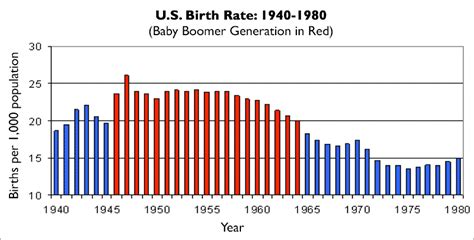
Now, I’m all for bashing the goddamn Boomers, but let’s be fair (since it matters for historical analysis). There’s a common misconception about the Baby Boom. Here, see if you can spot it:
Did you see it? Look closer, and you’ll see that while 1947(-ish) appears to be the peak year in terms of total births, the vast majority of what we call “Boomers” were born after 1950. Let’s do some simple math. The very oldest Boomers were born in 1946. The Summer of Love was 1967. Even if we assume the Summer of Love came out of nowhere — which is impossible, of course, any movement that large had antecedents going back years, probably decades, but let’s assume — that means that any “Boomers” participating were, at most, barely 22 years old. They were just barely 24 when Woodstock came around. Granted that the youngest are the dumbest, and thus can have outsize influence, they still can’t have been largely, let alone solely, responsible for the idiocy of the hippies.
That’s all on the older crowd, the so-called “Silent Generation” — the ones who were old enough to be aware of World War II, but unable to participate directly.
It’s easy to verify. The Port Huron Statement, the founding document of the New Left, was penned by coddled college kids in 1962 — meaning, by kids born, at latest, in about 1942 (its principal author, Tom Hayden, was born in 1939). Here are the Chicago Seven and their dates of birth: Abbie Hoffman (1936), Jerry Rubin (1938), David Dellinger (1915!), Hayden, Rennie Davis (1941),John Froines (1939), and Lee Weiner (1939).
Hoffman, especially, bears scrutiny. Though he’s best remembered as a Yippie — that is, the founder of an ostentatiously youth-oriented movement — he was 31 at its founding. Don’t trust anyone over thirty, right?
1936 to 1946 is only a decade, but it’s crucial. A kid born in 1936 would have vivid memories of World War II and its immediate aftermath — fathers, uncles, and older brothers (and, in more than a few cases, aunts and older sisters) coming home from the service. A kid born in 1946 would have a completely different experience — ask any combat veteran about the first year or two back in the world, versus being home for a decade. Those guys — the kids who saw firsthand the angry young strangers they were supposed to call “Dad” — were the ones who did the real damage in The Sixties(TM), just as it was the almost-but-not-quite frontsoldaten who did the real damage in the Third Reich.
With me? Now hang on to your hats, because here’s where it gets pretty meta: It was the “Silent Generation,” not the Boomers, who did the real damage in The Sixties(TM). That is, the guys who juuuust missed the giant social upheaval that was World War II. The Boomers have done all the damage since The Sixties(TM).
That — The Sixties(TM), which is why I’m using that obnoxious (TM) — is the great social upheaval they juuuust missed. [These people] aren’t old fossils from the flower power years, though many of those fossils are still alive and kicking (including four of the Chicago Seven: Hayden, Davis, Froines, and Weiner). Has anyone heard from Billy Ayers lately? How about Noam Chomsky (born 1928)? I’m sure they have plenty to say … but nobody cares.
It’s not retreads from The Sixties(TM) out there doing this stuff. It’s the people who wish they’d been around for the Summer of Love that are doing it. It’s the people who just know they would’ve ended the Vietnam War, if only they hadn’t been in junior high at the time. This is their Woodstock, not least because they only heard about the original when they arrived for freshman orientation in 1976.
Severian, “Talkin’ ’bout My Generation!”, Rotten Chestnuts, 2020-06-11.