
The Korean War by Indy Neidell
Published 14 Jul 2026In Chicago, the US Republican Party Convention comes to its end and they have chosen Dwight “Ike” Eisenhower as their Presidential Candidate. Part of the official platform is ending the Korean War. The war continues, of course, with a new UN operation designed to take prisoners, massive aerial bombing of Pyongyang, and the build up of the South Korean Army — the ROKA — to one day hopefully take over from the UN forces.
July 15, 2026
The Korean War Week 108 – The Republican Candidate – July 14th, 1952
Comments Off on The Korean War Week 108 – The Republican Candidate – July 14th, 1952
July 8, 2026
The Korean War Week 107 – America on Strike! – July 7, 1952
The Korean War by Indy Neidell
Published 7 Jul 2026The US Steelworkers Union strike enters its second month this week with no end in sight and the lack of steel production is affecting the war, worsening what is already an artillery shell crisis. President Harry Truman even considers taking over the steel industry to salvage the war effort. In South Korea, the constitution is amended to allow direct popular Presidential elections rather than the President being chosen by the National Assembly and in Chicago, at the end of the week the US Republican Party Convention begins, with Douglas MacArthur giving the keynote address.
00:00 Intro
00:39 Recap
01:09 Local SK News
03:22 Bombing the Power Plants
05:24 Artillery Crisis and Steelworkers Strike
09:53 Republican Convention Begins
13:46 Summary
13:59 Conclusion
Comments Off on The Korean War Week 107 – America on Strike! – July 7, 1952
July 1, 2026
The Korean War Week 106 – The Battle of Old Baldy – June 30, 1952
The Korean War by Indy Neidell
Published 30 Jun 2026On the ground, the fight for the hilltop they call “Old Baldy” really heats up this week, and it’s a bloody one. In the air, the bombing campaign to destroy the North Korean hydro-electrical complex continues, and the Suiho dam, one of the world’s largest, is put out of action and the power is out across much of the country.
00:00 Intro
00:45 Recap
01:14 Suiho Dam
05:22 Old Baldy
09:04 Army Budgets
14:29 Planning a coup?
16:08 Summary
16:22 Conclusion
17:10 Call to Action
Comments Off on The Korean War Week 106 – The Battle of Old Baldy – June 30, 1952
June 24, 2026
The Korean War Week 105 – Destroy Suiho Dam! – June 23, 1952
The Korean War by Indy Neidell
Published 23 Jun 2026Since the beginning of the war UN air power has studiously avoided hitting North Korea’s hydro-electric complex, since the power the dams provide is mainly for civilian use, but that changes this week! Meanwhile on the ground, the focus has turned to capturing Communist POWs for information, but that task has suddenly proved impossible now that the UN POW camps are firmly back in UN control, and it seems the Communists now prefer even death to capture.
00:00 Intro
00:29 Recap
00:59 Taking Prisoners
03:18 The Shropshires
05:54 Ammunition Shortage
08:41 Targeting Power Plants
14:55 Summary
15:10 Conclusion
15:58 Call to Action
Comments Off on The Korean War Week 105 – Destroy Suiho Dam! – June 23, 1952
June 17, 2026
The Korean War Week 104 – Order Restored at Koje-do – June 16, 1952
The Korean War by Indy Neidell
Published 16 Jun 2026The saga of Koje-Do POW camp comes to its end this week after Bull Boatner’s troops crack down hard and finally take full control there. Operation Counter continues with fighting for Hill Eerie, and South Korean President Syngman Rhee is stirring up so much trouble that the US is considering intervening in South Korean politics to stop him.
00:00 Intro
00:40 Recap
01:11 Operation Counter
03:31 The Chinese Account
05:22 Koje-Do
10:46 Rhee Again
12:50 US Presidential Election
15:58 Summary
16:25 Conclusion
18:13 Call to Action
Comments Off on The Korean War Week 104 – Order Restored at Koje-do – June 16, 1952
June 10, 2026
The Korean War Week 103 – The Outpost War – June 9, 1952
The Korean War by Indy Neidell
Published 9 Jun 2026The US 45th Division launches Operation Counter in the field this week, to take some enemy outposts, Bull Boatner finishes his plans for his operation to take total control at Koje-Do POW Camp, and in the US, the Presidential primary season finishes, though it’s still anybody’s guess who the actual Democratic and Republican candidates will be.
00:00 Intro
01:21 Recap
01:52 Primary Season
05:18 Operation Counter
09:20 Communist Artillery
12:09 Boatner
20:10 Summary
20:20 Conclusion
Comments Off on The Korean War Week 103 – The Outpost War – June 9, 1952
June 3, 2026
The Korean War Week 102 – American Bioweapons on Korean Soil? – June 2, 1952
The Korean War by Indy Neidell
Published 2 Jun 2026The Chinese continue their campaign of accusing the US of practicing germ warfare in North Korea and Manchuria. Meanwhile in South Korea, Syngman Rhee has declared martial law in Pusan as part of his campaign to remain in power.
00:00 Intro
00:50 Recap
01:23 Germ Warfare Charges
11:17 Bull Boatner
15:34 Holding POWs
17:58 Summary
18:13 Conclusion
19:21 Call to Action
Comments Off on The Korean War Week 102 – American Bioweapons on Korean Soil? – June 2, 1952
May 27, 2026
The Korean War Week 101 – Another Week, Another POW Riot – May 26, 1952
The Korean War by Indy Neidell
Published 26 May 2026In the wake of the kidnapping of the Koje-Do POW camp commandant, UN Commander Mark Clark is busy really working on expanding security at all the POW camps in Korea and gaining total internal control of them. However, the damage done to the UN’s global reputation by the whole incident is considerable, and at the negotiating table the Communists denounce the UN and UN Chief Delegate Turner Joy leaves his post to return to the states. The war in the field goes on as always, with the Philippine Battalion Combat Team seeing success in the field.
Comments Off on The Korean War Week 101 – Another Week, Another POW Riot – May 26, 1952
May 20, 2026
The Korean War Week 100: Mark Clark in Command – May 19, 1952
The Korean War by Indy Neidell
Published 19 May 2026Mark Clark is the new UN Commander and will run the war in Korea, replacing Matt Ridgway, who leaves for Europe to take over NATO Command. The Koje-Do POW camp situation is resolved, but is a black eye for the UN, as are the allegations that the US has been practicing germ warfare in Korea and Manchuria, backed up by “confessions” from captured American airmen.
00:00 Intro
01:13 Recap
01:29 Demand and Response
05:35 What Went Wrong at Koje-Do?
12:06 Germ Warfare?
13:55 Mark Clark
15:45 ROK and Ammunition
19:53 Philippine Raids
21:16 Summary
21:28 Conclusion
22:09 Call to Action
Comments Off on The Korean War Week 100: Mark Clark in Command – May 19, 1952
May 13, 2026
The Korean War Week 99: The War’s Most Humiliating Crisis – May 12, 1952
The Korean War by Indy Neidell
Published 12 May 2026The world turns it’s eyes to the UN POW camp at Koje-Do island when the Communist POWs in one of the compounds kidnap the Camp Commandant, an American General no less, and issue demands that they say must be met before his release. Can this be settled diplomatically, or is the army going in in force?
00:00 Intro
00:54 General Dodd Kidnapped
04:09 Koje-Do Phase Two
07:04 Dodd on Trial
13:18 The POWs Demands
18:30 Summary
19:03 Conclusion
19:54 Call to Action
Comments Off on The Korean War Week 99: The War’s Most Humiliating Crisis – May 12, 1952
May 6, 2026
The Korean War Week 98: No Peace at Panmunjom – May 5, 1952
The Korean War by Indy Neidell
Published 5 May 2026At the end of last week the UN presented a peace package proposal to the Communists at the peace talks, but that package has been rejected. The only issue still left to clear up is that of POW repatriation, but that seems insurmountable, at least for the time being. In the field, there are ambushes, skirmishes, and night patrols, but still no larger scale actions, and the temperature at Koje-Do POW camp continues to rise and rise, perhaps nearing a boiling point.
00:00 Intro
01:34 Recap
02:09 The Package Rejected
03:58 Night Patrols
08:32 The Fighting
14:13 Koje-Do
15:58 Summary
16:15 Conclusion
Comments Off on The Korean War Week 98: No Peace at Panmunjom – May 5, 1952
April 29, 2026
The Korean War Week 97: A Peace Proposal Package – April 28, 1952
The Korean War by Indy Neidell
Published 28 Apr 2026There is what should be major news this week as the UN gives the Communists a peace proposal package at long last that addresses the remaining three issues to solve. It does not seem that it will be accepted by the Communist side, though, with the only sticking point being the issue of POW repatriation. There’s also still more unrest and protest at Koje-Do POW camp. And it looks like we’ll be getting a new UN forces commander, since Matt Ridgway will soon head to Europe to take over NATO command there.
00:00 Intro
00:24 Recap
00:56 Truman and Ike
02:34 April 28th
07:14 POW Rations
10:37 Notes
11:05 Summary
11:20 Conclusion
Comments Off on The Korean War Week 97: A Peace Proposal Package – April 28, 1952
April 26, 2026
South Korea’s switch from an exporting heavyweight to a cultural juggernaut
In the latest SHuSH newsletter, Kenneth Whyte looks at the importance of a South Korean government report to changing the structure of the South Korean economy and making the country far more visible culturally on the world stage:
South Korea, in the latter half of the twentieth century, was building its economy almost entirely by exporting manufactured goods, everything from home electronics to ships to automobiles. That changed, as the story goes, when the country’s Presidential Advisory Board on Science and Technology released a report on digital technology in May 1994. It noted that a single Hollywood film, Jurassic Park, with its computer-generated dinosaurs, generated the same amount of foreign sales as 1.5 million Hyundai cars. The darling of Korean industry, Hyundai was exporting 640,000 cars a year in 1994. So one film was worth more than two years of heavy industrial production requiring enormous plant, equipment, capital investment.
The report stunned Koreans — “literally sent shock waves across the country”, writes Doobo Shim, a Seoul-based professor of media and communication. At the time, culture and entertainment were viewed as ephemeral and unlikely to contribute to Korea’s core mission of “improving the material conditions of the people”. The country decided it needed to change its game in order to thrive in the twenty-first century economy.
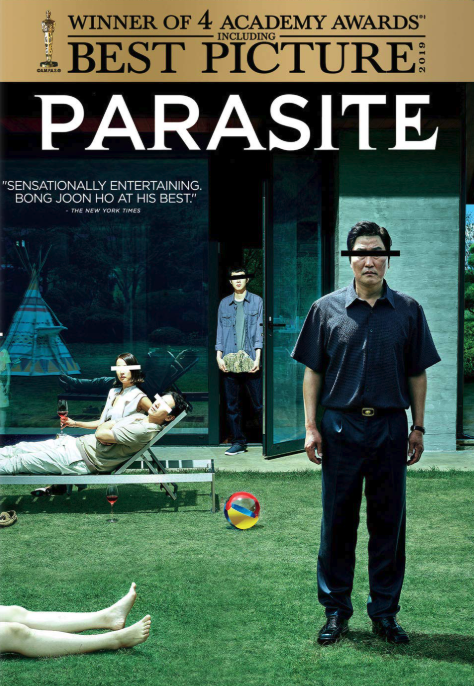
It wasn’t a straight line from the Presidential Advisory Report to Parasite, Squid Game, BTS, Blackpink, and Han Kang’s Nobel prize, but it’s straighter than you might think. Seoul is now a top-five world cultural center, and arguably top two if we’re talking pop culture and anything that appeals to under-thirties. How it happened tells us a great deal about Canada’s relative failure to develop home-grown cultural and entertainment industries.
The Presidential Advisory Board report alone did not alter Korea’s strategy. The country was starting from way behind. First came democratic reforms and media deregulation. That birthed new commercial TV channels and a variety of independent publications. Now with an independent (from government) domestic media sector, Korea tried to protect it by limiting the amount of foreign cultural product in its market. That didn’t work. In 1993, 90 of the top 100 video rentals in the country were from Hollywood; only five were domestic. Sound familiar, Canada?
Protection wasn’t going to work, anyway. Another factor at play was the Uruguay Round, an international accord negotiated between 1986-1994 that decisively liberalized the global economy, forcing all 123 signatory countries to open their markets for a vast range of goods and services, including communications services and entertainment product. It was clear to Korea that efforts to protect heritage and culture by shutting out the world had no future. It needed to upgrade its efforts in the cultural sphere if it wanted to avoid being swamped by content from multinational companies, and not just American ones. Satellite television services out of Japan and Hong Kong were already making inroads in Korea.
Another thing: Korea had noticed that Japan, its nearest rival in the home electronics sector, was making investments in content. Sony had bought Columbia pictures and CBS records. It was the nineties, the age of synergy, or vertical integration. Companies making devices — video players, portable music players — also wanted to own what played on them. Korean firms such as Samsung and Daewoo, makers of TVs and VCRs, felt a need to be vertically integrated, too.
So the Presidential Advisory Report landed on fertile ground. Korean businesses felt an imperative to pay attention to content. The Korean government felt itself under siege from foreign cultural and entertainment product. “Gone are the days”, said one expert interviewed in the newspaper Dong-A Ilbo, “when the government could appeal to the people to watch only Korean programs out of patriotism”.
All that notwithstanding, the report mostly resonated because it presented culture as an opportunity. It asked Koreans to recognize the potential of arts and entertainment to improve the material conditions of the people. Instead of resisting the emerging global marketplace, the power of multinational corporations and platforms, and the free movement of talent, it needed to master this new system, compete commercially, and take Korean culture to the world.
April 22, 2026
The Korean War Week 96: Korean Marines Leapfrog the Han – April 21, 1952
The Korean War by Indy Neidell
Published 21 Apr 2026UN Command completes its screening of the 170,000 military and civilian POWs they hold to see how many of them would violently resist repatriation, and it turns out it’s most of them. The Communists are furious. This cannot be good for the armistice negotiations. We also take a look at the defense possibilities the Marines have in their new positions and which Chinese forces oppose them.
00:00 Intro
00:55 Recap
01:32 POW Screening
07:26 The Marines
08:56 The Chinese
13:37 Summary
13:53 Conclusion
Comments Off on The Korean War Week 96: Korean Marines Leapfrog the Han – April 21, 1952
April 15, 2026
The Korean War Week 95: TWO THIRDS of POWs Refuse Repatriation – April 14, 1952
The Korean War by Indy Neidell
Published 14 Apr 2026US Marines begin to make contact with their Communist Chinese adversaries in their new position in the west of Korea, but a more insidious issue is beginning to threaten the UN war effort: dwindling stockpiles of ammunition. In fact, two-thirds of the US army’s procurement budget is going exclusively to ammunition, but production lag — the time between paying for something and actually getting it — is putting Eighth Army operations at risk. Elsewhere, POW screening begins, with results that might throw a wrench into the painstakingly negotiated armistice terms back at Panmunjom.
00:00 Hook
00:59 Recap
01:51 POW Screening
05:49 Ammunition
10:46 Marine Operations
14:07 Summary
14:57 Conclusion
(more…)
Comments Off on The Korean War Week 95: TWO THIRDS of POWs Refuse Repatriation – April 14, 1952


