Quotulatiousness

May 30, 2019

Doug Ford versus the Ontario neo-prohibitionists, progressive temperance snobs and other social control freaks

Filed under: Business, Cancon, Law — Tags: , , , , — Nicholas @ 03:00

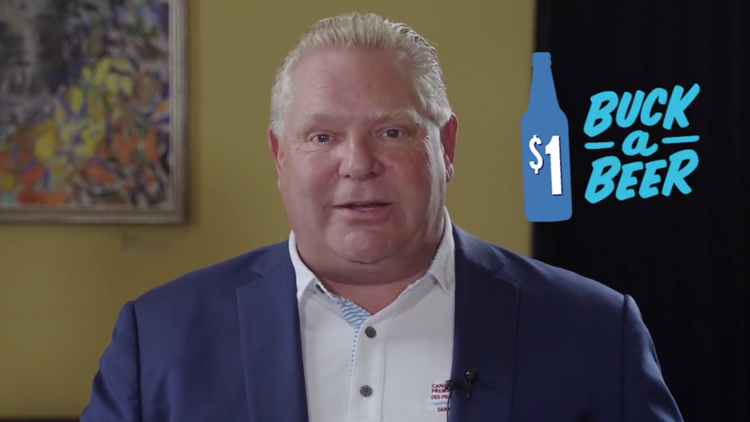
During the last Ontario election, it was common to disparage Doug Ford as being “Trump-like”, and now that he’s the Premier, it turns out to be true in at least one aspect: Ford does have a Trump-like ability to induce a form of hysteria in his opponents. Ford’s crusade to liberalize Ontario’s alcohol market is a case in point. In the Toronto Star, all the old arguments against liberalization — usually portraying Alberta’s long-since liberalized market as a dystopian hell-hole of alcohol-shattered lives — are being dragged out again:

The key is that the Ford team doesn’t actually care about wine that will be sold in corner stores and more supermarkets. It’s a sop to tourists, which seems reasonable.

No, it cares about beer because beer is a social marker, a shorthand. Wine is considered urban but buck-a-beer is rural/semi-urban. Men drink it. Men with beerbellies drink it. To a government mysteriously seeking a vote that it already has, drinking beer is a signal that a man is a regular guy. But Ford is not a regular guy. He doesn’t drink. He’s not anxious. He’s not renting.

It is very much a problem that any government in power would believe this of the regular guy vote. Alcohol causes hospitalization, crime and early death. It destroys families and jobs, and eventually its victims drink to block out what they lost by drinking.

[…]

They may not know it, they may be doing it instinctively, but it is still madness. Alcoholics are costly to treat and they suffer terribly. Courting their vote comes courtesy of a report by a former health minister in Alberta where booze is sold in private liquor stores.

The problem, as Albertans know, is you’re too afraid to buy it. These stores are often shabby places that are magnets for violence. Watch out, Premier Ford, it’s Ontario and there’s going to be NIMBY.

I am aware that I’m writing like a preacher. Preach on, sister. Anyone over 30 learns to distinguish between people who drink for pleasure and those who cannot cope with it. We are horrified. We offer help.

Back in 2013, Colby Cosh neatly summarized the Ontario neo-prohibitionist rhetoric:

Albertans find it instructive to watch Ontario politicians debate the privatization of liquor retailing, which Klein’s cabinet bulldog, Dr. Stephen West, executed almost overnight in 1993. It was perhaps the representative policy move of the Klein era, the best symbol of his approach to government. Today one will hear Ontarians telling themselves the most bizarre things about Alberta in order to support the idiot belief that booze is a natural monopoly. “You can’t even get red wine there! All they have in the stores is various flavours of corn mash and antifreeze! The streets resound with the white canes of the blinded!” Talk to the saner residents and you rapidly discover the real root of Ontarians’ positive feeling for the LCBO, which is esthetic. It’s just nicer to buy a handle of Maker’s Mark from someone who makes a union wage and has a vague halo of officialdom. You leave the shop feeling okay about your vice.

Klein was liked by Albertans, not because of some mythic popular touch, but because there wasn’t an ounce of tolerance for this sort of thing in him. Alcohol was something he understood very well. (Too well.) People do not need liquor to be flogged to them any harder than the manufacturers already do; put a man in prison and he will make the stuff in the toilet starting on day two. What the old ALCB was really marketing to the public, and what the LCBO markets now, was itself — its own role as social protector/moral approver/tastemaker. Klein identified that part of the system as a parasitic growth, a vestige with no function but its own preservation; and he had West ectomize it with the swiftness of a medieval barber.
April 24, 2019

Opponents claim Doug Ford is using booze liberalization as a distraction … if so, it’s working well

Filed under: Business, Cancon, Law, Media — Tags: , , — Nicholas @ 03:00

Chris Selley documents just how Ontario Premier Doug Ford’s opponents are unable to ignore the (personally teetotal) Ford’s alcohol-related proposals:

A peculiar affliction has broken out among Ontarians who think their relatively new government is devoting far too much time and attention to liberalizing alcohol laws: They can’t stop talking about it.

I don’t mean people with entirely fair public health concerns (though I think those concerns are pretty marginal, given the modest changes). And I don’t mean the pearl-clutching hordes who think allowing alcohol consumption in parks will lead to mayhem, no matter how civilized the results might demonstrably be elsewhere. (That peculiarly Ontarian crew has certainly made itself heard, though, and it seems to include a surprising number of progressive millennials.)

I mean people who didn’t have particularly strong views one way or the other about 9 a.m. mimosas, tailgate parties, drinking in parks or buying beer at the corner store, or might even have supported some legislative relaxation, but who now can’t stop railing against them even as they deplore the government’s actions on objectively more serious files.

[…]

On letters and op-ed pages, you’ll find the topic of booze popping up in all sorts of places it objectively doesn’t belong — not if one doesn’t want to be distracted, anyway. It seems to lead people down all sorts of strange blind alleys. One Toronto Star columnist noted that neither Premier Doug Ford nor Finance Minister Vic Fedeli will “touch a drop themselves,” but that “they are making it easier for you to access just in time for breakfast, happy hour, or a nightcap.” So what? Why would anyone want the premier’s or finance minister’s personal tastes and preferences influencing public policy?

Another Star columnist spent seven paragraphs sneering at the idea of tailgating in Ontario before declaring herself perfectly fine with the idea. “But,” she asked, “is tailgating what Ontario needs?” Is that the standard, then? Government shall only allow the masses such entertainments as they “need”?

Using booze as a “distraction” is not a new tactic. It became a running joke during Kathleen Wynne’s tenure that whenever things were going (especially) badly for her government, she would pop up to announce another batch of supermarkets authorized to sell beer and cider (and sometimes, though much more rarely, wine!).

April 12, 2019

Premier Ford “could go down in history as the premier who landed downtown Torontonians their white whale subway”

Filed under: Cancon, Government, Railways — Tags: , , , , — Nicholas @ 03:00

Chris Selley finds himself surprised at how sane Doug Ford’s GTA subway-and-light-rail expansion plans sound:

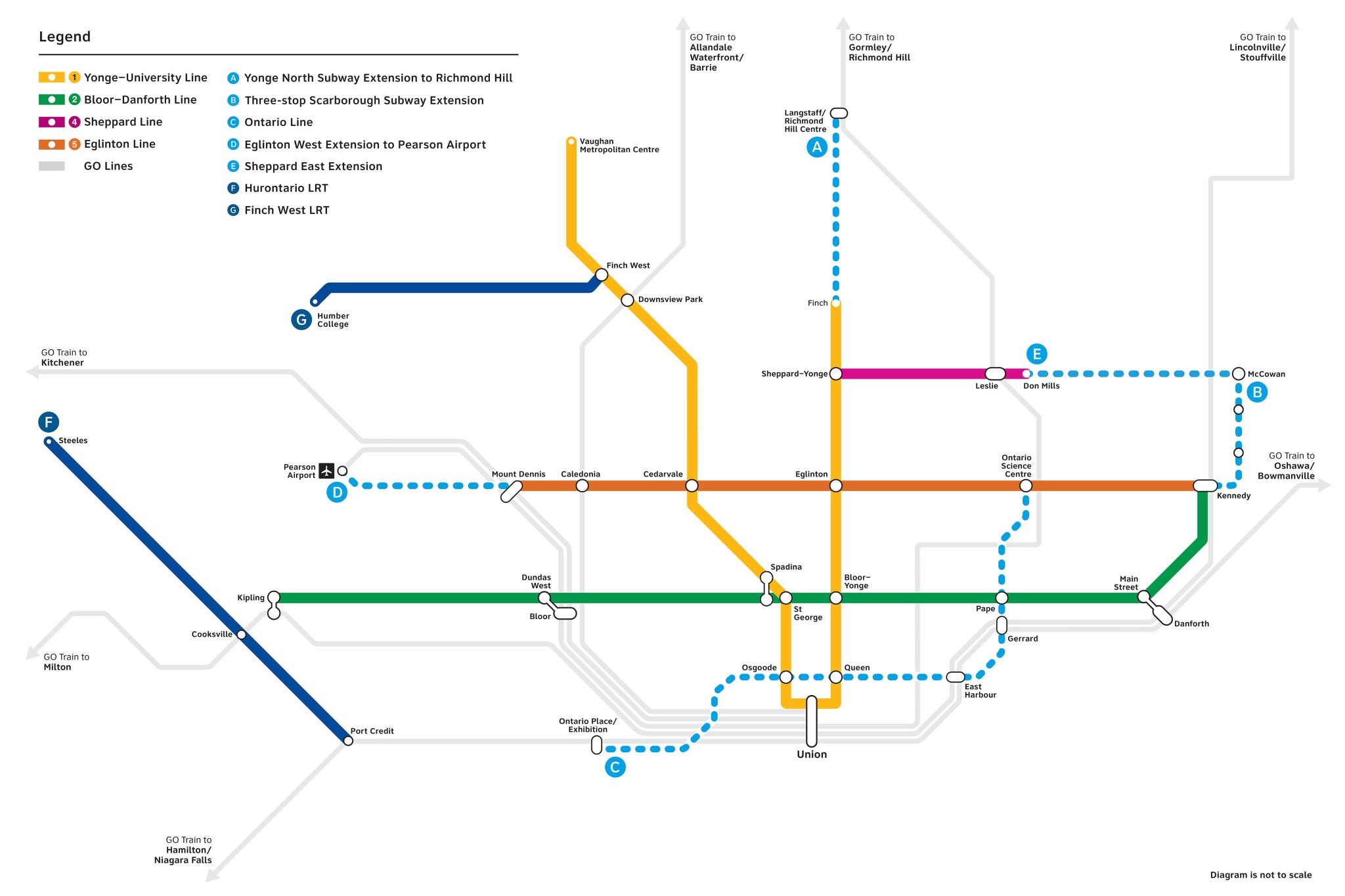
Click map to embiggenate

I’ll say this much at least about Premier Doug Ford’s big $28.5 billion transit announcement on Wednesday morning ($11.2 billion if you only count provincial money): I never thought I would see him so enthusiastically tout a much-needed transit line to and through enemy territory in downtown Toronto. Faint praise, perhaps, but when Ford said he wanted to upload Toronto’s subways to the province, I never imagined a plan even half this superficially sane.

Crowding on the Yonge line at Bloor Street presents “a clear health and safety problem,” Ford told reporters in Etobicoke, “and without action it is only going to get worse.” Thus his number-one transit priority is the same as everyone else’s: the Downtown Relief Line, which the PC government has wisely redubbed the Ontario Line.

The most basic and essential piece of that line, which Toronto city staff are already working on, would connect City Hall with Pape station on Danforth. Passengers who live in the east end and work downtown could thus avoid the bottleneck at Yonge and Bloor, relieving the alarming rush hour situation on platforms there and — assuming new TTC signalling technology works as promised — freeing up southbound capacity for folks from York Region: Ford vows to extend the Yonge line to Richmond Hill (cost: $5.6 billion).

The order here matters more than the timeline (2027, supposedly). It is undisputed that the DRL has to happen before the extension. That’s basic knowledge. But Ford is capable of ignoring or fouling up very basic knowledge when stumping for subways. This is a man who nearly promised Pickering one. On Wednesday, he sounded remarkably well briefed.

Ford’s Ontario Line wouldn’t stop at Danforth and City Hall, either. In the east it would head north across the Don Valley, through Thorncliffe Park and up to Eglinton. This idea is nearly as old as the DRL itself. And it would jog southwest from downtown to Ontario Place — a novelty, but again, not crazy. Total cost for the line: an at least semi-plausible $11.2 billion.

April 11, 2019

Ontario government unveils massive subway and light rail expansion for the GTA

Filed under: Cancon, Government, Railways — Tags: , , , , , — Nicholas @ 05:00

Doug Ford has always been a fan of subways, but now that he’s the Premier of Ontario, he’s getting to indulge his subway fetish in a vast expansion to heavy and light rail transit in and around Toronto:

Click map to embiggenate

The plans include:

  • An expanded downtown relief line, now to be called the Ontario line, running from Ontario Place on the lakeshore through downtown along Queen Street then crossing the Bloor-Danforth subway line at Pape station and running north to the Ontario Science Centre on the Eglinton Crosstown LRT line. This line is optimistically to be ready for opening by 2027.
  • The existing Sheppard Line will be extended east from Don Mills to McCowan, where it will intersect with the planned Scarborough subway extension (now to include three stops, not just the one originally announced, and to be completed by 2030).
  • The Yonge-University line will be extended north from current terminus at Finch to the Richmond Hill Centre with a hoped-for completion date soon after the Ontario line.
  • The Eglinton Crosstown line will be extended west to Pearson airport, with a target completion date of 2031.
  • New light rail lines will be created between Finch West on the Yonge-University subway to Humber College, and along Hurontario Street in Mississauga from Port Credit on the lakeshore to Steeles Avenue in Brampton.

To accomplish all of this will require financial contributions from the City of Toronto, York Region, and the federal government, as the province is only funding just over one third ($11.2 billion) of the estimated $28 billion price tag.

Of course, it’s a Doug Ford plan, so none of the usual suspects in Toronto are happy about any of it.

November 22, 2018

The apparently unexpected backlash over cancelling a French-language university in Ontario

Filed under: Cancon, Education, Politics — Tags: , , , , — Nicholas @ 03:00

I suspect a lot of the uproar is actually just target-of-opportunity stuff to justify criticism of Ontario premier Doug Ford. Chris Selley points out that until the announcement, there wasn’t actually a lot of support for the new university among French-speaking Ontarians:

You would never know it since Thursday, when the Ontario government cancelled plans to open a new French-language university in Toronto, but those plans were not universally beloved. A lot of people hated the location. In an op-ed in Le Droit, University of Ottawa political scientist François Charbonneau complained it was being built to serve future francophone immigrants, not proper Franco-Ontarians in a community where they’ve been established for generations.

He called it “a historic mistake that perfectly illustrates what it means to be a minority: to have no power over one’s own destiny and to be dependent on ideological rantings with no democratic legitimacy.”

Higher-education consultant Alex Usher was among many who dismissed enrollment projections for the university as “fantasy.” Writing on the Higher Education Strategies blog, Usher called a recent survey of francophone Ontario high school students the “worst piece of social science I have ever seen.” It found lots of interest in attending the new university, but didn’t bother asking about their interest in existing bilingual alternatives like Laurentian University and the U of O.

To language hawks, bilingualism is the enemy: French always loses out in a budget crunch, and it does nothing to advance the right to live one’s life solely in French. Trouble is, very few students at French-language Ontario high schools are remotely interested in living their lives solely in French.

These are all things Premier Doug Ford and his ministers might have mentioned if they hoped to leave an impression other than that Ontario francophones just aren’t worth the money. They might wisely have chosen not to axe the French Language Commissioner in the same fiscal update, transferring its complaint-resolution powers to the ombudsman but orphaning its advocacy mandate. Finance minister Vic Fedeli hasn’t even said how much of its $1.2 million budget he hopes to recoup.

But they did what they did, all at once, and they said it was all about saving money. I suspect the whirlwind they reaped came as a surprise.

Good heavens, though, what wind.

October 31, 2018

Premier Ford’s promise to lower electricity rates in Ontario

Filed under: Business, Cancon, Government — Tags: , , , , — Nicholas @ 05:00

In the Financial Post, Lawrence Solomon says Doug Ford can’t risk abandoning his promises about Ontario electricity costs, despite his cabinet’s worries about provincial reputation damage:

Ford has every reason to return the power system to some semblance of economic sanity. Ontario is now burdened by some of the highest power rates of any jurisdiction in North America, throwing households into energy poverty and forcing industries to close shop or move to the U.S. The biggest reason by far for the power sector’s dysfunction is its renewables, which account for just seven per cent of Ontario’s electricity output but consume 40 per cent of the above-market fees consumers are forced to provide. Cancelling those contracts would lower residential rates by a whopping 24 per cent, making good on Ford’s promise to aid consumers.

[…]

To date, Ford has stopped renewable developments that haven’t been completed, which will prevent things from getting worse, but he has failed to tear up the egregious contracts of completed developments, which will prevent things from getting better. Based on conversations that I and others have had with government officials, it appears that Ford is inclined to cancel the contracts and honour his signature promise, but he is being thwarted by cabinet colleagues who fear that Ontario’s reputation will take a hit in the business community if they don’t play nice.

Except, there’s nothing nice about betraying a promise to the voters who democratically put you in power in order to avoid pressure from lobby groups who think governments are entitled to hand out sweetheart deals to their favoured cronies. There’s also nothing democratic about it. It is an axiom of parliamentary government that “no government can bind another.”

Canadian governments, including Ontario governments, have in the past torn up odious contracts, including those in the energy sector. When they did, upon passing binding legislation, they were able to reset the terms, offering as little or as much compensation as they wished. Outraged business lobbies’ claims that the reputation of governments would be affected were not borne out. Moreover, such rightings of political wrongs serve the interest of small government and free markets, because businesses have always understood that there’s an inherent risk in contracting with governments that are able to unilaterally rewrite contracts. To overcome that inherent risk, businesses add a risk premium when getting in bed with government, helping to explain the rich contracts the renewables developers demanded. That risk premium acts to make business-to-business dealings more economic than business-to-government dealings.

September 29, 2018

The Ontario government’s amazingly sensible approach to legal cannabis

Filed under: Business, Cancon, Law, Liberty — Tags: , , , , — Nicholas @ 03:00

Chris Selley expresses what a lot of surprised people must be feeling after Premier Doug Ford’s government introduced startlingly mature and sensible rules for the distribution and sale of cannabis products in the province after the federal government’s legalization is enacted:

The Ontario government tabled its cannabis retail framework in the legislature on Thursday, and it only further repudiates the Frightened Communist model envisioned by the Liberals. The government will sell pot online, as before, and will maintain a monopoly on wholesaling. But the rest will be up to the private sector, under the control of the Alcohol and Gaming Commission. As it stands, there won’t even be a cap on the number of licences; a government official said Thursday they expect 500 to 1,000 applications right off the bat.

In response, OPSEU president Smokey Thomas beamed out a furious press release on behalf of his spurned members — er, sorry, on behalf of Ontario’s “municipalities and communities.”

“Unlimited stores and unlimited places to smoke will cause unlimited problems,” Thomas averred. “It’s outrageous. We’re going to become the wild west of cannabis and Sheriff Doug Ford is going to skip town, leaving communities and municipalities holding the dime bag.”

Thomas predicted Premier Ford would hand out retail pot licences to “Conservative insiders” and “corporate donors.” (Corporate donations are illegal.) He accused Ford of funnelling what by rights should be public profits into “private pockets.”

“If Ontario’s finances are truly as bad as Ford wants us to believe, why is he giving away the millions, maybe even billions, in revenue we’d get if cannabis sales were public?” he asked.

Does the government make money on cigarettes? On alcohol sold in bars and restaurants, at privately run LCBO agency stores and, of late, in supermarkets? Of course it does. Scads of it.

So it’s all quite ridiculous, as OPSEU press releases tend to be. But Thomas is not wrong when he argues the new approach is remarkably permissive. Perhaps most notably, whereas the Liberals’ proposed rules banned using marijuana in public, the PCs’ would allow you to smoke or vape it anywhere you can tobacco (though not in cars or boats). But it’s far less permissive than one might expect in other ways as well.

September 21, 2018

Doug Ford is a bit like Trump in the way he gets his critics to froth and fizz on demand

Filed under: Cancon, Media, Politics — Tags: , , , , — Nicholas @ 03:00

For all the claims that Doug Ford would be “just like Trump”, they’re not all that similar, but one way the Ontario Premier does resemble the American President is the way that they both can send their opponents into rhetorical hysteria almost without effort:

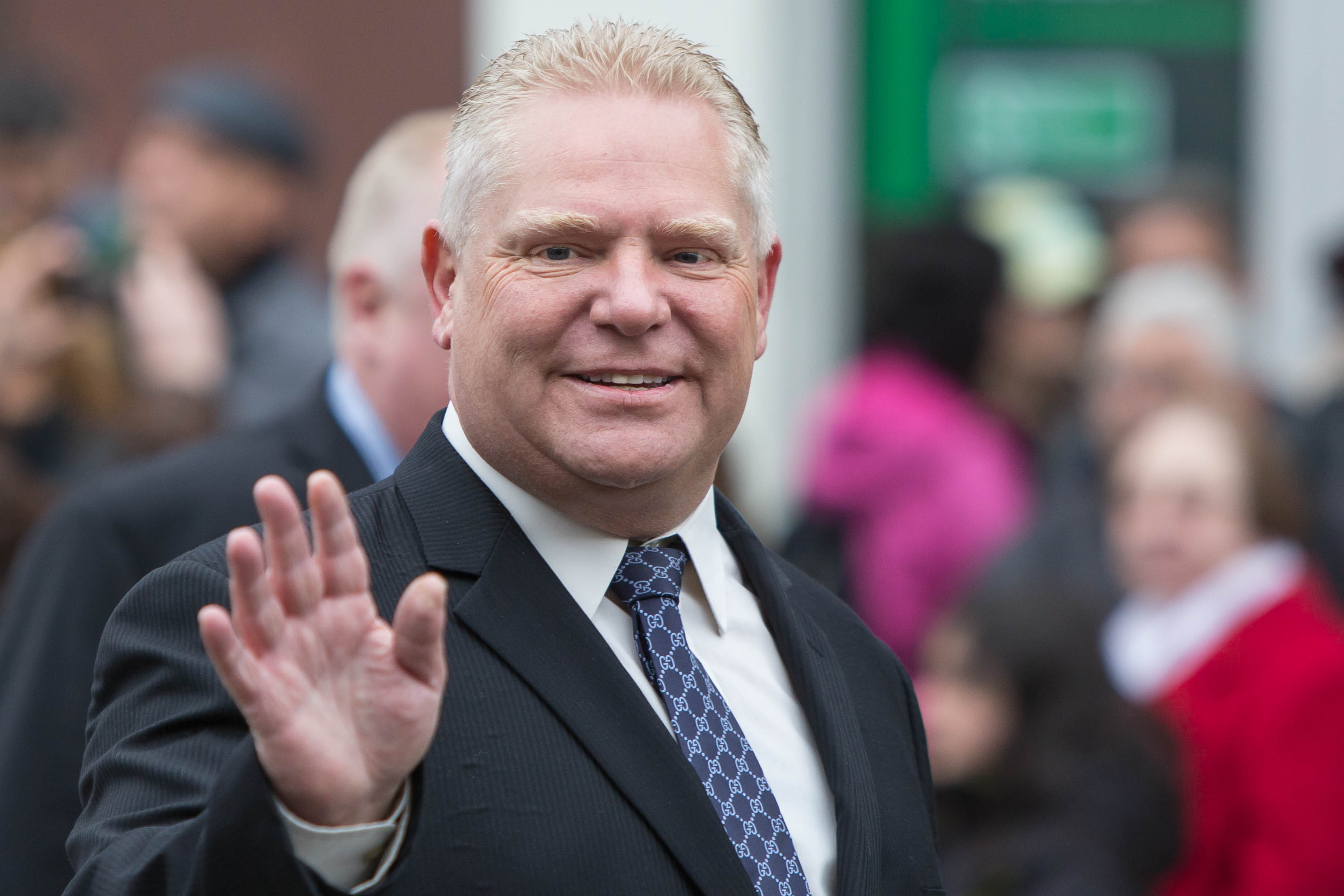
Doug Ford at the 2014 Good Friday procession in East York, Canada.

Photo via Wikimedia Commons.

As much as Ford’s government has violated political norms, we shouldn’t want the remedy to do likewise — whether it’s the feds invoking Disallowance (as a majority of Toronto city councillors voted to support) or the Lieutenant-Governor refusing Bill 31 Royal Assent (as requested Tuesday by various petitioners led by former lefty Toronto mayor John Sewell), or a judge undermining provincial authority over municipalities on grounds that collapse in higher courts.

So now, perhaps, Toronto can return to reality — or as close as you can get during an election campaign.

No, there was no magic brand of fit Mayor John Tory or hypothetical mayor Jennifer Keesmaat or anyone else could have pitched that would have stopped Ford in his tracks. Torontonians’ fits are a feature for Ford, not a bug. In defending Bill 5 he has repeatedly namechecked various left-leaning allegedly do-nothing councillors. Their apoplexy sustains him. In his book about Rob Ford, councillor John Filion quoted Doug Ford on his plans for Tory after losing the 2014 mayoral election: “He’s going to take off the sheets in bed at night and find my teeth wrapped around his nuts.”

Note that Chris Selley is careful to include the “allegedly” there … no need to invite lawsuits for the National Post.

And no, there is no real hope of relief in the ongoing appeals process over Bill 5. Even if the Supreme Court were to side with Belobaba, it would only repudiate the way in which the province wielded its powers — i.e., in the middle of an election — not the powers themselves. Had the government waited four years, or even legislated a two-year council term at 47 wards to be followed by an election at 25, it would have been on plenty-thick ice. It could easily re-legislate a 25-ward Toronto after such a ruling, and without using the notwithstanding clause.

Toronto politicians are destined to be Doug Ford’s favourite punching bag at least until they stop reacting so hysterically every time he so much as looks in their direction. He may not be a Twitter troll of the same mastery as Donald Trump, but he doesn’t appear to need social media to get his critics all panty-bunched.

Similarly, while there is no telling how much Ford might meddle in Toronto’s affairs in the coming years, at every step along the way he will make the idea of meddling in Toronto affairs more toxic for future non-Conservative governments. All provincial governments have screwed over Toronto now and again; as of this summer, screwing over Toronto is Something Doug Ford Does. And no Liberal or New Democrat wants to be like Doug Ford.

When things die down a bit, the opposition parties will have to take a break from denouncing Ford and explain what they’ll do in future to strengthen Toronto’s democracy: restore control over its political boundaries, provide more taxation powers, allow road tolling, whatever. It would be Pollyannaish to suggest Ford has caused a political awakening in Toronto, but he has certainly made it more attractive for the other parties to take Toronto more seriously, and concurrently much more risky for them to be seen reneging on such promises in future.

August 31, 2018

Farewell, buck-a-beer publicity stunt, we hardly knew ye

Filed under: Business, Cancon, Politics — Tags: , , , , — Nicholas @ 03:00

Chris Selley on the all-too-brief publicity stunt of cheaper beer for Ontario:

President’s Choice is ending its buck-a-beer promotion on Sept. 3, just days after it started: We get one week, one long weekend and then out of the pool, party’s over, back to class. PC-branded beer will rocket back up to $1.38 a bottle when you buy 24 at The Beer Store or $1.65 when you buy 12, which highlights just how steep — and presumably unsustainable — the discount really was. We shall see how long the two other participating breweries’ offers last, but they made it quite clear, as did PC, that this was a limited-time offer prompted by Doug Ford’s most shamelessly blunt populist pledge.

My goodness, though, what a commotion it will leave in its wake. Some brewers quite understandably took the opportunity to note the impact of aluminum tariffs on their bottom lines, to complain that Ford’s government was playing favourites by giving away expensive product placement in LCBO stores for $1 beer, and to note the government is actually raising taxes on beer.

Others, however, waxed utterly scandalized. “How about buck a pound of steak? Who would eat that?” asked one Toronto brewer who had perhaps not entirely thought through his rhetorical question. “We haven’t even given two thoughts about this,” Great Lakes Brewery’s communications manager, Troy Burtch, told the Toronto Star. “Why would anyone do this?” Burtch and Great Lakes have signalled their total uninterest by tweeting incessantly about it.

The Canadian Taxpayers’ Federation went after some of the affronted craft brewers for accepting taxpayer subsidies for their higher-end products. People on social media lined up for and against buck-a-beer, vowing to boycott the participants or those complaining about the program.

The whole thing was a dumb Ford Nation stunt, no question. But good grief. You can hardly blame the breweries, either for participating or for not: they were just trying to wring as much publicity as they could from the situation. No one is really any worse off, or at least not much. What we were really seeing among the chattering classes was a rerun-by-proxy of the June 6 election: to drink Ford’s swill was to vote Ford Nation; to boycott it was to stand bravely against their entire agenda.

August 14, 2018

Ontario embraces online sales for marijuana, with retail stores to follow in 2019

Filed under: Business, Cancon, Government, Liberty — Tags: , , , , — Nicholas @ 05:00

Chris Selley on the Ontario government’s surprisingly sensible approach to phasing in retail sales of cannabis over the next eight months:

Ontario’s Progressive Conservative government called a brief truce in its multi-front war with the federal Liberals on Monday to give one of Prime Minister Justin Trudeau’s signature policies a major boost: as had been widely rumoured, the Tories will scrap the previous Liberal government’s tentative public marijuana retail scheme and instead hand out licenses to the private sector.

How many licenses and what kinds of stores are just two of many unresolved details. The government says it will consult widely to determine how best to proceed, with a target opening date for licensed brick-and-mortar stores of April 1, 2019 (with publicly run online sales to commence in October). But it seems safe to hope the cap, if any, will be significantly higher than the previous government’s laughably timid 150.

Thanks to Toronto’s reluctantly laissez-faire approach to illegal storefront (nudge-wink) “medical” marijuana “dispensaries,” we know 150 might not even satisfy a free market in the country’s largest city. Trudeau has always said the goal of legalization was to smash the illegal market and plunk down a legal one in its place. The Ontario Liberals’ plan seemed almost tailor-made to fail in that endeavour.

There remains ample room for the new government to screw this up. But if it gets pricing and regulation and enforcement halfway right, the country’s most populous province should now be well placed to give legalization a good shot at achieving what proponents have always said it should — which is, basically, to make it like booze. Of course kids still get their hands on booze, but at least it’s a bit of a chore. And at least when kids get drunk, they’re not drinking moonshine.

The need to claim the retail market from the existing extra-legal networks will hinge on quality, availability and (especially) the prices that the province sets. Price it too high (pun unintentional), and the legal market will not take over distribution and sales from the black market. Provide poor quality and get the same results. Restrict sales too stringently, and watch the profits go back to the current dealers … who are not noted for their sensibilities about selling drugs to the under-aged.

In the meantime, it’s interesting to ponder why they’re going in this direction. Fedeli and Attorney-General Caroline Mulroney were at great pains Monday to stress their primary concern was the children.

“First and foremost, we want to protect our kids,” said Mulroney. “There will be no compromise, no expense spared, to ensure that our kids will be protected following the legalization of the drug.”

“Under no circumstances — none — will we tolerate anybody sharing, selling or otherwise providing cannabis to anybody under the age of 19,” said Mulroney. Fedeli vowed that even a single sale to a minor would void a retailer’s license.

Yet, let’s be honest, kids well under the age of 19 can already get cannabis and other illicit drugs — more so in urban and suburban areas, but it’s hard to imagine that legalizing cannabis for 19-plus customers somehow magically renders the under-19s uninterested in getting access, too.

July 20, 2018

“Trudeau becomes the first prime minister I’ve ever covered who has demoted himself”

Filed under: Cancon, Politics — Tags: , , — Nicholas @ 05:00

In Maclean’s, Paul Wells analyzes Prime Minister Justin Trudeau’s recent federal cabinet shuffle:

So much has changed, culminating — for now — with the burial of Ontario provincial Liberalism at the hands of Doug Ford. Alberta and Quebec could next fall to Jason Kenney and François Legault. Certainly that’s the way to bet it. Even normally sunshiny New Brunswick, Newfoundland and PEI are refusing to file carbon reduction plans in line with what Catherine McKenna expects.

So the cabinet Trudeau shuffled on Wednesday isn’t a pre-election cabinet, in the sense of one that’s sweet and shiny to attract distracted voters, so much as it’s a survive-until-the-election cabinet. If this cabinet were a movie, it’d be Walter Hill’s 1979 classic The Warriors. A bunch of street fighters, just trying to make it from the Bronx to Brooklyn in one piece. Doug Ford calling to them from an abandoned car, clinking empty bottles together. Or to use another, perhaps less obscure, movie analogy, it’s farewell to Hope and Hard Work, hello to Horse’s Head/ In Your Bed.

The stars of this partially-refurbished cabinet are two bad cops, in one case quite literally: Bill Blair and Dominic LeBlanc. Blair’s job on the border-crossing file isn’t only to get up Doug Ford’s nose, though that’s a handy bonus. It’s to do more or less what he did as the Liberals’ back-bench pilot of cannabis legalization: to steward a controversial file as humourlessly as humanly possible, to convey with every flinty word and steely grimace that the government is not even remotely interested in messing around.

It’s interesting that Ahmed Hussen, a personable and diligent minister who was also obviously appointed so he could incarnate Liberal branding of openness and diversity, keeps every part of the immigration file except those elements that scare some voters: the people walking across the border. Those parts have been assigned to Sgt. Rock over here.

LeBlanc, an irrepressible rogue whose dad was Pierre Trudeau’s fisheries minister and who has known Justin Trudeau all his life, is not by nature a political bone-crusher, although that’s certainly within his vocabulary. He doesn’t even like when people like me emphasize that part of his personality. He will prefer to get along. But he has the job Trudeau had because Trudeau noticed that, even though his intergovernmental minister was Justin Trudeau, the intergovernmental mood out there was getting noticeably chippy. So Trudeau stripped Trudeau of that portfolio and handed it to someone who could concentrate on it. It’s traditional to view a smaller ministerial portfolio as evidence of a demotion. Trudeau becomes the first prime minister I’ve ever covered who has demoted himself.

July 5, 2018

Barbara Kay on revising Ontario’s sex-ed curriculum

Filed under: Cancon, Education, Health, Politics — Tags: , , , , , — Nicholas @ 03:00

Her latest column in the National Post has some advice for Premier Doug Ford and his merry band of (dare I say) reformers:

Doug Ford at the 2014 Good Friday procession in East York, Ontario.
Photo via Wikimedia Commons.

Doug Ford’s victory was in some measure due to his promise — I believe a heartfelt one — to repeal the sex ed curriculum in Ontario schools. I assume there’s a replacement program in the works. A sex-ed vacuum is not politically tenable, or even what most conservative parents want.

What principles will undergird a Doug Ford inspired curriculum? I’d suggest four guidelines for his consideration.

First, take sex ed out of the hands of ideologues and activists. Constitute a task force made up of a variety of stakeholders, involving both liberal and conservative parents (including parents of LGBT students), disinterested scientific authorities and, yes, religious representatives, to hammer out recommendations for a sex ed paradigm, in which science is separated from theory, and in which proponents of morality and modesty-based sex ed have a voice and a vote.

Second, revisit the underlying premise in sex ed today that all children must learn everything under the sun that touches on sexuality from the state.

[…]

Third, there is the question of readiness. Children can be taught the facts of biology quite early, but there is no need to engage young children in detailed discussion of sexual preferences before they fully understand the nature of sexual desire. It is obviously appropriate to warn against internet porn and social media perils at a fairly early age, and the reality of same-sex couples (including parents of students) openly acknowledged, but full engagement in the nature of sexual desire in all its diversity and detail is best left for adolescence.

Finally, nowhere is the need for distinction between science and theory more urgently required than in the area of transgenderism.

Much of what children are learning about transgenderism today, at a very tender age, is not science-based, but activist-dictated theory that can result in psychological harm.

June 9, 2018

Various comments on the Ontario election

Filed under: Cancon, Politics — Tags: , , — Nicholas @ 03:00

Once the voting was underway, I briefly checked my Facebook feed and, as expected, saw a lot of declared support for the NDP (even among those who normally lean Liberal), a few of the more outspoken Conservatives fighting their corner, but others I think of as Conservative-leaning were generally being very quiet. I didn’t bother with my Twitter feed, as relatively few of the people I follow are from Ontario, and the same for my Gab feed (Twitter biases as far left as Gab tends to the far right).

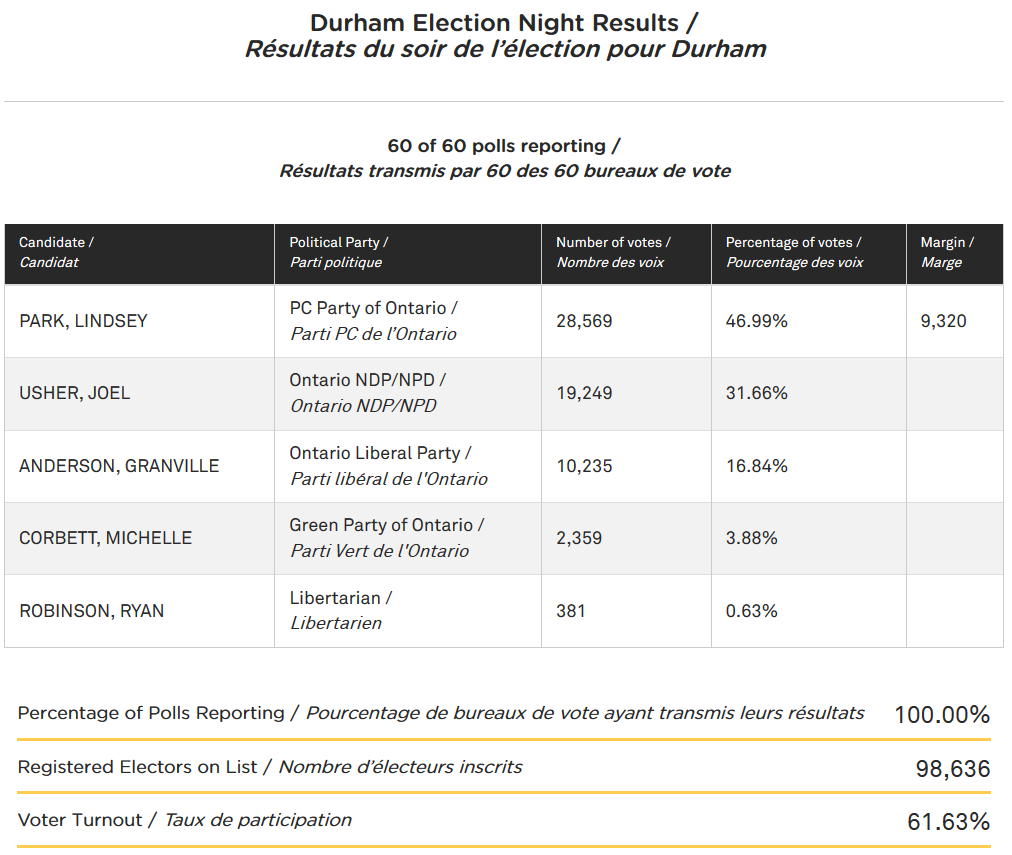
When I went in to vote (I had a Libertarian candidate in my riding), I asked the poll clerk if there had been any ballot refusals and she said “there’d been a few”. The preliminary results shown on the Elections Ontario site for my riding:

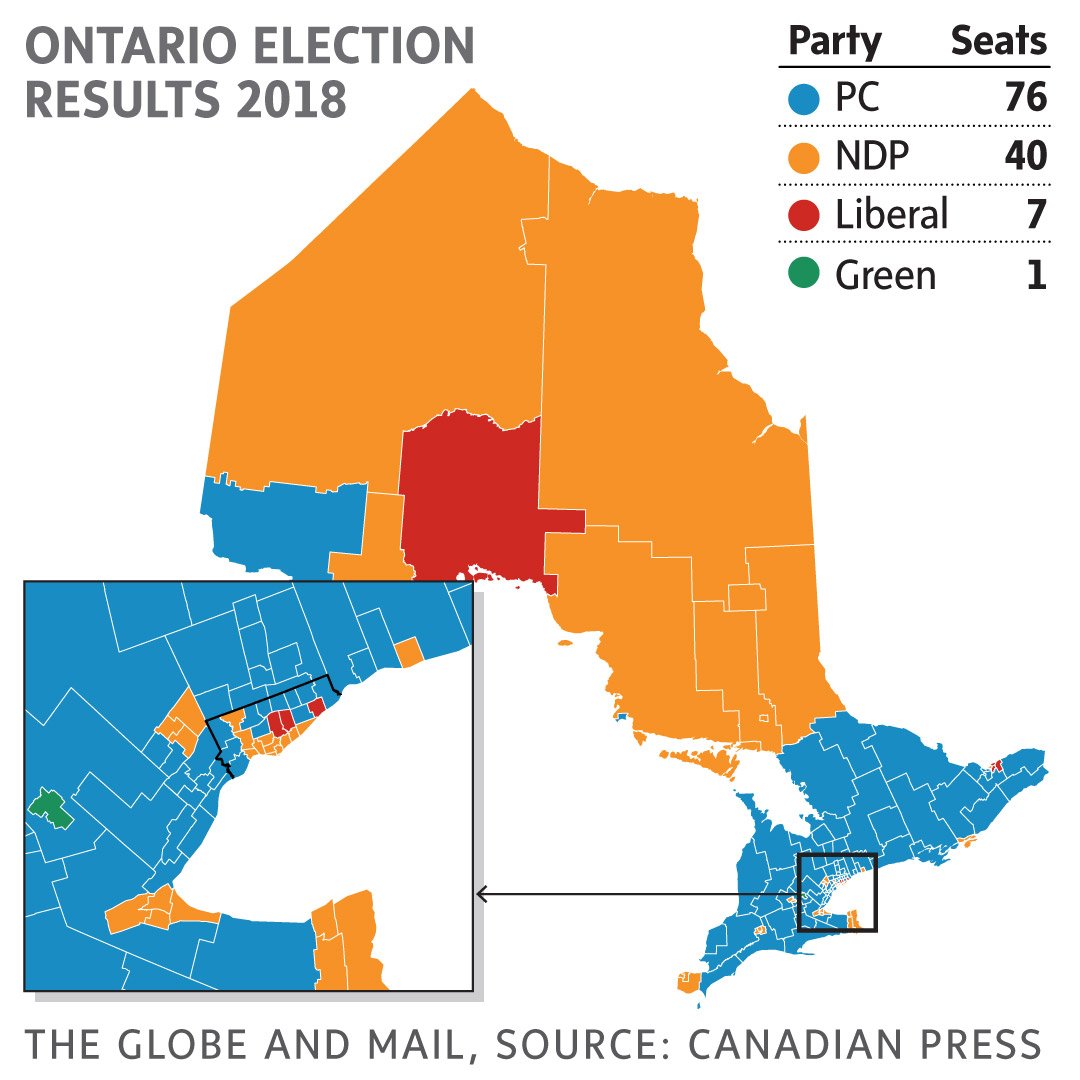
The Globe and Mail sent a tweet showing the overall shape of the PC victory:

David Warren commented on the election results:

My Chief Texas Correspondent leaps naturally upon the result of yesterday’s Ontario provincial election, in which our governing Liberals were annihilated. He sees this as a conventional “shift to the Right,” in Merican party terms, and celebrates it as such.

To which I reply: that the moronic city voters went not Right but over to the NDPee, which promised more spending than even the Liberals could imagine, and various grand new welfare schemes. (They are a zoological garden of various activist nutjobs.) Our outgoing premier’s personal charmlessness factored into the result. The winning Doug Ford is a total clown, and the media will have him for breakfast and snacks, yet for one brief glorious moment the Leftoids are in disarray. Ford is no Trump, though he might be able to match your esteemed President in straightforward vulgarity. He cannot have the fondest clew what he will do with the mess he has inherited, now that he is in power. He will have to betray that half of his constituency to which he promised the opposite of what he pledged to the other half, with unstudied vagueness. His caucus will be crawling with Suburban Saracens and other multicultural eccentrics — not the old solid Tory phalanx of white, Presbo-Methodist, rural hicks. Alas, though the ride may be wild, it won’t be fun to watch.

At BlogTO, Lauren O’Neil gathers a lot of Toronto-centric Twitter comments (not surprisingly, most are not complementary toward the Premier-elect (who, I’m informed we should more accurately be calling the Premier-designate instead)).

Kathy Shaidle posted on Facebook:

Am I relieved? You bet. But: Remember how close the polls were. The NDP got a lot of votes, and while our system means that the PCs won, the “popular” vote still shows how many leftoids there are in the province. And who else noticed that Doug’s “enthusiastic” official opening lines — “What a response. This is incredible.” — was scripted, and delivered with the stilted conviction of an Ed Wood stock player? On that note, I’ve seen less wooden Chippendale highboys…

May 18, 2018

Deploy scare quotes as required when considering the “cultural” “impact” of the suburbs

Filed under: Cancon, History, Politics — Tags: , , , , , — Nicholas @ 05:00

Rick McGinnis has a thoughtful piece on the creation and evolution of the modern western suburb, in the context of the ongoing Ontario election:

Maybe it’s some remnant of our tribal past, but it’s hard for us to leave behind some impulse to fear and vilify whoever lives one village over, beyond the river or in the next valley. We might think we’re sophisticated, cosmopolitan people, but this nascent tribalism is never far from the surface, and I saw it re-emerge with a roar during recent municipal elections here in Toronto.

Back when the late Rob Ford won his surprise mayoral victory in 2010 – certainly a surprise for his opponents, who couldn’t imagine how decisively he’d win – the electoral post-mortems painted his triumph as the revenge of the suburbs that once comprised a group of independent townships over the downtown, Toronto’s older urban core.

It was a battle between the suburbs and the city, won this time by the suburbs, who rallied behind various standards – summed up in the media as a love of cars, ethnic and cultural homogeneity and lower property taxes. As with any history written by the losers – the media, for the most part, who identified as urbanite, not suburbanite – it relied on conveniently ignoring facts that didn’t fit, and the deployment of sweeping generalizations, many of them out of date – if they were ever true at all – by decades.

[…]

Up here in Ontario, the imminent provincial election means that the suburbs versus city scenario will be revived, to either apportion blame should Progressive Conservative leader Doug Ford become premier, or get unpacked if he loses and the boogeyman of a monolithic voting bloc needs to be triumphantly debunked.

There remains the small matter that Ford Nation events – held inevitably in the suburbs since the heyday of Doug’s brother Rob – are visibly far more diverse than, say, the average Liberal fundraiser, and Ford opponents have been chewing on that tough gristle for nearly a decade.

Obviously, the suburbs can’t be both a politically, economically and culturally monolithic place, and a diverse, complex collection of communities mysteriously moved to unite during election cycles to oppose the prerogatives of certain political parties and the urbanites who love them. There’s a very complex story about the suburbs dying to be told, but we’re still invested in stereotypes that are decades out-of-date for the purposes of situational political utility. It’s an object lesson that politics, more than anything else, is the enemy of truth.

Diversity has joined “marriage,” “rights,” “privilege” and “family” on that list of words that we’ve come to use without sharing a common meaning, especially when we talk about places like the suburbs, what have come to mean something very different in our imaginations than they exist in reality. For the people living there – whose lived experience has nothing to do with convenient fictions – the suburbs are really just a place where a mortgage might be affordable, where you can have a front and a back yard, and where you don’t share walls with your neighbours.

May 11, 2018

Imagine Ontario’s election

Filed under: Cancon, Politics — Tags: , , , , , — Nicholas @ 03:00

Andrew Coyne on the fantasy campaign that is just kicking off in Ontario:

The first NDP ad of the 2018 Ontario election campaign invites viewers to “imagine a place” where hydro is cheap, drugs are free, and dental care is on the house — all at no cost to anyone except the “very rich” who will be “asked” to “pay a little more,” which I gather is NDPese for “taxed within an inch of their lives.”

That word — “imagine” — might be the theme of the coming election. The three major parties appear to be living in a world of the imagination, with platforms full of imaginary promises paid for with imaginary dollars. The province is sinking ever deeper in debt, notwithstanding the Liberal government’s desperate efforts to conceal it, its debt-to-GDP ratio headed for 45 per cent even after a decade or more of uninterrupted economic growth. A recession of any length or severity would blow that number skyward.

Beyond that the picture only grows darker, with the first of the baby boomers just into their 70s and the costs of health care projected to rise, relentlessly, as they grow into their dotage. And yet all three parties are merrily racking up new spending promises — daycare, pharmacare, dentacare, the works — with money they wouldn’t have even if the official budget numbers were genuine, and not, as the province’s auditor general has lately warned, a swindle and a fraud (I paraphrase). It’s an election in la-la land.

Oddly, this does not seem to be the conventional view. The advance word on the election, rather, is that Ontario is facing a choice of unprecedented starkness, a polarizing election with no one seeming to occupy the middle ground.

“It’s hard to remember a provincial campaign that’s featured two leaders so diametrically opposed to each other,” broadcaster Steve Paikin wrote recently, of the Liberals’ Kathleen Wynne and the Conservatives’ Doug Ford. “The political centre,” agrees the Globe and Mail’s Marcus Gee, “has vanished like a puddle in the sun.”

It’s true that the Liberals and the NDP are in something of a bidding war for the left-of-centre vote. If the March budget signalled a retreat from the Liberals’ not-overly-stringent devotion to fiscal restraint, the NDP platform goes further in every direction: about $4 billion a year further, in fact.

« Newer PostsOlder Posts »

Powered by WordPress