
Is being pro-business and pro-capitalism the same? Does capitalism generate an unfair distribution of income? Was capitalism responsible for the most recent financial crisis? Dr. Jeffrey Miron at Harvard answers these questions by exposing three common myths of capitalism.
May 19, 2013
Top Three Common Myths of Capitalism
Comments Off on Top Three Common Myths of Capitalism
April 16, 2013
Six political talking points on international trade that are myths
In Maclean’s, Stephen Gordon collects six of the most common myths politicians use to justify trade distorting policies:
1) Exports are good. Not true; exports are the costs we pay for engaging in international trade. Diverting domestic productive resources to producing more things for foreigners doesn’t increase our standards of living.
2) Imports are bad. This is point one restated: imports are the benefits from trade. The reason we engage in international trade is to obtain goods and services more cheaply than we can produce them for ourselves.
3) Trade deficits are bad. I went though this at length in this post: noting that a country has a trade deficit (or, more properly, a current account deficit) is the same thing as noting that domestic investment is larger than domestic savings. It’s not obvious why this is necessarily a bad thing.
4) Trade deficits are a sign of a slowing economy. The Canadian trade balance is generally counter-cyclical: falling during expansions and rising during recessions. A trade deficit is standard fare for Canadian expansions, not something to get concerned about.
5) Liberalized trade increases employment. Again, this is point one restated. Liberalized trade may increase the number of workers in certain export-oriented sectors. But the effect on total employment in the economy is zero.
6) Liberalized trade reduces employment. Again, this is point two restated. Liberalized trade may reduce the number of workers in certain sectors vulnerable to foreign competition. But the effect on total employment in the economy is still zero.
Comments Off on Six political talking points on international trade that are myths
December 11, 2012
Reason.tv: James Payne on Six Political Illusions
“The first thing [children] think about of government is that it is like a super parent,” says author and Reason Magazine contributor James Payne. Payne points out that seeing government as having the virtues of a parent — wisdom, responsibility, money, unlimited funds for whatever you need — has lead to illusions about what role the government should be playing in our lives.
Payne sat down to talk with Reason TV at Libertopia 2012 in San Diego, Calif. to discuss his book, Six Political Illusions: A Primer on Government for Idealists Fed Up with History Repeating Itself.
Comments Off on Reason.tv: James Payne on Six Political Illusions
October 30, 2012
Detecting Photoshopped images – a primer
I’m sure almost everyone saw dramatic and scary images of “Hurricane Sandy” like this one that went round my friends’ Facebook timelines yesterday:
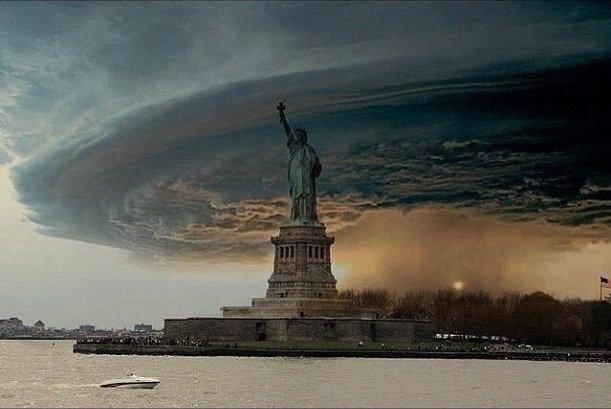
As you’ve probably guessed from the title, this is a ‘shopped image. RJS Security has a quick primer on detecting doctored images using this example:
Whenever a major media event happens (like Hurricane Sandy), we are inundated with news. Sometimes that news is useful, but often it merely exists to create FUD… Fear, Uncertainty and Doubt. While I have not personally seen any malware campaigns capitalizing on the event yet, it is inevitable. The pattern is generally as follows:
- Event hits the news as media outlets try to one-up eachother to get the word out.
- People spread the warnings, making them just a little bit worse each time they are copied.
- Other people create hoaxes to ride the wave of popularity.
- Still other people create custom hoaxes to exploit the disaster financially.
A few minutes ago, at least in my little corner of the internet, we hit stage 3 when this image was posted
H/T to Bruce Schneier for the link.
Comments Off on Detecting Photoshopped images – a primer
August 24, 2012
It’s an odd sort of “austerity” that increases government spending
Everyone knows that Britain’s current economic woes are because of the government’s harsh austerity measures, right?
The argument over ‘the cuts’ has now become wholly detached from reality. Listen to any BBC debate and you’ll find the debate presented along these lines: ‘The Coalition, aiming to eliminate the deficit by 2015, has cut spending; this has had the effect of reassuring the markets and preventing a Greek-style meltdown but, on the other hand, it has impeded growth, and so reduced the tax-take, which has meant that the deficit now won’t be abolished until at least 2017. Some people believe that we need to focus on growth, not austerity. They are calling for Plan B’.
Every assumption contained in that summary is false. Net government expenditure is higher now than it was three years ago. Such deficit reduction as there has been has come largely through tax rises rather than spending cuts. The reason that government borrowing costs are low is not because of the imagined austerity programme, but because the Bank of England has magicked up nearly £400 billion through quantitative easing, given it to banks and told them to buy government debt with it. Growth and austerity are not antonyms: it was debt-fuelled growth caused the disaster in the first place. As for Plan B, no one has yet tried Plan A: spending less.
Comments Off on It’s an odd sort of “austerity” that increases government spending
August 19, 2012
The end of the world is nigh
Sell all your posessions! Live for the now! Repent your sins! Or, as Matt Ridley suggests, keep calm and carry on:
This is the question posed by the website 2012apocalypse.net. “super volcanos? pestilence and disease? asteroids? comets? antichrist? global warming? nuclear war?” the site’s authors are impressively open-minded about the cause of the catastrophe that is coming at 11:11 pm on December 21 this year. but they have no doubt it will happen. after all, not only does the Mayan Long Count calendar end that day, but “the sun will be aligned with the center of the Milky Way for the first time in about 26,000 years.”
When the sun rises on December 22, as it surely will, do not expect apologies or even a rethink. No matter how often apocalyptic predictions fail to come true, another one soon arrives. And the prophets of apocalypse always draw a following — from the 100,000 Millerites who took to the hills in 1843, awaiting the end of the world, to the thousands who believed in Harold Camping, the Christian radio broadcaster who forecast the final rapture in both 1994 and 2011.
Religious zealots hardly have a monopoly on apocalyptic thinking. Consider some of the environmental cataclysms that so many experts promised were inevitable. Best-selling economist Robert Heilbroner in 1974: “The outlook for man, I believe, is painful, difficult, perhaps desperate, and the hope that can be held out for his future prospects seem to be very slim indeed.” Or best-selling ecologist Paul Ehrlich in 1968: “The battle to feed all of humanity is over. In the 1970s [“and 1980s” was added in a later edition] the world will undergo famines — hundreds of millions of people are going to starve to death in spite of any crash programs embarked on now … nothing can prevent a substantial increase in the world death rate.” Or Jimmy Carter in a televised speech in 1977: “We could use up all of the proven reserves of oil in the entire world by the end of the next decade.”
Predictions of global famine and the end of oil in the 1970s proved just as wrong as end-of-the-world forecasts from millennialist priests. Yet there is no sign that experts are becoming more cautious about apocalyptic promises. If anything, the rhetoric has ramped up in recent years. Echoing the Mayan calendar folk, the Bulletin of the Atomic Scientists moved its Doomsday Clock one minute closer to midnight at the start of 2012, commenting: “The global community may be near a point of no return in efforts to prevent catastrophe from changes in Earth’s atmosphere.”
Comments Off on The end of the world is nigh
May 31, 2012
Mugabe’s “ambassador” appointment debunked
It’s a good indicator of how many of us view the United Nations and its doings that a large number of bloggers got taken in by the idea:
Hayes Brown explains in detail. The short version: because of the arcane politics of the UN, Zimbabwe won the right to co-host, along with Zambia, the next meeting of the UN World Tourism Organization’s General Assembly. Brett Schaefer reported that news, which is somewhat outrageous in its own right, on the Heritage Foundation’s blog, adding a sentence:
The United Nations World Tourism Organization (UNWTO), created in 1970 and based in Madrid, identifies itself as the “United Nations agency responsible for the promotion of responsible, sustainable and universally accessible tourism.” It announced last year that Zambia and Zimbabwe jointly “won the bid” to host the 20th session of the UNWTO General Assembly in 2013. Zimbabwe’s president, Robert Mugabe, has been appointed a “United Nations international tourism ambassador” in recognition of the promotion and development of tourism.
Oh, those whacky bloggers. I’d like to take this moment to apologize for spreading unsupported rumours that I sourced from shady and unreliable reports in the National Post and the Guardian.
Comments Off on Mugabe’s “ambassador” appointment debunked
April 5, 2012
Why government stimulus is usually a bad idea
Mike Milke of the Fraser Institute:
Frum’s praise for Ottawa’s go-slow approach on balanced books is premised on the perception that if Ottawa actually cut spending (as opposed to slowing the rate of growth) such actions would endanger our prosperity: “If you reduce spending too fast, you crimp your economy,” wrote Frum.
But that’s a mistaken notion.
To use just one example from a large body of research, in 2009, leading fiscal policy expert and Harvard University professor Alberto Alesina and his colleague Silvia Ardagna reviewed stimulus initiatives in Canada and 20 other industrialized countries from 1970 to 2007. In the 91 instances where governments tried to stimulate the economy, it turned out the unsuccessful attempts generally were the ones based on increased government spending. Alesina noted that “a one percentage point higher increase in the current [government] spending-to-GDP ratio is associated with a 0.75 percentage point lower growth.”
In other words, stimulus spending doesn’t increase economic growth; it harms it.
To see how Ottawa’s own stimulus spending was unnecessary, consider how Canada emerged from the last recession and how government stimulus spending had nothing to do with it. Our recession ended in mid-2009; it was only about then that federal and provincial governments started spending extra (borrowed) stimulus cash.
To credit stimulus spending for the end to Canada’s recession, one must argue that extra (borrowed) dollars mostly spent after June 2009 somehow magically rescued the Canadian economy before June 2009.
All the borrowing did have one effect: It added to the existing large federal debt mountain, forecast to hit $614-billion in 2015, up from $457-billion in 2008.
The government’s stimulus spending was demanded by the opposition, but evidence since then indicates that the minority Tories would probably have passed a stimulus budget even if the opposition didn’t give them political cover.
March 3, 2012
Three persistent myths about the Great Depression, the New Deal, and World War 2
Historian Stephen Davies names three persistent myths about the Great Depression. Myth #1: Herbert Hoover was a laissez-faire president, and it was his lack of action that lead to an economic collapse. Davies argues that in fact, Hoover was a very interventionist president, and it was his intervening in the economy that made matters worse. Myth #2: The New Deal ended the Great Depression. Davies argues that the New Deal actually made matters worse. In other countries, the Great Depression ended much sooner and more quickly than it did in the United States. Myth #3: World War II ended the Great Depression. Davies explains that military production is not real wealth; wars destroy wealth, they do not create wealth. In fact, examination of the historical data reveals that the U.S. economy did not really start to recover until after WWII was over.
Comments Off on Three persistent myths about the Great Depression, the New Deal, and World War 2
December 2, 2011
“There is no prophecy for 2012. It is a marketing fallacy”
The BBC attempts to debunk the “2012 is the end of the world” notion that the Mayans are supposed to have predicted.
The date marks the end of one of the periods of roughly 400 years into which the Mayan calendar is divided.
Mexico’s National Institute for Anthropological History has also tried to counter speculation that the Maya predicted a catastrophic event for 2012.
Only two out of 15,000 registered Mayan texts mention the date 2012, according to the Institute, and no Mayan text predicts the end of the world.
“There is no prophecy for 2012. It is a marketing fallacy,” Erik Velasquez, etchings specialist at the National Autonomous University of Mexico, told Reuters.
Comments Off on “There is no prophecy for 2012. It is a marketing fallacy”
July 28, 2011
Penn and Teller talk about their new TV show
Erik Amaya reports on the duo’s latest show, Penn & Teller Tell a Lie:
“We kind of forced Showtime into doing a show about science and reality,” admitted Penn Jillette, the more outspoken half of the duo. “We did get to have naked people and we did get to say profanity. I am one of the only people who does not own a motorcycle who has said ‘motherfucker’ enough.”
After referring to their new home as “The Disco Channel,” Jillette mentioned that the cable network was “more interested in science.” Unlike Bullshit, the performer hopes Tell a Lie will take a more pointed view of both science and objective reality. He then outlined the format: “We’re doing six packages, most of them [featuring] us. One of those stories will be a fake, a complete lie. [After each episode], the audience can go to discovery.com and vote on which is a lie.”
Teller clarified that segments within each episode will make certain claims. “We will claim that a single head of human hair can lift a Mustang,” he began. “We will claim that a wrecking ball can be stopped by special wallpaper. We’ll claim that you can put a person into a tank of live piranha and they will not kill him.”
“The person will be Teller,” Jillette interjected.
Comments Off on Penn and Teller talk about their new TV show
April 23, 2011
QotD: The debunking problem in media
[. . .] the second issue is how people find out about stuff. We exist in a blizzard of information, and stuff goes missing: as we saw recently, research shows that people don’t even hear about retractions of outright fraudulent work. Publishing a follow-up in the same venue that made an initial claim is one way of addressing this problem (and when the journal Science rejected the replication paper, even they said “your results would be better received and appreciated by the audience of the journal where the Daryl Bem research was published”).
The same can be said for the New York Times, who ran a nice long piece on the original precognition finding, New Scientist who covered it twice, the Guardian who joined in online, the Telegraph who wrote about it three times over, New York Magazine, and so on.
It’s hard to picture many of these outlets giving equal prominence to the new negative findings that are now emerging, in the same way that newspapers so often fail to return to a debunked scare, or a not-guilty verdict after reporting the juicy witness statements.
All the most interesting problems around information today are about structure: how to cope with the overload, and find sense in the data. For some eyecatching precognition research, this stuff probably doesn’t matter. What’s interesting is that the information architectures of medicine, academia and popular culture are all broken in the exact same way.
Ben Goldacre, “I foresee that nobody will do anything about this problem”, Bad Science, 2011-04-23
March 4, 2011
January 21, 2011
Remaking Red Dawn as a metaphor for US fear of China
David Harsanyi notes the remake of the 1980’s movie Red Dawn with the Chinese taking the place of the original film’s Soviet and Cuban troops:
Doubtlessly, the remake will be entertaining and offer a far more plausible plot line than the original — seeing that the Chinese, well, they have a proper army. Producers will almost certainly capitalize on a growing alarmism regarding China’s growth. Few issues, in fact, can bring right and left together in this polarized world of ours than a shared knowledge that China is bad news.
Now, the American populace can typically be divided into two categories: 1. Those who don’t care one whit about foreign policy. 2. Newspaper editors.
So before Chinese President Hu Jintao was here meeting with the president, Andrew Kohut of the Pew Research Center took to the pages of The Wall Street Journal and explained what we think about the topic.
Apparently, 47 percent of those he surveyed cited China as the world’s top economic power. (Only 31 percent properly identified it as the U.S., which has an economy nearly three times the size.) Another Pew survey from last year found that 47 percent of us consider China’s growth a “bad thing” for the United States. A new CNN poll found that 58 percent of us believe that China’s “wealth and economic power” are a threat to the U.S.
I’m certain our relationship with China is layered with international complexity and fraught with danger. But why would we fear the aspects of China’s ascendancy — its “wealth and economic power” — that pose the least threat to United States? Unlike ideological clashes, economic competition can be mutually beneficial. A country with real economic wealth is typically free and doesn’t look kindly on radical behavior. Suicide bombers rarely drive top-of-the-line BMWs.
I have a long history of doubting the stated size and growth of the Chinese economy and therefore feeling that the “threat” they pose is overstated. Overall, the economic growth in China is a good thing, both for China and for the world economy, but there’s still too much malignancy from the “bad old days” of the command economy that haven’t been properly dealt with. China is big, and getting bigger, but will face severe problems the longer these historical artifacts remain unexamined and unresolved.
January 20, 2011
In case you weren’t worried enough about the rise of China
The Wall Street Journal rounds up the leading indicators of the current “USA sliding down the ladder” worries:
Of all the differences between dictatorship and democracy, probably none is so overlooked as the ability of the former to project strength, and the penchant of the latter to obsess about its own weakness.
In 1957 the Soviets launched Sputnik and the U.S. went into a paroxysm of nerves about our supposed backwardness in matters ballistic. Throughout the 1980s Americans lived with “Japan as Number One” (the title of a book by Harvard professor Ezra Vogel, though the literature was extensive) and wondered whether Mitsubishi’s purchase of Rockefeller Center qualified as a threat to American sovereignty.
Now there’s China, whose President is visiting the U.S. this week amid a new bout of American hypochondria. In an op-ed last week in these pages, Andrew Kohut of the Pew Research Center noted that a plurality of Americans, 47%, are under the erroneous impression that China is the world’s leading economy. News reports regarding Chinese military strides, or the academic prowess of Shanghai high school students, contribute to Western perceptions of Chinese ascendancy. So does the false notion that Beijing’s holdings of U.S. debt amounts to a sword of Damocles over Washington’s head.
Oh, we nearly forgot: Tough-as-nails Chinese mothers are raising child prodigies (a billion of them!) while their Western counterparts indulge their kids with lessons in finger-painting.
There you go, more than enough to keep you up late tonight worrying about the inevitability of China’s rise to top economic dog in the pack. Of course, most of it is misinterpretation of the facts, but you can worry about it if you want.
H/T to Jon, my former virtual landlord, for the link.
Comments Off on In case you weren’t worried enough about the rise of China


