
Published on 15 Apr 2017
Start your free Great Courses Plus trial today: http://ow.ly/z4VI30acl50
It’s time for Out Of The Trenches again where Indy answers your questions about World War 1, this week we talk about the recruitment age, smoke grenades and fortress locations.
April 16, 2017
Smoke Screens – Fortress Location – Recruitment Age I OUT OF THE TRENCHES
Comments Off on Smoke Screens – Fortress Location – Recruitment Age I OUT OF THE TRENCHES
April 15, 2017
Tank Chats #6 Vickers Light MKVI B
Published on 5 Jun 2015
The first mass-produced British tank.
Being, in terms of numbers, the most significant British tank at the outbreak of war, the Mark VIB saw service with the British Expeditionary Force in France, the Eighth Army in North Africa and in various subsidiary theatres. As a reconnaissance vehicle it was satisfactory, as a fighting tank quite useless since armour protection was minimal and the armament ineffective against enemy tanks.
Comments Off on Tank Chats #6 Vickers Light MKVI B
April 11, 2017
Evolution of the British Infantry during World War 1 I THE GREAT WAR Special
Published on 10 Apr 2017
The professional British soldier of 1914 had little to do with the British conscript of 1918. So, even though World War 1 is often perceived as something static, the British infantry underwent a considerable evolution during the war.
Comments Off on Evolution of the British Infantry during World War 1 I THE GREAT WAR Special
April 10, 2017
Small Arms of WWI Primer 022: German T-Gewehr Anti-Tank Rifle
Published on Mar 29, 2016
Othais and Mae delve into the story of this WWI classic. Complete with history, function, and live fire demonstration.
C&Rsenal presents its WWI Primer series; covering the firearms of this historic conflict one at a time in honor of the centennial anniversary. Join us every other Tuesday!
Cartridge: 13.2x92mmR
Capacity: 1 rnd
Length: 5.5′
weight: 37.7 lbsAdditional reading:
Das Tankgewehr Mauser M 1918
Wolfgang KernDWJ – 1972 – Volume 4
Die Panzerbuchse 18
K. D. Meyer
Comments Off on Small Arms of WWI Primer 022: German T-Gewehr Anti-Tank Rifle
April 9, 2017
Tank Chats #5 Lanchester Armoured Car
Published on 7 May 2015
Lanchester Armoured Cars were produced by the The Lanchester Company at the request of the War Office, during late 1920’s and 30’s.
The long chassis was fitted with a large armoured body that mounted two machine guns in a turret as well as a third, optional, hull mounted gun. The Lanchesters turned out to be much too big for reconnaissance duties and were almost impossible to turn around on the narrow roads found in Britain at that time. Only 39 cars were issued.
Comments Off on Tank Chats #5 Lanchester Armoured Car
April 4, 2017
The Forgotten Ally – Portugal in WW1 I THE GREAT WAR Special
Published on 3 Apr 2017
Portugal’s participation in the First World War 1, especially the service of the Portuguese Expeditionary Corps on the Western Front, is often forgotten. And even when the troops were still fighting, the political situation back home had changed so much that the soldiers were largely forgotten.
Comments Off on The Forgotten Ally – Portugal in WW1 I THE GREAT WAR Special
Tank Chats #4 Vickers Armstrongs Type E
Published on 15 Apr 2015
The fourth in a series of short films about some of the vehicles in our collection presented by The Tank Museum’s historian David Fletcher MBE.
Alongside their work for the British armed forces Vickers-Armstrongs produced military equipment for foreign buyers. Their earliest commercial tank designs failed to sell but in 1928 they produced a masterpiece. Known as the 6-ton or ‘six-tonner’, it was a remarkable design, with a rear-mounted, air-cooled engine driving to a gearbox and track sprockets at the front of the tank. There were two main variants; some tanks were supplied with two machine-gun turrets (Type A) while others carried a larger single turret (Type B) like our exhibit.
Following trials the British Army turned it down but the tank was a major export success. It sold all around the world, from South America to Japan and was even studied by the United States Army. It was built under licence in Russia (see our T-26 exhibit) and influenced tank design in many other countries. Our exhibit is displayed in the fancy camouflage style adopted by Vickers for their commercial offerings; it is seen at a mythical army equipment exhibition some time in the thirties.
Shortly before World War II Vickers built a new version, powered by a Rolls-Royce engine (the Mark F) but this failed to sell. Subsequent to this the government of Siam (Thailand) placed a repeat order but specified the original Armstrong-Siddeley engine. These were completed closer to the Mark F design but few, if any, reached their destination. With the outbreak of war the British Government impounded all commercial tanks still in the factories and the remaining stock of six-tonners, of which this is one, were used by British forces for training.
Comments Off on Tank Chats #4 Vickers Armstrongs Type E
April 2, 2017
The (inevitable) failure of the “Revolution in Military Affairs”
In an article about security incident response automation, Bruce Schneier provides a useful thumbnail sketch of a US Army attempt to dispel the fog of war in real time:
While this is a laudable goal, there’s a fundamental problem with doing this in the short term. You can only automate what you’re certain about, and there is still an enormous amount of uncertainty in cybersecurity. Automation has its place in incident response, but the focus needs to be on making the people effective, not on replacing them security orchestration, not automation.
This isn’t just a choice of words — it’s a difference in philosophy. The US military went through this in the 1990s. What was called the Revolution in Military Affairs (RMA) was supposed to change how warfare was fought. Satellites, drones and battlefield sensors were supposed to give commanders unprecedented information about what was going on, while networked soldiers and weaponry would enable troops to coordinate to a degree never before possible. In short, the traditional fog of war would be replaced by perfect information, providing certainty instead of uncertainty. They, too, believed certainty would fuel automation and, in many circumstances, allow technology to replace people.
Of course, it didn’t work out that way. The US learned in Afghanistan and Iraq that there are a lot of holes in both its collection and coordination systems. Drones have their place, but they can’t replace ground troops. The advances from the RMA brought with them some enormous advantages, especially against militaries that didn’t have access to the same technologies, but never resulted in certainty. Uncertainty still rules the battlefield, and soldiers on the ground are still the only effective way to control a region of territory.
But along the way, we learned a lot about how the feeling of certainty affects military thinking. Last month, I attended a lecture on the topic by H.R. McMaster. This was before he became President Trump’s national security advisor-designate. Then, he was the director of the Army Capabilities Integration Center. His lecture touched on many topics, but at one point he talked about the failure of the RMA. He confirmed that military strategists mistakenly believed that data would give them certainty. But he took this change in thinking further, outlining the ways this belief in certainty had repercussions in how military strategists thought about modern conflict.
McMaster’s observations are directly relevant to Internet security incident response. We too have been led to believe that data will give us certainty, and we are making the same mistakes that the military did in the 1990s. In a world of uncertainty, there’s a premium on understanding, because commanders need to figure out what’s going on. In a world of certainty, knowing what’s going on becomes a simple matter of data collection.
Comments Off on The (inevitable) failure of the “Revolution in Military Affairs”
March 28, 2017
David Fletcher’s Tank Chats #3 Medium Tank MkII* (Vickers Medium)
Published on 20 Mar 2015
The third in a series of short films about some of the vehicles in our collection presented by The Tank Museum’s historian David Fletcher MBE.
In 1923 Vickers Ltd. of Sheffield and Newcastle, started to manufacture tanks for the British Army. They were the first representatives of a new generation of tanks, designed to fight on the move and restore mobility to the battlefield.
As designed the Medium tanks had a 3 pounder gun in the turret; a Vickers machine-gun in each side of the hull and Hotchkiss light machine-guns in the turret. These last were later eliminated in favour of a single Vickers machine-gun, mounted alongside the main gun and described as co-axial, since it elevates on the same axis as the main gun. This modification altered the design from Mark II to Mark II*. Using these tanks the Royal Tank Corps established standards of gunnery which, in their day, were never equalled.
Comments Off on David Fletcher’s Tank Chats #3 Medium Tank MkII* (Vickers Medium)
March 26, 2017
Comparing WW1 Helmet Designs I OUT OF THE TRENCHES
Published on 25 Mar 2017
Start Your Free Trial For The Great Courses Plus*: https://www.thegreatcoursesplus.com/special-offer?utm_source=US_Influencer&utm_medium=InfluencerYouTube&utm_campaign=143317
It’s time for the Chair of Wisdom again and this week Indy compares World War 1 helmet designs and we talk about the discrimination of Germans in the US during WW1.
Comments Off on Comparing WW1 Helmet Designs I OUT OF THE TRENCHES
March 21, 2017
British Weapons of World War 1 feat. C&Rsenal I THE GREAT WAR Live Stream
Streamed live 9 hours ago
Othais’ channel: https://www.youtube.com/candrsenal
In our series about the rifles and pistols today, Othais got his hands on the standard issue rifles and pistols of the British Army in World War One.
Comments Off on British Weapons of World War 1 feat. C&Rsenal I THE GREAT WAR Live Stream
March 15, 2017
Serbian Field Marshal Stepa Stepanovic I WHO DID WHAT IN WW1?
Published on 14 Mar 2017
Serbia’s turbulent history of the late 19th and early 20th century created some hard-boiled military leaders to the front lines of World War 1. One of these was Stepa Stepanovic – but he was not just hard boiled, he also stood with his country throughout the entire war which included the Serbian Exodus to Korfu.
Comments Off on Serbian Field Marshal Stepa Stepanovic I WHO DID WHAT IN WW1?
March 14, 2017
British India During World War 1 I THE GREAT WAR Special
Published on 13 Mar 2017
India was part of the British Empire during World War 1 and it was of vital importance to the war effort. Resources, manufacturing power and over 1.3 million men that served in the Army meant a great price for India to pay during the war. But even before the conflict, the call for independence grew louder and louder.
Comments Off on British India During World War 1 I THE GREAT WAR Special
March 11, 2017
QotD: US Army awards contract, losing bidder launches appeal (of course)
The Services should just acknowledge the reality of contracting anything in the seven-figure realm, and change initial award announcements to read: “The Initial Conditional Award of Contract XYZ is to Defense Conglomerate 1369. Work will commence after all Congressional Outraged Publicity-Seeking Posturing is exhausted and Butthurt Losing Contractor Challenges are adjudicated. We hope to run both those actions concurrently, and anticipate work will commence a minimum of 3-5 years behind schedule and costs grow at an exponential rate during this period, hence the budget supplemental is already in draft form for Newsies, Think Tanks, and Outraged Congresspersons to grind axes with.” Added caveat for this particular contract: “Additionally, a website has been established to collect all the comments from .40/.45 cal and steel-frame fanboyz to rant about How Stupid This Choice Is.”
John Donovan, posting to Facebook, 2017-02-28.
Comments Off on QotD: US Army awards contract, losing bidder launches appeal (of course)
February 25, 2017
Updating the junior rank structure of the Canadian Army
Earlier this week, Ted Campbell offered his suggestions on how to address some issues he notes in the lower ranks of the Canadian Army, based on both Canadian and allied armies’ experiences:
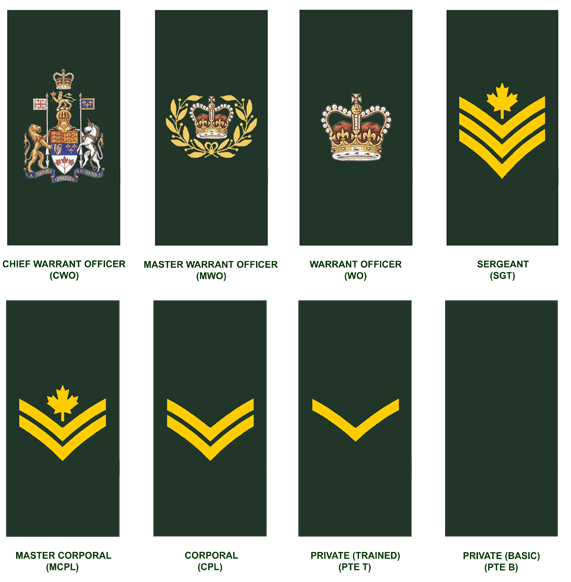
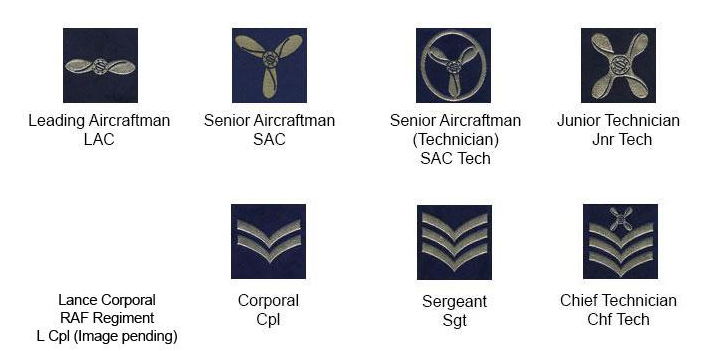
There was always a problem with the old (1850s to 1960s) Army rank structure: there was some need to tie rank to trade, but not as tightly, many military people believe, as […] in the Canadian Armed Forces today. Some branches (corps) used to have fairly strict rules; in the old (1960s) Royal Canadian Corps of Signals, for example, the technicians, amongst the very highest paid soldiers in the whole army, could not attend the long, difficult and expensive, advanced (3rd of 4 levels) technician course until they had passed the junior leadership course and they could not attempt the senior leadership course until they had passed the advanced technician’s course, and so on. But that system always excluded some good people. There were, and still are today, many people who can be excellent, even outstanding technicians but cannot lead or manage soldiers. The United States Army addressed this same issue by creating the “specialist” grouping which allowed soldiers to “advance” through part of the pay system ~ higher salaries for technical skills ~ but not the other ~ even higher salaries for leadership. In past years there were many different (paid) grades of specialist but now it is a “rank” equivalent to the US Army corporal for soldiers who have not yet or cannot pass the first level junior leader course. The British Royal Air Force has a similar and, in my opinion, better system …
… which recognizes both technical skill and leadership requirements.
In my opinion we should undo much of what Mr Hellyer did, while thanking him for addressing the pay problem, and restore the junior leadership positions, especially the tank and rifle section commanders, to the real, and younger, junior leaders: those in the rank of master corporal. This will restore the senior leaders to their traditional roles as “guides” and mentors to the junior leaders: both to the corporals and the lieutenants. The ranks of sergeant ~ in several “grades” and warrant officer are often, and very correctly, referred to as the backbone or even the “heart and soul” of the army. That is partly because, traditionally, they stood ever so slightly “aloof” from the rank and file. The lieutenants gave orders, advised, coached and mentored by the sergeants, to the corporals who, then, directly led the riflemen but were also mentored by the sergeants. It was, to repeat the words I used to describe the US constitution, “a fine and finely balanced system;” we upset the balance 50 years ago to solve a pay problem. We should, also, adapt the RAF’s aircraftman/technician to our own needs to allow some soldiers to advance “up” in their technical field (and be paid more) without becoming leaders (and being paid more for that, too).
To do that the Army will have to reform itself.
First, it will have to repose trust in its junior leaders; that’s something that will be hard to do, even after the Army, of absolute necessity, makes junior leader training ~ making privates into corporals and civilians into second lieutenants ~ its highest priority and the job it assigns to its very, very best senior leaders.
Second, it will have to restore the “sergeant’s mess” to its traditional pride of place in the Army by giving the sergeants and warrant officers back the senior supervisory and management duties that have, in far too many cases, migrated “upwards” until they are now done by captains and even majors. Once again, it is a trust issue and we live in a world where many of the most senior leaders are timid because they have been “burned” too often, by their own superiors, when a subordinate makes a mistake. Mistakes are part of human nature; they have to be corrected, forgiven, in most cases, and, very often, used as teaching aids.
Third, the government will need to revise the pay system so that junior leaders are paid more and, meanwhile, the gap between corporal and master corporal and sergeant is maintained.
Fourth, promotions, in the Army, at least, to corporal and to captain must not be automatic. Promotion to corporal must require that one pass a very tough junior leaders course; promotion from lieutenant to captain should be by examination.
But, doing these four things will, in my opinion, give the Army a firm foundation upon which to build and fight.
Comments Off on Updating the junior rank structure of the Canadian Army


