
Published on 7 Jun 2014
http://HomegrownFurniture.com Create your own woodworking shop from scratch. In part one of this video series, woodworker Jim Thompson helps you build your very first woodworking workshop. Jim includes buying tips, craigslist tactics and tool recommendations for a new woodworker on a budget.
July 13, 2017
Setting-up Your First Woodworking Shop Pt. 1
Comments Off on Setting-up Your First Woodworking Shop Pt. 1
July 7, 2017
How to Prepare Stock for Joinery | Paul Sellers
Published on 23 Jun 2017
What do you need to do to your dimensioned wood to prepare it for joinery? Often there are undulations or machine marks in the surface of the wood, or movement after dimensioning that needs removing before joinery layout occurs. Let’s work on getting the silky smooth surface and square faces that make for crisp, accurate joinery.
For more information on these topics, see https://paulsellers.com or https://woodworkingmasterclasses.com
Comments Off on How to Prepare Stock for Joinery | Paul Sellers
June 28, 2017
Handsaw comparison – Japanese pull-cut versus Western push-cut
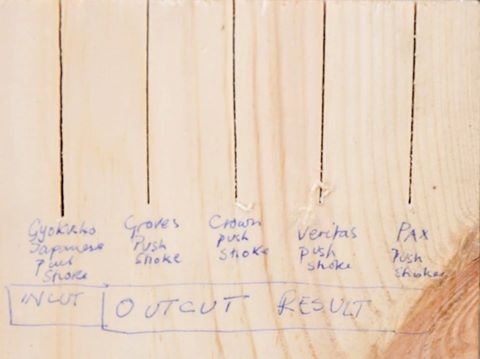
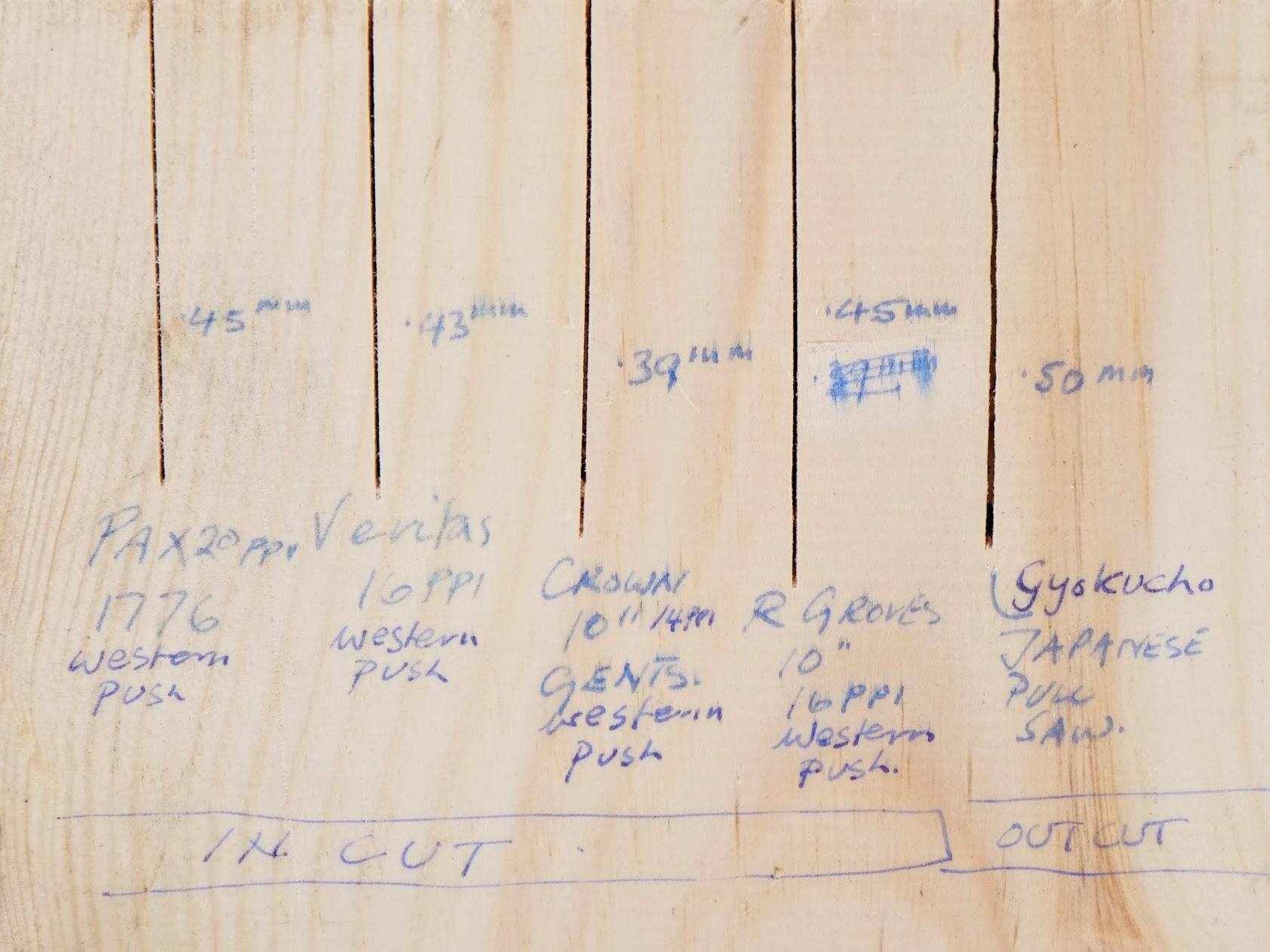
On Facebook, Paul Sellers posted a couple of photos showing the differences between some traditional western hand saws, which cut on the push stroke, and traditional Japanese hand saws, which cut on the pull stroke:
When you hear people say Japanese saws cut better, cut cleaner, cut faster, cut easier, usually it’s not necessarily true. In reality the Japanese saws cut on a pull stroke and the western saw on a push. When sharpened properly both cut very well. The difference for me is that one is a throwaway, the other a keeper for a lifetime. I own saws made in England and the USA that are totally functional and range in age from between the early 1800s 1860s and some up to date that I use daily. You can make any saw any thickness you like and it will work well.
Just saying.The main difference nowadays is you throw away the Japanese saws because you can’t sharpen them whereas a decent western saw can be sharpened, well, for 200 years when you learn how. Most people can master saw sharpening with an hour of practice.
Comments Off on Handsaw comparison – Japanese pull-cut versus Western push-cut
June 27, 2017
What Can You Do With a Jigsaw? A Lot! | WOODWORKING BASICS
Published on 21 Oct 2016
A lot of people think that they need a lot of big, expensive stationary tools for woodworking. If you don’t have a lot of space or money, a jigsaw is an amazing tool that can make almost all the cuts you need. Full article► http://bit.ly/JigsawBasics
Comments Off on What Can You Do With a Jigsaw? A Lot! | WOODWORKING BASICS
June 25, 2017
Sometimes, the workman is right to blame his tools
Paul Sellers recently bought and tested a new Two Cherries brand “Gent’s saw” and was very unhappy with the tool:
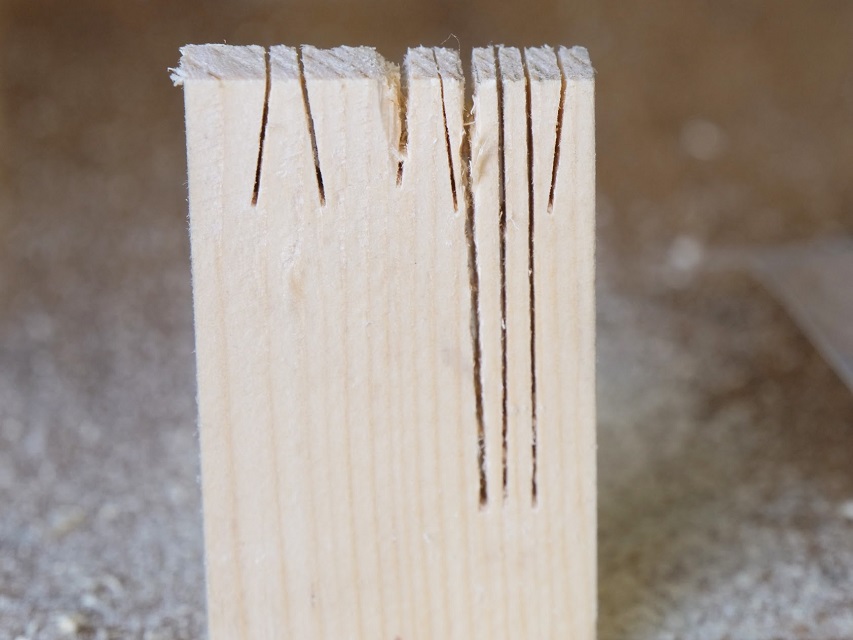
This week I picked up a brand new gent’s saw straight from the pack made by the famous German tool makers Two Cherries. I noticed the unusual tooth shape, which strangely resembled the edge of a tin can when we used to open it with a multipurpose survival knife. I wondered how it would work and whether it was just a miscut. I examined several others and realised it was actually intentional as they were indeed manufactured that way. I offered the saw to the wood and the very middle cut with the dovetailed angle and the broken off section was the results of ten strokes.
“The long saw cut on the left is how the saw cuts by a man who has used such saws every day, six days a week for 53 years. The two to the right are how it cuts after sharpening and redefining the teeth.”
Could this truly be the end product of the once highly acclaimed Two Cherries of German tool manufacturing? I looked at the packet and, well, there it was; Made in Germany. So here is my perspective on the saw. Nice beechwood handle–nicely shaped (but it is unfinished), nice brass back, good quality steel plate, not too soft, not too hard. Two Cherries, the materials leave you no excuse for making such a poor grade product. YOU should be very ASHAMED of your product and yourselves. It is the very worst saw of any and all saws ever, ever, ever manufactured. I have never seen anything worse.
[…]
If you bought this saw and you thought the outcome was a result of your inexperience. It’s not. Blame the tool maker. It’s his pure arrogance to think he can pass something off to you like this and call it a dovetail saw. Shame on you Two Cherries, shame on you!
Comments Off on Sometimes, the workman is right to blame his tools
June 12, 2017
How to Make a Dovetail Template | Paul Sellers
Published on 2 Jun 2017
Paul introduces the dovetail template that he has been making and using for over 50 years. It helps you to efficiently mark out the dovetail angle. Making it requires a high degree of accuracy and attention to detail, in order for it to be used as a reference.
Comments Off on How to Make a Dovetail Template | Paul Sellers
May 28, 2017
How to make a Half-lap Dovetail | Paul Sellers
Published on 18 May 2017
The half-lap dovetail is possibly the most common of all the dovetails used today. It is used for the front corners of drawers, and anywhere where you want to use a dovetail which is not visible from a certain viewpoint. Paul has developed a method which includes a small rebate, that helps in aligning the components to achieve the crisp definition of quality half lapped dovetails.
For more information on these topics, see https://paulsellers.com or https://woodworkingmasterclasses.com
Comments Off on How to make a Half-lap Dovetail | Paul Sellers
May 17, 2017
The Only 3 Sandpapers You Really Need | SANDING BASICS
Published on 20 May 2016
Sanding can be time-consuming, tedious and one of the dustiest, messiest, most boring tasks in woodworking. But it’s also something that you’ll have to do in just about every single project. I hope to minimize the monotony in this Sanding Basics video. Please read the full article: http://bit.ly/WWMMsanding
Comments Off on The Only 3 Sandpapers You Really Need | SANDING BASICS
May 11, 2017
Pocket holes vs. mortise and tenon joints
Published on 24 Feb 2015
Before commenting about glue, please see the followup: http://www.youtube.com/watch?v=WMi6W2cvw7g
More about these tests here:
http://woodgears.ca/joint_strength/pockethole.html
Comments Off on Pocket holes vs. mortise and tenon joints
May 3, 2017
Understanding and Choosing Antique Router Planes
Published on 10 Mar 2017
Bill Anderson teaches all about antique router planes and how to choose the best planes. See best brands on my blog post: http://woodandshop.com/understanding-choosing-antique-router-planes
Comments Off on Understanding and Choosing Antique Router Planes
April 26, 2017
French cleat follow-up
Published on 2 Mar 2013
Answering a few questions from yesterday’s video on my main channel:
[French cleat storage system for hand tools]
Comments Off on French cleat follow-up
April 6, 2017
How to Turn Pulls Without a Lathe
Published on 11 Jun 2014
Learn how to create custom door and drawer pulls using your drill press.
Comments Off on How to Turn Pulls Without a Lathe
March 29, 2017
How to set up & tune a tablesaw
Uploaded on 29 Jun 2008
Original post on our site with additional information, plans, questions & comments: http://www.thewoodwhisperer.com/videos/tablesaw-setup-tuneup-pt-1/
Our tools are no good to us if they aren’t tuned up properly. As the “heart” of the workshop, its crucial that our tablesaws are configured to perform their best. So whether you are setting up a new saw, or tuning up your current one, this video guide will get you where you need to be. Part 1 covers three different methods for aligning the miter slot to the blade as well as a simple technique for attaching and leveling the extension wings.
March 26, 2017
Woodworking Not So Common Sense
Published on 2 Sep 2015
As you can imagine in my line of work, I spend a lot of time helping new woodworkers solve problems. This gives me a unique perspective on the potential stumble point that most woodworkers will experience. Eventually, these things become woodworking common sense but until that time, I consider it woodworking not-so-common sense. So here are five tips that most woodworkers eventually figure out on their own.
Comments Off on Woodworking Not So Common Sense
March 22, 2017
Sue Rhodes – My Workbench
Published on 25 Feb 2017
Follow Sue on Instagram: @rhodes_woodwork
Workbench made by Sue Rhodes as her masterclass student project at the John McMahon School of Fine Woodworking, Nottinghamshire, UK (http://www.schoolofwoodworking.co.uk).
Comments Off on Sue Rhodes – My Workbench


