Quotulatiousness

June 27, 2013

How many “environmental” groups are actually harming the environment

Filed under: Economics, Environment, Media — Tags: , , , — Nicholas @ 00:01

Willis Eschenbach at Watts Up With That:

Now, given that poverty is the greatest threat to the global environment, the inescapable conclusion is that the only way the global environment stands a chance is if poor countries can develop economically.

And that is why the anti-development, pro-expensive energy stance of the large environmental NGOs is one of the great environmental tragedies of our times.

Here’s the chain of causality:

1. Climate alarmists, with the strong support of the major environmental NGOs like Greenpeace and WWF, declared war on CO2.

2. The method that they chose to fight CO2 was to discourage fossil fuel use by making energy more expensive, using a combination of taxation, legislation, international pressure, and expensive subsidies to achieve that end. Obama’s War on Coal, announced today, is just one of hundreds of examples of the wealthy NGOs and the rich governments working to increase the price of energy.

3. Since energy is development, expensive energy keeps poor countries in poverty. When the World Bank denies loans for coal fired plants in India, the poor suffer … but the environment suffers more. Until they can afford to use coal and gas, they’ll run the country on wood … I refer you back to Figure 1 for how well that works out.

4. Expensive energy slows a country’s economic development, and as President Obama pointed out, people worried about money don’t pay attention to the environment.

This ends up in a bizarre position—the actions of the major environmental NGOs are ensuring continued environmental destruction in the developing world.

June 22, 2013

Three deaths reported in Calgary flooding

Filed under: Cancon, Environment — Tags: , , , — Nicholas @ 10:13

680News rounds up the reports from Calgary, where the Bow River flooded significant portions of the city yesterday:

Officials are now blaming the devastating flooding in southern Alberta for at least three deaths in the province.

An estimated 100,000 people have been evacuated from their homes, with little information available on when they’ll be able to return.

“I’m not in a position right now to be able to give you timings on neighbourhoods that are along the Bow River and when people may be able to return to those homes, but we are slowly getting there,” said Calgary Mayor Naheed Nenshi.

Many also have no idea whether they’ll have a livable home to return to once the floodwaters finally recede.

Experts say that in some areas, that could still be days.

‘Stunning’ is how Prime Minister Stephen Harper described the flooding in southern Alberta, after he boarded a military helicopter in Calgary to get an aerial view.

Calgary has been one of the hardest hit areas in the western province, and the city was something of a ghost-town Saturday.

There was some positive news for those who have been evacuated, with people in at least one Calgary neighbourhood being allowed to return home Saturday.

During the intial reporting, several Edmontonians were poking fun at Calgary’s plight, but the tone changed quickly once the seriousness of the situation became clear:

The traditional Edmonton-Calgary rivalry went by the wayside, with the provincial capital city promising to send 100 of its police officers to help out where needed.

A total of 1,200 Canadian troops and eight military helicopters have been sent to the city to help local emergency crews with evacuations and sandbagging.

Emergency crews from Ontario, meanwhile, were planning to head out as soon as possible.

“The Ontario Red Cross is at this time mobilizing supplies to help shelter thousands of people in Calgary,” the agency’s Mike Morton said.

The power is off in much of the downtown core in Calgary still, with some of the outages done as a precaution, while others as a direct result of the flooding.

Officials say it could be the middle of next week before all of the lights are back on.

The Calgary Sun‘s front page:

Calgary Sun front page flooding

Generating electricity from “biomass” – bad economics and bad for the environment

Filed under: Britain, Economics, Environment — Tags: , , , , — Nicholas @ 09:57

Matt Ridley explains why replacing natural gas (or even coal) electrical generation with biomass is an absurd “solution”:

Under the Government’s plan, biomass power stations will soon be burning much more wood than the country can possibly produce. There is a comforting myth out there that biomass imports are mainly waste that would otherwise decompose: peanut husks, olive pips, bark trimmings and the like. Actually, the bulk of the imports are already and will continue to be of wood pellets.

It is instructive to trace these back to their origin. Reporters for The Wall Street Journal recently found that the two pelleting plants established in the southern US specifically to supply Drax are not just taking waste or logs from thinned forest, but also taking logs from cleared forest, including swamp woodlands in North Carolina cleared by “shovel-logging” with giant bulldozers (running on diesel). Local environmentalists are up in arms.

The logs are taken to the pelleting plants where they are dried, chopped and pelleted, in an industrial process that emits lots of carbon dioxide and pollutants. They are then trucked (more diesel) to ports, loaded on ships (diesel again), offloaded at the Humber on to (yet more diesel) trains, 40 of which arrive at Drax each day.

[. . .]

Over 20 or 40 years, study after study shows that wood burning is far worse than gas, and worse even than coal, in terms of its greenhouse gas emissions. The effect on forest soil, especially if it is peaty, only exacerbates the disparity. The peat dries out and oxidises.

Yet the Government persists in regarding biomass burning as zero-carbon and therefore deserving of subsidy. It does so by the Orwellian feat of defining sustainability as a 60 per cent reduction in emissions from fossil fuels. As Calor Gas puts it: “This is a logical somersault too far, conveniently — for the sake of cherry-picking the technology — equating 40 per cent to 0 per cent.” (Calor Gas supplies rural gas and is understandably miffed at being punitively treated while a higher- carbon rival industry is subsidised. […]) Moreover, unlike gas or coal, you are pinching nature’s lunch when you cut down trees. Unfelled, the trees would feed beetles, woodpeckers, fungi and all sorts of other wildlife when they died, let alone when they lived. Nothing eats coal.

So, compared with gas, the biomass dash is bad for the climate, bad for energy security and dependence on imports, bad for human health, bad for wildlife and very bad for the economy. Apart from that, what’s not to like?

The Economist on the cooling chances of major climate control legislation

Filed under: Environment, Government, Media, Science — Tags: , , — Nicholas @ 09:37

I was disappointed when The Economist switched sides to join the “consensus” on global warming and started arguing for massive government intervention in the economy to “save the planet”. Fifteen years after the last significant bout of warming, The Economist is starting to sound a bit more sensible (and skeptical):

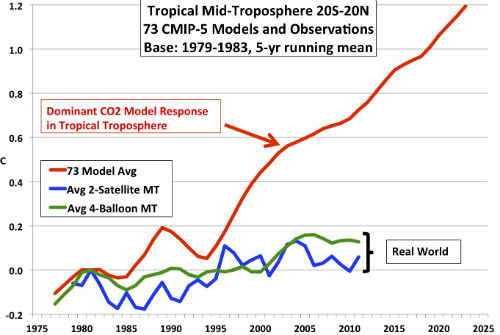
…there’s no way around the fact that this reprieve for the planet is bad news for proponents of policies, such as carbon taxes and emissions treaties, meant to slow warming by moderating the release of greenhouse gases. The reality is that the already meagre prospects of these policies, in America at least, will be devastated if temperatures do fall outside the lower bound of the projections that environmentalists have used to create a panicked sense of emergency. Whether or not dramatic climate-policy interventions remain advisable, they will become harder, if not impossible, to sell to the public, which will feel, not unreasonably, that the scientific and media establishment has cried wolf.

Dramatic warming may exact a terrible price in terms of human welfare, especially in poorer countries. But cutting emissions enough to put a real dent in warming may also put a real dent in economic growth. This could also exact a terrible humanitarian price, especially in poorer countries. Given the so-far unfathomed complexity of global climate and the tenuousness of our grasp on the full set of relevant physical mechanisms, I have favoured waiting a decade or two in order to test and improve the empirical reliability of our climate models, while also allowing the economies of the less-developed parts of the world to grow unhindered, improving their position to adapt to whatever heavy weather may come their way. I have been told repeatedly that “we cannot afford to wait”. More distressingly, my brand of sceptical empiricism has been often met with a bludgeoning dogmatism about the authority of scientific consensus.

Of course, if the consensus climate models turn out to be falsified just a few years later, average temperature having remained at levels not even admitted to be have been physically possible, the authority of consensus will have been exposed as rather weak. The authority of expert consensus obviously strengthens as the quality of expertise improves, which is why it’s quite sensible, as matter of science-based policy-making, to wait for a callow science to improve before taking grand measures on the basis of it’s predictions.

As I wrote back in 2004, “I’ve never been all that convinced of the accuracy of the scientific evidence presented in favour of the Global Warming theory, especially as it seemed to play rather too clearly into the hands of the anti-growth, anti-capitalist, pro-world government folks. A world-wide ecological disaster, clearly caused by human action, would allow a lot of authoritarian changes which would radically reduce individual freedom and increase the degree of social control exercised by governments over the actions and movement of their citizenry.”

June 21, 2013

Calgary flooding

Filed under: Cancon, Environment — Tags: , , , — Nicholas @ 10:23

June 10, 2013

When recycling makes sense – and when it doesn’t

Filed under: Economics, Environment, Government — Tags: , , , — Nicholas @ 11:14

Michael Munger examines two of the most common myths about recycling:

Almost everything that’s said about recycling is wrong. At the very least, none of the conventional wisdom is completely true. Let me start with two of the most common claims, each quite false:

  1. Everything that can be recycled should be recycled. So that should be the goal of regulation: zero waste.
  2. If recycling made economic sense, the market system would take care of it. So no regulation is necessary, and in fact state action is harmful.

If either of those two claims were true, then the debate would be over. The truth is more complicated than almost anyone admits.

There are two general kinds of arguments in favor of recycling. The first is that “this stuff is too valuable to throw away!” In almost all cases, this argument is false, and when it is correct recycling will be voluntary; very little state action is necessary. The second is that recycling is cheaper than landfilling the waste. This argument may well be correct, but it is difficult to judge because officials need keep landfill prices artificially low to discourage illegal dumping and burning. Empirically, recycling is almost always substantially more expensive than disposing in the landfill.

Since we can’t use the price system, authorities resort to moralistic claims, trying to persuade people that recycling is just something that good citizens do. But if recycling is a moral imperative, and the goal is zero waste, not optimal waste, the result can be a net waste of the very resources that recycling was implemented to conserve. In what follows, I will illustrate the problems with each of the two central fallacies of mandatory and pure-market recycling, and then will turn to the problem of moral imperatives.

May 15, 2013

Canadians’ hypocrisy on climate change

Filed under: Cancon, Environment, Politics — Tags: , , , — Nicholas @ 00:01

Stephen Gordon fired off a tweetstorm yesterday:

May 5, 2013

A second life for the American chestnut tree?

Filed under: Environment, Science, USA — Tags: — Nicholas @ 10:25

The Economist reports on a trial of genetically modified chestnut trees:

Once upon a time, according to folklore, a squirrel could travel through America’s chestnut forests from Maine to Florida without ever touching the ground. The chestnut population of North America was reckoned then to have been about 4 billion trees. No longer. Axes and chainsaws must take a share of the blame. But the principal culprit is Cryphonectria parasitica, the fungus that causes chestnut blight. In the late 19th century, some infected saplings from Asia brought C. parasitica to North America. By 1950 the chestnut was little more than a memory in most parts of the continent.

American chestnuts may, however, be about to rise again — thanks to genetic engineering. This month three experimental patches will be planted, under the watchful eye of the Department of Agriculture, in Georgia, New York and Virginia. Along with their normal complements of genes, these trees have been fitted with a handful of others that researchers hope will protect them from the fungus.

The project has been organised by the Forest Health Initiative (FHI), a quango set up to look into the idea of using genetic engineering to rescue species of tree whose populations have been devastated by fungal diseases or insect pests. It has sponsored research at several universities, and this month’s trial is the first big field test. If it works, the FHI will ask the government for permission to plant transgenic chestnuts in the wild, with the intention of re-establishing the species in America’s woodlands. And if that goes well, it could provide a model for projects to re-establish elm trees (being devastated by Dutch elm disease, a beetle-born fungal infection), ash trees (threatened in North America by a beetle called the emerald ash borer, and in Europe by a fungal disease called ash dieback) and a fir tree known, confusingly, as the eastern hemlock (which is plagued by the woolly adelgid, a sap-sucking bug).

April 19, 2013

Enviro-Apocalypse Now (or real soon, anyway)

Filed under: Books, Environment, Media — Tags: , , — Nicholas @ 09:17

At sp!ked, Tim Black reviews the latest environmental doom-mongering tome from Andrew Simms:

All of this ought to leave Simms & Co looking like the boys who cried climate catastrophe. Yet somehow, as Cancel the Apocalypse shows, they are continuing, unabashed, to preach environmental doom despite its palpable absence. In fact, the hyper-pessimism has even been ramped up a bit. ‘The horsemen are galloping and there are more than four of them’, Simms chirrups. ‘Climate change, financial meltdown, the global peak and decline of oil production, a mass extinction event of plant and animal species, overuse of fresh water supplies, soil loss, economic infrastructure increasingly vulnerable to external shocks — it’s the age of the complex super disaster.’ It seems devastating climate change is no longer enough for Simms; he wants to solicit a whole host of other unrelated, and highly debatable, phenomena for his narrative of woe. Cancelled? No way, Simms chortles: the apocalypse is back on.

So how is Simms able to maintain his unshakeable belief in our imminent destruction? What makes him and his tweedy, right-on puritan mates different to, say, William Miller, founder of the Second Adventists (later to become the Seventh Day Adventists), who, as Simms tells us, believed the day of reckoning would fall in 1843, 1845, 1846, 1849, 1851, 1874 and 1999?

The ostensible answer is that whereas previous doomsayers derived their predictions from ‘gobbledygook floating up from patterns of words and numbers dimly discerned in books about faith and belief’, Simms and his followers rely upon ‘verifiable scientific experiment’. Of course, The Science.

Which is funny, because Cancel the Apocalypse does not contain much in the way of ‘verifiable scientific experiment’. What it does feature, though, is a scientistic use of the authority of science to justify a whole range of dubious assertions. In Simms’ hands, science is no longer science. It is a metaphor, an authority-bolstering gloss, allowing him to talk, for example, of socio-historical phenomena such as the economy in terms of the laws of nature: ‘Just as physical laws constrain the maximum efficiency of a heat engine’, he writes, so ‘economic growth is constrained by the finite nature of our planet’s natural resources, the variable but ultimately bounded biocapacity of its oceans, fields, geology and atmosphere’; and later on, ‘the laws of physics mean it is not possible to create the order of such [economic] exchanges without a little something being lost [Simms is referring to the biosphere]’.

March 28, 2013

British energy prices graphically explained

At The Register, Lewis Page debunks the propaganda from the government and shows the cost components of British energy prices from the government’s own published source:

The government’s Department of Energy and Climate Change, with the current minister as mouthpiece, has just pushed out a report claiming that its green policies are saving us money now and will save us even more in coming decades. Can it be true? We can save the planet — or anyway reduce carbon emissions — and it not only costs nothing, but puts money in our pockets?

In a word, no: of course not. If that was true there would be no need for government action, we’d be acting to reduce carbon emissions on our own. And indeed, once you skip the foolish tinned quotes and bogo-stats in the executive summary, the report itself makes it very clear that in fact green policies are already to blame for most of the sustained climb in electricity prices we’ve suffered over the past decade — and that it’s going to get a lot worse.

The blue and brown bars are what you would pay without green intervention. The rest is thanks to the greens.

The blue and brown bars are what you would pay without green intervention. The rest is thanks to the greens.

So there you are, plain as day. The various green interventions in the UK and EU energy markets which have come in since the turn of the century are already costing you a hefty sum — the government have already forced up the price you pay for electricity today by nearly 20 per cent over where it would have been if they’d left matters alone. If they carry on as planned, by the year 2030 they will have managed to drive it up by more than a third over where it would normally be.

March 24, 2013

Humans are very good at spotting patterns … even when they aren’t really there

Filed under: Environment, Health, Media, USA — Tags: , — Nicholas @ 00:01

In Slate, George Johnson explains why the human ability to detect patterns can sometimes work against us:

Lay a chessboard on a table. Then grab a handful of rice and let the grains fall and scatter where they may. They won’t spread out uniformly with the same number occupying each square. Instead there will be clusters. Now suppose that the chessboard is a map of the United States and the grains are cases of cancer.

Each year about 1.6 million cases of cancer are diagnosed in the United States, and epidemiologists regularly hear from people worried that their town has been plagued with an unusually large visitation. Time after time, the clusters have turned out to be statistical illusions — artifacts of chance.

The Erin Brockovich incident, one of the most famous, is among the many that have been debunked. Hexavalent chromium in the water supply of a small California town was blamed for causing cancer, resulting in a $333 million legal settlement and a movie starring Julia Roberts. But an epidemiological study ultimately showed that the cancer rate was no greater than that of the general population. The rate was actually slightly less.

March 23, 2013

Human Achievement Hour 2013

Oh, right. It’s once again time for the Gaia-worshippers to do an hour’s penance for the crime of being alive in an industrialized society. The Competitive Enterprise Institute proposes a different way of using that hour:

On Saturday, March 23 at 8:30pm (local time), some people, businesses and governments around the world will choose to sit in the dark for one hour as a symbolic gesture to take action against climate change. The organizers of Earth Hour say that they [no] longer expect energy use to actually drop during the hour, but instead see it as a way for people to show their commitment to reducing energy use and taking action beyond the hour.

It’s absolutely every person’s right to decide if they want to conserve energy for whatever reason; they are free to sit in the dark as long as they want. However, it should not be their right to impose their beliefs or opinions on others. And that is what is at the heart of the environmentalist movement. While many participants in Earth Hour sincerely want a cleaner environment — a desire most of us share — the environmentalist movement whether implicitly or explicitly seeks to clamp down on human progress by reducing energy consumption whether through regulation and taxation. They want to make fossil fuels, which they see as dirty, more expensive to encourage the use of renewable “greener” energies.

Despite any good intentions, the ultimate result of environmentalist policies is not a healthier, cleaner environment. Instead we will see a population that is sicker and poorer. The only way we achieve technology that is “greener” is by building on older “dirtier” technology. As we make it harder and more expensive for those in the business of creating new technologies, all we do is slow progress and make it that much longer to reach more environmentally friendly solutions.

March 18, 2013

Mark Lynas and his break with the anti-GMO activists

Filed under: Britain, Environment, Food, Media, Science — Tags: , , — Nicholas @ 09:11

Mark Lynas was one of the most prominent activists working against the adoption of genetically modified crops. Over time, he realized he was fighting the wrong battle and publicly recanted his decades-long struggle. He talks about it in an interview with Charlie Gillis in Maclean’s:

Q: You’ve disavowed a cause you were identified with for decades. How are you feeling about your decision?

A: It’s been traumatic, but it’s also been something of a liberation. I’ve obviously been inconsistent in my life, but so are we all. In my view, it’s better to be inconsistent and half-right, than to be consistently wrong. Even the pope doesn’t claim these days to be infallible, yet that’s what most environmental groups do.

Q: Still, you’ve offended your former allies, a lot of whom are now trying to discredit you. Some say you exaggerated your part in founding the anti-GM movement to start with. What’s that been like on a personal level?

A: My whole social scene has been characterized by my environmentalism. I’m in a situation where I can go to a party and I don’t know who’s currently not speaking to me.

Q: On Twitter, Vandana Shiva, a prominent environmentalist in India, likened your calls for farmers to be able to plant GMOs to saying rapists should have the freedom to rape.

A: That was simply astonishing, and frankly, hurtful to people who have actually suffered the trauma of rape. Look, these attacks on me are obviously done in the interests of damage limitation. It’s sort of an emperor’s-new-clothes thing. I have helped expose the fact most people’s concerns about GM foods are based on mythology. Once you can get past the idea that there’s something inherently dangerous about GM foods, it’s a whole different conversation. We actually can tell whether GM foods are safe. They have been extensively tested hundreds and hundreds of times, using different techniques. Many of the tests were conducted independently. The jury is entirely in on this issue.

[. . .]

Q. You argue that opposing GMOs is actually anti-environmental.

A. That was the realization that changed my mind. That recombinant DNA is actually a potentially very powerful technology for designing crop plants that can help humanity tackle our food-supply shortages, and also reduce our environmental footprint. They can help us use less fertilizer, and dramatically reduce pesticide applications. We can reduce our exposure to climate change through drought and heat-tolerant crops. So the potential is enormous.

March 14, 2013

Reason.tv: Matt Ridley on How Fossil Fuels are Greening the Planet

Filed under: Environment, Food, Media — Tags: , , , — Nicholas @ 00:01

Matt Ridley, author of The Red Queen, Genome, The Rational Optimist and other books, dropped by Reason‘s studio in Los Angeles last month to talk about a curious global trend that is just starting to receive attention. Over the past three decades, our planet has gotten greener!

Even stranger, the greening of the planet in recent decades appears to be happening because of, not despite, our reliance on fossil fuels. While environmentalists often talk about how bad stuff like CO2 causes bad things to happen like global warming, it turns out that the plants aren’t complaining.

March 4, 2013

Solar power in a dark German winter

Filed under: Economics, Environment, Europe, Germany — Tags: , , — Nicholas @ 13:44

The German government is having to pay a lot of money in subsidies to solar power generators, but is also having to scramble to buy power from other European sources as the solar output is falling far below current demands:

The Baedeker travel guide is now available in an environmentally-friendly version. The 200-page book, entitled “Germany – Discover Renewable Energy,” lists the sights of the solar age: the solar café in Kirchzarten, the solar golf course in Bad Saulgau, the light tower in Solingen and the “Alster Sun” in Hamburg, possibly the largest solar boat in the world.

The only thing that’s missing at the moment is sunshine. For weeks now, the 1.1 million solar power systems in Germany have generated almost no electricity. The days are short, the weather is bad and the sky is overcast.

As is so often the case in winter, all solar panels more or less stopped generating electricity at the same time. To avert power shortages, Germany currently has to import large amounts of electricity generated at nuclear power plants in France and the Czech Republic. To offset the temporary loss of solar power, grid operator Tennet resorted to an emergency backup plan, powering up an old oil-fired plant in the Austrian city of Graz.

Solar energy has gone from being the great white hope, to an impediment, to a reliable energy supply. Solar farm operators and homeowners with solar panels on their roofs collected more than €8 billion ($10.2 billion) in subsidies in 2011, but the electricity they generated made up only about 3 percent of the total power supply, and that at unpredictable times.

« Newer PostsOlder Posts »

Powered by WordPress