
Quotulatiousness

December 15, 2009

RAF and Royal Navy facing further cuts

Filed under: Britain, Bureaucracy, Military — Tags: , , , , — Nicholas @ 07:40

With the costs of maintaining British troops in Afghanistan still rising, the government is expected to announce further cuts to the Royal Air Force and Royal Navy today:

Some RAF bases face closure to pay for extra equipment for British forces in Afghanistan, a defence minister indicated this morning.

Quentin Davies said that it would be a “very good thing” to get by with fewer RAF bases if that was possible and that the Ministry of Defence wanted to spend its money with “maximum effect”.

[. . .]

Some Tornado and Harrier aircraft and small navy surface vessels are likely to face cuts. A number of RAF bases will be closed — including reportedly RAF Kinloss in Moray — and part of the sovereign base areas in Cyprus will be sold.

The two large aircraft carriers are expected to survive this particular cut, although it wouldn’t be surprising to see further delay introduced into their construction . . . even though stretching out delivery dates is an expensive way to increase short-term savings:

The announcement follows the publication of a report from the National Audit Office saying the gap between the cost of planned weapons projects and what the MoD can actually afford could be as much as £36bn.

The gap would have been larger had the ministry not delayed a number of projects, such as the construction of two large aircraft carriers, the Queen Elizabeth and the Prince of Wales, the NAO reports.

However, the decision to delay the carrier project to save £450m over the next four years will increase costs by £1.12bn over later years — a net increase of £674m, the NAO says.

The MoD has also decided to reduce an order of Lynx Wildcats from 80 to 62 helicopters, saving £194m but reducing planned flying hours by a third. The report says that last year the price for the 15 biggest military schemes rose by £1.2bn, £733m of which was the result of delays designed to save money in the short term.

Update: Believe it or not, there’s actually some sense to the government’s announced changes:

The headlining move comes with the announcement, widely anticipated, that the British fleet of US-made Chinook heavy-lift helicopters is to increase from 48 to 70 aircraft, with initial deliveries of ten new choppers arriving by 2013. The Chinook is the only helicopter in widespread Western service with enough spare lift to operate with any freedom in Afghanistan’s heat and high altitudes, and the new copters will be extremely welcome among British forces there.

It is also expected that another Boeing C-17 heavy transport plane will be ordered to join the existing UK fleet of 5, which are regarded as crucial to sustaining the “air bridge” logistic link between Blighty and its troops in Afghanistan.

These short-term improvements will be paid for not by any budget increase, but by reducing the active forces of Tornado bombers and Harrier close-support jets, and early retirement for much of the existing fleet of antique Nimrod MR2 maritime patrol aircraft. These moves will allow closure or mothballing of some of the RAF’s 45+ UK stations, with associated further job losses and savings.

They’ve also announced the retirement of the Sea King helicopter from active service, with the existing inventory of Merlin HC3 moving from the RAF to RN service (including whatever refitting will be necessary to “maricise” them for full-time service with the fleet).

Overall, the changes make a good deal of sense . . . what a surprise.
The rise of California wine

Filed under: Bureaucracy, Europe, France, USA, Wine — Tags: , — Nicholas @ 07:18

H/T to Jon, my former virtual landlord.

December 14, 2009

Shock! Horror! Children’s book series from 1940’s has “conservative values”!

Filed under: Books, Britain, Media, Railways — Tags: , — Nicholas @ 09:38

I guess it must have been a slow news week, if this makes the news:

Thomas the Tank Engine attacked for ‘conservative political ideology’
Children’s favourite Thomas the Tank Engine has been attacked by a Canadian academic for its “conservative political ideology” and failure to adequately represent women.

The show’s right-wing politics shows the colourful steam engines punished if they show initiative or oppose change, the researcher found.

She also highlighted the class divide which sees the downtrodden workers in the form of Thomas and his friends at the bottom of the social ladder and the wealthy Fat Controller, Sir Topham Hatt, at the top.

[. . .]

She was critical of the fact the show only has eight female characters out of the 49 who feature.

“The female characters weren’t necessarily portrayed any more negatively than the male characters or the male trains, but they did tend to play more secondary roles and they’re often portrayed as being bossy or know-it-alls,” she said.

Let’s see, a series of stories, written for children starting in the 1940’s. Conformist? Check. Sexist? Check. Reinforces class-based stereotypes? Check. By God, she’s right! Call out the Human Rights pitbulls!

File this one under “Obvious”.

December 11, 2009

Changes coming to England’s over-generous libel laws?

Filed under: Britain, Law — Tags: , , , , — Nicholas @ 09:19

For the aggrieved, suing in London has been the way to go, due to English laws which strongly favour the plaintiff. This may change, as the laws are being reviewed:

England has long been a mecca for aggrieved people from around the world who want to sue for libel. Russian oligarchs, Saudi businessmen, multinational corporations, American celebrities — all have made their way to London’s courts, where jurisdiction is easy to obtain and libel laws are heavily weighted in favor of complainants.

Embarrassed by London’s reputation as “a town called sue” and by unusually stinging criticisms in American courts and legislatures, British lawmakers are seriously considering rewriting England’s 19th-century libel laws.

A member of the House of Lords is preparing a bill that would, among other things, require foreigners to demonstrate that they have suffered actual harm in England before they can sue here.

They don’t call it the original Nanny State for nothing

Filed under: Britain, Bureaucracy, Government — Tags: , — Nicholas @ 00:05

In case you think the constant stories from Britain of increasing state surveillance of the citizenry are just unrelated events, Shattered Paradigm has more unrelated events for you:

#1) The U.K. has more surveillance cameras per citizen than anywhere else in the world. In fact, according to one estimate, there are 4.8 million video cameras constantly watching every move citizens make.

#2) Government education inspectors in the U.K. have announced that the 40,000 parents who homeschool their own children must undergo criminal records checks.

#3) U.K. authorities are now admitting that every phone call, text message, email and website visit made by private citizens will be stored for one year and will be available for monitoring by government agencies.

#4) Officials in the U.K. have spent two years and massive amounts of money on a study they claim proves that 10-pin bowling is a health and safety hazard and should be banned.

#5) Parents at one school in the U.K. are being forced to undergo background checks to prove that they are not pedophiles before they are allowed to accompany their children to school Christmas carol events.

H/T to Radley Balko, who says that the title “‘Most oppressive Big Brother society on earth’ is a bit much.”

December 10, 2009

Russia does it again, to NATO’s benefit

Filed under: Military, Politics, Russia — Tags: , , , — Nicholas @ 09:19

Sometimes, the Russian approach to diplomacy results in exactly the opposite to the intended outcome:

In the 1990s, when enlarging NATO to take in the ex-communist countries still seemed perilous and impractical, help came from an unexpected source. Yevgeny Primakov, a steely old Soviet spook who became first head of Russia’s Foreign Intelligence Service, then foreign minister and even, briefly, prime minister, liked to say that it would be “impermissible” for the alliance to admit ex-communist states.

His remarks, and others in similar vein by leading Russian politicians, proved counterproductive. The more the Kremlin huffed and puffed about ex-captive nations deciding their own future, the harder it became to dismiss those countries’ fears: if your neighbour terms it “impermissible” for you to install a burglar alarm, people will start taking your security worries seriously. Some wags even suggested that a “Primakov prize” be established to mark the boost he had given to the cause.

But the lesson apparently was not learned:

Instead, Russia is adopting the opposite course. It habitually violates Baltic airspace. It maintains a vocal propaganda offensive (such as a report being launched in Brussels this week by a Russian-backed think-tank, which criticises Baltic language and citizenship laws). This autumn, it scandalised NATO opinion by running two big military exercises, without foreign observers, based on highly threatening scenarios (culminating in a Strategic Rocket Forces drill in which Russia “nuked” Poland). The exercises demonstrated weakness and incompetence, as well as force of numbers and nasty thinking. But they made life hard for peacemongers and strengthened the arguments of NATO hawks and the twitchy eastern Europeans.

December 8, 2009

India grounds their SU-30 fighters (again)

Filed under: India, Military, Russia — Tags: , — Nicholas @ 08:26

The Indian military has grounded their fleet of Russian SU-30 fighters after a crash involving a more advanced version:

For the second time this year, India has grounded its Su-30 fighters because one of the aircraft crashed. This time, the grounding of the 98 Su-30s in service is expected to last only a few days. Earlier this year, in May, its Su-30 fighters were grounded for a month after one of them appeared to develop engine problems and crashed. One of the pilots survived, but the parachute of the other failed to open. Four days before the Indian Su-30 went down, a Russian Su-35 also crashed because of engine problems. The Su-35 is an advanced version of the Su-30, and uses a similar engine. Earlier this year, Russia grounded all its MiG-29 fighters to check for structural problems, after one of them came apart in flight. All this is particularly upsetting to Indians, who had been assured by the Russians that the Su-30 was a modern (built to Western standards of reliability) aircraft. Such assurances were necessary because of earlier Indian experience with the MiG-21, and Russian aircraft in general. So far this year, India has lost twelve military aircraft, most of them of Russian design.

December 7, 2009

A wine sale for the well-heeled

Filed under: France, Randomness, Wine — Nicholas @ 12:30

Some very old (and one hopes, authentic) wines to be auctioned off by La Tour d’Argent in Paris:

A total of 18,000 bottles — including wine from Cognac, Champagne, Burgundy and Bordeaux — will be auctioned.

The sale is intended to raise 1m euros (£0.9m) to renew the cellar’s contents and ensure the restaurant keeps its multiple Michelin stars.

Its wine list is 400 pages long, with no fewer than 15,000 tipples.

December 6, 2009

Farewell to the Orient Express

Filed under: Economics, Europe, Railways — Tags: — Nicholas @ 00:32

Economic times are hard on non-essential services, and the luxury train called the Orient Express faces cancellation:

Its name evokes images of glamour and mystery and has provided authors including Agatha Christie and Ian Fleming with perfect backgrounds for their tales of intrigue and suspense.

But now the Orient Express is to be cut from Europe’s rail timetables. Next weekend, the service — which runs only between Strasbourg and Vienna — will be scrapped, a victim of high-speed railways and cut-price flights.

“The name the Orient Express will disappear from the official timetables before the year is out, after more than 125 years,” says Mark Smith, the rail expert who runs The Man in Seat Sixty-One website.

Only travellers who can afford lavish private trains — such as the Venice Simplon-Orient-Express and the Danube Express’s Istanbul Odyssey — will be able to enjoy the service’s former glory.

Of course, it’s hard to believe that Vienna qualifed as an “oriental” destination . . .

December 5, 2009

Henry 8.0

Filed under: Britain, History, Humour — Tags: , — Nicholas @ 12:55

H/T to Michael O’Connor Clarke, who said “Forget about the Tudors – BBC’s “Henry 8.0″ is much more historically accurate”.

Met Office reacts to Climategate

Filed under: Britain, Environment — Tags: , , — Nicholas @ 11:59

Britain’s Met Office is taking strong measures in light of the Climategate revelations:

The Met Office plans to re-examine 160 years of temperature data after admitting that public confidence in the science on man-made global warming has been shattered by leaked e-mails.

The new analysis of the data will take three years, meaning that the Met Office will not be able to state with absolute confidence the extent of the warming trend until the end of 2012.

The Met Office database is one of three main sources of temperature data analysis on which the UN’s main climate change science body relies for its assessment that global warming is a serious danger to the world. This assessment is the basis for next week’s climate change talks in Copenhagen aimed at cutting CO2 emissions.

December 4, 2009

Britain lowers defences against alien invasion

Filed under: Britain, Government, Military, Space — Tags: , — Nicholas @ 10:02

It’s true . . . the British are now wide-open to invaders from Rigel: they’ve re-assigned their UFO investigation forces to other duties:

The Ministry of Defence has closed its UFO unit after more than 50 years of investigating reported UK sightings.

A hotline and e-mail address for the public to report possible sightings was shut on 1 December because it had no “defence value”, the MoD said.

The officer handling reports has moved to another post, saving £44,000 a year.

The MoD said the unit had received thousands of reports, although none had yielded proof of aliens or any security threat to the UK.

Well of course they’d say that, wouldn’t they? Expect the mothership to show up any day now . . .

December 2, 2009

Scotland may eliminate “double jeopardy”

Filed under: Britain, Law, Liberty — Tags: — Nicholas @ 08:19

As England and Wales have already gotten rid of this ancient relic of former times, which prevented multiple prosecutions of a suspect for the same crime, Scotland is also considering getting rid of this encumbrance on state prosecution:

The centuries-old law preventing someone acquitted of a crime from being tried again in a Scottish court could be abolished.

But a review of the rule by the Scottish Law Commission also said any change in the law should not be imposed on cases retrospectively.

Of course, our noble prosecutors would never take advantage of this change to harass or punish anyone:

Patrick Layden, QC, lead commissioner on the review, said he believed the basic principles behind double jeopardy should remain.

He said it was up to parliament to decide whether or not retrials could be held in serious cases where strong new evidence became available after the accused was acquitted.

I understand the urge to change the law — it is frustrating to see a criminal get away with a crime due to insufficient evidence being available when the case goes to court. The BBC article specifically mentions a case where this seems to have happened, and quotes family members of the victims about their disappointment and anger over the acquittal.

That being said, I still think it’s a bad idea to allow the state to serially prosecute someone until they get a favourable result. The power and resource imbalance between a government and an individual provides far too much opportunity for the stronger party to eventually succeed — and there’s no guarantee that they’ll be correct about the actual guilt of the person being prosecuted (and we’ve certainly seen more faulty prosecutions lately as DNA evidence becomes easier and cheaper to evaluate).

November 30, 2009

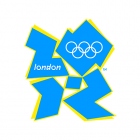
2012 Olympic logo not just ugly, but also cartoon porn

Filed under: Britain, Law, Sports — Tags: , , , — Nicholas @ 12:41

One of the least aesthetic Olympic logos ever devised may also be deemed pornographic:

Government zeal in pursuing anyone suspected of harbouring paedophilic tendencies may shortly rebound — with unintended consequences for the 2012 Olympic logo.

Earlier this month, the Coroners & Justice Bill 2009 received the Royal Assent. This Act was another of those portmanteau pieces of legislation for which the current government is famous, mixing up new regulations on the holding of inquests, driving offences, provocation in murder cases and, crucially, a new law making it a criminal offence to be found in possession of an indecent cartoon image of a child.

The horror facing the unpopular Olympics logo is that this is a strict liability offence. If an image is indecent, or held to be so by a jury, it is no good the Olympic Committee claiming that it was not intended as such.

Regular readers will be aware of the controversy that surrounded the current logo since the day it was launched. Critics were not impressed by the £400,000 that had allegedly been shelled out to creative consultancy Wolff Olins to come up with the design. However, it was the logo’s perceived suggestiveness — with many sniggering that it appeared to show Lisa Simpson performing an act of fellatio — that excited internet controversy.

You’ll not that I was careful not to show the offending logo, both for fear of prosecution and because it’s hideous:

[Perry de Havilland]: What does it look like to you? To me it is obvious: a collapsing structure of some sort, perhaps a building at the moment of demolition. The sense of downwards motion towards the bottom of the page is palpable.

Breathtaking. I mean what truly magnificent symbolism. The entire Olympic endeavour has been a massive looting spree with already grotesque cost over-runs (and it is only 2007), so surely something that conjures up images of collapse and disaster is really on the money . . . and speaking of money, at £400,000 (just under $800,000 USD) for the logo, it perfectly sums up the whole ‘Olympic Experience’ for London taxpayers. [. . .]

[James Lileks]: Seriously, what is the matter with people who come up with this? And what is the matter with the people who approved it? Ads that showed the logos have reportedly caused seizures among British epileptics, but I think this thing would make a fossilized femur bone suffer convulsive muscle spasms. If you can’t tell, it’s the year of the London games — 2012. I think it’s also meant to imply a human form — say, a discus thrower, or a runner bursting from the blocks. Whatever it is, it’s an aesthetic catastrophe, and would seem to indicate there’s no one around in the London Games who had the nerve to bark “rubbish, that; try again, and give me a proper logo with some bloody numbers.” I think there’s a point at which people lose the ability to pretend they have any sort of aesthetic criteria, and embrace whatever’s loud and ugly simply because loud and ugly is the style of the times. There’s always a fair amount of coin to be had for dissing the traditionalists, of course; I imagine that if someone submitted a logo with a flag or a bulldog they would have suffered a gentle sneer: still pining for the empire, eh, Smithson. Well, Kipling’s dead. Yes he is. Dig him up, you’ll find Posh Spice’s heel stuck in his heart, the coffin stuffed with I Heart Diana memorial teddy bears.

Doctors urged to advise patients on reducing their carbon butt-print

Filed under: Britain, Bureaucracy, Environment, Health — Tags: , , , , — Nicholas @ 09:20

The Climate and Health Council in Britain is urging GPs to provide their patients with information on how to reduce their carbon output:

The Council has been recently formed to study the health benefits of tackling climate change and promotes a range of ideas from reducing your carbon footprint by driving less and walking more to eating local, less processed food.

It wants to raise ‘health’ on the agenda of December’s UN Climate Change Summit in Copenhagen.

They believe that offering patients advice on how to lower their carbon footprint can be just as easy and achievable as helping them to stop smoking or eat a healthier diet.

Other proposals include for all developed nations to pay an extra five dollars a barrel on oil and a tax on airline tickets. This would go into a special fund to develop low-carbon alternatives to existing technologies, they say.

So, after waiting for however many weeks to get that precious 2.5 minutes of actual patient-doctor interaction, two minutes will now be composed (in a Freudian slip, I originally mistyped that as “composted”) of Climate-Puritan hectoring. That’ll do wonders for both the environment and for doctor/patient relations.

« Newer PostsOlder Posts »

Powered by WordPress

