Quotulatiousness

December 14, 2025

Andrea Dworkin – feminism’s anti-sex evangelist

Filed under: Books, History, Media, Politics, USA — Tags: , , , — Nicholas @ 05:00

On her Substack, Janice Fiamengo examines the life and work of Andrea Dworkin, whose influence on modern feminism is still quite strong, twenty years after her death:

A friend wrote a couple of days ago to say that he had seen shiny new copies of works by feminist author Andrea Dworkin (1946-2005) in Munro’s Books, one of Canada’s premier independent bookstores. One of the books was positioned on a shelf with the cover facing out to indicate that it was being showcased.

It is both shocking and unsurprising that Picador Books decided to reprint three of Dworkin’s texts in the past year, calling her a “prescient and visionary writer” who was “ahead of her time”. Anti-male paranoia is a sanctioned, cultivated taste more popular now, perhaps, than ever before, and Andrea Dworkin is its most notorious propagandist.

Known for her physical bulk, impassioned rhetoric, unkempt hair, and lesbian-identified overalls, Dworkin was a feminist icon in the 1980s and 90s, loved and hated in equal measure. No one did more to outline and consolidate the modern feminist understanding of sex than she, writing on the subject obsessively and with unparalleled fervor in books with titles such as Woman Hating (1974) and Pornography: Men Possessing Women (1981). The MeToo movement is almost unimaginable without the influence of Dworkin’s pronouncements.

Like other radical feminists, Dworkin wrote about rape, pornography, and prostitution, but her special focus was the degradation for women of sex itself: regular sex, the commonly accepted, normalized indignity that men allegedly inflict on women every day. Tempering her words in the white-heat of her revulsion, Dworkin became feminism’s anti-sex evangelist.


Sex, Dworkin believed, embodied nothing less than men’s hatred of everything female: “Intercourse is the pure, sterile, formal expression of men’s contempt for women” (p. 175). This is the thesis of her most representative book, Intercourse, which was first published in 1987 when Dworkin was 41 years old. Dworkin’s characterization of heterosexual sex as the ultimate enactment of misogyny has had an enduring impact on North American culture.

Intercourse set out to illuminate, through select readings of literary texts, what Dworkin believed to be a constant of male culture: the “hatred of women, unexplained, undiagnosed, mostly unacknowledged, that pervades sexual practice and sexual passion” (pp. 175-76). The phrase she most often used in the book to refer to intercourse was “the fuck”, which was meant to signify the raw dehumanization that supposedly characterized it.

Dworkin nominated herself the expert on male contempt for women because she had been its victim. “Specifically, am I saying that I know more than men about fucking?” she asked defiantly in the book’s preface, and answered, “Yes, I am […] the way anyone used knows the user” (p. xxxi).

While she also claimed in the preface that the book “does not say that all men are rapists or that all intercourse is rape” (p. xxxii), she does essentially say that, if not in quite those words. As she asserted only a page after the denial, “Intercourse conveys […] what it means that men — and now boys — feel entitled to come into the privacy of a woman’s body in a context of inequality” (p. xxxiv).

In another segment, she clarified that most, even the vast majority, of men were sexually abusive. She charged that men object to feminist criticism of pornography and prostitution because “So many men use these ignoble routes of access and domination to get laid,” that “without them the number of fucks would so significantly decrease that men might nearly be chaste” (p. 61). The implication was that men who objected to her arguments about the omnipresence of sexual exploitation were themselves sexual abusers who didn’t like the thought of their exploitation being curtailed.

This was the Dworkin who made feminists swoon with admiration: bombastic, hyperbolic, and incandescent with accusatory rage.
Hitler becomes a German – Rise of Hitler 23, January-March 1932

Filed under: China, Germany, History, Japan — Tags: , , , , , — Nicholas @ 04:00

World War Two
Published 13 Dec 2025

The big news this winter is the German Presidential elections, held now in March for the first time since 1932, which pit current President Paul von Hindenburg against Nazi Party leader Adolf Hitler. Hitler, though, must become a German citizen before he can run; he been stateless since he gave up his Austrian citizenship seven years ago. The campaigns are quite different, but both effective, and the German people head for the polls.
(more…)

Where does all the money go for so many First Nations bands?

Filed under: Bureaucracy, Cancon, Economics, Government — Tags: , , , , , — Nicholas @ 03:00

Earlier this month, I shared a long thread highlighting some incredible findings from the audit of a single First Nations group in Saskatchewan (here). On the social media site formerly known as Twitter, @Martyupnorth discusses how the federal government has gone out of its way not to ensure that First Nations funding is transparent:

    Cory Morgan @CoryBMorgan
    The Siksika reserve got $1.3 billion a few years ago and the housing is still predominantly shit.

    It’s not lack of government funding folks.

    It’s a broken system of racial apartheid.

    This ruling won’t help a bit.

Let’s talk about transparency in First Nations reserve finances in Canada. It’s topic that’s sparked a lot of debate.

Back in 2013, the Harper government passed the First Nations Financial Transparency Act (FNFTA), which required chiefs and councils to publicly disclose their salaries, expenses, and audited financial statements. The goal? To ensure accountability for the billions in federal funding going to reserves, empowering community members to hold leaders responsible and curb potential corruption.

But the Act was controversial from the start. Critics, including many First Nations leaders (no surprise there), called it paternalistic, imposed without proper consultation, and an infringement on Indigenous sovereignty. Some argued it violated privacy by forcing the public release of sensitive financial details, like personal remuneration schedules.

Enter Justin Trudeau. During his 2015 campaign, he promised to repeal the FNFTA, saying it wasn’t “respectful” to First Nations and needed replacement with a co-developed approach. Once in power, his government didn’t formally repeal the Act, but effectively reversed it by suspending enforcement. They stopped withholding funds from non-compliant bands, halted court actions, and reinstated frozen money. Compliance rates plummeted afterward, with fewer bands disclosing info publicly.

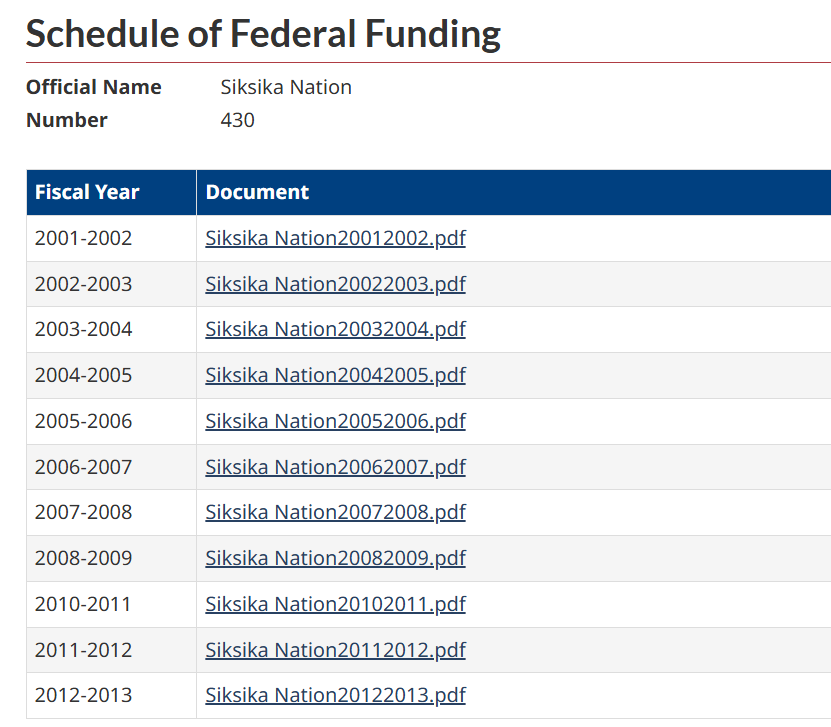
See the screen shot below. The Siksika Nation, to whom Cory refers to, hasn’t dislosed financial data since 2013.

The Liberals’ rationale? Building “mutual accountability” through partnership rather than top-down rules, addressing privacy concerns and respecting self-governance. But a decade later, as of 2025, the Act remains on the books unenforced, while polls show most Canadians still want transparency in how reserve funds are mis-managed.

What do you think? Does ditching enforcement help or hinder real accountability?

Update: At some point, the audits have to start and the government and the courts will then have their hands full:

A Fire Upon The Deep and the Identity Gradient

Filed under: Books, Media, Space — Tags: , , — Nicholas @ 02:00

Feral Historian
Published 8 Aug 2025

Vernor Vinge’s A Fire Upon The Deep would take a two-hour video to completely dissect. This is not that video. Instead, I’m looking just at the recurring ideas of collective identity and distributed consciousness. And all without a single mention of Skroderiders.

This one has been sitting around for about a year, due to lack of b-roll to cover the numerous jumpcuts due to my rambling and the rather persistent flies on that particular day. It’s a little rough, but let’s just roll with it.
(more…)

QotD: Why are Castles?

Filed under: Europe, Government, History, Military, Quotations — Tags: , , , — Nicholas @ 01:00

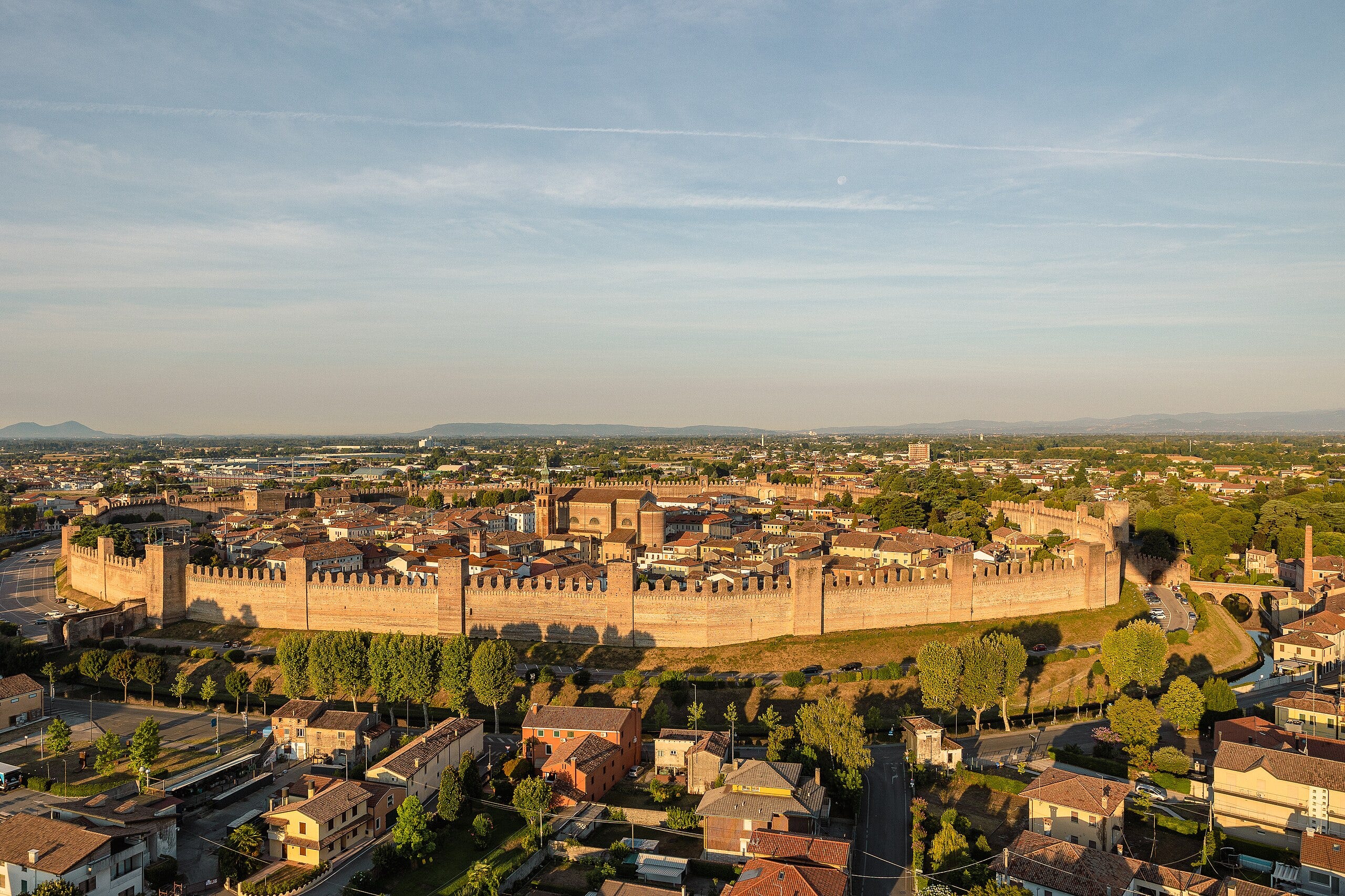
Castles differ from that other standby of medieval fortifications — city walls — in one crucial way, and that difference sheds a lot of light on their military application.

The walls of Cittadella, Italy (photo by Edoardo Bortoli, CC BY-SA 4.0).

A massive city wall, like the one shown above, has the very clear purpose of limiting access to a city or town. Close the gates, and no one can get in. Try to get in, and we’ll shoot you! The walls are meant to protect the settlement, both its inhabitants as well as its structures and physical wealth.

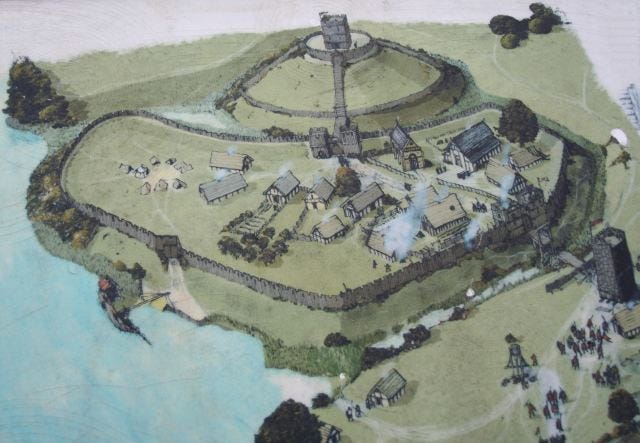
A castle, on the other hand, has a much smaller footprint than a city. It might only be a few buildings and a courtyard. Indeed, as we’ll see later in the series, the earliest castles (the classic “motte and bailey” design) were relatively small fortifications of earth and timber, capable of being built in a matter of days.

Image of a motte and bailey style castle. This particular one would take much longer than a few days to make, but it’s worth noting that even this “primitive” castle of timber and earth would have been a serious problem for any attacker. (Duncan Grey – Display Board of Huntingdon Hill Motte and Bailey Castle – CC BY-SA 2.0).

Especially if a lord was not in residence, a castle might only have a garrison of a few dozen, a far cry from the walls around urban centers that protected thousands or tens of thousands of lives!

So why bother?

Because, unlike a city wall which is meant to defend everything within it, a castle isn’t built in order to protect a tiny bit of land on top of a hill. Instead (say it with me, class): a castle is built to deny an enemy freedom of movement.

It’s not about what’s inside the walls. It’s about what’s outside the walls.

A castle allows you to control a disproportionately large area of land.

That control matters a great deal, because land was the source of wealth in pre-modern contexts. In societies where 80-95% of the populace were farmers, wealth and power came from controlling arable land. Capital did not derive principally from urban centers — wealthy and valuable as those were.1

Before we go further into how that impacts war and politics, I want to take a moment and dig deeper into why a castle allows its owner to control the land, because it’s something that’s usually glossed over, and understanding this dynamic will have a significant bearing on everything else we talk about here.

The Ugly Nature of Rule

As I’ve explained before, in order to actually rule an area, the ruler needs to have a monopoly on legitimate violence within that area. The emphasis here is on legitimate violence, which is significantly different than just “brute force”; force alone will always be a temporary and unstable method of rule. [You can read this explainer for more on that.] A ruler’s legitimacy allows that monopoly to continue unopposed.

One of the main reasons why a ruler needs that monopoly is that it allows for the collection of resources for use by the state. I’m going to lump all this together under the word “taxes”, but to be clear: in pre-modern societies, “taxes” could include manual labor commitments, payments in kind (in crops, in material, etc.), or in cash.

For all that, the ruler needs his agents to have unfettered access to the country he aims to rule; his tax collectors, law enforcers, merchants, judges, and certainly his lords and military all need to be able to move freely throughout the realm in order to do all the necessary business of maintaining law, order, and the collection of taxes.

Those are the most basic elements of statehood, the most basic mechanism of ordinary, everyday governing.

Castles fit into that system the same as any other governmental or administrative center: it’s a place to collect and store resources, a place for state agents to shelter, a locale for arbitration of justice, a residence for a lord … A castle can be a courthouse, police station, secret service listening post, governor’s mansion, and revenue service office all in one.

And a castle is fortified for much the same reasons that governmental buildings across history have always been fortified.

Even if the majority of a subject populace believes your rule is legitimate — a big if! — then there will still be people who chafe at the collection of taxes and who feel wronged by the administration of justice. Those outliers — if indeed they even are outliers — might try something stupid, like taking back their resources or stabbing your thugs peace-loving tax collectors. Better to have everything locked up, right?

And if the castle is large, and visibly imposing? Well that doesn’t hurt, does it?

That’s the every-day purpose of castles, at least in the sense that on any average Tuesday morning, that’s what the castle is for. That’s what people in the castle are doing. Ruling.

Eric Falden, “What Were Castles Actually For?”, Falden’s Forge, 2025-07-29.


    1. There are exceptions, of course, such as thassalocratic polities. But sea-faring societies don’t built castles and are therefore WAY outside the bounds of this discussion.

Powered by WordPress