Quotulatiousness

August 11, 2025

Smug Canadian boomer autohagiography rightly antagonizes the under-35s

Fortissax had an argument with one of his readers over a smug, self-congratulating meme about how wonderful Canada was in the 1990s and early 2000s:
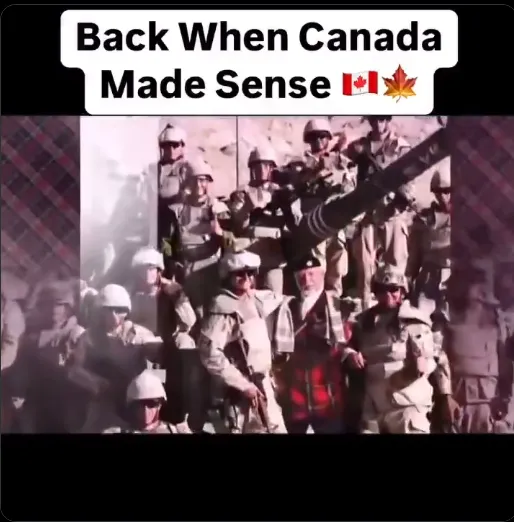
What we lived through long before Trudeau was the Shattering, the breakdown of Canada’s social cohesion, driven by left-liberalism with communist characteristics applied to race, ethnicity, sex, and gender, and punitive almost exclusively toward visibly White men. My generation, those millennials born on the cusp of Gen Z, saw post-national Canada take shape not in the comfortable suburban rings of the GTA or the posh boroughs of Outremont and Westmount, but in self-segregated, ghettoised enclaves of immigrants whose parents never integrated and were never required to.

Memes like that are dishonest because they feed a false memory. The 2000s were not normal. Wages were stagnant, housing was already an asset bubble, and immigration was still flooding in under a policy that explicitly forbade assimilation. Brian Mulroney had enshrined multiculturalism into law in 1988. Quebec alone resisted, carving out the right to limit immigration under the 1992 Quebec–Canada Accord. After Chrétien, Stephen Harper brought in three million immigrants, primarily from China, India, and the Philippines in that order.

The Don Cherry conservatives of that era were Bush lite. They were rootless, cut off from their history, their identities manufactured from the top down since the days of Lester B. Pearson. They conserved nothing. For Canadian youth, it was the dawn of a civic religion of wokeness, totalitarian self-policing by striver peers, and the quiet coercion of every institution. My memories of that decade are of constant assault — mental, physical, spiritual — from leftists in power, from encroaching foreigners, and from the cowardice of conservatives.

Your 2000s might have been great. For us, they were communist struggle sessions. In 2009 we were pulled from class to watch the inauguration of Barack Obama, a foreign president, as a historic moment for civil rights. Our schools excluded us while granting space to every group under the sun: LGBT safe spaces and cultural clubs for Italians, Jamaicans, Jews, Indians, Indigenous, Balkaners, Greeks, Slavs, Portuguese, Quebecois, Iroquois, Pakistanis — every culture celebrated except our own. Anglo-Quebecers and Anglo-Canadians got nothing but an Irish club, closely monitored for “white supremacy” and “racism” by the HR grandmas of the gyno-gerontocracy of English Montreal. Students self-segregated, sitting at different cafeteria tables and smoking at different bus shelters. At Vanier, Dawson, and John Abbott College, these divisions were institutionalised. I remember walking into the atrium of Dawson, my first post-secondary experience, greeted by a wigger rolling a joint while a Jamaican beatboxed to Soulja Boy.

We became amateur anthropologists out of necessity, forced to navigate a nationwide cosmopolitan experiment from birth. We learned the distinctions between squabbling southeastern Europeans of the former Yugoslavia, and we did not care if Kosovo was Serbia or whether Romanians and Albanians were Slavic, they all acted the same way. We learned the divides within South Asia, the rivalries between Hindutva and Khalistani, the differences between a Punjabi, a Gujarati, a Telugu, a Pakistani, a Hong Konger, a mainlander, and a Taiwanese. We know the shades of Caribbean identity, the factions of the Middle East, and the intricacies of North African identity. We should never have needed to know these things, but we do.

For us, childhood in this cesspit was the seedbed of radicalism. We never knew an era when contact with foreigners was limited to sampling food at Loblaws. All we know is being surrounded by those who hate us, governed by a state that wants to erase us, with no healthcare, no homes, no jobs that are not contested by foreigners, and no money to start families.

Stalin’s Death: The Day the USSR Changed Forever! – W2W 39

Filed under: Government, History, Russia — Tags: , , , , , — Nicholas @ 04:00

TimeGhost History
Published 10 Aug 2025

March 1953: Stalin’s sudden death triggers a whirlwind of conspiracies, paranoia, and a deadly battle for control inside the Kremlin. As Beria, Khrushchev, and the Soviet elite scramble for power, the fate of the world’s largest superpower hangs in the balance. Was Stalin murdered by his inner circle, or did his own regime consume him? Discover the truth behind the downfall, the rise of Khrushchev, and the birth of the KGB in the Cold War’s most dramatic turning point.
(more…)

The problem with the theory that local government is more responsive is … people

Filed under: Government, Liberty, Politics, USA — Tags: , , — Nicholas @ 03:00

Poor Chris Bray is having a moment of deep cognitive dissonance over the vast chasm between his prior belief that local government is more sensible, more grounded, more responsive to the electorate than huge, distant, impersonal big government:

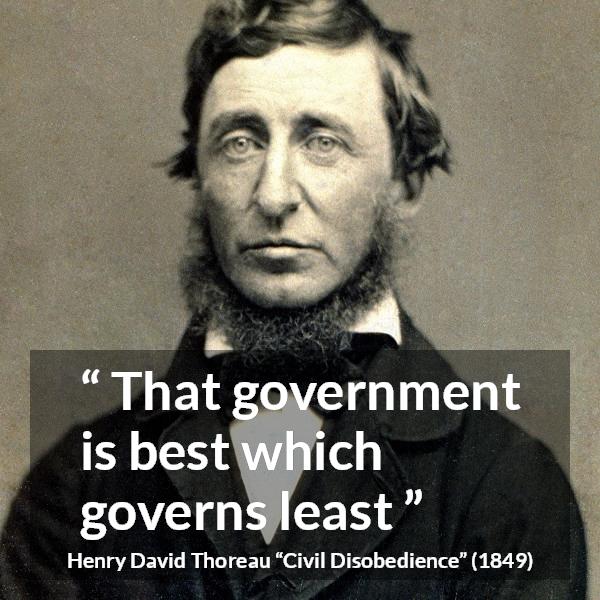
The more you deal with government, the more you are likely to agree with Thoreau

The problem of underlying principles and structural assumptions in a moment of profound cultural decay.

Like my old friend James Madison, the core of my understanding of political power is that authority becomes more rational and balanced as it gets closer to the people who are governed. Starting from home in my list of ideological priors, centralized power is usually going to be a steamroller, managed on top-down premises by people you’ve never met; local government, government by neighbors, is usually going to be more adept at listening and adapting. Your mayor is down the block, mowing his lawn. You can wave to him. When I worked at small town newspapers, I’d have breakfast with the city manager and the police chief — mostly so they could threaten to call my editor and have me fired, but still. They were here, right in front of me. I could talk to them. In the town where I’ve lived for a few years, now, I’ve waited at Trader Joe’s for a city councilman in cargo shorts and an old t-shirt to move over so I could get to the ground beef. They aren’t distant autocrats.

Sadly, though, a good few of them turn out to be proximate autocrats, and almost miraculously stupid. The problem with the theory of relatively well-balanced local authority is that some of the biggest goobers I’ve ever met have served on small town city councils and school boards, and your HOA board of literal neighbors makes Mussolini look like a hippie.

[Deleted a video here of an HOA officer being arrested, because it was staged.]

I wrote a quite carefully reported newspaper story about wasted money at a suburban school district, decades ago, that was critical but fair and elaborately sourced. The subsequent conversations I had with the members of the school board made me wonder if they had actual brain damage. No one on earth is more susceptible to psychotic conspiracy theories than small town elected officials, who respond to mild criticism by demanding to know WHO PUT YOU UP TO THIS, WHO ARE YOU REALLY WORKING FOR!?!?!?! WHAT’S YOUR TRUE AGENDA!?!?!?! WHO SENT YOU!?!?!?!? If you ask me for a list of the top ten people I’ve known personally and can’t stand at all, roughly eight of them were elected to local government positions in towns with low-five-figure populations, and I start grinding my teeth at the sound of their names. Wait, no: nine.

This topic is back on my mind this week because of Lina Hidalgo, though a county of five million people may be a bad example of real localism and neighborhood authority. Hidalgo is the county judge — in Texas, the chief executive officer — of Harris County. And she’s mad as a hatter. Click on the link to watch the video, but a tax increase is “not about politics, it’s about kids.” Never heard that one before.

[…]

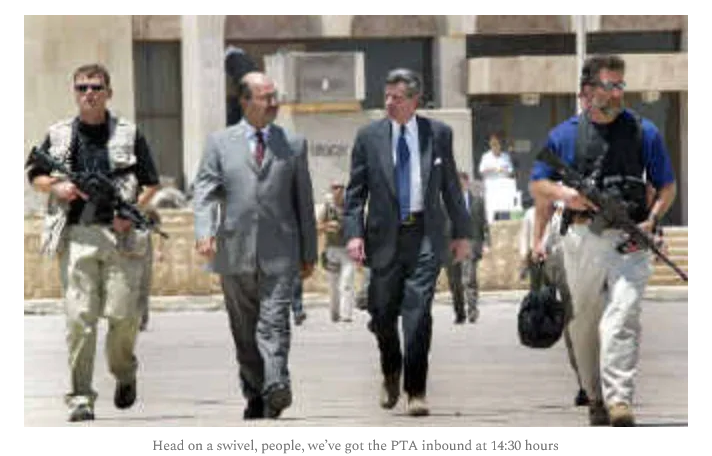
Making appalling decisions at the head of broken institutions, they respond to criticism by hiring men with guns as a shield against ordinary human contact. Like I said, the mayor is down the block, mowing his lawn, so you can wave to hi—STOP RIGHT THERE, GET ON THE GROUND.

The spirit of the NSBA letter lives on in a thousand local offices, where the problem with running schools is that parents exist, and the problem with running cities is that they have people in them.

Speed vs Armour: The Unexpected History of Fast Tanks

Filed under: Britain, Germany, History, Military, Weapons, WW1, WW2 — Tags: , , , , — Nicholas @ 02:00

The Tank Museum
Published 21 Mar 2025

Would you rather go to war in a tank that was quick but lightly armoured – or heavily armoured but slow?

The concept of fast tanks has existed since the First World War, but making a tank fast is easier said than done. You can increase the speed, but only by compromising the other two sides of The Iron Triangle.

Whilst a good power to weigh ratio is key to making a tank go fast, there are other factors that need to be considered. J Walter Christie pioneered the innovative helicoil spring suspension system – an invention that allowed tanks to cope with travelling at high speeds across country. Although not picked up by the US Army, the brilliance of Christie’s suspension was recognised by the Soviets and soon made an appearance on the BT-Series of tanks – and most effectively on the T-34.

Back in the UK, the newly mechanised cavalry was making use of some brand-new Cruiser tanks. Whilst these were fast vehicles, this was coming at the cost of effective protection. Some military thinkers advocated for the concept of “speed as armour” but results were mixed – with the Crusader and Cromwell both proving to be capable tanks.

After the war, the British Army finally moved on from “speed as armour” and settled on sacrificing a bit of speed for the sake of better protection. This was incorporated first into the concept of Universal Tanks and remains a fixture in the modern Main Battle Tank.

So, we’ll ask again. Would you rather go to war in a tank that was quick but lightly armoured – or heavily armoured but slow?

00:00 | Introduction
00:51 | What Makes it a Fast Tank?
02:39 | What is a Fast Tank For?
04:39 | Suspension of Disbelief
06:34 | Speedy Soviets
08:29 | Cruisers Replace Cavalry
11:20 | The Second Wave
13:19 | Cruising in Europe
19:08 | One Tank to Do It All
(more…)

QotD: The job of the fuller

Filed under: Europe, History, Quotations — Tags: , , , — Nicholas @ 01:00

Our woollen fabric now has another step before it is fully finished, a mechanical and chemical processing known as fulling, which might both be done as a finishing process for newly woven fabric or as a cleaning process for clothing that had become soiled (though it should be noted that worsted wool is not generally fulled, so not all woollen products would be put through this process). Fulling accomplished two things, it scoured, which removed any remaining oils in the fabric (remember that, even if the wool had been scoured raw, it is likely to have been re-oiled to aid spinning and protect the fibers) which cleansed the wool, while the mechanical action of fulling matted the fibers together, increasing the strength of the wool and allowing it to more effectively repel water. The process, as done in the ancient and medieval world, was generally fairly simple: fabrics were immersed in a solution with a cleaning agent in a large basin and then trampled underfoot by a fuller. The actual act of mechanically treading the cloth underfoot was called “tucking” or “walking”. This mechanical trampling enabled the cleaning agents to penetrate fully into the fabric and dissolve away whatever grease, oils, dirt or other impurities might be there.

The cleaning agents for fulling wool varied by time and place. Roman fulleries generally used urine allowed to sit for a time (becoming “stale” – such urine is known as “wash”) because that concentrated the ammonium in the urine which acted as the cleansing agent. By the Middle Ages, we see the use of “fuller’s earth” (ammonia-rich clay), although urine continued to be used as well, presumably for its greater availability. As J.S. Lee notes (op. cit., 53), from the late twelfth century, we begin to see the use of water-power to replace the fullery worker as the treading agent, with the use of heavy wooden hammers driven by a water wheel to pummel the fabric.

Once this process was done the clothes or fabric were removed from the basin, scrubbed and wrung out fully, before being rinsed. In the Roman context – Roman fulleries (fullonicae) are fairly well archaeologically preserved and so give clues to the process at that time – the rinsing basins are set up to allow workers to walk in and out of them (some have working benches) which suggests that rinsing may have included additional scrubbing and wringing to make sure to remove both all of the impurities as well as all of the cleaning agents (Flohr, The World of the Fullo, 179-81). Fabrics would then have to be hung to be dried. In the Roman context, artwork tends to show clothes hung over high beams in the fullonica to dry; in the medieval context they were often hung to dry outdoors on long wooden frames called “tenters”.

Finally, the cloth would be “napped” (also called “raising the nap”, “rowing”, “teasing”, or polishing), which may have actually been the most labor intensive part of the process. Cloth would be brushed first, to raise the nap (the fuzzy, rough raised surface on woolen cloth), which would then be sheared to leave the cloth smooth. This stage also provided an opportunity for burling (and now you know why the coat factory is in Burlington), the inspection of the cloth and the manual removal of burrs, knots and other defects. Flohr (op. cit.) argues that this stage in the process consumed the bulk of the time and labor of fulling (a point on which J.S. Lee concurs for the Middle Ages). It is to a significant degree unfortunate that the sensational “they washed clothes in urine!” element of fulling has tended to eclipse the rest of the process in not only the popular imagination but occasionally in the scholarly discourse (the already cited Flohr, The World of the Fullo is a good antidote to this).

The position of fulling in the production chain of textiles seems to have varied a bit over time. In the medieval and early modern periods, fulling was generally done only once, as a final finishing stage in cloth production. By contrast, as Miko Flohr argues (op. cit., 57ff), the primary job of the Roman fuller was effectively as a laundry (though they may have treated freshly woven wool as well). Part of this probably has to do with differences in Roman clothing; Roman clothes were generally fairly simple in shape which must have made them easier to put through a fullery as a completed garment. Myself, I wonder if the changing role of fulling has to do with the introduction of soap during the later Roman Empire, which would have made it more possible for clothes to be laundered domestically (the Romans cleaned their bodies with oil, scraping it off with a strigil, which while perfectly good for cleaning skin would obviously not do for clothes, but soap and scubbing will work for both).

Fulling was generally a commercial (that is, not household) operation, done by professional fullers and we’ll talk about them (along with dyers and cloth merchants) in just a moment in terms of their place in society.

Bret Devereaux, “Collections: Clothing, How Did They Make It? Part IVa: Dyed in the Wool”, A Collection of Unmitigated Pedantry, 2021-04-02.

Powered by WordPress