Ted Gioia reads the tea leaves of the big music labels and says that the future does not look good. At all:
I follow music industry news the way other people read obituaries.
Those two kinds of articles have a lot in common — both death notices and music biz news deal mostly with the past. The only new thing in the story is that something was living, and now it ain’t.
Here’s an example from yesterday:
This sounds like a happy story, no? These smart people are investing in music.
But it isn’t a happy story. They are investing in the rights to old music. They won’t spend any of that money on new music.
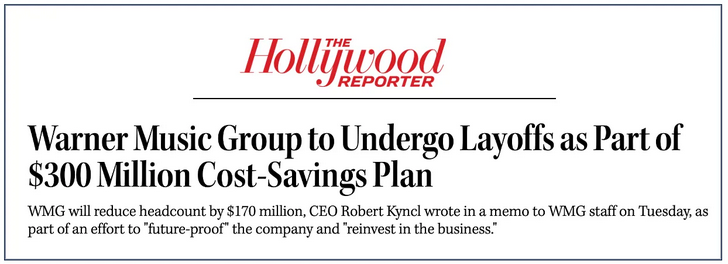
If you have any doubts about Warner’s priorities, here’s another headline — also from yesterday.
If you’re looking for a clear signal from a major record label, it won’t get any clearer than this.
This is exactly what a record label does when it no longer views music as a vital creative force in the current day. This is what happens when a major label morphs into a copyright and IP management business — which can be run by a small team of lawyers and accountants.
Yes, you can make money living off the past — but not for long.
I keep waiting to read a news story about a major label investing a billion dollars in developing new artists. But I never see that story.
I’ve written in the past about fans who prefer old music. But big record labels are even more obsessed with vintage and retro songs.
And it’s not just Warner Music. Universal Music is doing the same thing. So is Sony and Concord and other big labels.
That’s disturbing.
These are the same companies who should be creating the future of music. They should be convincing the public to listen to new songs and new artists. After all, if record labels don’t invest in the future of music, who will?
Maybe nobody.
A few years ago, investment firms started viewing old songs as investments. That didn’t work out very well. The most prominent song investment fund crashed and burned — as I predicted long in advance.
At that point, the smart money headed for the exits.
In the aftermath, the only enthusiastic buyers of old songs were the big record labels. They are the buyers of last resort.