
World War Two
Published 31 May 2025May 10, 1940. A new kind of warfare comes to the fore as a German Panzer Group rumbles through the Ardennes towards Sedan. Heinz Guderian has one goal in mind — Get to the Meuse! If he can manage that, then the Battle of France may be over before it even begins. Can the Allies hold back the armoured armada?
Chapters
01:05 German Forces
04:13 Blitzkrieg Theory, Applied
07:37 The Advance Begins
14:50 The Allied Plan
17:59 A Tight Schedule
20:57 Summary
21:16 Conclusion
(more…)
June 1, 2025
Panzers Attack! – Ten Days in Sedan
Comments Off on Panzers Attack! – Ten Days in Sedan
Ted Gioia on stopping AI cheating in academia
I’ve never been to Oxford, either as a student or as a tourist, but I believe Ted Gioia‘s description of his experiences there and how they can be used to disrupt the steady take-over of modern education by artificial intelligence cheats:
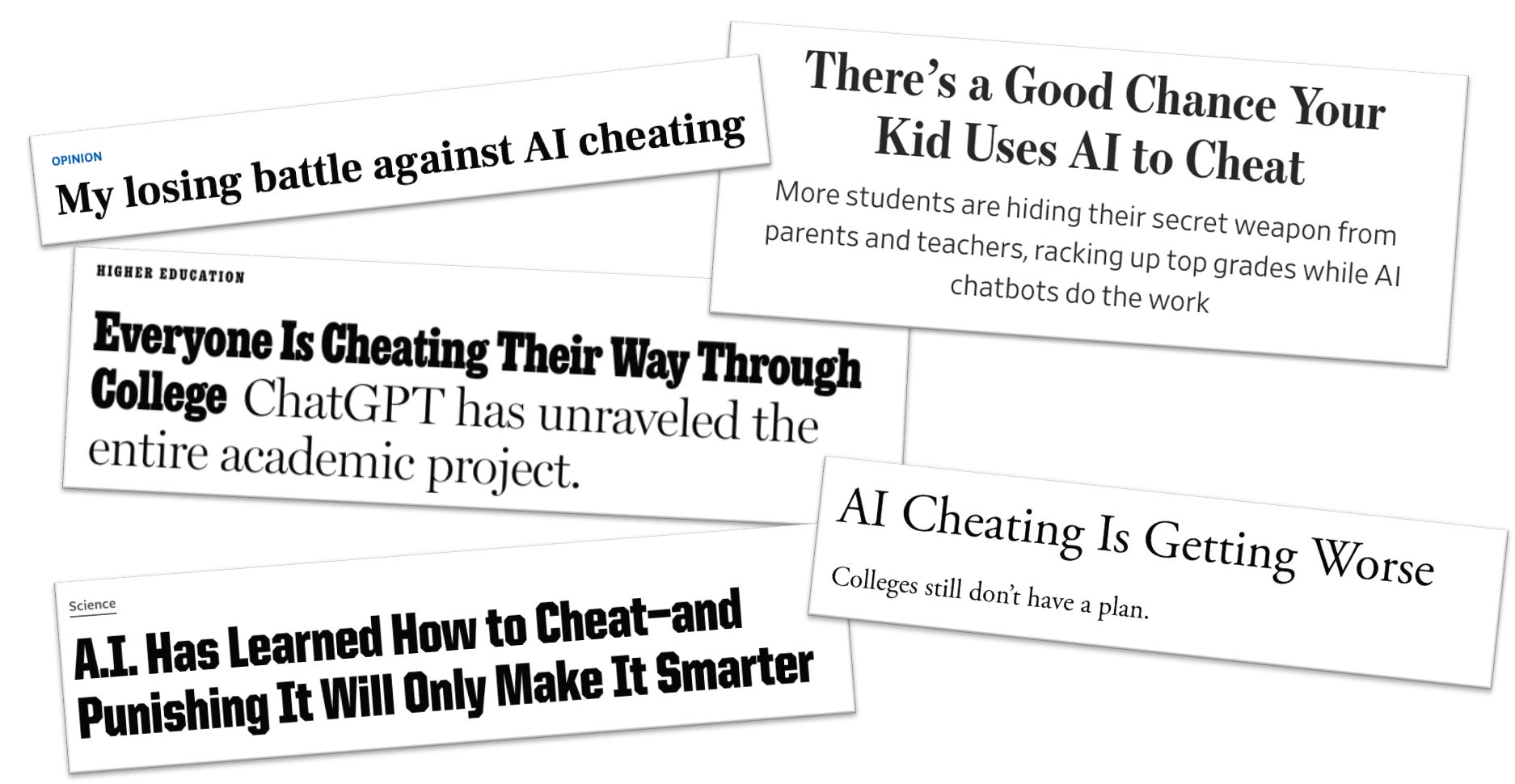
How would the Oxford system kill AI?
Once again, where do I begin?
There were so many oddities in Oxford education. Medical students complained to me that they were forced to draw every organ in the human body. I came here to be a doctor, not a bloody artist.
When they griped to their teachers, they were given the usual response: This is how we’ve always done things.
I knew a woman who wanted to study modern drama, but she was forced to decipher handwriting from 13th century manuscripts as preparatory training.
This is how we’ve always done things.
Americans who studied modern history were dismayed to learn that the modern world at Oxford begins in the year 284 A.D. But I guess that makes sense when you consider that Oxford was founded two centuries before the rise of the Aztec Empire.
My experience was less extreme. But every aspect of it was impervious to automation and digitization — let alone AI (which didn’t exist back then).
If implemented today, the Oxford system would totally elminate AI cheating — in these five ways:
(1) EVERYTHING WAS HANDWRITTEN — WE DIDN’T EVEN HAVE TYPEWRITERS.
All my high school term papers were typewritten — that was a requirement. And when I attended Stanford, I brought a Smith-Corona electric typewriter with me from home. I used it constantly. Even in those pre-computer days, we relied on machines at every stage of an American education.
When I returned from Oxford to attend Stanford Business School, computers were beginning to intrude on education. I was even forced (unwillingly) to learn computer programming as a requirement for entering the MBA program.
But during my time at Oxford, I never owned a typewriter. I never touched a typewriter. I never even saw a typewriter. Every paper, every exam answer, every text whatsoever was handwritten—and for exams, they were handwritten under the supervision of proctors.
When I got my exam results from the college, the grades were handwritten in ancient Greek characters. (I’m not making this up.)
Even if ChatGPT had existed back then, you couldn’t have relied on it in these settings.
(2) MY PROFESSORS TAUGHT ME AT TUTORIALS IN THEIR OFFICES. THEY WOULD GRILL ME VERBALLY — AND I WAS EXPECTED TO HAVE IMMEDIATE RESPONSES TO ALL THEIR QUESTIONS.
The Oxford education is based on the tutorial system. It’s a conversation in the don’s office. This was often one-on-one. Sometimes two students would share a tutorial with a single tutor. But I never had a tutorial with more than three people in the room.
I was expected to show up with a handwritten essay. But I wouldn’t hand it in for grading — I read it aloud in front of the scholar. He would constantly interrupt me with questions, and I was expected to have smart answers.
When I finished reading my paper, he would have more follow-up questions. The whole process resembled a police interrogation from a BBC crime show.
There’s no way to cheat in this setting. You either back up what you’re saying on the spot — or you look like a fool. Hey, that’s just like real life.
(3) ACADEMIC RESULTS WERE BASED ENTIRELY ON HANDWRITTEN AND ORAL EXAMS. YOU EITHER PASSED OR FAILED — AND MANY FAILED.
The Oxford system was brutal. Your future depended on your performance at grueling multi-day examinations. Everything was handwritten or oral, all done in a totally contained and supervised environment.
Cheating was impossible. And behind-the-scenes influence peddling was prevented — my exams were judged anonymously by professors who weren’t my tutors. They didn’t know anything about me, except what was written in the exam booklets.
I did well and thus got exempted from the dreaded viva voce — the intense oral exam that (for many students) serves as follow-up to the written exams.
That was a relief, because the viva voce is even less susceptible to bluffing or games-playing than tutorials. You are now defending yourself in front of a panel of esteemed scholars, and they love tightening the screws on poorly prepared students.
(4) THE SYSTEM WAS TOUGH AND UNFORGIVING — BUT THIS WAS INTENTIONAL. OTHERWISE THE CREDENTIAL GOT DEVALUED.
I was shocked at how many smart Oxford students left without earning a degree. This was a huge change from my experience in the US — where faculty and administration do a lot of hand-holding and forgiving in order to boost graduation rates.
There were no participation trophies at Oxford. You sank or swam — and it was easy to sink.
That’s why many well-known people — I won’t name names, but some are world famous — can tell you that they studied at Oxford, but they can’t claim that they got a degree at Oxford. Even elite Rhodes Scholars fail the exams, or fear them so much that they leave without taking them.
I feel sorry for my friends who didn’t fare well in this system. But in a world of rampant AI cheating, this kind of bullet-proof credentialing will return by necessity — or the credentials will get devalued.
(5) EVEN THE INFORMAL WAYS OF BUILDING YOUR REPUTATION WERE DONE FACE-TO-FACE — WITH NO TECHNOLOGY INVOLVED
Exams weren’t the only way to build a reputation at Oxford. I also saw people rise in stature because of their conversational or debating or politicking or interpersonal skills.
I’ve never been anywhere in my life where so much depended on your ability at informal speaking. You could actually gain renown by your witty and intelligent dinner conversation. Even better, if you had solid public speaking skills you could flourish at the Oxford Union — and maybe end up as Prime Minister some day.
All of this was done face-to-face. Even if a time traveler had given you a smartphone with a chatbot, you would never have been able to use it. You had to think on your feet, and deliver the goods with lots of people watching.
Maybe that’s not for everybody. But the people who survived and flourished in this environment were impressive individuals who, even at a young age, were already battle tested.
Comments Off on Ted Gioia on stopping AI cheating in academia
Praga I: A Blow-Forward Bullpup Semi-Auto-Selectable Vickers Gun
Forgotten Weapons
Published 15 Jan 2025The Praga I was the first machine gun design from noted Czech arms designed Vaclav Holek. Three examples were made for Czech military testing in 1922, but they were not acceptable. Instead, this design served as the first stepping stone to the eventual development of the ZB-26, perhaps the best of the interwar light machine guns.
Mechanically, the Praga I is largely based on the Vickers/Maxim system except with a locking wedge instead of a toggle joint. It also uses a forward-moving gas trap sort of action instead of recoil operation like the Maxim/Vickers. The fire control mechanism is essentially a Vickers lock, just built into the receiver of the gun instead of in a moving bolt or lock. It is a truly fascinating system!
Many thanks to the VHU — the Czech Military History Institute — for giving me access to this fantastic prototype to film for you. The Army Museum Žižkov is a part of the Institute, and they have a three-story museum full of cool exhibits open to the public in Prague. If you have a chance to visit, it’s definitely worth the time! You can find all of their details (including their aviation and armor museums) here:
Comments Off on Praga I: A Blow-Forward Bullpup Semi-Auto-Selectable Vickers Gun
QotD: Robert E. Howard was more accurate with Conan than the historians of his day
This is one of my favorite facts of history that makes me laugh maniacally when I think about it. In some respects, Robert E. Howard’s “Hyborian Age” fantasies of Conan the Barbarian described the late Neolithic and early Bronze Age more accurately than archaeologists and historians managed to during most of the century after the fantasies were published.
(I’m not the first to point this out. Credit goes to Greg Cochran, co-author of “The 10,000 Year Explosion”, on his blog West Hunter.)
How did this happen? Scholars, reacting against 19th century Romanticism (and especially the weird polyp of it that turned into Nazi racial theory) adopted a sort of meta-model of prehistoric civilizations in which they usually evolved peacefully in place, with large-scale migration and warfare being exceptional.
It was only the advent of paleogenetics that shattered this cozy image. We now know that the Cimmerians (the Yamnaya ancestors of modern Europeans) did in fact come storming off the steppes to kill every male in sight and take all the women as sex slaves. We can read the traces of this catastrophe in our chromosomes.
ESR, Twitter, 2025-02-10.
Comments Off on QotD: Robert E. Howard was more accurate with Conan than the historians of his day


