
Quotulatiousness

May 17, 2025

German democracy … saved by bureaucratic incompetence?

Filed under: Germany, Government, Media, Politics — Tags: , , , , — Nicholas @ 04:00

Checking in to the situation in Germany, it seems that the big secret report compiled by the German spy agency on the extremely extreme extreme right-wing Alternative für Deutschland party is a bit less than what was expected. Okay, a lot less:
In my last post, I wrote that “The campaign to ban Alternative für Deutschland is not going well“. Today – a mere seventy-two hours later – you could say that the campaign to ban Alternative für Deutschland is all but dead. This is because the people most committed to banning the AfD also happen to be some of the stupidest, most incompetent legal and political operators the world has ever seen. Their incompetence is so enormous that I am for once willing to entertain conspiracy theories as to why they might have undermined their own project. It is that bad.

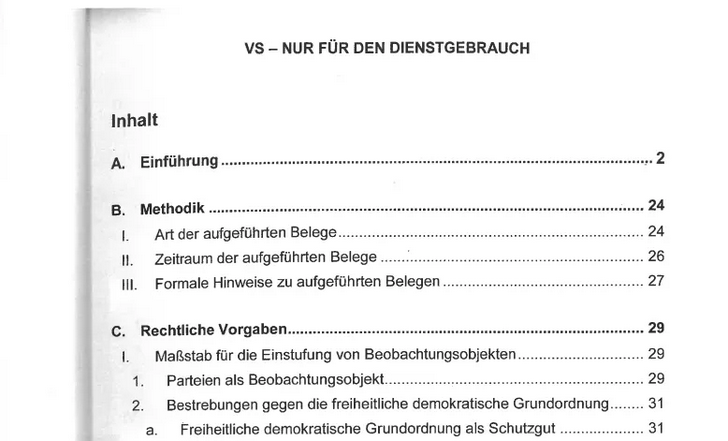
Two weeks ago, you may remember, Interior Minister Nancy Faeser forced the Federal Office for the Protection of the Constitution (BfV) to rush their long-planned upgrade of the AfD and declare the party to be a “confirmed right-wing extremist” organisation. Word spread of a mysterious 1,100-page assessment, full of damning proofs that allegedly supported this upgrade. This document had to be kept secret, Faeser explained in an interview, “… to protect sources and withhold indications of how our findings were obtained”. So espionage, much secret, wow.

The thing was, the anti-AfD dossier could not have been that secret, because somebody (almost certainly, somebody in the Interior Ministry) immediately leaked it to Der Spiegel, whose journalists published various excerpts in an effort to make the case for how evil and fascist and Nazi and Hitler the AfD are. In this way the press could climax repeatedly in a wave of democratic orgasms over the renewed possibility of an AfD ban, even in the absence of the supersecret report.

The media circus dissipated quickly, however. The publicity campaign, the roll-out – a lot of things went wrong, some of them inexplicably wrong. Still, I thought there was a 40% chance that the Bundestag would try to open ban proceedings sometime this year. That, as I said, was on Monday. What happened on Tuesday, is that Cicero, NiUS and Junge Freiheit all received the secret 1,100-page assessment (actually, it contains 1,108 pages) and published it in its entirety. Since Tuesday evening, a great many people have been reading this document, and they have been realising various things.

The first thing they’ve realised, is that it contains hardly anything derived from supersecret spy sources at all. It is little more than a collection of public statements by AfD politicians. Faeser’s sources-and-methods justification for keeping the report hidden was a total lie.

The second thing they’ve realised, is that it is an abomination. The vast majority of material that the BfV have collected is not even suspect. It is a lot of off-colour jokes, memes, but also just banal nothing statements – thousands and thousands and thousands of them, arranged under various hysterical subject headings. Nothing in here is remotely strong enough to support the case for banning the AfD and a lot of it is also very bizarre in terms of argument. Not only have the prospects of an AfD ban all but evaporated, but I think it’s even likely the party will succeed in their present lawsuit and that the administrative court in Cologne will throw out the “right-wing extremist” label.
Learning racism in Japan

Filed under: Cancon, Japan — Tags: , , , , — Nicholas @ 03:00

John Carter recounts how his views and opinions on racism changed while living for an extended period in Japan:

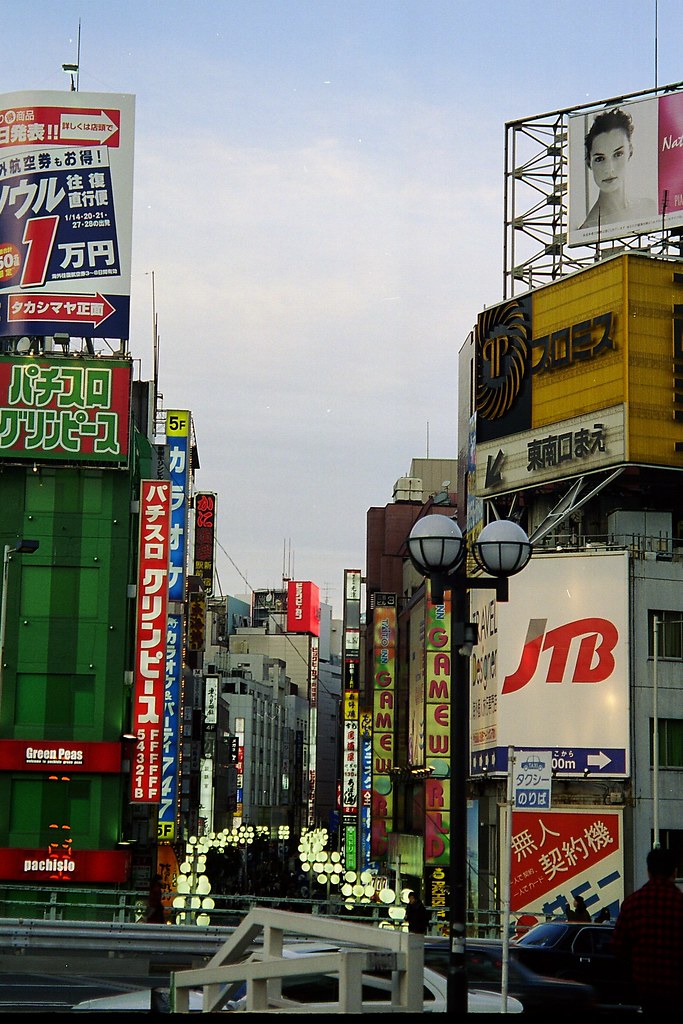
“Tokyo street scene” by snapsbycw is licensed under CC BY 2.0 .

We started the conversation talking about the Shiloh Hendrix affair, but ultimately got onto the subject of the Land of the Rising Sun. As it turns out, Alexandru and I have both spent quite some time living in Japan, an experience which contributed to both of us becoming incorrigible racists. This is a very common occurrence: almost anyone who spends a significant amount of time living in a very different country will start to draw conclusions about the differences between human groups. Your levels of epistemic closure need to be extraordinarily high to avoid this.

When I first moved to Japan I was, in most ways, an unreconstructed liberal. I took the axiomatic precept of the Boomer Truth Regime – that stereotypes are both incorrect and evil, because all people are basically the same – more or less for granted. This was very easy for me to do: I’d grown up in a remote, homogeneously Anglo part of rural Canada, and while I’d had some degree of exposure to different ethne at university, this was during a period in which Canada was making a real effort to filter immigrants for quality, and most of the non-white, second-generation immigrants I interacted with were heavily westernized. I wasn’t unaware of cultural differences, but I generally assumed that it went no deeper than that, and that inside every human being there was a liberal Anglo struggling to break free.

Japan of course is a completely alien culture. Among the many profound differences with the contemporary West is that the Japanese are, famously, intensely and unashamedly racist, or “xenophobic” as it is usually framed. I was initially taken aback by how frank the Japanese could be about this, for instance by asking questions about me that were clearly in rooted in their stereotypical understanding of what young North American white boys were generally like. But there were two things about this experience that quickly made me stop and think. First, these questions were almost never hostile, but rather came from a place of genuine curiosity: they were simply trying to get to know me, which they would do by starting with a default mental picture and then testing to see if and how I conformed or departed from that picture so that they could update their model accordingly. Yet I had been assured my entire life, by every TV show, movie, and teacher, that stereotypes were always hateful! Second, a great many of their stereotypical assumptions about me were uncomfortably accurate. Yet I had been assured my entire life, by every TV show, movie, and teacher, that stereotypes were always wrong!

It didn’t take me long to get over this cognitive dissonance, which I resolved by the simple expedient of concluding that I’d been lied to by my culture, which is something that even then I’d realized happens a lot. This then gave me internal permission to observe the Japanese themselves, to notice the myriad differences in character and behaviour as compared to my own people, and to connect these individual level differences to their emergent societal consequences.

Learning racism in Japan is a humbling experience for a Westerner. I’ve travelled to a lot of different countries, and everywhere else I’ve either felt like my own people were basically on the same civilizational level (Europe), or at a noticeably higher level (South America). Japan is the only place I’ve ever been where I felt like an unlettered, uncouth, savage, stinky barbarian primitive one step removed from the cave – where it was obvious that my own people could learn quite a bit about how to comport themselves in a civilized fashion. Then again, at the same time, this taught me to value that very barbarism: it’s quite possible, as the Greek understood when regarding the Mede, to be overcivilized.

I could go on about this subject for hours, but I’ve got things I need to do today – like go to the gym and get some work done on other projects I’ve been engrossed in – and I wanted to get this out fast. In any case, I did go on about this subject for hours, with Alexandru and Phisto, so if you’d like to hear more about Japan you’ll just have to click through and listen.

Battle of the Atlantic, 1939-1940

Real Time History
Published 3 Jan 2025

In the summer of 1940, Great Britain is under attack in the air and at sea. German U-Boat wolf packs prowl the Atlantic and sink over a million tons of shipping. German skippers call this the “happy time” — but was the German Navy actually that successful early in the Battle of the Atlantic?
(more…)

QotD: Suburbs and their critics

Filed under: Architecture, Media, Politics, Quotations, USA — Tags: , , , , — Nicholas @ 01:00

I respect [sprawl] as people’s choice – the suburbs, highways and byways, strip malls, cookie-cutter houses, whether small semi-detached or McMansions, the whole lot of it.

It gets a lot of bad press, it has got a lot of influential haters, ridiculers and deriders. There are the urbanists, the town planners, the architects, most of whom can’t abide the sprawl. It’s ugly, inefficient, unsustainable, it lacks amenities and it lacks a sense of community, it prioritises – or privileges, as they would say – cars over pedestrians, it wastes space and it wastes resources, it’s barbaric. Those much smarter and more creative than us have offered a lot of alternatives: high-density living, modernist spaces, Le Corbusier’s houses as “machines for living”. They tore down the slums and erected high rise projects, council flats, banlieues and osiedla. They designed and built whole new districts, rich in concrete and wide bare expanses of public space.

Then there are the cultural as opposed to professional haters, and they too are as old as the suburbs themselves. The sprawl is a prison, a conformist hell. It deadens imagination and stifles creativity. It’s full of dumb people leading dumb lives. It’s a triumph of materialism, selfishness and narrow mindedness over selflessness, community and commonweal. From literature through movies and music to TV shows, suburbs don’t get a break; they are the hotbed of reaction, sexism, racism, homophobia, xenophobia, intolerance, prejudice, oppression and kitsch. “Revolutionary Road”, “Stepford Wives”, “American Beauty”, “Weeds”, “Little Boxes”, Stephen King novels, the list is endless, but you get the drift.

There are many differences between the suburbanites and the suburbs haters, but the one big one is this: the suburbanities are the live-and-let-live crowd – they know what they like but they don’t give a shit if you don’t like it. It’s your business and it’s your life – you can do whatever you like. The suburbs haters, on the other hand, not only know what they like but they believe that everyone else should like it to, and if they don’t, tough luck, they should be forced to change for the sake of what’s really good for them and for the whole community. Suburbs are not something that can be tolerated as an option; they should be destroyed, land reclaimed, ideally by nature, their former residents corralled and concentrated.

In many ways it’s yet another example of the old elite versus the masses cultural clash. The masses essentially just want to be left alone. The elites want to remake the whole world so it accords to their vision of what’s good and useful. The masses’ is not to question why …

Arthur Chrenkoff, “In praise of sprawl”, Daily Chrenk, 2020-05-21.

Powered by WordPress



