
Quotulatiousness

May 6, 2025

If “a trade imbalance constitutes an American ‘subsidy’ justifying annexation of that country, then the US is going to have to annex most of the planet”

Filed under: Britain, Cancon, Government, Media, Politics, USA — Tags: , , , , , — Nicholas @ 05:00

Despite getting his preferred choice elected as Canadian Prime Minister, US President Donald Trump still seems determined to troll Canadians about becoming the “51st state”. Among his shifting set of justifications for this is the trade imbalance between the US and Canada, which Trump chooses to interpet as a “huge” subsidy the US is providing to Canada. On that basis, there are going to have to be a lot more US states in the future:
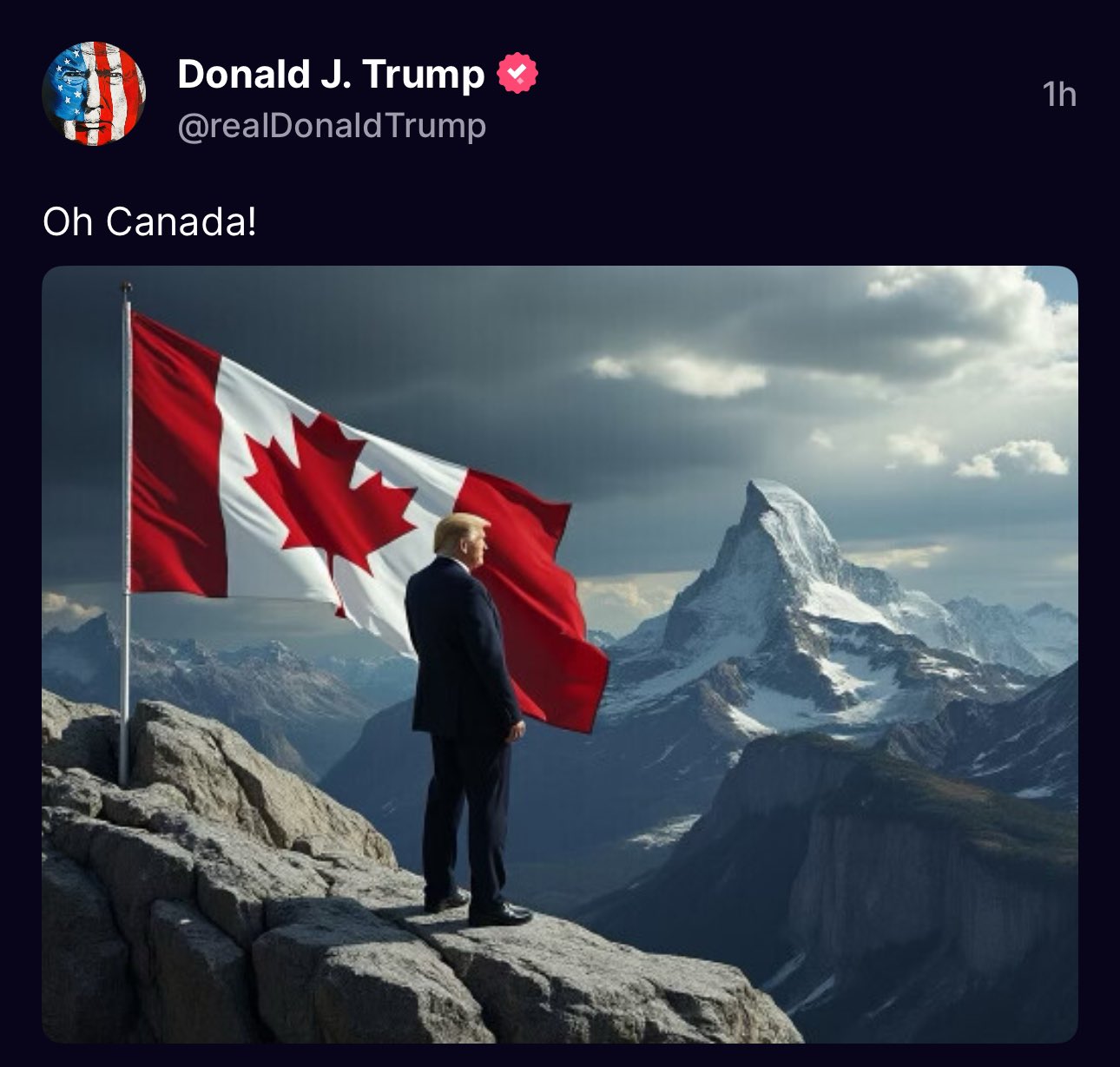
So now we have serious commentators gaming out the pros and cons of war with Canada. What started out as a mildly amusing bit of presidential “trolling” is now being discussed as next year’s Donbass.

If, for the purposes of argument, one accepts the President’s line that a trade imbalance constitutes an American “subsidy” justifying annexation of that country, then the US is going to have to annex most of the planet: last year Washington had a one-and-a-quarter trillion-dollar imbalance with the world. It’s not hard to figure out why: over recent decades the uniparty turned a country that used to make things into a crappy low-wage service economy. […] The US now has trade imbalances with — or “subsidies” of — not only the countries that you’d expect (China, Mexico, Germany, Japan, India) but a lot of ones you wouldn’t (Finland, Algeria).

True, Canada is closer than Algeria, so there are national-security implications for Washington: the country and its politicians (Trudeau, Carney) have been entirely hollowed out by Peking, but then so it goes south of the border (Biden, McConnell). And Trump’s plan for a “fifty-first state” will not solve that problem.

The “fifty-first state” shtick can’t ever have been serious, can it? Geographically, the fifty-first state would be bigger than the other fifty combined, and with a bigger population than California’s. Last time they added stars to the flag, both parties got something out of it: the GOP Alaska and the Dems Hawaii. So wouldn’t it make more sense to make Canada’s ten provinces and three territories a baker’s dozen of new American states with a couple of senators apiece? Yeah, sure – if you want Republicans never to win a national election again.

So, aside from last week’s vote, how is the other side reacting? Last Thursday’s print edition of The Spectator contained a curiously phrased squib from my old editor, Charles Moore:

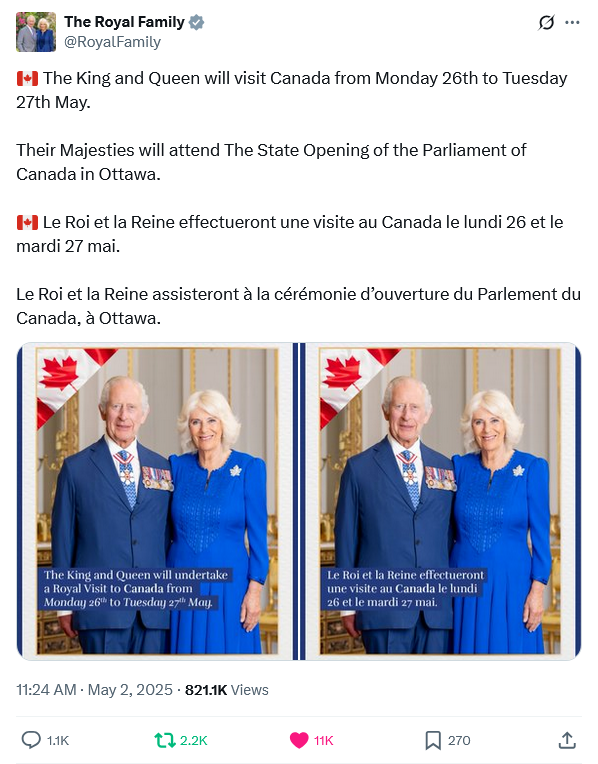
    The President may be only hazily aware that the King, of whom, he says, he has the “honour to be a friend”, is also King of Canada. If, as seems likely, the King follows his mother’s twice-used precedent and opens the new Canadian parliament in person, Trump may come to see that his next-door neighbour is part of a long-standing, legitimate order which Canadian voters are happy to endorse.

Let’s just run that again:

    If, as seems likely, the King follows his mother’s twice-used precedent and opens the new Canadian parliament in person …

The last time his mother opened Parliament in Ottawa was in 1977 — her Silver Jubilee year. Trudeau-wise, Justin’s father Pierre was not keen on it, but didn’t feel he could pick and win a fight with the Palace over it. A quarter-century later, Trudeau’s successor Jean ChrΓ©tien, a towering colossus of micro-pettiness, was annoyed at being given a crappy seat at the Queen Mum’s funeral and so scuttled Her Majesty’s Golden Jubilee throne speech.

So why would Charles Moore think it “likely” that the King would be opening Parliament in Ottawa later this month? If, as it was in my day, Speccie columns for Thursday’s magazine have to be filed on Tuesday, that would make Moore the first guy in either the Canadian or UK media to know what was not revealed to the world until Friday […]

The King has travelled far less in the first three years of his reign than his mother did: shortly after her Coronation, the Queen set off on a tour of parts of the Commonwealth that kept her away from London for six months. Her son can’t do that because he’s very sick with cancer. So it’s quite something that he’ll land in Ottawa on Monday May 26th, deliver the throne speech the following day, and then fly out again. Carney wouldn’t be doing this if he weren’t going to take the opportunity to put his view of Canadian sovereignty into the Sovereign’s mouth.

So, if Trump really has the “honour to be a friend” of the King, the only point of this 24-hour flying visit is so His Majesty can send the message that friends don’t let friends threaten to steal each other’s countries. In fact, he has made a point of referring to himself as “King of Canada” quite a bit of late. […] The “King of Canada” bit was done at the instigation of Carney. Which is odd. Especially from a party that has spent half-a-century diminishing and degrading the Crown, and for a monarch who is, unlike his mother, largely unloved and unloveable. Yet Carney seems belatedly to have come around to the old-school monarchist view that, without the Sovereign, there is insufficient to distinguish Canada from its domineering southern neighbour — especially when that neighbour keeps talking about taking it. On the other hand, both the King and his Canadian prime minister are bigtime players at the World Economic Forum, so they’re not the most obvious choice for defenders of national sovereignty. On the other other hand, it’s one thing to surrender it to fellow globalists, quite another to surrender it to Donald Trump.

I have no idea where this is headed, and if anyone can enlighten me I’d be happy to hear it. But Trump has doubled down on it, and Carney is playing the King card to oppose it. As longtime readers know, I have a general preference for smaller nations as happier homes for their people. If Alberta or Quebec voted to secede, why would you take the trouble to do that just to become a minor and inconsequential part of another big country?

But, that aside, why would it be in America’s interest to absorb a hostile population of mostly lefties over a vast and unpoliceable landmass? The history of the last thirty years is that China has shown there are subtler ways of taking over the world without firing a shot, while America has persisted in doing it the old-fashioned way and, in Iraq, Afghanistan, Ukraine and elsewhere, has gotten nowhere. Why add Canada to the list?
1949: How the Arab-Israeli War Ended – W2W 27

TimeGhost History
Published 5 May 2025

In early 1949, the Arab-Israeli War finally comes to an uneasy end. After brutal fighting, armistice talks in Rhodes redraw borders with a green pencil line, displacing hundreds of thousands and reshaping the Middle East. Egypt, Jordan, Syria, and Lebanon reluctantly sign ceasefires, leaving core issues β€” Jerusalem, refugees, and recognition β€” unresolved. But can forced armistices really bring lasting peace, or is Palestine fated to endless conflict?
(more…)

Online tools for the curious autodidact

Filed under: Books, Education, Technology — Tags: , , , — Nicholas @ 03:00

Like many people, I was generally not a good student and in primary and middle school, I was notorious for reading the “wrong” parts of books because they were closer to my interests than the assigned readings, but I generally was able to scrape together enough marks to pass the tests on the stuff I skimmed or ignored. This is hardly the way to make an academic career — not that I would ever have done so, unless they just let me study what I wanted to learn about. A useful Substack for my fellow autodidacts [Wiki] is a side project of military historian Bruce Ivar Gudmundsson called Extra Muros, and his latest post provides some information on tools for online research that you may find helpful:

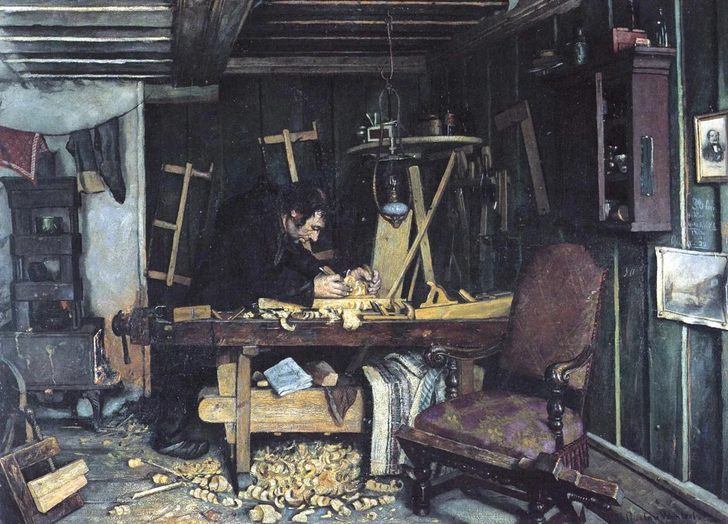
Gustav Wenzel – “A Carpenter’s Workshop” (1881)

The “advanced search” page of the Internet Archive allows you to …

  • download copies, in various electronic formats, of
  • – books and magazines published before 1929

    – works (such as those created by the US Federal Government) that have always belonged to the public domain

    – relatively recent works uploaded by people in countries (such as India) with less restrictive copyright laws

  • examine books that you might want to acquire for enjoyment the old-fashioned way
  • find higher-quality copies of items that you found on Google Books
  • obtain an overview of the works (to include foreign language translations)
  • – of a particular author

    – on a particular subject

The “advanced search” page on the website of the Hathi Trust allows you to do many of the things you might otherwise do on the Internet Archive. Alas (and, indeed, alack), the interface restricts the direct download of complete volumes to “participating institutions”. As a result, mere mortals must either seek the PDF in question on Google Books (to which Hathi provides a direct link) or use a bit of freeware called Hathi Download Helper.

The Hathi Trust search engine also makes it easy for you to search within books for specific words and phrases, as well as the mention of particular places and personalities. Doing the former turns the Hathi Trust database into a kind of dictionary, a way of discovering ways that people in various climes and times have used the expression. Doing the latter converts that cornucopia into an encyclopedia.

The NGram Viewer performs a similar service. However, as it sits atop a smaller collection and suffers from a number of irritating defects, it has proved less useful to me than the website of the Hathi Trust.

Gilboa Snake: Is the Double-AR Really so Dumb? (Re-Cut for YouTube)

Filed under: History, Middle East, Military, Weapons — Tags: , , , , — Nicholas @ 02:00

Forgotten Weapons
Published 7 Jan 2025

YouTube removed this video, so I re-cut it to meet their requirements (I think … for now). If you want to get off YouTube and support historical & education gun channels, please consider subscribing to History of Weapons & War: weaponsandwar.tv

The Gilboa Snake is an Israeli rifle (from the same designer behind the Cornershot) that essentially combines two standard ARs into a single unit. In its civilian configuration it has two of every part — barrels, bolts (mirrored, so one ejects left and the other right), triggers, buffers, etc. In its military setup, the triggers and recoil system are combined into single units, and this makes the gun arguably practical. With a single trigger, a person fires two rounds simultaneously, resulting in either two simultaneous hits at close range, or the potential for one hit at longer range instead of what might be a miss with a regular rifle. This is a concept that has been experimented with by pretty much all major militaries over the past decades; the Russians, French, and Americans all had rifles like this. Other approaches to the end result included duplex and triplex ammunition (multiple bullets in one case) and hyper-burst firing mechanisms (like the Russian AN-94 and German G11). Ultimately all of the different systems were deemed poor compromises compared to normal rifles, but it’s not as bizarre of an idea as it might first appear.

Unfortunately, the civilian Snake has to have two separate triggers to avoid machine gun classification in the US. It’s difficult to fire both triggers simultaneously, and this limits the practical military applications of the gun.

Oh, and don’t miss the unique elements in the Snake to allow for the barrels to be zeroed before mounting sights!
(more…)

QotD: World War I shattered the European notion of what “war” actually was

Filed under: Europe, History, Military, Quotations, WW1 — Tags: , , — Nicholas @ 01:00

Echoes of those views continue to appear in western literature until the impersonal carnage of the Western Front seem to finally snuff them out. But it isn’t that the generations and generations before 1914 had never experienced war, but that war had changed.

We’ve actually talked before about just how profoundly our modern view of war and battle (and battlefields) is conditioned by the experience of the first world war and the vast literary production of the generation that went through those trenches. Certainly for English (and German and French, etc.) literature, World War I seems to almost snap the tradition in half, making everything before it feel trite and washing the whole of war literature in grim tones of field grey.

And, of course, that is the point. World War I was a new kind of war that shattered the old certainties born out of the old kinds of war. It is often a mistake to assume those old certainties had been born out of some eternal peace, but while the 1800s had not seen a general European war, they had seen many wars, in the many imperial possessions of European countries, on the edges of what the British or French considered “Europe” and also in the heart of Europe itself (not to mention a few dust–ups in the Americas). These were not peaceful societies confronting their first war and shocked by the experience, but very bellicose societies encountering for the first time a new sort of war and being stunned at how different it was from what they had expected, from the wars of their (recent!) past.

All of which is to say war, war really does change. And warriors with it.

Bret Devereaux, “Collections: The Universal Warrior, Part IIb: A Soldier’s Lot”, A Collection of Unmitigated Pedantry, 2021-02-05.

Powered by WordPress



