Quotulatiousness

July 9, 2015

The first female NFL referee

Filed under: Football — Tags: , — Nicholas @ 04:00

Amy Trask hopes that Sarah Thomas gets booed. I’m pretty sure she’ll get her wish (and then some):

I have never met Sarah Thomas, but I appreciate the significance of her achievement. When Sarah Thomas takes the field as an official at the start of the 2015 season, she will be the first woman to do so (other than in a temporary, replacement capacity) in the National Football League. I congratulate her and I wish her the very best for continued success.

I also hope that Sarah Thomas is booed.

When Sarah Thomas throws a flag she shouldn’t have thrown — which she will, as all officials do — she should be booed. When Sarah Thomas fails to throw a flag she should have — which she will, as all officials do — she should be booed. Sarah Thomas should be booed as loudly and as resoundingly as her male colleagues are booed.

Gender equality means gender equality. And if gender equality is the expectation, all consequences that flow therefrom must be accepted, whether one likes them or not.

When Sarah Thomas takes the field, she should do so without regard to gender. If one wants to be considered without regard to gender, then one should not consider one’s gender. Since I do not know Sarah Thomas, I do not know whether our views on these issues are similar. My hunch, though, is that Sarah Thomas has comported herself without regard to gender throughout her career.

It makes no sense to undertake one’s responsibilities — on the field, in an owner’s meeting, in a boardroom, as a physician, as a judge, as an astronaut, as a farmer, in the military, or otherwise — with any thought given to one’s gender. How can a woman hope (or insist, or demand) that she be considered and treated without regard to gender, while giving thought to her gender?

Might Sarah Thomas encounter some gender-based resistance? Of course.

My experience suggests she will not encounter any such resistance from Pete Morelli, the head of her officiating crew. I never encountered anything I believed to be gender-based resistance during any of my interactions with Pete or with any other officials. I never sensed that Pete or any other officials treated me any differently than they treated my male counterparts. (Some of them did not like my shouting and swearing—but to the extent they objected to it, I do not believe they did so because I was a woman.)

July 2, 2015

“These women should be able to milk their boobs for whatever purpose they want”

Filed under: Liberty, Politics, USA — Tags: , , — Nicholas @ 02:00

Shikha Dalmia on the schizophrenic demands of the “Free the Nipple” movement:

The Free the Nipple movement (which has already become the subject of a 90-minute, yawn-inducing documentary) tries to cure such attitudes, but in such a ham-handed and shock-jocky way that few real women outside of college campuses can relate to it, other than publicity-hungry celebrities. Thanks to the movement, 100 students—men and women—at UC San Diego took off their shirts last month to fight for the equal right of both sexes to go topless. Likewise, Scout Willis, the daughter of Demi Moore and Bruce Willis, earned her two minutes of fame some years ago when she went strolling topless in Manhattan to protest Instagram’s nudity policies barring pictures of topless women. Not to be outdone, Miley Cyrus, who has never encountered a publicity stunt involving her body parts that is too over-the-top, tweeted a picture of her bare breasts with red stars on the nipples to express her solidarity.

These women should be able to milk their boobs for whatever purpose they want, free from state censorship and violence, to be sure. But does that mean that freeing the nipple is the “civil rights issue” of our time — as some feminists claim — that requires busting all social taboos against female toplessness?

Not really.

For starters, it’s not like this kind of thing hasn’t been tried before. The “burn the bra” movement was all the rage among feminists in the 1960s. But it didn’t go beyond a few symbolic bonfires because going braless is simply too physically uncomfortable for most women with modern lifestyles.

Free the Nipple activists accuse society of a double standard for allowing men to show their breasts but not women. “Why are we more offended and outraged by female nipples than male nipples?” one demands to know.

But the fact is that their movement itself is based on a double standard. Indeed, if they were interested in genuine sexual equality, they wouldn’t just fight for the right to go topless, but all laws against indecent exposure. So why don’t they? Maybe because they realize that allowing strange men to swing their schlongs in streets would be neither comfortable nor safe for women.

June 29, 2015

QotD: “Bodice Rippers”

Filed under: Books, Politics, Quotations, USA — Tags: , , , — Nicholas @ 01:00

This is one of my favorite passages of Scripture:

    There be three things which are too wonderful for me, yea, four which I know not: The way of an eagle in the air; the way of a serpent upon a rock; the way of a ship in the midst of the sea; and the way of a man with a maid.
    –Proverbs 30:18-19

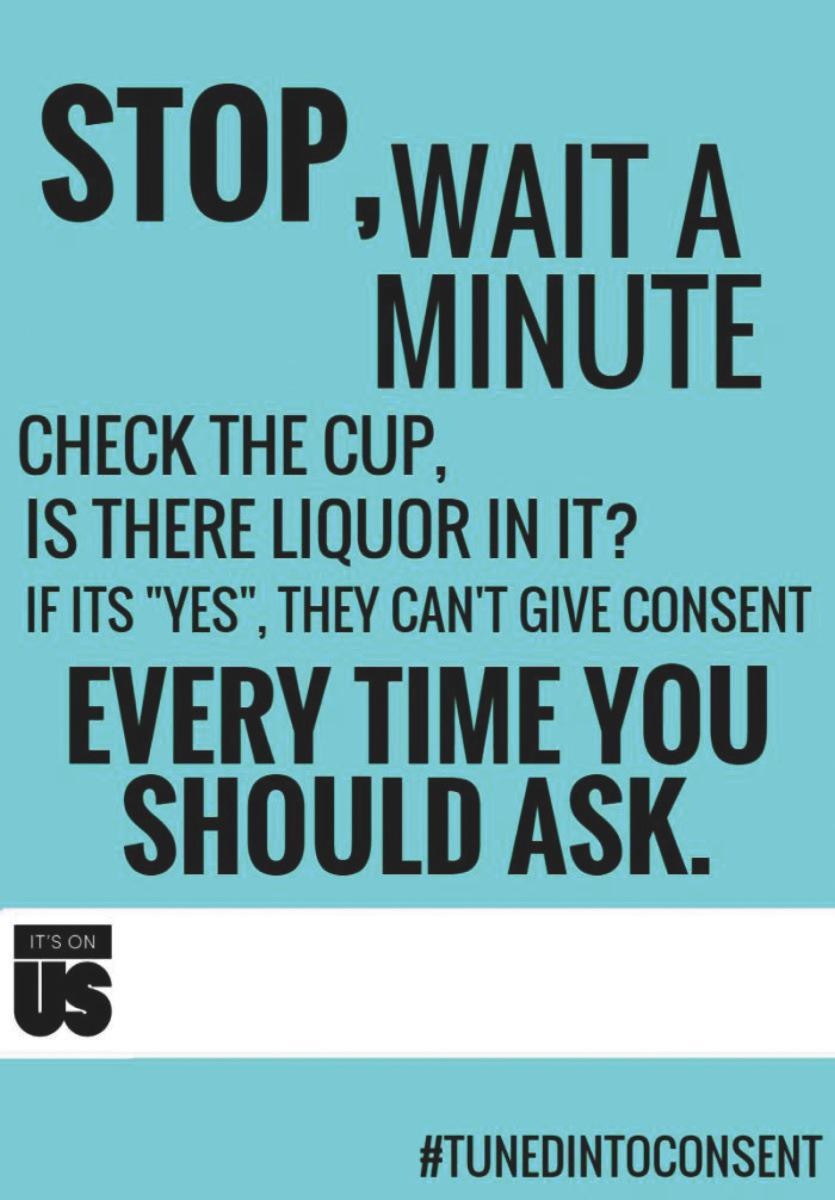
That last bit there, yeah, there’s a lot to that. It comes to my mind frequently these days, what with all the fake rape stories floating around and feminists dumbing down the definition of ‘rape’ and ratcheting up what constitutes ‘consent’ and universities attempting to regulate student sexual activity with silly rules about requiring explicit consent at each stage of foreplay. Really?

There’s something missing there. I mean, sure the university has to do this stupid stuff to avoid getting itself into a morass of Title IX lawsuits, but feminists have seized the opportunity to further their own agenda. They’ve brought in the whole toolkit of critical theory, and the oppressive patriarchy and complaints about gender bias and supposed female powerlessness to force the rest of us to accept their view that the only reasonable and moral basis for a sexual relationship is an a priori straight-up consent transaction, that the woman may unilaterally rescind at any time during the proceedings, and anything else is an assault on women (i.e rape).

However, how men and women interact with each other, the steps of the mating dance, is far more complicated. And the feminist square-peg-in-a-round-hole narrative totally ignores the popularity of the “bodice-ripping” romance novels, which are almost universally written by women for women, and hardly ever read by men. And the market is huge. Women are buying these books by the truckload. I found a list of supposedly the best bodice ripper novels and the intro is instructive:

    This is a list for Bodice Ripper romance novels that you think are a 5 star read. The best of the best – with alpha heroes, un-politically correct action, forced seduction, rape, sold into slavery plot lines, mistresses and cheating – the no-holds bar world of Bodice Ripper!

Notice the selling points: (a) alpha heroes, (b) forced seduction, (c) rape, and (d) sold into slavery plotlines. But where’s the consent? It’s not even in the equation. Oh, I’m sure that after the female lead is raped/seduced, she eventually falls in love with the alpha male and willingly and joyfully surrenders to his alpha maleness (I haven’t actually read any of these, I’ve just heard that that’s the way most of them turn out), but that’s all ex post facto.

And then beyond the bodice-rippers, there’s the 50 Shades books, which takes the bodice ripper one step further, and again, huge seller. So I think there’s something about how the relationships are portrayed in these books that touches women’s psyche at some basic level. Women are attracted to strength. No woman likes being the partner of a weak man. I’m sure feminists would like to believe that this whole aspect of male/female relationships doesn’t exist, but E L James’ bank account says otherwise.

And of course, James’ success has resulted in other authors piling on: 8 Series to Start After You Finish the Fifty Shades Trilogy. Don’t get me wrong. I do not recommend the 50 Shades series and I’m certainly not recommending any of these wannabes, which look even sleazier, if that’s possible. My point is, if what feminists want to be true is indeed true, then why are these books so popular? (hint: it must be that damn patriarchy again!)

Feminism is trying to force us all to live in a world that simply doesn’t exist. Fake rape stories and real lawsuits, not to mention damaged and ruined lives, are the toxic sludge that results from mixing feminism with the sexual revolution and letting it simmer for five decades. We’ll be cleaning up these messes for a very long time.

I wonder if Mattress Girl has read the 50 Shades books?

“Sunday Morning Book Thread 06-07-2015: The Man Within [OregonMuse]”, Ace of Spades H.Q., 2015-06-07.

June 17, 2015

QotD: Heinlein’s alleged misogyny

Filed under: Media, Quotations — Tags: , , , — Nicholas @ 01:00

My friend Cedar, today, posted about one of those lies that “everybody knows” and that are absolutely not true. Not only not true, but risible on their face. The lie is that Heinlein was a misogynist, which is not only a lie but a whole construct, an artifact of lies. And one that humans, nonetheless seem to buy wholesale.

I’m not going to repeat the argument. Cedar made it. But I’m going to quote what she said:

    When the woman who had first made the titular accusation was questioned by multiple voices in startlement, she finally admitted that she knew it to be so, because she had read it in Asimov’s biography. Wait a minute, was my reply, you mean that man that Eric Leif Davin in his recent book Partners in Wonder wrote this about?” Isaac Asimov is on record for stating that male fans didn’t want females invading their space. According to the letter columns of the time, it seems that the only fan who held that opinion was… Isaac Asimov. A number of males fans welcomed their female counterparts. As did the editors, something Davin goes to great lengths to document.” (You can read more on the women that other women ignore here at Keith West’s blog) So this woman has taken a known misogynist’s claim that another man is a misogynist without questioning and swallowed it whole.

I run into this again and again. In a panel, once, questioning accusations of misogyny directed at Heinlein I got back “Well, obviously he was. His women wear aprons.” I then got really cold and explained that in Portugal, growing up, when clothes were expensive (how expensive. People stole the wash from the line. Imagine that happening here. People stealing clothes. Just clothes. Not designers, not leather, just clothes, including much-washed-and-mended pajamas.) we always wore aprons in the kitchen. And Heinlein was writing when clothes were way more expensive, relatively. (I buy my clothes at thrift stores. So unless it’s a favorite pair of jeans or something, I don’t wear aprons.) The difference is not “putting women in their place.” The difference is the cost of clothes.

And this is why I don’t get put on the “Heinlein, threat or menace” panels any more.

But 90% of the women who make the accusation that Heinlein hated women or couldn’t write women have never read him. They’ve just heard it repeated by people with “authority.” The cool kids. And so they can’t be reasoned out of this assumption, because it’s not an assumption. It’s glamor. (The other ten percent, usually, were primed to think he was a misogynist and read the beginning of a book and didn’t “get” some inside joke. Like, you know, the getting married after a tango. Which was pure fan fodder. They wouldn’t have thought anything of it if they hadn’t been primed. But they’d been primed. They were under a glamor to see what wasn’t there.)

Sarah Hoyt, “Glamor and Fairy Gold”, According to Hoyt, 2015-06-02.

May 30, 2015

There are no good outcomes from a war between men and women

Filed under: History, Religion — Tags: , , , — Nicholas @ 04:00

Sarah Hoyt digs into the archive to find a particularly appropriate post from the distant past:

I know this goes completely against everything you’ve ever heard and learned. History — and SF — is full of dreamers who are convinced that if women ruled the world it would all be beauty flowers and non aggression. (To these dreamers I say spend a week as a girl in an all-girl school. It will be a rude awakening.)

Dreamers of the Dan Brown stripe posit a peaceful female worship, with yet more beauty and flowers and non-aggression. They ignore the fact that 99% of the goddess-worshipping religions were scary. And don’t tell me that’s patriarchal slander — it’s not. The baby-killing of Astoreth worship has been documented extensively. (Of course, the Phoenicians were equal-opportunity baby killers.) The castrations of Cybele worship were also well documented. Now, I can hardly imagine a female divinity without imagining hormonal episodes requiring appeasement — but that’s because I’m a woman of a certain age, and that’s fodder for another altogether different discussion. Suffice it to say that the maiden and mother usually also had a crone persona who was … er… “not a nice person.”

Anyway — all this to say since I joined the MOB (Mothers Of Boys) the scales about such things as the inherent equality of men and women as far as their brain structure and basic behavior have fallen from my eyes. (Well, the scales that remained. My experience in school notwithstanding, I’d been TAUGHT that females were getting the short end of the stick and that’s a hard thing to overcome. Learned wisdom is so much more coherent than lived wisdom, after all.)

Again — indulge me — I’m going to make a lot of statements I can too back up, but which would take very, very, very long to document — so it will seem like I’m ranting mid air. Stay with it. If I feel up to it later, I’ll post some references.

Yes, women have been horribly oppressed throughout history including the rather disgusting Victorian period that most Americans seem to believe is how ALL of history went. I contend, though, that women were not oppressed by some international conspiracy of males — yes, I know what Women’s Studies professors say. I would however remind you we’re talking of a group of people who a) have issues finding their own socks in the dresser they’ve used for ten years. b) Are so good at communicating as a group that they couldn’t coordinate their way out of a wet paper bag, or to quote my friend Kate, couldn’t organize a bonk in a brothel. (In most large organizations the “social/coordinating” function is performed by females at various levels.) c) That women being oppressed by a patriarchy so thorough it altered history and changed all records of peaceful female religion would require a conspiracy lasting thousands of years and involving almost every male on Earth. If you believe that, I have this bridge in NY that I would like to sell you. — Women were oppressed by their own bodies.

Throughout most of history women had no safe and effective means of stopping pregnancy. — please, spare me the “herbal” remedies. I grew up in a village that had little access to medicine. If there had been an effective means of preventing pregnancy we’d have known it. TRUST me. There are abortificients, but they endanger the mother as well. However, until the pill there was no safe contraceptive. The herbal contraceptive is a plot device dreamed up by fantasy writers. Also, btw, the People’s Republic of China TESTED all these methods (including swallowing live tadpoles at the full moon.) NONE of them worked. SERIOUSLY.*

What this meant in practical fact is that most women were pregnant from menarche to menopause, if they were lucky to live that long. I’ve been pregnant. If you haven’t, take it from me it’s not a condition conducive to brilliant discourse or reasoned logic. On top of that, of course, women would suffer the evils of repeated child bearing with no rest. In effect this DID make women frail and not the intellectual equals of men. And it encouraged any male around to “oppress” them. I.e., when the majority of females around you need a minder, you’re going to assume ALL females need a minder. It’s human nature. Note that beyond suffrage, the greatest advance in women’s equality came from the pill. Not a coincidence, that.

May 29, 2015

“Lean in” may not be the best advice for women to follow

Filed under: Books, Business — Tags: , , , — Nicholas @ 02:00

In The Observer, Amy Alkon suggests that following the “lean in” advice may lead to unanticipated problems for a lot of women:

Remember junior high? Well, the reality is, if you’re a woman, you never really get to leave.

This rather depressing truth about adult mean girls isn’t one you’ll read in Facebook COO Sheryl Sandberg’s best-selling book, Lean In.

Unfortunately, according to a near mountain of research on sex differences, the “You go, career girl!” advice Ms. Sandberg does give is unrealistic and may even backfire on women who take it.

The problem starts with her book’s title, unreservedly advising women to “lean in” — to boldly assert themselves at the office — without detailing the science that lays out the problems inherent in that.

Ms. Sandberg goes clueless on science throughout her book; for example, never delving into what anthropological research suggests about why women are not more supportive of one another and why it may not be reasonable for a woman to expect other women in her workplace to be supportive of her in the way men are of other men and even women.

Joyce Benenson, a psychologist at Emmanuel College in Boston, doesn’t have Sandberg’s high profile, but she’s done the homework (and research) that’s missing from Sandberg’s book, laying it out in a fascinating science-based book on sex differences, Warriors and Worriers: The Survival of the Sexes.

May 26, 2015

QotD: Feminism and marriage

Filed under: Politics, Quotations — Tags: , , , — Nicholas @ 01:00

It’s not merely the feminist foot soldiers out in the gender fields that are prime examples of the new feminist lockstep. You see it in the theory end of the business, as well, the sincere striving for what Gandhi called “complete harmony of thought and word and deed.” Recently, Laura Bates, founder of the Everyday Sexism project, wrote an article for The Guardian in which she asked, “Can a woman who’s fought for equality and respect, against sexism and misogyny, become a bride?” Bates laments that the ritual of marriage “is riddled with patriarchal symbolism;” she notes with approval the wedding of some feminist friends in which, concerning the bridal party, “nobody’s role is dictated by their gender;” she lambasts the “sexist undertones” to be found in the traditional throwing of the bouquet; and sums up “The great name conundrum” by declaring that “changing her name erases [the bride’s] identity as a separate individual.” If you want to make a wedding even more exhausting and harried than it already is, go Full Feminist on it.

Daniel Payne, “The Many Fabricated Enemies of Feminists”, The Federalist, 2014-07-22.

May 25, 2015

Women in combat roles

Filed under: Military, Politics, USA — Tags: , , , , — Nicholas @ 02:00

At War on the Rocks, Anna Simons looks at the ongoing controversy in the United States over allowing women to serve in front-line combat roles:

Earlier this year, I spoke with a roomful of field grade officers about the debate and controversy over women in combat. The officers knew my position. What was next to impossible for me to discern, however, was where most of them are when it comes to this topic — which is the challenge with trying to have an open debate about it. The topic is just too politically charged for opponents to feel they can speak openly or honestly.

Officers who balk at the idea of women serving in ground infantry units or on Special Forces Operational Detachments Alpha (ODAs) won’t publicly say so, let alone publicly explain why. They worry about retaliation that could hurt their careers. In contrast, those who have no reservations — usually because they won’t be the ones who have to deal with the fallout from integration at the small unit level — slough off the challenge as just another minor problem or “ankle biter.”

There is more to this dichotomy than just officers’ career concerns, however. As one member of the audience put it, even if special operations forces and Marine Corps brass are prepared to go to Capitol Hill armed with irrefutable logic and unimpeachable facts against integrating women into ground combat units, they will still come across as chauvinists. For any male who opposes full integration, the chauvinist charge is impossible to escape.

I am sure there is something to this; and if I were a male, the chauvinism charge might mortally wound me as well. Maybe knowing in advance that this is how I would be branded would cause me to fight only on grounds of proponents’ choosing. For example, I could use standards and measurable data — as if there is some scientific way to determine what the right ratios and formulae are to prevent anything untoward happening when young men and women are put together in the field for indeterminate lengths of time.

May 15, 2015

Women in front-line combat trades

Filed under: Military, USA — Tags: , , , — Nicholas @ 03:00

At Strategy Page, a look at the political desire to fully integrate women into the combat arms:

In 2014, after years of trying to justify allowing women into the infantry, artillery and armor and special operations forces, the U.S. government decided to just order the military to make it happen and do so without degrading the capabilities of these units. While the army was inclined the just say yes, find out what quotas the politicians wanted and go through the motions, others refused to play along. SOCOM (Special Operations Command) and the marines pointed out that the research does not support the political demands and that actually implementing the quotas could get people killed while degrading the effectiveness of the units involved. This is yet another reason why many politicians do not like the marines and are uneasy about SOCOM.

But action had to be taken and orders were orders. The various services opened up some infantry training programs to women and have discovered two things. First (over 90 percent) of women did not want to serve in any combat unit, especially the infantry. Those women (almost all of them officers) who tried out discovered what female athletes and epidemiologists (doctors who study medical statistics) have long known; women are ten times more likely (than men) to suffer bone injuries and nearly as likely to suffer muscular injuries while engaged in stressful sports (like basketball) or infantry operations. Mental stress is another issue and most women who volunteered to try infantry training dropped out within days because of the combination of mental and physical stress. Proponents of women in combat (none of them combat veterans) dismiss these issues as minor and easily fixed, but offer no tangible or proven solutions.

Back in 2012 the U.S. Army and Marine Corps were ordered to come up with procedures to select women capable of handling infantry and special operations assignments and then recruit some women for these jobs. This had become an obsession with many politicians. None of these proponents of women in the infantry have ever served in the infantry, but they understood that if they proceeded without proof that women could handle the job, that decision could mean getting a lot of American soldiers and marines killed. The politicians also knew that if it came to that, the military could be blamed for not implementing the new policy correctly.

So far the tests, overseen by monitors reporting back to civilian officials in Congress and the White House, have failed to find the needed proof that women can handle infantry combat. The main problem the military has is their inability to make these politicians understand how combat operations actually work and what role sheer muscle plays in success, or simply survival. But many politicians have become obsessed with the idea that women should serve in the infantry and are ignoring the evidence.

May 12, 2015

QotD: When advertising becomes propaganda

Filed under: Britain, Humour, Quotations — Tags: , , , — Nicholas @ 01:00

The problem with the posters in the airport was that they resembled the political propaganda of a totalitarian regime, insinuating what could not be dissented from without some danger or personal inconvenience. I do not mean to say that we now live in such a regime in the most literal sense, that we have already to fear the midnight knock on the door, but rather that the posters contribute to a miasma of untruth, the kind of untruth that is becoming socially dangerous, or at least embarrassing, to point out. For if you do dissent from such a slogan you will be immediately cast into the social Gehenna where the reactionaries are sent, whose cries of outrage can be dismissed merely by virtue of who they are. If you say that science does not need women, you will be taken to mean that you think that women should be confined to children, kitchen, and church, and that you are an advocate of the burqa (though actually I would make it compulsory for young English women in the center of English towns and cities on Friday and Saturday nights, though only for aesthetic, not for moral or religious, reasons).

Not to be able to answer back to perceived untruths: such is the powerlessness that can eventually drive people to espouse the worst causes.

Theodore Dalrymple, “A Miasma of Untruth”, Taki’s Magazine, 2014-06-29.

May 6, 2015

QotD: “Science needs women”

Filed under: Humour, Quotations, Science — Tags: , , , — Nicholas @ 01:00

Science does not need women any more than it needs foot fetishists, pole-vaulters, or Somalis. What science needs (if an abstraction such as science can be said to need anything) is scientists. If they happen also to be foot fetishists, pole-vaulters, or Somalis, so be it: but no one in his right mind would go to any lengths to recruit for his laboratory foot fetishists, pole-vaulters, or Somalis for those characteristics alone.

[…]

It is true, of course, that women are demographically underrepresented in the ranks of scientists, but so are many other groups. (This means, of course, that others are overrepresented.) This may be for more than one reason: lack of aptitude or interest, for example, or deliberate or subtle obstructiveness. But historical attempts to recruit scientists according to some demographic criterion or other have not been met with success, even as far as the advancement of science itself is concerned, and have been made by the very worst dictatorships that in other respects have been abominable. Social engineering and engineering are two very different activities. It would be no consolation to know while on a collapsing bridge and about to plunge into the deep ravine below that it had been built by a truly representative sample of the population, and was therefore a monument to social justice.

Suppose that, instead of Science needs women, other slogans based upon exactly the same logic hung over the arrivals hall: Heavyweight boxing needs Malays, for example, Football needs dwarf goalkeepers, Quantity surveying needs bisexuals, Lavatory cleaning needs left-handers: the absurdity of the argument would be immediately apparent. In fact the categorization both of human activities and humans themselves being almost infinite, the obsession with demographic representation as the most important criterion of fairness or social justice is virtually without end. The search for social fairness in this sense can lead only to perpetual conflict, much as the imposition of parliamentary democracy has done in countries in which it is not an organic outgrowth of their history, and as a true parliamentary regime in the European Union would very soon do.

Theodore Dalrymple, “A Miasma of Untruth”, Taki’s Magazine, 2014-06-29.

April 2, 2015

“… women think about their bodies in much more complicated ways than men do”

Filed under: Health, Science — Tags: , — Nicholas @ 04:00

Amanda Smith on some of the reasons why human male and female shapes are so different from one another, unlike most mammals:

“It just seems that women think about their bodies in much more complicated ways than men do, and that’s kind of bewildering when you’re a man,” he says.

Apart from mere curiosity, Bainbridge has a professional interest: “I’d always thought it was strange that humans are the one species where our females are curvy — you don’t really see that in other species”.

He addresses that question in his book: Curvology: The Origins and Power of Female Body Shape.

At birth, he writes, human babies are around 12 per cent fat by weight. Throughout childhood that average fat level remains consistent between boys and girls. However, by the end of puberty girls of average weight will have have a body composition of 24 to 30 per cent fat, while boys hardly change at all.

“There is a very spectacular stacking on of adipose tissue during those years, and of course that’s what makes women such a distinctive shape compared to men,” says Bainbridge. “Men have got the same as most animals, it’s women that are absolutely exceptional.”

March 25, 2015

The juggling act of mothers in the workforce

Filed under: Business, USA — Tags: , , , — Nicholas @ 03:00

In The Federalist, Nichole Russell agrees that it is nearly impossible to “have it all” (a real career and a family) … at the same time, anyway:

The conversation about mothers in the workforce seems to be at once continuous and clamoring. Rarely does a working mother nail the problem and solution without sounding too whiny or too arrogant. Yet a recent commentary in Forbes comes as close to any as I have seen recently, complete with some eyebrow-raising admissions. If more men and women — parents and CEOs — viewed this exhausting issue with such clarity, perhaps we could finally work towards a solution.

In the piece, succinctly titled, “Female Company President: I’m sorry to all the mothers I worked with,” Katharine Zaleski recounts how, while employed in high-powered editorial positions at The Washington Post and The Huffington Post, she regularly scoffed at the work ethic of other women just because they were mothers, either mentally or by failing to support the decisions they made related to work and family.

She reveals this penitent anecdote: “I secretly rolled my eyes at a mother who couldn’t make it to last minute drinks with me and my team. I questioned her ‘commitment’ even though she arrived two hours earlier to work than me and my hungover colleagues the next day.”

What’s just as surprising as her admission that she evaluated a mother’s work-related achievements on a different scale than she did other employees is the equally important truth that the workforce isn’t just a tough place for moms because of their male bosses. “For mothers in the workplace, it’s death by a thousand cuts – and sometimes it’s other women holding the knives. I didn’t realize this – or how horrible I’d been – until five years later, when I gave birth to a daughter of my own.”

Zaleski goes on to discuss how she lamented her status as a new mom and employee only briefly before she determined to find a solution, both for her daughter so she wouldn’t feel “trapped” and other moms facing the same struggle. She wound up co-founding a startup called PowertoFly that matches women in technical positions they can do from home.

While many conservatives and liberals alike might call this an abandonment of the feminist theory, I think it actually expresses the heart of feminism — not radical left-wing feminism, but one of the few Oprah gems I agree with: “You can have it all, just not at the same time.”

March 24, 2015

Tim Worstall on the economic emancipation of women

Filed under: Economics, History, Liberty — Tags: , , , — Nicholas @ 03:00

In his Forbes column last week, Tim Worstall made the point that perhaps the biggest economic story of the last century has been the economic emancipation of women:

There’s an interesting little rumpus going on over the new book by Robert Putnam on the class divide in American lifestyles. Put very simply, the middle and upper classes seem to take marriage and child rearing seriously and the poor have a more, umm, chaotic approach. Looking at the various think pieces that have been done on this book I find myself astonished by the way that the most important salient and relevant fact is simply not being mentioned. Marriage is many things but among them is that it is an economic contract. And the terms of that contract have changed: thus it’s not even remotely surprising that behaviour has changed too.

[…]

Which brings me to that headline: that the economic emancipation of women is the most important single fact of the past century. That past really was a different place. We can argue if we want to about whether that economic emancipation is complete (the famous womens’ 77 cents to mens’ dollar, or is it a motherhood pay gap and so on) but let’s leave that for another time. What is obviously and glaringly true is that women are much freer economically than they were a century ago. Wages for women back then were distinctly lower than they were for men. And no, this wasn’t particularly discrimination: some large part of what most people were hired for was physical muscle. Men have more of this so they got paid more. There were also strong social norms: I’m not quite sure of pre-WWI America but in my native UK the only respectable jobs for an adult woman (ie, something that the bourgeois would be happy to see their daughters go into) were nursing or teaching. And as a result of this paucity of choice the wages were low in both professions (there’s a strong truth to the point that the rising wages of both teachers and nurses in recent decades are the result of their being free to work in other sectors these days).

The result of both of these things was that the wages of a female worker were not, except at the most basic, basic, level, sufficient to raise a child let alone support a family. I’m not saying that being a single parent these days is easy but it is at least possible as tens of millions of people are showing us.

Which brings us to marriage: yes, this is many things. Love, sex, companionship and so on. But it is also an economic contract (the only proof we need of this is to read some divorce settlements)
and marriage always has been an economic contract. Pretty much since humans arrived as a species it has been necessary to have two parents around in order for a child to have a reasonable chance of survival to an age where it would have its own children. This was true of hunter gatherer societies, of agricultural ones, of industrial ones, feudal and so on. It really is only in this past century, more so in the past 50 years, that it’s been possible for one person to both earn a living and raise a child or children. Yes, obviously people did do so as a result of having to do so but it wasn’t something that anyone did by choice simply because of the penury that resulted from their doing so. And yes, all of this is much more true of women than men.

Everything’s Awesome and Camille Paglia is Unhappy!

Filed under: Liberty, Media, Politics, USA — Tags: , , , , , , — Nicholas @ 02:00

Published on 19 Mar 2015

Growing up as “a gender nonconforming entity” during Eisenhower’s America wasn’t easy for cultural critic and best-selling author Camille Paglia. Her adolescence in small-town, upstate New York was marked by rejection, rebellion, and cross-dressing—all in reaction to the stultifying social norms of the 1950s and early ’60s.

So what does Paglia think of contemporary culture, with its openness to a wide variety of ever-proliferating gender, racial, and sexual identities?

Not much.

“I do not feel that gender is sufficient to explain all of human life,” Paglia tells Reason TV‘s Nick Gillespie. “This gender myopia, this gender monomania, has become a disease. It’s become a substitute for religion. It is impossible that the feminist agenda can ever be the total explanation of human life.”

Whether the subject is feminism or the fate of Western civilization, Paglia is no Pollyanna. In this wide-ranging discussion, she says higher education is going to hell, the Fourth Estate is an epic FAIL, millennials are myopic, contemporary criticism has croaked, and Hillary Clinton might singlehandedly destroy the universe. Even Madonna, once Paglia’s ideal of sex-positive feminism, seems to have lost her way.

Does the celebrated author of Sexual Personae and Break Blow Burn have any reason to get out of bed in the morning? Does she have any hope for the universe at all? Watch the video to find out.

« Newer PostsOlder Posts »

Powered by WordPress