Quotulatiousness

November 7, 2025

“BookTok on its own sounds innocent enough”

Filed under: Books, Health, Media — Tags: , , , , , , — Nicholas @ 04:00

I’ve seen occasional references to BookTok on other platforms but as it seemed to be as female-coded as an online community can be, I’d never bothered to pay close attention to it. If Zoomertea is to be believed, it’s a weird and disturbing space for the unprepared to visit:

Image from “The Female Gooner Epidemic” at Zoomertea

If you’re smart enough to have never downloaded TikTok, then you’ve probably never heard of BookTok and the resulting epidemic of female gooners (a term borrowed from porn culture to describe obsessive arousal and fixation). BookTok on its own sounds innocent enough, women rediscovering the joys of reading, romanticising cozy nights in, or even joining a book club. In theory, what could be more wholesome? However, the reality is more concerning. It turns out the bookish girls have traded the likes of Pride and Prejudice for highly pornographic dark fantasy erotica, stories that make Fifty Shades of Grey seem tame.

Women have always enjoyed a flair for romance. Once it was the slow burn longing of Romeo & Juliet or Wuthering Heights – the stories weren’t explicit, yet still roused deep, passionate feelings. By the 2000s, romance had evolved into “chick lit” – breezy novels about friendship, love and self-discovery. Books like Bridget Jones and the Devil Wears Prada swapped tragic love for witty realism, capturing the struggles of modern women navigating careers, dating, and independence. It seems like in all aspects of modern culture, people have been pushing for the “reliability factor” – they wanted to see themselves in the characters and storylines. But somewhere along the way, the realism and reliability factor lost its appeal.

During the pandemic, while the virus spread and the world stayed home, TikTok spread too, surpassing 2 billion downloads by mid-2020. With endless free time, people picked up new hobbies: some tried Chloe Ting’s “Get Abs in 2 Weeks” workouts, others turned to BookTok and rediscovered their love for literature. Booktok isn’t just for explicit romantasy novels, however it’s become synonymous with women who obsessively consume dark romance. On BookTok, desire isn’t intimate anymore; it’s performed.

While Fifty Shades of Grey, a book very explicitly about sex, came almost ten years before BookTok, it wasn’t exposed to the algorithmic amplification loop we see today. Although its release did shock readers and spark feminist critiques about patriarchal relationships and sexual themes, it still felt more like a dirty secret. Its eroticism was discussed privately, even sheepishly. It was a book club secret, not a TikTok performance. Now, even the most unassuming women are flocking to BookTok and demanding books with a maximum “spice rating”, without an ounce of shame. But how did this happen?

Somewhere between the isolation and scrolling, the lines between fantasy and reality began to blur. The algorithm on TikTok can be very dangerous for enforcing unhealthy habits on its users. When a woman watches or likes just one “spicy book” video, even just out of curiosity, TikTok interprets it as interest in similar content. Without the user’s knowledge, suddenly their ForYou page is filled with similar videos, “books with a max spice rating”, “extreme taboo book recommendations” or “Top five dark romance recs”. The more they see, the more they engage, the more the algo pushes darker more extreme content. Essentially, the algorithm learns: You like desire, here’s more. Louder. Darker

October 30, 2025

QotD: When species’ mating rituals are disturbed, they don’t mate … and Humans are a species

Filed under: Health, Media, Quotations — Tags: , , — Nicholas @ 01:00

    Rob Henderson @robkhenderson

    The actual truth is a lot of guys are naturally timid and are secretly grateful that approaching women was stigmatized because it gave them a righteous-sounding excuse for their own cowardice.

Is thirty seconds’ thought before posting too much to ask?

If cold approaching strange women was part of the natural human reproductive cycle, no men would [be] afraid to do it, because those who were would not have had descendants.

Every species has mating rituals. If those rituals are not disrupted, they will mate. If they are disrupted, they will not mate.

This is why a cattery run by a middle aged housewife in her own home can breed Occicats, Russian Blues, or Bengals, but the best zoos in the world can’t make two pandas into three pandas.

The basic mating ritual of human beings does not begin with a man cold approaching a strange woman.

It begins with a woman covertly signalling a willingness to be approached, either to a specific man, or in general. Only then is the man supposed to respond with an overt approach.

Women raised under the heel of feminism not only don’t know how to signal, they don’t even know that they should.

Men raised under the heel of feminism not only don’t know how to spot a signal, they don’t know they should be looking for one. And even if they did, it wouldn’t do them any good, because the women are not signalling.

This is why women’s twitter histories are an endless litany of “don’t approach me at the park, don’t approach me in the dark, don’t approach me here or there, don’t approach me anywhere”, alternating with “why don’t I get any attention? *sob*”.

They instinctively know that an approach from a man they do not favor is an affront, so they are affronted, and demand not be approached, when it happens.

Then everyone stops approaching, and they cry.

They want only men they like to approach them, but they have no idea that it’s their responsibility to make this happen.

If you attempt to make them understand this, most of them think you are telling them to overtly cold approach men, and they hate this idea, because it’s not natural to them, either.

Blank slatists, who don’t think humans have mating rituals, or at least don’t want them to, will insist that men “man up” and do all the work of solving this problem by cold approaching a steady stream of women until something clicks.

Or they will try to get women to do the approaching by building a dating website where only women can make first contact.

Doesn’t work.

Because mating rituals aren’t just “things you’re afraid to stop doing”, they are “things that make you feel attracted at all”.

When I was in my 20s, I would certainly cold approach women. But only for sex. If a woman didn’t make some sort of “come-hither” signal to me, sex was all I was in it for, and sex was the highest level of commitment she could expect from me.

Because it was firmly fixed in my mind, on an instinctive level, that she wasn’t actually that enthusiastic about me. And if she wasn’t enthusiastic about me, how could I be about her?

No thanks. I wanted to be appreciated, and so do most men.

Walking around with your breasts on display may attract the male gaze, but it’s not a substitute for contributing some energy and enthusiasm to the process.

This is what men really mean when they say “you told us not to approach you”.

It doesn’t mean “I am afraid of being called a creepy pervert or even arrested”.

It means “I can’t drum up much enthusiasm if you don’t show any”.

It means “You told everyone not to approach you, and you never shot me that eye contact and smile to say ‘I didn’t mean you'”.

It means “You project an air of defensiveness, and I’m not interested in rowing upstream. I want to be appreciated.”

No one wants to dance with a mannequin.

Devon Eriksen The social media site formerly known as Twitter, 2025-07-26.

October 12, 2025

QotD: Male privilege revealed

Filed under: Books, Health, Media, Quotations — Tags: , , , , , — Nicholas @ 01:00

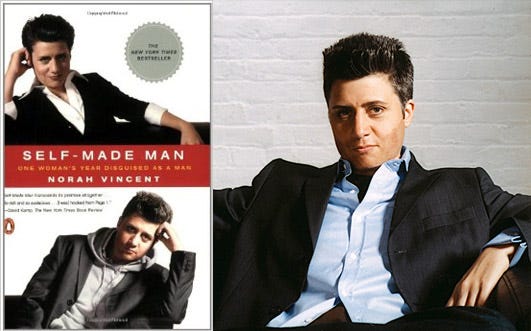
Self-Made Man by Norah Vincent documents the author’s 18-month experiment living as a man named Ned. She decided to embark on this experiment to explore gender dynamics from “the other side”, so to speak. Vincent, a liberal journalist with a strong feminist background, decided she wanted to understand men’s lives and social roles from within. She recognized, accurately, that men change their behavior when a woman is present, and she was curious to see how they were when no women were around.

Vincent described herself as a “bull dyke” and held strong feminist views. She expected, throughout the course of the experiment to uncover the secrets of male privilege and the societal advantages that, she was sure, are afforded to men. She anticipated that living life as a man would validate her beliefs that men lead easier lives and wield unchecked power. She figured that, at the very least, she could enjoy a couple of years as a powerful male.

Vincent disguised herself as a man by getting a new hair style and giving herself a fake five o’clock shadow, among other things. She had always been considered rather masculine in her usual feminist and lesbian circles, so she figured she could pass rather easily as a man, if perhaps a slightly effeminate one. She was right.

Her initial assumptions changed when Vincent discovered that men, contrary to her expectations of power and privilege, face their own unique set of pressures and struggles. Men, she discovered, were expected to suppress any signs of vulnerability. This quickly led to feelings of extreme isolation that she did not expect. Nobody “had her back” because, as far as they knew, she was just a man, and should “man up”. She quickly realized that men do not have inherently easier lives. Her preconceived notions of in-born male advantage evaporated. She was getting worried.

She realized that women do not have empathy for the struggles of men.

Norah, as Ned, experienced the behavior of women toward men firsthand. At one point, she tried dating women as a man. She figured this would be incredibly easy for her. Not only was she a woman herself and knew how women think, but she was also a lesbian and already liked women. She worried at first that she’d be too good at it and would have to tell interested women that she was a woman to stop them from pursuing her.

The reality was sharply different from her expectations. Her apparent femininity came across as her simply being an effeminate man. This caused women to be disinterested in her and their rejections were dismissive, cold, and often extremely brutal. Women would sometimes treat her with suspicion or outright hostility as they assumed her intent was negative.

These interactions eventually led Vincent to start developing misogynistic thoughts. That’s right: women treated her so poorly when they believed her to be a man that she started to develop misogynistic thoughts.

Interestingly, many of the supposedly straight women she had attempted to date, even those who had been brutal and cold toward her, immediately expressed interest in a lesbian “hook-up” when she told them she was a woman who had been disguised as a man for the sake of journalism.

Perhaps there’s no such thing as a “straight woman”. Is there even a such thing as a lesbian?

CTCG, “UNDERCOVER: A Feminist’s Year Living as a Man”, Codex Trivium Cosmic Genesis, 2025-06-16.

October 4, 2025

Rapid onset gender dysphoria (ROGD)

Filed under: Cancon, Health, Media, Politics — Tags: , , , , , , — Nicholas @ 05:00

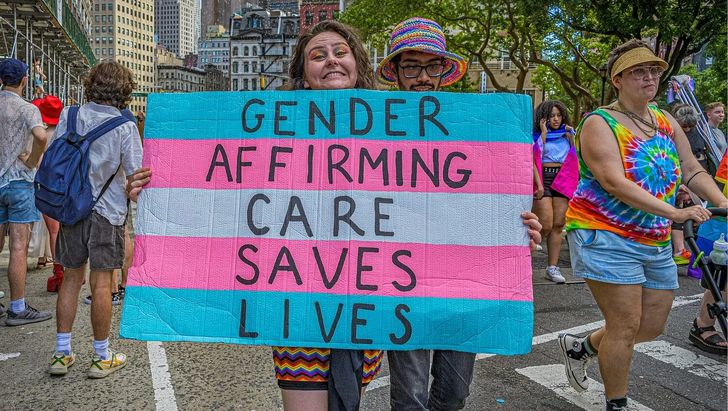
At Woke Watch Canada, Igor Stravinsky tells the story of “Jane and John”, a distressing tale of rapid onset gender dysphoria:

Image via the Boston Medical Center

In Ontario elementary schools, students are taught that whether you’re a boy or a girl is not determined by your physical body. Kids are encouraged to “explore their identity”. You may have a girl’s body. But how do you feel about it?

These kinds of discussions are going on because schools have accepted what rational people call “gender ideology”, but I prefer the term “gender mythology” because an ideology usually has to do with political systems. In my view the idea that a person’s sex is unrelated to their physical body, that they have a kind of soul sex, if you will, is clearly a myth.

[…]

Jane and John

This is a true story. The names have been changed to protect the privacy of this person.

Jane was a happy, clever, talented, and expressive girl who always wanted to help others. She displayed precocious empathy and enjoyed teaching younger kids various skills. Jane became socially conscious at an early age and was bothered by the fact that she enjoyed a middle-class, Western quality of life while so many others were clearly struggling. As an elementary student, she canvassed her neighbourhood collecting donations for disadvantaged kids. She came to identify with groups she saw as persecuted or oppressed.

Her school was very racially diverse, but she did not observe much racial discrimination. What she did notice was a fair bit of homophobia. She quickly took every opportunity to be an ally to the LGBT cause. In her middle school, there was an LGBT club, which she joined. Jane would often arrive home from school in an angry state because another student had said something that upset her, like, “being gay is a sin”, for example.

Jane’s parents were progressives who made it clear that she would be loved and accepted if she were a lesbian. Jane laughed at that and replied that she “dreamed about boys”.

Jane was a high achiever who was active in athletics and music. At 16, she became a vegan. She was in most ways a typical high school student, but her allyship with LGBT people gradually moved towards activism.

At university she quickly gravitated towards Indigenous and Gender Studies. Her close friends were all LGBT people. Her best friend was a transwoman (a man who identified as a woman). Jane came out as “bisexual” but her main romantic relationship was with a man.

Then, abruptly at the age of 20, she announced to her parents that she was to be called “John” and that she was going to transition to male.

By her own admission, Jane had been perfectly happy as a girl/woman for 20 years- “until I wasn’t”. This does not fit the Gender Mythology narrative. There is simply no way you can reasonably argue that she had, at this late age, suddenly realized what she truly was. She herself did not even claim that. So, what happened?

[…]

It was pretty obvious to me that Jane’s “transition”, like [trans-race activist Rachel] Dolezal, was the result of a combination of personal qualities and social influences. All the stars aligned to point her in that direction. She desperately wanted to be part of the community she had connected with and was tired of just being an ally. Claiming to be bisexual did not really cement her position as an insider. But becoming trans was her ticket.

Due to the extreme nature of taking on that identity — lifelong drug regimens and a number of surgeries, all of which presented serious health risks, going down that road reflected a true commitment and not only made her a part of the LGBT tribe but catapulted her to the top of the hierarchy.

What Jane experienced is known as Rapid Onset Gender Dysphoria (ROGD) and was first identified by the physician/researcher Lisa Littman. Learn more about it here. If you want to get a 2SLGBTQ++ (plus whatever other letters and numbers they’re using now — I can’t keep up) activist spitting mad mention ROGD. The phenomenon proves beyond a reasonable doubt that gender dysphoria can be induced in vulnerable people by social circumstances and aligns well with the research and clinical practice of Dr. Kenneth Zucker from the Centre for Addiction and Mental Health (CAMH) in Toronto.

Zucker ran the clinic for some 20 years and was pushed out due to his refusal to accept “affirmative care” as the only acceptable treatment for gender dysphoria. Zucker found that about 80% of kids would eventually grow out of their dysphoria and thus did not believe in affirming kids’ identities but rather focused on helping them cope with their condition.

Since affirmative care (an oxymoron!) has been adopted, we thus know that 80% of the kids who have been put on the road to gender transitions (and most carry through to the end) would have seen their gender dysphoria dissipate naturally over time. But once the first step — puberty blocking drugs, is taken, kids almost always go on to cross sex hormones and many continue with various surgeries.

Gender clinics do not do follow up nor do they support de-transitioning, but it is clear that the number of young people out there who have seriously harmed themselves through “affirmation” treatments is significant, and more harm is being done day by day as long as affirmative care remains the standard treatment for gender dysphoria.

August 3, 2025

20th century advertising alchemy rediscovered

Filed under: Business, Media, Politics, USA — Tags: , , , , , — Nicholas @ 05:00

Much sound and fury has been devoted to the ritual denunciations of American Eagle and their new ad campaign featuring blatant Nazi ideology and imagery, er, I mean Sydney Sweeney:

Whenever I endure a sentence which trespasses into a jibe about whiteness or men or some other illusory bugbear, I stop reading and launch the laptop through the window. This week, I’ve cleaned out eBay. As one delivery driver lugs a fresh laptop to my front door, another scoops up the last to fall from the sky.

Those all-too-common laments about skin colour or genitalia are the scarlet letter imprinted on the chest of the thoughtless bore. It’s a mind virus without antidote. Screeching “whiteness!” upon snapping one’s shoelace betrays sound psychological health.


Take Sydney Sweeney, an American actress blessed with a merciless, unfair genetic inheritance. This week, Sydney broke the internet. Her crime? She’s rather attractive. Worse yet, Sydney flaunts her icy, Scandinavian beauty.

In an advert for American Eagle, the dewy, lissom blonde squeezes her gymnastic body into a pair of denim jeans. Smouldering before the camera, Sydney flutters her “great genes”.

Those great genes sashay around a classic Mustang — 400 horses of unapologetic masculine energy. Sydney pats her hypnotic behind. She fires up that climate-melting engine. The infernal marriage of masculine-feminine consummates as she roars off into the distance.

Advertisers know what they did. Diana, Roman goddess and huntress of men. Her chariot, the male appendage made steel and exploding gasoline. A combination to light our monkey brains on fire. The symbolism hijacks our amygdala: buy these jeans, and she’s yours. Or, for the other sex, buy these and manipulate them.

I’m sorry to be so blunt, reader. Those claims, as primitive as they may appear, are the animating spirit of advertising. Back in the 1920s, Freud’s nephew, Edward Bernays, transplanted Uncle Siggy’s theories into the advertising business. Out went staid adverts praising a product’s utility. In went adverts selling visions of your unconscious, insatiable self. Bernays transformed the public relations and advertising worlds. He sold products that stirred the galloping herds of the subconscious mind.


Take cigarettes. Before Bernays, smoking was a decidedly male pursuit. Tobacco giants, keen to double their potential customer pool, turned to him. Bernays transformed smoking from a vulgar, unladylike pastime into a symbol of freedom and female empowerment. Men buy Patek Phillipe watches for the same reason. As Dave Chappelle put it: “If a man could fuck a woman in a cardboard box, he wouldn’t buy a house”.

In just a few moments, Sweeney’s serpentine hips lulled advertising away from overt wokeness to its subliminal witchcraft. It worked. American Eagle’s stock surged fifteen percent.

For research, I studied the ad twenty-seven times. Your humble narrator bought thirty-seven pairs of jeans and then signed over his entire inheritance to Ms Sweeney.

The reaction on the identitarian left authored five additional chapters to the upcoming edition of the Diagnostic and Statistical Manual of Mental Disorders.

By teasing the words “genes” and “jeans”, Sweeney called for the annexation of Poland and the Sudetenland. MSNBC excelled itself, even birthing a new pidgin English indecipherable to 97 percent of native speakers:

“Sydney Sweeney’s ad shows an unbridled cultural shift towards whiteness”.

Well, that’s one way to think about it.

July 14, 2025

The “War of the Sexes” is over … men now expected to surrender and go back to doing what women want

Filed under: Health, Media, Technology — Tags: , , , , — Nicholas @ 05:00

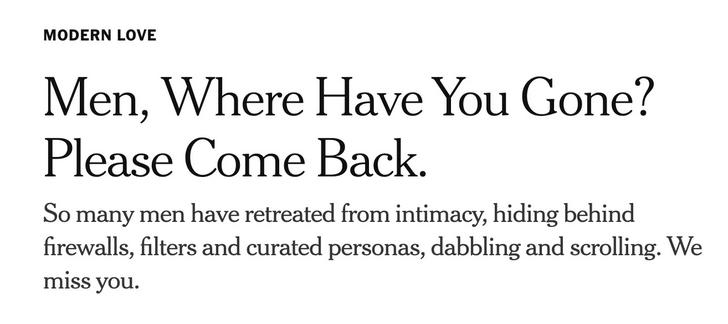
The more I read about the state of male-female interactions on the dating scene (such as it is), the more grateful I am that I’m decades out of that killing ground. Male survivors have clearly decided that the risks are far greater than the potential relationship rewards and individually withdrawn in large enough numbers that the “dating scene” is a shadow of what it once was in the pre-swipe-left era. Janice Fiamengo responds to a “men, come back!” plea from Rachel Drucker in the New York Times:

The question of where men have gone, in the title of Rachel Drucker’s New York Times op/ed, is surely disingenuous. Drucker thinks she knows: men have disappeared into social media posting, digital lurking, uncommitted sexting, and porn. Allegedly afraid of emotional intimacy, they are no longer “showing up” for women. Drucker addresses men directly, diagnosing their feelings: “You’ve retreated — not into malice, but into something softer and harder all at once: Avoidance. Exhaustion. Disrepair.”

Well, maybe. Maybe not.

Drucker’s article is part social lament, part personal ad, and like many statements by modern women about men, it is notable for its presumption. Drucker seems to think she can call off the sex war simply by saying she’s had enough. Men were never supposed to stop being available to women. Drucker mourns a lost time when men “asked questions and waited for the answers”, when they “listened — really listened — when a woman spoke”. It doesn’t seem to occur that men have been listening and have heard women’s messages, loud and clear.

Drucker goes so far as to express nostalgia for a time of male sexual pursuit, when having a woman on one’s arm was a way for a man to prove himself and impress other men. “It wasn’t always healthy”, she says in one of her many massive understatements (ignoring the barrage of condemnation leveled against such men) “but it meant that men had to show up and put in some effort”.

Drucker produces no evidence of men’s lack of effort, and it is not clear that her personal anecdotes — all culled, it seems, from her monied Chicago milieu — are representative. I know many men, including young men, who are still willing to pursue romantic relationships with women; many put in a lot of time and thought. But it does ring true that at least some portion of men are far more wary than in previous eras, unwilling to risk the potential hell of divorce or of a false accusation in a culture that believes women and belittles men.

Some men have simply come to the conclusion that modern women aren’t, in general, all that likable — neither marriage material nor viable candidates for motherhood.

As far as female pronouncements about men go, Drucker’s piece is not the worst. It does not hector or accuse (at least, not much), and Drucker expresses some genuine liking for men. But it’s not clear how much that is worth when she is so oblivious to men’s points of view and unaware that at least some of the onus for re-engaging men must fall on women. Drucker’s blind spots and unearned certainty turn her wistful dirge into a tone-deaf commentary on contemporary sexual politics.


The article begins with a restaurant, where Drucker notes the absence of men. There are women together, doing what women do, but almost no coupled men. And in her own life, Drucker notes, there has been retreat. It isn’t just her, she’s sure: it’s a collective act in which men are removing themselves from women’s lives, no longer “trying to connect”.

Drucker is part of the problem, though she doesn’t seem to recognize it. She admits that she “spent over a decade” working for Playboy and more hardcore sites to get men addicted to digital pornography. Part of her job was “to understand exactly what it took to get a man to pay for content he could easily find for free”. She does not seem to regret this work or recognize its damage; on the contrary, she exults that it helped her understand men’s deepest selves.

Her characterization is simplistic and contemptuous: “We knew what worked”, she boasts. “It wasn’t intimacy. It wasn’t mutuality. It was access to stimulation — clean, fast and frictionless. In that world, there’s no need for conversation. No effort. No curiosity. No reciprocity.”

If this is what men fundamentally are to Drucker — sex bots without emotion or desire for reciprocity — why is she so disappointed that they are no longer around?

June 10, 2025

The limits of female empathy

Filed under: Books, Health, USA — Tags: , , , , , , — Nicholas @ 03:00

Janice Fiamengo discusses the 2006 book Self-Made Man: One Woman’s Year Disguised As A Man by journalist Norah Vincent. Intended as a kind of exposé of male privilege, her investigations turned into something rather different than she originally intended:

    Many men are lonely. Many don’t like the work they do. Many are unhappily married. They struggle with an at-times overwhelming sex drive. Their encounters with women, romantic or otherwise, often involve rejection and contradictory tests of their masculinity. They are the objects of blame and bigotry in their societies, yet are expected to remain stoic and put women’s needs first.

It’s a strange world in which the above observations — by a woman — are seen as outstanding insights, but it’s the one we’re in.

In 2006, American journalist Norah Vincent published Self-Made Man: One Woman’s Year Disguised As A Man, an under-cover adventure in which the author, a mannish lesbian with big feet, spent close to 18 months periodically disguised as a man named Ned, notching up about 150 episodes in drag.

With breasts flattened, fake stubble on her chin, and a stuffed jock strap in her pants, having hired a tutor to teach her how to pitch her voice low and move like a man, she set out to “infiltrate exclusive all-male environments and if possible learn their secrets” (p. 18). She joined a bowling league, went on dates, did sales calls, spent some weeks at a monastery, and attended a Robert Bly-influenced men’s wilderness retreat.

Expecting to learn something about male power, she found instead “the hidden pain of masculinity and my own sex’s symbiotic role in it” (p. 254). The planned exposé became a feminist mea culpa.

The book got a lot of attention when it was published, and many men expressed gratitude and appreciation for the empathy and insight in Vincent’s work.

Reading the many accolades, I felt sadness, tenderness, and amazement. Wasn’t this a bit much? Was it really so remarkable that a woman could develop sympathy for the opposite sex?

Most men are so unaccustomed to any empathy from a woman, even when it’s mixed with patronizing descriptions and questionable conclusions, that they respond as if to heroism. The woman who cares, even within circumscribed limits, is catapulted into the company of the saints.

Imagine the reaction if a man had masqueraded as a woman for a year or more, and then pretended to understand women (even sympathetically) using a shop-worn ideological framework? Imagine a white person putting on blackface in order to become an expert, even a well-intentioned one, on the need for black self-improvement? There would be howls of outrage and indignant rebuttals, especially by members of the impersonated group.

Not in Vincent’s case. So rare is a woman’s attempt to understand male experiences that she doesn’t need to be consistently sympathetic or accurate.

Even when someone goes beyond temporary male drag, there is a palpable surprise that mens’ lives are not a well-watered garden of male privilege:

Today, of course, there is still always a reason to look away from men’s pain. Feminist-inclined men and women routinely “bathe in male tears“. They claim that discussing men’s issues is misogynistic, and ask “Can White Men Finally Stop Complaining?” No wonder it seems that the only time men can be heard is when women speak for them.

Notably, women who “transition” to male through hormone treatments and surgery are often shocked by the indifference and unkindness they encounter in public, where men are not eager to help and women expect deference. Zander Keig wrote as a trans man in “Crossing the Divide” of a pronounced sense of aloneness: “No one, outside of family and close friends, is paying any attention to my well-being”.

May 16, 2025

For some reason, men who sleep around don’t want to marry women who sleep around

Filed under: Health, Media, USA — Tags: , , , , — Nicholas @ 03:00

Young women who approach casual sex the way that young men do (or used to, anyway) are shocked to find that men don’t want to settle down in a long term relationship with a woman with a similar “bodycount”:

A young woman at a club with unrealistically disinterested young men.
Image generated by Grok.

First of all, men are very different than women, but guys are also fairly simple creatures.

Here are the fundamentals, ladies …

If a man sees you as a potential match, is attracted to you, you feed him, seem to want to take care of him, you’re a good mom (if you have kids), have good sex with him, are nice to him, he enjoys talking to you and you genuinely seem to think he’s great, he will think he’s the luckiest guy on earth. The great thing about all of this is that it’s mostly under your control. Yes, you might have to dress up and have some open conversations about what the two of you like in bed, but it’s a doable list. Being 6’4′ or making $500,000 per year to get some woman’s attention may be outside of a man’s control, but if a man considers a woman relationship material, she is probably capable of locking him in if she wants to do it.

Of course, like everything else in life, there is some nuance involved here.

For one thing, good sex is a key part of a good relationship, BUT unlike a lot of women, men are also generally very comfortable with the idea of having sex OUTSIDE OF RELATIONSHIPS. A lot of men can enjoy sex with women they just met, women they know they’ll never see again, or even women THEY DON’T EVEN LIKE AS HUMAN BEINGS. Men just have a biological drive toward sex, the same way, for example, a lot of dogs have a biological drive toward prey. The second my dog sees a cat; she wants to chase it. If she catches up to the cat, she doesn’t even know what to do, but she does know she wants it to run so she can have the fun of running after it. It’s an innate drive for her and most men have that same kind of innate drive around sex, even though most of us never have the opportunity to fully express it.

[…]

For example, all other things being equal, just about every man would prefer a virgin to a woman with say 50 previous partners. Why? Well, in a man’s book, being promiscuous is a huge negative in a woman you’re interested in long term for reasons great and small, fair and unfair.

Like what?

Well, first and foremost, the traditional concern is that if she’s sleeping around, how do you know your child is yours? The last thing any man wants to do is get cucked and end up spending his life raising a child some other man impregnated his wife with right under his nose. Along similar lines, the more a woman has slept around, the more likely it is that she may cheat. After all, unless you’re the absolute peak of the pyramid for men, having sex requires a lot of effort and work. For women? Not so much. She’ll have easy opportunities every day of the week, probably multiple times per day, and if she feels comfortable sleeping around, can you trust her?

How easy is it? Well, once, I remember talking to a female friend of mine who had moved to another city, was lonely, and she complained to me that she “Just needed to get laid.” I laughed at her over the phone and told her something like, “All you have to do is dress up, go to a hotel bar, look for any attractive single man, sit next to him, and talk to him for 5 minutes, then ask him to take you up to his room. You’ll be having sex 5 minutes after. It’s that easy” – and it is, for women.

We can go on. Promiscuous women are statistically less likely to stay married. You also have to think they probably aren’t going to be as satisfied in bed if they’re comparing you to a large number of men. You know, “Well, Brett had that amazing 8 pack, Jimmy was really hung, Paul could go forever, and Todd did that really cool thing with his tongue, so how good is this compared to those guys?” Furthermore, it’s natural for men to want large numbers of female partners, but not so much for women, which usually means women who sleep around have issues. How many mentally healthy, happy women are racking up truly large numbers of guys? Not many.

April 25, 2025

What Were Georgian Attitudes Towards Sex? | Georgian Pleasures

Filed under: Books, Britain, Health, History — Tags: , , , , , — Nicholas @ 02:00

History Hit
Published 12 Sept 2024

Historian Dr Kate Lister removes Bridgerton‘s rose-tinted glasses, unlaces the corsets and unbuttons the breaches of the Georgians. Join Kate as she investigates how s*x and the world of celebrity were a big thing long before the 20th century.

The fabulous wealthy elite of Bridgerton look perfectly preened, their teeth, hair, make up, even their sex scenes are all filled with opulent glamour! But in reality a lot of people in Georgian society, including the wealthy, were dealing with a myriad of issues, from syphilis, teeth decay and scandals to laudanum and gin addictions. All of this would have been rife and incredibly visible on the big city streets during the booming industrial revolution.

Kate uncovers what went on betwixt the Georgian sheets: who’s doing what, where, how and with whom. Along the way she’ll explore extraordinary guides to s*x work in London and Edinburgh and unwrap the world of 18th century condoms, syphilis and even high profile and hidden sex clubs. All of this will help to unearth the real lives of the people stomping the streets, pubs and back alleys of these lavish Georgian cities. No stone is left unturned in the quest to reveal the real lives of Georgian society!
(more…)

April 2, 2025

Iceland’s “double standards about sex between adults and minors … exposes grey areas in victim-centered sanctimony”

Filed under: Government, Law, Politics — Tags: , , , — Nicholas @ 03:00

Janice Fiamengo discusses the recent revelation that Iceland’s Minister for Education and Children’s Affairs, Ásthildur Lóa Thórsdóttir, had an affair with an under-age teen when she was in her 20s:

Last week, Ásthildur Lóa Thórsdóttir [right], Iceland’s Minister for Education and Children’s Affairs, was revealed to have had a sexual relationship with a teen boy decades ago, when she was 23 years old. The case vividly highlights the west’s double standards about sex between adults and minors, and it exposes grey areas in victim-centered sanctimony.

That the case occurred in Iceland, a feminist stronghold with a female president, a female prime minister, and a claimed “zero-tolerance policy for sexual abuse and exploitation of children“, is not at all surprising. No one seriously expects feminists to apply their touted compassion to male teenagers; and no one believes that their championing of gender equality includes sexual probity for women.

Iceland is so thoroughly feminist that in 2023, the prime minister herself joined other women on a one-day strike to demand, amongst other utopian objectives, “an end to unequal pay,” neatly sidestepping (while illustrating) that the so-called pay gap is caused primarily by women’s tendency to work fewer hours than men do. Female moral innocence is such a cherished belief of the Nordic island nation that it has designated 2025 as Women’s Year, with “12 months of events dedicated to progressing gender equality.” (Interested readers should consult a gushing Guardian article, “Women are the best to women“, which depicts Iceland as a near-idyllic women-led community in which men hardly figure.)

Clearly, when the most powerful woman in the country can take a day off to showcase women’s alleged lack of power, few women are prepared to consider their own potential abuse of it.

That brings us to the Minister for Children’s Affairs, who appeared flabbergasted last week to find that her long-ago sexual past has become fodder for unsympathetic public discussion and suggestions of serious impropriety. “I understand … what it looks like“, she is quoted as saying to reporters, seemingly exasperated at how difficult it is “to get the right story in the news today”. At 58 years of age, Thórsdóttir is being given a tiny glimpse into what thousands of men have experienced since feminism entered its Jacobin phase.

Over three decades ago, Thórsdóttir began a relationship with a 15-year-old boy who was attending her church group. He has been identified as Eirik Asmundsson. He was a troubled boy with a chaotic home life, and she was an adult member in the group; newspaper articles have said that she was a group counselor, which she denies. She claims that the relationship did not become sexual until the boy was 16, and that he pursued her.

Thórsdóttir eventually gave birth to a child — a son — when she was 23 and Asmundsson was 16. She claims, again contrary to news reports, that their sexual relationship was long over by then, having lasted only a few weeks. What is undisputed is that she forced the boy to pay child support for 18 years, long after she had met and married another man, which occurred about a year after the child’s birth. She also opposed numerous requests by her child’s father to form and maintain a relationship with his son. Overall, she treated the boy shamefully.

Naturally, if a male government minister had been found to have been sexually involved with, impregnated, and then split from a 15- or 16-year-old girl when he was 22, especially when he was part of a religious organization in which he had some degree of moral or spiritual influence over her, there would be no public doubt whatsoever about his culpability.

All news reports would have been condemnatory, and his protestations, if he had been naïve enough to make any, would have been in vain. There would have been a chorus of disapproving statements from his fellow politicians in the Icelandic parliament. He would have been forced to resign from government and would likely be facing criminal investigation, perhaps for custodial rape (sex with a youth in one’s employment, care, or custody).

In Thórsdóttir’s case, in contrast, there has been only a brief flurry of reports and limited personal fallout. She was forced to resign from her ministerial post, but she remains in government. That she has kept her job is extraordinary. The Daily Mail, while not defending her, waffled about her potential criminality, saying “The age of consent is 15 in Iceland, but it is illegal to have sex with anyone under the age of 18 if the adult holds a position of authority over them, as Thorsdottir is accused of doing“.

March 16, 2025

Female sexual predators

Filed under: Health, Law, Media, USA — Tags: , , , , — Nicholas @ 05:00

Every civilized person rejects the notion that male sexual predators should be tolerated, yet few are willing to accept the notion that female sexual predators might even exist. They absolutely do exist and they do commit terrible crimes against their — often very young — victims, as Janice Fiamengo shows:

Even when we are aware that women prey on children, many of us can’t really believe it. When Florida Congresswoman Anna Luna, a Republican elected to the U.S. House of Representatives, proposed three new bills last year that would impose harsh penalties, “including the death penalty”, for various forms of sexual abuse, child pornography, and child sexual exploitation, it is impossible to believe that Luna thought any number of women would be executed for child rape, and nor will they be given the leniency that is shown to women in the criminal justice system (see Sonja Starr’s research).

Yet similar crimes to Ma’s are easily discovered. In the same month that Ma pled guilty, a Martinsville, Indiana teacher was charged with three counts of sexual misconduct against a minor, a 15-year-old boy who has alleged that as many as ten other students were raped by the same woman. The month before that, a New Jersey primary school teacher was charged with aggravated sexual assault against a boy who was 13 years old when she bore his child; it is alleged that she began raping the boy when he was 11. The month before that, a Tipton County, Tennessee teacher [pictured below] pled guilty to a dozen sex crimes against children ranging in age from 12-17 years old. It is thought that she victimized a total of 21 children.

In the same month, a Montgomery, New York teacher pled guilty to criminal sexual assault of a 13 year old boy in her class, whom she assaulted over a period of months. In the previous month, a San Fernando Valley teacher was charged with sexual assault of a 13 year old male student; police believe she victimized others also. Earlier in the year, a substitute teacher in Decatur, Illinois was charged with raping an 11 year old boy. These are just a few recent cases, and only those involving female schoolteachers. Female predators are also to be found amongst social workers, juvenile detention officers, and sports coaches.

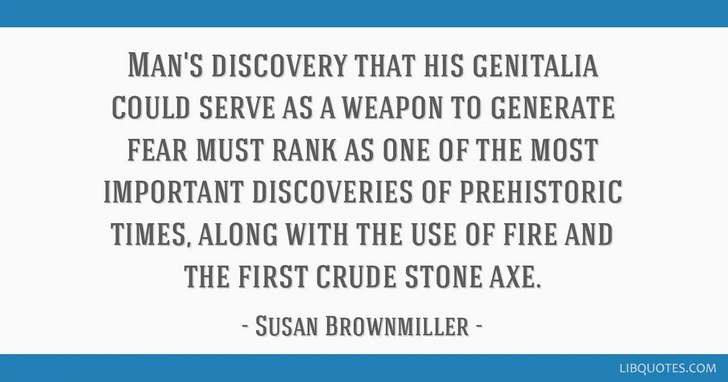
The feminist position on male sexual abuse of women and girls has for a long time been that it is about power. Men rape and abuse, according to Susan Brownmiller [quoted above] and others, because they believe it their right as men to keep women subordinate. Rape compensates for male inadequacy and allows for the expression of men’s hostility toward women: it is not about lust but about men’s need to humiliate and degrade. As Paul Elam once noted in a Regarding Men episode, the theory is fatally weakened if even a single woman does the same thing. Feminists have responded by saying that female sexual abuse is fundamentally different from male, less dangerous to society, less hurtful to its victims.

While I was doing research for this essay, I happened upon a recent podcast discussion between Louise Perry, British author of The Case Against the Sexual Revolution, and Meghan Murphy, Canadian Substack author and editor of Feminist Current. The podcast was called “What Happened to Feminism?” and I tuned in because I have enjoyed their perspectives on other issues.

Perry and Murphy are both critics of feminism who remain, as their conversation confirmed, staunchly feminist and anti-male. At one point in the podcast (at about 50:00), the conversation turned to #MeToo, and especially to allegations against teachers. Having already agreed that 95% of MeToo allegations were true, or at least based on something real, the pundits went on to agree, with disconcerting laughter, that there was no comparison between a “crazy” woman who “had sex” with a male student in her class, and a “dangerous” man, a “predatory rapist”, who went after under-age girls in his power.

Murphy even trotted out the old chestnut that abused boys were “stoked about the situation” in getting with “the hot teacher”. After all, she chuckled, “Men are gross predators. Men are perverts. They can’t keep it in their pants.” Perry, seeming taken aback by Murphy’s vulgarity, nonetheless agreed that the sexual abuse of boys is in an entirely different category from that of girls: “It is so annoying to me,” she said, “when people will go around claiming that these are exactly the same”.

Indifference to the victimization of boys, and lack of shame in admitting it, could hardly have been more stark. I mention the podcast not because it was singularly outrageous but because the attitudes expressed in it are still so much the norm, even amongst women who claim to have rethought other feminist beliefs.

March 10, 2025

QotD: The “Basic College Dude” of the 2020s

Filed under: Education, Quotations, USA — Tags: , , , , , — Nicholas @ 01:00

… though I have written probably 50,000 words on the Basic College Girl over the years, I have spent almost no time on her opposite number, hereby christened the Basic College Dude (BCD). Admittedly some part of this is structural: There just aren’t that many Persyns of Penis in college these days — nationwide, college enrollment is something like 65% female and climbing; I bet there are more than a few small colleges that, while technically coed, are almost exclusively female. Also, I taught mostly freshman-level History classes, and since I was one of the few dinosaurs who didn’t make attendance a part of the class grade, only the congenital rule-followers, i.e. chicks, showed up.

But mostly it’s just because none of them stick in my memory. The #1 characteristic of the Basic College Dude is that even if he’s there, he’s not there. He’s checked out — mentally, emotionally, spiritually (if that even means anything anymore). Unlike the girls, all of whom seem to be in 72 different clubs and organizations (and list them all on their email auto-signatures, such that by junior year, their honorifics are longer than my entire resume), the guys don’t seem to do much of anything. How do they while away their hours? I assume with social media, like everyone, and with video games and blackout drinking …

… the latter of which I have seen, a lot, and if you’ll permit a brief digression, if you really want to know how fucked our society is, go to a student bar on a Friday night. I myself was a bit of a party animal in college, and like everyone I went over the line a few times, but college kid drinking these days is almost Soviet — they’re aiming to get knee-walking, gutter-puking, total-blackout shitfaced, and they set about it as grimly and efficiently as possible. The girls, too, with the added bonus that they’re all on Ambien and Klonopin and every other happy pill you’ve ever heard of, which makes for some interesting, by which I mean terrifying, behavior …

[…]

But mostly it’s because college dudes have had their libidos beaten out of them. […]

Not only does the BCD not know how to do this, as Nikolai says, he apparently doesn’t actually want to. Constant stimulation by blinking screens, shit diets, and a lifetime of indoctrination have reversed the sexual dilithium crystals. Heartiste used to go on about this, and while I’m no biochemist, either, I think his theory is sound: There’s so much environmental estrogen floating around that men develop the emotional equivalent of gynecomastia, while women turn butch. Throw nth wave feminism into the mix, and you’ve got women acting like the crudest, most obnoxious male stereotypes (they call this “being strong and empowered”), while the men mope and sigh to their diaries.

The end result is that the BCD walks around like he’s shellshocked. He does the bare minimum, hoping to just grind it out without any further affronts to his basic human dignity … but so mal-educated is he, that the phrase “basic human dignity” doesn’t even register with him.

Severian, “The Basic College Dude”, Founding Questions, 2021-10-05.

January 20, 2025

“You can’t have genuine equality for women while also letting them duck through the trap door of but I didn’t mean it, like children, when their choices have unhappy outcomes”

Filed under: Law, Liberty, Media, Politics, USA — Tags: , , , , , , , — Nicholas @ 04:00

Kat Rosenfield shares her concerns about what the accusations against Neil Gaiman indicate about the problems with allowing women to be legally unreliable narrators:

There’s a moment in the Gaiman exposé where the main accuser, Scarlett Pavlovich, sends him a text message asking him how he’s doing. Gaiman says he’s struggling: he’s heard from people close to him that Pavlovich plans to accuse him of rape. “I thought that we were a good thing and a very consensual thing indeed,” he writes.

“It was consensual (and wonderful)!” she replies.

Except: she doesn’t mean it. We know this because Lila Shapiro, the author of the piece, breaks in to tell us as much:

    Pavlovich remembers her palms sweating, hot coils in her stomach. She was terrified of upsetting Gaiman. “I was disconnected from everybody else at that point in my life,” she tells me. She rushed to reassure him.

But also, we know this because she didn’t mean it is sort of an ongoing theme, here. And that’s what I want to talk about.

By this point in the article we’ve been instructed, explicitly and repeatedly, that you can’t assume a relationship was consensual just because all parties involved gave consent. “Sexual abuse is one of the most confusing forms of violence that a person can experience. The majority of people who have endured it do not immediately recognize it as such; some never do,” Shapiro writes in one section. In another, she explains that it doesn’t matter if the women played along with Gaiman when he asked them to call him “master” or eat their own feces because “BDSM is a culture with a set of long-standing norms” to which Gaiman didn’t strictly adhere (as the meme goes, it’s only BDSM if it comes from the BDSM region of France, otherwise it’s just sparkling feces-eating sadomasochism.)

Shapiro spends a lot of time thumbing the scale like this, and for good reason: without the repeated reminders that sexual abuse is so confusing and hard to recognize, to the point where some victims go their whole lives mistaking a violent act for a consensual one, most readers would look at Pavlovich’s behavior (including the “it was wonderful” text message as well as her repeated and often aggressive sexual overtures toward Gaiman) and conclude that however she felt about the relationship later, her desire for him was genuine at the time — or at least, that Gaiman could be forgiven for thinking it was. To make Pavlovich a more sympathetic protagonist (and Gaiman a more persuasive villain), the article has to assert that her seemingly self-contradictory behavior is not just understandable but reasonable. Normal. Typical. If Pavlovich lied and said a violent act was consensual (and wonderful), that’s just because women do be like that sometimes.

Obviously, this paradigm imposes a very weird, circular trap on men (#BelieveWomen, except the ones who say they want to sleep with you, in which case you should commence a Poirot-style interrogation until she breaks down and confesses that she actually finds you repulsive.) But I’m more interested in what happens to women when they’re cast in this role of society’s unreliable narrators: so vulnerable to coercion, and so socialized to please, that even the slightest hint of pressure causes the instantaneous and irretrievable loss of their agency.

The thing is, if women can’t be trusted to assert their desires or boundaries because they’ll invariably lie about what they want in order to please other people, it’s not just sex they can’t reasonably consent to. It’s medical treatments. Car loans. Nuclear non-proliferation agreements. Our entire social contract operates on the premise that adults are strong enough to choose their choices, no matter the ambient pressure from horny men or sleazy used car salesmen or power-hungry ayatollahs. If half the world’s adult population are actually just smol beans — hapless, helpless, fickle, fragile, and much too tender to perform even the most basic self-advocacy — everything starts to fall apart, including the entire feminist project. You can’t have genuine equality for women while also letting them duck through the trap door of but I didn’t mean it, like children, when their choices have unhappy outcomes.

December 15, 2024

QotD: Elite luxury beliefs – cultivated non-disgust

Filed under: Cancon, Europe, Media, Politics, Quotations, USA — Tags: , , , , , — Nicholas @ 01:00

Then there is the acceptance of what can only be described as unconventional lifestyles. Gay rainbow gender-bending madness is one thing. It seems progressive. Sodomites used to get ten years of hard labour. Look how advanced we have become.

But now they’ve moved on to the kids. It is easy to believe a listless, drug-addled elite might indulge in sexual degeneracy just for the hell of it. But how do we explain kindergarten teachers teaching their pupils about pronouns? Doctors emotionally blackmailing parents by insisting that the alternative to mutilating their children is their suicides? Or civil servants quietly putting gender-neutral bathrooms in public spaces?

How do we explain any of this? How do we even explain the emergence of transgenderism at all? There have been transexuals and gender dysphorics throughout history. They were typically understood as an offshoot of homosexuality, the extreme end of the effeminacy spectrum, and a vanishingly small fraction of the population.

But the current contagion is unusual and is clearly artificial. Its scale can only be a result of active promotion. Much of that is accomplished via the media and fellow travellers who champion these activities. But it is helped along by a collection of other professionals, and any attempt to question it is met with energetic pushback.

It is apparent that much of this comes from on-high, a literal top-down initiative. In less than twenty years we have witnessed a journey that began with gay rights and now includes active promotion of sexual deviancy to children, none of it natural or wanted by the majority. There is lots of speculation as to why this may be, including the part it may play in a comprehensive depopulation agenda.

What is apparent is that the professional class who endorse and promote this perceive it as an exercise in tolerance.

The notion of tolerance has typically been invoked for the distasteful, a last line of defence when direct measures fail, not a behavioural response indicating sophistication.

We rely on tolerance for things we dislike but cannot avoid. We learn to tolerate a persistent whine from an air conditioning unit, a noisy neighbour, or a noxious smell. But our goal is always to remove the source of the problem. Tolerance is a stopgap only when more permanent solutions are absent.

Their belief that tolerance is a virtue is one of the greatest shortcomings of today’s chattering classes. It is exactly the kind of signal error that exemplifies the disconnect between globalist elites and their obedient cheerleaders. The mechanism here seems to be a kind of learned override to natural disgust or discomfort. When others then object to whatever letter they have just added to the LGBTQWERTY+ community on the basis that it can’t be healthy or normal to endorse this stuff, that learned response includes the flare of superiority at your obvious backwardness.

How satisfying it must feel to have your natural inclination toward superiority endorsed in this way. Like whole food vegans at a Medieval banquet, it must provide an irresistible sense of smugness to know that you are the one-eyed man in the rainbow-decked land of the blind, with the uneducated hopelessly lost in their backward understanding of the benefits of sexual liberation.

While elites and their public relations machine happily endorse this misplaced emphasis on tolerance, all evidence suggests the elites themselves are not tolerating anything, despite what their obedient minions may think. They really are indulging in the cocaine-fuelled all-star human sacrifice orgies for real because they are cosmically bored and rich.

They aren’t rising above intrinsic disgust responses, they have sexualized them. They seem to have fetishized everything we consider unacceptable. Trafficked kids, femboys, chicks with dicks, gangbangs, farmyard orgies, human sacrifice, the lot.

They may even experience a thrill in seeing just how far they can push public morality as many have suggested, and especially how far they can get otherwise normal middle-class people to champion deviancy and hedonism most cultures find distasteful enough to ban.

The excessive promotion of tolerance is a defence against unnatural practices bored elites are rumoured to engage in. The professional class, for all their faults, probably aren’t into human sacrifice or animal orgies. So their response is to elevate the importance of visible acceptance of alternative lifestyles, hence gay kids, castrated boys, invented genders and other absurdities they cannot possibly believe themselves, and all of it instantly conveyed to one’s peers with nothing more than a multicoloured flag.

To top it all when they see how normals react, those unmoved by inept calls to be more understanding about sexual abuse, when they see parents reach for the shotgun at the very idea of sexually mutilating children, they get to invoke the conjoined twin of their cultivated tolerance, namely artificial superiority. The deep belief that they see further than the yokels with their primitive instinct to actually protect the vulnerable and embrace some basic sense of public morality.

These absurd beliefs can be observed in our educated classes because they ostentatiously demonstrate tolerance and its newfound position as the supreme virtue of the post-Christian age, one of the most successful public relations campaigns ever run by elites.

Spaceman Spiff (guest-post) “Praying to Absent Gods”, Postcards from Barsoom, 2024-07-16.

November 20, 2024

QotD: The Chads, the Staceys, and the Incels

Filed under: Health, Media, Politics, Quotations — Tags: , , , , — Nicholas @ 01:00

I have spent some time in the twilight reaches of the manosphere researching a new book, a world of depressing forums, full of hatred and despair, where young men gather to focus on the absence of sex in their lives. There are two broad categories: The Incels hate women because they won’t sleep with them. The Men Go Their Own Way (MGTOW) guys won’t sleep with women because they hate them.

These boys have their own vocabulary and belief systems. Pretty girls (Staceys) all sleep with the same few Alpha men (Chads). The Staceys ride the Cock Carousel, ie, have sex with the same few Chads. All this sluttish behaviour gives the Staceys something called A Thousand Cock Stare.

It is a grim world, in which women are evil and manipulative, and hated both for being sluts and for being virgins. It is a world in which pictures of pretty girls with their pet dogs are unbelievably sinister. These boys choose to live in this bleak world. They are culpable. But, if you tell all young, white boys that they are damned, why should they not behave as if they are damned?

A society which does not allow for people to atone, to be redeemed, and to be judged on their intent and actions is a miserable place. Most people interact with each other without antagonism most of the time. We should start being a bit more forgiving to each other, ditch the Puritanism and learn to cherish the well-meaning stumble towards decency. Even if, sometimes, we fall.

Antonia Senior, “Identity politics is Christianity without the redemption”, UnHerd, 2020-01-20.

« Newer Posts — Older Posts »

Powered by WordPress