This was written by Jon, my former virtual landlord, in an email to me earlier today. I’ve asked his permission to post it on the blog.
Did you see this Wall Street Journal post?
When Apple introduced the iPad last year, it added a new buzzword to technology marketing. The device, it declared, was not just “revolutionary,” a tech-hype cliché, but “magical.” Skeptics rolled their eyes, and one Apple fan even started an online petition against such superstitious language.
But the company stuck with the term. When Steve Jobs appeared on stage last week to unveil the iPad 2, which hit stores Friday, he said, “People laughed at us for using the word ‘magical,’ but, you know what, it’s turned out to be magical.”
I’m not sure what she’s on about when get gets to magic and dissing “makers” and hackers for their disdain of such. More on that later.
Sadly, I think love for the iPad is explained in much simpler terms: it is a shiny object, and people like shiny objects.
The thing is well proportioned (I’ve not looked at the specs, but I suspect that golden ratio proportions are present in its design), it has a polished surface, the display is bright and vivid — and people simply dig that sort of thing. I admit that I find the things attractive, but not attractive enough to overcome what are, for me, wallet-crushing limitations:
- No ROI. I cannot be measurably productive on an iPad — I could not write or code or draw on the thing — so I’m never going to make back its cost. I’ve been able to pay for all of my computers by being productive on them, but that would not happen on the iPad. For that to happen, I would have to devote far more time than I have to, say, learning how to program for the thing — and that’s not likely to happen. Your mileage will, of course, vary on this: if you can measure and assign a dollar value to the time saved by having a portable internet access point around the office, plant, home, or on the road, then you’ll see more of a return here. At present, though, I don’t need that — at least not in a way that can be represented by income or cashflow.
- Hyper-accelerated planned obsolescence. Apple is notorious for this — the next generation of device typically makes the earlier generation either less desirable or downright useless. My first — and only — Mac taught me this lesson, and I won’t fall for it again — at least not with an Apple product. The device becoming less desirable may not be an issue for most people, unless they are stylish hipsters who buy the device simply for its value as a fashion accessory. The reduced functionality, lack of updates, and lack of development support might be a real problem for people who bought the things for measurable productivity. So again, as ever and always, your mileage will vary.
Another thing that keeps me from buying one of these is that I can see that they are not going to age well. A portable device is going to get beat up, and the iPad will lose much of its Jobs-gizz-polished luster as the screen gets greasy and smudged, the case gets dinged and pitted, and then, finally — horror of horrors — the screen gets a deep corner-to-corner gouge after you read about the next generation device, drop the thing face down in shock, accidentally kick it into the next stall, and the hobo there picks it up and does who knows what with it before passing it back to you under the cubicle wall. Something as precious as the iPad just will not weather that sort of abuse. And even if it did, would you really want it back after that?
Postrel dibbles:
Even the “maker ethic” of do-it-yourself hobbyists depends on having the right ingredients and tools, from computers, lasers and video cameras to plywood, snaps and glue. Extraordinarily rare even among the most accomplished seamstresses, chefs and carpenters are those who spin their own fibers, thresh their own wheat or trim their own lumber — all once common skills. Rarer still is the Linux hacker who makes his own chips. Who among us can reproduce from scratch every component of a pencil or a pencil skirt? We don’t notice their magic — or the wonder of electricity or eyeglasses, anesthesia or aspirin — only because we’re used to them.
I’m not sure what to make of that. It sounds like she’s saying that hackers should revere the iPad simply because they could not make one themselves from scratch. By that logic, I should revere a shipping pallet because I could not make one from scratch — and I’m thinking beyond my lack of woodworking skills here. To Postrel, the shipping pallet should be seen as magic because I did not plant the acorn that grew into the oak that I cut down with the axe that I forged myself from ore that . . . oh, screw it, you know where I’m going with this and have better things to do with your time than to follow me there).
Postrel is missing the fact that clever people have commoditized magic: they’ve found methods to manufacture tedious or complicated things in ways that make them commonplace and disposable. It’s true that your average hacker could not build an iPad from scratch, starting from raw silicon and copper and gold and dead plankton transmogrified into petrochemicals. I mean, really, who has the time to farm plankton, wait for them to die, settle to the bottom of the ocean, be covered by sediment, be compressed through the build-up of rock strata over geological epochs — sorry, I’m doing it again. While your average hacker is not going to build an iPad from raw materials, your average hacker could probably build a world-changing application for a popular platform if that platform were open.
The article throws out the old groan about any sufficiently advanced technology being indistinguishable from magic. To those who don’t think too much about how that technology works, it certainly must seem like magic. What’s truly magical, though, is when such magic is commoditized and becomes commonplace. It goes from being a flashy-bangy trick to something that’s actually useful. Sadly, Apple is not building magic — they are building a captive audience.
Damnit. I’ve been letting this stew for a couple of days, and I can see that it’s just going to boil down to some lame bromide about how free markets and free access to products that one actually owns after paying for them are what is truly magical, but I’m just not going to go there. So I’m going to consider this done and send it off.

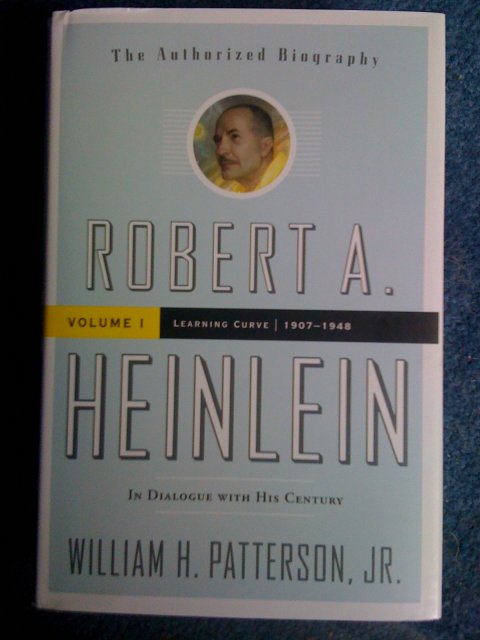 I finished reading the first volume last night, and I can’t wait for volume two.

