Quotulatiousness

February 23, 2019

No matter which “global crisis” they cry up, their answer is always “more government”

Filed under: Environment, Government, Media, Politics — Tags: , , , — Nicholas @ 03:00

Alex Noble on the remarkable consistency of the proffered solution to any and all “global” problems:

Climatechangers are really just watermelons – green on the outside but red on the inside. You’ll notice that none of their ideas about how to prevent climate change involve anything other than bigger government.

For them, climate change is just a pretext – an irrefutable argument (“if you disagree that we need to save the planet you must want people to die!”) that enables them to demand more taxes and more power for them and their friends so they can set the world to rights.

And out here in the real world, they have their army of useful innocents – voters fearful of tackling the real world on their own without help from a cosseting State, all too ready to swallow any argument for bigger government.

Climate change largely consists of menacing them with stories about rising water and melting ice and starving polar bears, so they will allow our civil rights to be ridden over to keep us all safe. They demand it, in fact.

As H.L Mencken said, “The whole aim of practical politics is to keep the populace alarmed (and hence clamorous to be led to safety) by menacing it with an endless series of hobgoblins, all of them imaginary”

January 31, 2019

Coming soon for Canadians – mandatory maple-flavoured search results

Filed under: Business, Cancon, Government, Media, Technology — Tags: , , , , — Nicholas @ 03:00

Michael Geist relates the ongoing efforts of ACTRA to get the federal government to mandate high visibility for Canadian content in search engines:

The escalating battle being waged for new Internet taxes to fund Canadian content does not stop with proposals for new fees on Internet access and online video services. Cultural groups also want to increase the “discoverability” of Canadian content by mandating its inclusion in search results. According to the ACTRA submission to the broadcast and telecom legislative review panel, it has been calling for search engine regulation for the past 20 years:

    ACTRA stated during the 1999 CRTC process that Internet search engines would become the gateway for consumers to access the vast array of entertainment and information now available from around the world. We argued then the CRTC should regulate them.

It now argues for mandated inclusion of Canadian content in search results for cultural content under threat of economic sanction:

    Regulating search engines would be difficult, but ACTRA recommends the government approach search engines like Google, Bing and others, and request they ensure Canadians are offered some Canadian choices in their search results. While it is neither possible nor appropriate to interfere in the final selection made by individuals, Canadian consumers should have a real choice, including Canadian films, television programs and music. We expect companies would concur with the government’s reasonable request to be seen as good corporate citizens. If a particular search engine does not agree to this request, the government should impose an appropriate regulatory constraint or burden, such as amending the Income Tax Act to discourage Canadians from advertising on search engines that fail to comply.

January 23, 2019

QotD: Regulation doesn’t scale well

Filed under: Bureaucracy, Business, Government, Quotations, USA — Tags: , , — Nicholas @ 01:00

A nation state is, with certain exceptions such as Kiribati, a very large entity. A modern “nanny state” is conducted on a scale beyond anyone’s comprehension. The single measure that might be good for a given town in, say, West Virginia, cannot possibly be good for another in Idaho, and adds debilitating paperwork at both ends. Meanwhile, the scale of the regulation is so great, that small family operators right across the country, lacking huge resources for lobbying and propaganda, will inevitably be scrood. For the truth is big guvmint and big bidnis interface only with each other.

David Warren, “The no-brainer chronicles”, Essays in Idleness, 2017-02-16.

July 17, 2018

Juul threat

Filed under: Health, Technology, USA — Tags: , , , , , — Nicholas @ 05:00

John Tierney on the good news/bad news in the most recent smoking statistics in the United States:

Tobacco-company stocks have plunged this year — along with cigarette sales — because of a wonderful trend: the percentage of people smoking has fallen to a historic low. For the first time, the smoking rate in America has dropped below 15 percent for adults and 8 percent for high school students. But instead of celebrating this trend, public-health activists are working hard to reverse it.

They’ve renewed their campaign against the vaping industry and singled out Juul Labs, the maker of an e-cigarette so effective at weaning smokers from their habit that Wall Street analysts are calling it an existential threat to tobacco companies. In just a few years, Juul has taken over more than half the e-cigarette market thanks to its innovative device, which uses replaceable snap-on pods containing a novel liquid called nicotine salt. Because the Juul’s aerosol vapor delivers nicotine more quickly than other vaping devices, it feels more like a tobacco cigarette, so it appeals to smokers who want nicotine’s benefits (of which there are many) without the toxins and carcinogens in tobacco smoke.

It clearly seems to be the most effective technology ever developed for getting smokers to quit, and there’s no question that it’s far safer than tobacco cigarettes. But activists are so determined to prohibit any use of nicotine that they’re calling Juul a “massive public-health disaster” and have persuaded journalists, Democratic politicians, and federal officials to combat the “Juuling epidemic” among teenagers.

The press has been scaring the public with tales of high schools filled with nicotine fiends desperately puffing on Juuls, but the latest federal survey, released last month, tells a different story. The vaping rate last year among high-school students, a little less than 12 percent, was actually four percentage points lower than in 2015, when Juul was a new product with miniscule sales. As Juul sales soared over the next two years, the number of high-school vapers declined by more than a quarter, and the number of middle-school vapers declined by more than a third — hardly the signs of an epidemic.

June 5, 2018

Down with the experts!

Filed under: Government, Politics — Tags: , , , , — Nicholas @ 05:00

In Quillette, Alex Smith explores the limits of expertise and why so many people today would eagerly agree with the sentiments in my headline:

“People are sick of experts.” These infamous and much-derided words uttered by UK Conservative parliamentarian Michael Gove express a sentiment with which we are now probably all familiar. It has come to represent a sign of the times — either an indictment or a celebration (depending on one’s political point of view) of our current age.

Certainly, the disdain for expertise and its promised consequences have been highly alarming for many people. They are woven through various controversial and destabilising phenomena from Trump, to Brexit, to fake news, to the generally ‘anti-elitist’ tone that characterises populist politics and much contemporary discourse. And this attitude stands in stark contrast to the unspoken but assumed Obama-era doctrine of “let the experts figure it out”; an idea that had a palpable End of History feeling about it, and that makes this abrupt reversion to ignorance all the more startling.

The majority of educated people are fairly unequivocal in their belief that this rebound is a bad thing, and as such many influential voices — Quillette‘s included — have been doing their best to restore the value of expertise to our society. The nobility of this ambition is quite obvious. Why on earth would we not want to take decisions informed by the most qualified opinions? However, it is within this obviousness that the danger lies.

I want to propose that high expertise, whilst generally beneficial, also has the capacity in certain circumstances to be pathological as well — and that if we don’t recognise this and correct for it, then we will continue down our current path of drowning its benefits with its problems. In short, if you want to profit from expertise, you must tame it first.

[…]

However, it is worth drawing a distinction between these two types of expertise — the kind people question, and the kind people don’t. In short, people value expertise in closed systems, but are distrustful of expertise in open systems. A typical example of a closed system would be a car engine or a knee joint. These are semi-complex systems with ‘walls’ — that is to say, they are self-contained and are relatively incubated from the chaos of the outside world. As such, human beings are generally capable of wrapping their heads around the possible variables within them, and can therefore control them to a largely predictable degree. Engineers, surgeons, pilots, all these kinds of ‘trusted’ experts operate in closed systems.

Open systems, on the other hand, are those that are ‘exposed to the elements,’ so to speak. They have no walls and are therefore essentially chaotic, with far more variables than any person could ever hope to grasp. The economy is an open system. So is climate. So are politics. No matter how much you know about these things, there is not only always more to know, but there is also an utterly unpredictable slide towards chaos as these things interact.

The erosion of trust in expertise has arisen exclusively from experts in open systems mistakenly believing that they know enough to either predict those systems or — worse — control them. This is an almost perfect definition of hubris, an idea as old as consciousness itself. Man cannot control nature, and open systems are by definition natural systems. No master of open systems has ever succeeded — they have only failed less catastrophically than their counterparts.

May 31, 2018

QotD: Difficulties in using self-reported data

Filed under: Britain, Health, Quotations, Wine — Tags: , , — Nicholas @ 01:00

Nick Cohen, over in the Guardian, is busy telling us all that we must drink less and that Scotland raising the minimum price of alcohol (hitting poor people’s cheap cider and bargain booze, but not directly affecting craft lagers, appellation d’origine contrôlée wines and artisan gin) is a Good Thing because the industry makes its profits by exploiting addicts who are drinking themselves to death en masse.

    It is a truth universally unacknowledged that, like drugs cartels, the drink industry makes most of its money from addicts. It thrives on hooked customers, who put boosting the brewers’ profits before their and their families’ health and happiness. Sixty per cent of alcohol sales – worth £27bn a year in England – are to “increasing risk” drinkers taking more than 21 units of alcohol a week, in the case of men (about 10 pints or two bottles of wine), and “harmful” drinkers taking more than 50… Twenty one units (14 for women) does not sound much in my world of journalism, but it is a sign of people who cannot go a day without a shot of their drug, which is as good a definition of an addiction as any.

Now, there’s a question there about who decided what that “risk” was and how large it was. Cohen gets into the Salvation Army-style temperance-league apocalyptic warnings about the horrors of heavy drinking and warns that by the time you’re knocking back fifty units a week (for men, thirty-five for women) you’re undergoing “full degeneration”.

But is that based on any firm evidence? One interesting study, reassuring to the toper, can be found here, which among other things makes the gentle point that since we either under-report what we consume, or we pour away half of the booze we buy undrunk, planning policy on what we admit to consuming may not be accurate.

Jason Lynch, “How Much Is ‘Too Much’?”, Continental Telegraph, 2018-05-08.

May 8, 2018

QotD: Pay inequality

Filed under: Britain, Bureaucracy, Business, Media, Quotations — Tags: , , , , — Nicholas @ 01:00

It probably doesn’t come as news that airline companies pay pilots more than cabin crew — but according to the dogma of the gender wage gap, we’re supposed to find this fact troubling. The British government now requires companies to report their raw gender gap — that is, the difference in the median hourly wages earned by their male and female employees. Ignoring occupational differences, seniority, employment history, hours worked, or any of the countless other factors affecting salaries, these data are misleading at best. Nevertheless, when budget airline EasyJet reported a 51 percent pay gap between its male and female employees, the company knew that its reputation perched on the edge of a PR abyss.

And that’s the whole point of the exercise: simplify statistics to shock people at the seeming injustice done to women and shame companies into action; refuse to compare similar job functions; ignore the fact that, like every other airline, EasyJet’s pilots are disproportionately male, while their cabin crews skew female; forget that almost all carriers compete for the same 4 percent of the world’s female pilots; and whatever you do, don’t mention that the EasyJet CEO, who was in charge of this bigoted organization and also its highest-paid employee until retiring earlier this year, was a woman. The company should be branded with a scarlet “51 percent” until it … does what? Cuts pilots’ pay? Hikes the salaries of female cabin crew? Hires male attendants instead of female? Goes bankrupt?

Kay S. Hymowitz, “Equal Pay Myths: Activists for wage parity ignore stubborn truths”, City Journal, 2018-04-09.

May 5, 2018

QotD: Making decisions for other people’s “best interests”

Filed under: Economics, Government, Quotations — Tags: , , , — Nicholas @ 01:00

Confession: ever since I began to study economics as an 18-year old, I’ve always had difficulty understanding the thought processes of people who fancy themselves fit to intervene into the affairs of other adults in ways that will improve the lives of other adults as judged by these other adults. I understand the desire to help others, and I also understand that individuals often err in the pursuit of their own best interests. What I don’t understand is Jones’s presumption that he, who is a stranger to Smith, can know enough to force Smith to modify his behavior in ways that will improve Smith’s long-term well-being. Honestly, such a presumption has struck me for all of my adult life as being so preposterous as to be inexplicable. I cannot begin to get my head around it.

I cannot get my head around Jones’s presumption that he knows enough to forcibly prohibit Smith from working for an hourly wage lower than one that Jones divines is best for Smith. I cannot understand Jones’s presumption that he ‘knows’ that Smith meant, but somehow failed, to bargain for family leave in her employment contract. I am utterly befuddled by Jones’s presumption to know that the pleasure that Smith gets from smoking cigarettes is worth less to Smith than is the cost that Smith pays to smoke cigarettes. I cannot fathom why Jones presumes that he knows better than does Smith how Smith should educate her children.

Yet this presumption is possessed by many, perhaps even most, people. Why?

Don Boudreaux, “A Pitch for Humility”, Café Hayek, 2016-08-05.

March 20, 2018

China’s dark vision of “social credit”

Filed under: China, Government — Tags: , , , , , — Nicholas @ 05:00

Jazz Shaw says the Chinese government appears to have studied and taken extensive notes to “improve” on the social controls depicted in Black Mirror:

For those of you who have never seen the Netflix series Black Mirror, it’s a show which presents a series of mostly unrelated vignettes from various dystopian futures where the world is simply awful in a variety of horrifying ways. In the third season, they featured an episode called “Nosedive” which imagined a society where people’s social media rankings (based on feedback and ratings they received from other citizens each time they interact) determined their success in life. With high marks, you had access to the best rental properties, classy cars, highest paying jobs and invitations to the best parties. Too low of a score could see you taking the subway to your job cleaning public restrooms and living in the human equivalent of a roach motel.

Sounds like a terrifying, science fiction world, right? It absolutely does, except that it’s already taking place in China. They’re instituting precisely such a social media “credit” system where too many social offenses (which essentially means anything viewed by the Communist Party in a negative fashion) could block you from even being able to ride public transit. (Reuters)

    China said it will begin applying its so-called social credit system to flights and trains and stop people who have committed misdeeds from taking such transport for up to a year.

    People who would be put on the restricted lists included those found to have committed acts like spreading false information about terrorism and causing trouble on flights, as well as those who used expired tickets or smoked on trains, according to two statements issued on the National Development and Reform Commission’s website on Friday.

    Those found to have committed financial wrongdoings, such as employers who failed to pay social insurance or people who have failed to pay fines, would also face these restrictions, said the statements which were dated March 2.

Wow, China. Amiright? This sort of neo-puritan-panopticon-nanny-state-on-steriods couldn’t possibly happen here, could it?

You similarly receive “scores” if you’re a seller on E-bay. Other examples abound. At this point, the government doesn’t seem inclined to try to hop on this ride, but do they even need to? Facebook, Google, Twitter and the other major platforms already have a shocking level of influence on our lives. It would only take a few tweaks before they could begin sharing user ratings with the whole world and who knows where they could go from there?

February 21, 2018

QotD: Regulation

Filed under: Bureaucracy, Economics, Quotations — Tags: , , — Nicholas @ 01:00

… “regulation” could also be described as high-handed and ignorant interference in the mutually advantageous deals contracted voluntarily among the miserable serfs of the state, interference at best inspired by antique theories of natural monopoly and using antique policies appropriate to obsolete technologies, and at worst by conspiracies to benefit existing rich people, backed by state violence. Much of regulation, looked at coldly, would fall under such a definition, if not immediately on its passage, then after a few years of technological change or regulatory capture.

Deirdre N. McCloskey, Bourgeois Equality, 2016.

October 6, 2017

Regulation and the unregulated sharing economy

Filed under: Australia, Bureaucracy, Business, Government — Tags: , , , — Nicholas @ 03:00

This particular article talks about the situation in Australia, although it’s quite similar here in Canada:

Living in Australia sometimes feels like living in a bureaucrats’ version of a spaghetti western. The heroes are the brave and all-knowing public servants, while the villains are the naughty people who are too foolish to realise that government knows best.

Politicians and bureaucrats alike want to regulate first, ask questions later. It seems barely a week passes without someone trumpeting the expansion of the nanny state. And with each new crackdown, ban or tax, our freedom gets that little bit smaller.

Whereas once the government would at least go through the motions of citing things like market failure, all it takes now is for a politician to want to look tough or be seen ‘doing something’. So it is with the proposed regulation of short-term accommodation platforms like Airbnb and Stayz.

Sharing our home with someone is as old as time. Who has not stayed with a family member or friend, or the friend of a friend? The difference these days is that it is much easier. Technology allows us to stay in someone’s home nearly anywhere in the world.

The immense popularity of these platforms is simply staggering. Globally, Airbnb has just passed four million listings, more than the rooms of the top five hotel brands worldwide. Australia is particularly fertile ground for the company, with almost one in five adults having an account. The company claims Airbnb is the “most penetrated market in the world”.

For government, the platforms are confronting. With no red tape or government involvement, travellers are protected, bad apples ejected and quality maintained via hosts and guests providing reviews of each other using sophisticated technology and a trusted online marketplace. Airbnb says that, on average, a host could have a new reservation every day for over 27 years before experiencing a single bad incident. A track record like that would be the envy of any pub, hotel, motel or caravan park in the country.

The so-called sharing economy challenges the idea that people need red tape, regulations or government to keep them safe from harm. But that does not stop some from trying. Currently, the NSW Government is toying with a grab bag of Big Brother and nanny-state policies ranging from new taxes and caps, to licences, planning approval and complete bans.

No modern government has ever seen a healthy, flourishing market without feeling the need to insert itself into the process, usually justified by the need to “protect” consumers.

August 13, 2017

QotD: The measurement problem in government

Filed under: Britain, Government, Health, Quotations — Tags: , , , , , — Nicholas @ 01:00

Now take health insurance. (Or, if you live, like me, in a country with a national healthcare system that has a single comprehensive payer, the health system.) There are periodic suggestions that we should punish bad behaviour, behaviour that increases medical costs: Scotland has an alcoholism problem so we get the Alcohol (Minimum Pricing)(Scotland) Act, 2012. Obesity comes with its own health risks, and where resource scarcity exists (for example, in surgical procedures), some English CCGs are denying patients treatment for some conditions if they are overweight.

It should be argued that these are really stupid strategies, likely to make things worse. Minimum alcohol pricing is regressive and affects the poor far more than the middle-class: it may cause poor alcoholics to turn the same petty criminality observed among drug addicts, to fund their habit. And denying hip replacements to overweight people isn’t exactly going to make it easier for them to exercise and improve their health. But because we can measure the price of alcohol, or plot someone’s height/weight ratio on a BMI chart, these are what will be measured.

It’s the classic syllogism of the state: something must be controlled, we can measure one of its parameters, therefore we will control that parameter (and ignore anything we can’t measure directly).

Charles Stross, “It could be worse”, Charlie’s Diary, 2015-10-09.

August 1, 2017

Ontario adopts voluntary self-surveillance app from CARROT Insights

Filed under: Cancon, Government, Liberty, Technology — Tags: , , , , , — Nicholas @ 05:00

I often joke about how inexpensive it appears to be to “influence” politicians, but it’s only fair to point out that the voters those easily influenced politicians represent are even more easy to influence:

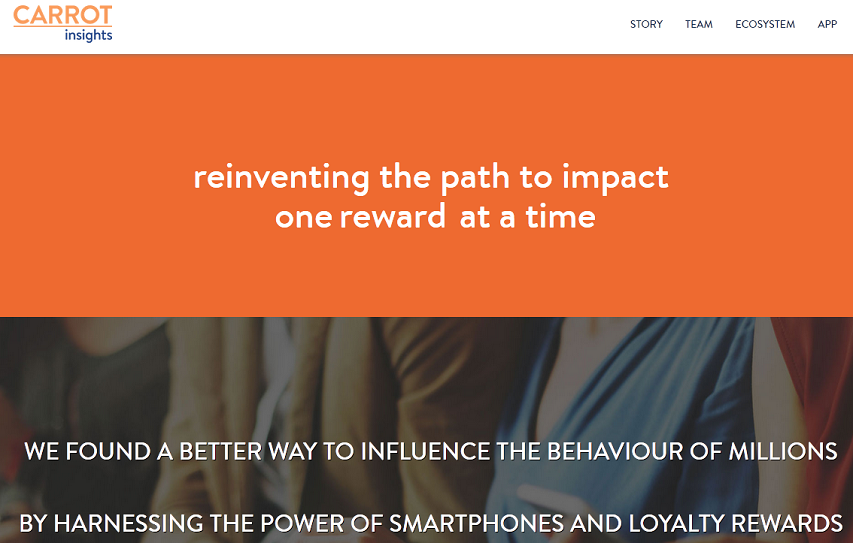
Ontario announced earlier this month that it will become the fourth Canadian government to fund a behavioral modification application that rewards users for making “good choices” in regards to health, finance, and the environment. The Carrot Rewards smartphone app, which will receive $1.5 million from the Ontario government, credits users’ accounts with points toward the reward program of their choice in exchange for reaching step goals, taking quizzes and surveys, and engaging in government-approved messages.

The app, funded by the Canadian federal government and developed by Toronto-based company CARROT Insights in 2015, is sponsored by a number of companies offering reward points for their services as an incentive to “learn” how to improve wellness and budget finances. According to CARROT Insights, “All offers are designed by sources you can trust like the BC Ministry of Health, Newfoundland and Labrador Government, the Heart and Stroke Foundation, the Canadian Diabetes Association, and YMCA.” Users can choose to receive rewards for companies including SCENE, Aeroplan, Petro-Canada, or More Rewards, a loyalty program that partners with other businesses.

It’ll be interesting if they share the uptake of this new smartphone app … just how many of us are willing to let the government track just about all of our actions in exchange for “rewards”.

In order to use the app, users are giving Carrot Insights and the federal government permission to “access and collect information from your mobile device, including but not limited to, geo-location data, accelerometer/gyroscope data, your mobile device’s camera, microphone, contacts, calendar and Bluetooth connectivity in order to operate additional functionalities of the Services.”

Founder and CEO of CARROT Insights Andreas Souvaliotis launched the app in 2015 “with a focus on health but the company and its partner governments quickly realized it was effective at modifying behavior in other areas as well,” according to CTV News.

June 15, 2017

Words & Numbers: What You Should Know About Poverty in America

Filed under: Economics, Government, USA — Tags: , , , , , — Nicholas @ 04:00

Published on 14 Jun 2017

Poverty is a big deal – it affects about 41 million people in the United States every year – yet the federal government spends a huge amount of money to end poverty. So much of the government’s welfare spending gets eaten up by bureaucracy, conflicting programs, and politicians presuming they know how people should spend their own money. Obviously, this isn’t working.

This week on Words and Numbers, Antony Davies and James R. Harrigan delve into how people can really become less poor and what that means for society and the government.

May 22, 2017

QotD: The nanny state’s ever-expanding reach

Filed under: Britain, Bureaucracy, Health, Quotations — Tags: , — Nicholas @ 01:00

The Royal Society for Public Health is suggesting that unusual, unhealthy or minority pursuits should be criminalised in order to set a good example to others. They want people to be arrested, fined and possibly even imprisoned for being poor role models. In a liberal society, the only appropriate response can be made with two words or two fingers.

Chris Snowdon, “A smoking ban in pub beer gardens? Stop persecuting smokers”, City A.M., 2015-08-14.

« Newer PostsOlder Posts »

Powered by WordPress