Quotulatiousness

September 29, 2019

Being a dictator is a stressful vocation

Filed under: Books, China, Germany, Government, History, Italy, Russia — Tags: , , , , , , — Nicholas @ 03:00

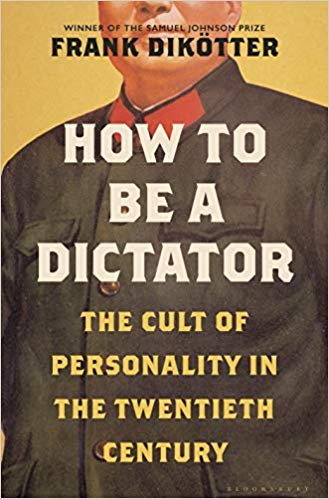
Gustav Jönsson reviews a new book by Professor Frank Dikötter on twentieth-century dictators:

One of the first things to emerge from Professor Frank Dikötter’s eagerly awaited new book How to Be a Dictator is that it is a stressful vocation: there are rivals to assassinate, dissidents to silence, kickbacks to collect, and revolutions to suppress. Quite hard work. Even the most preeminent ones usually meet ignominious ends. Mussolini: summarily shot and strung upside down over a cheering crowd. Hitler: suicide and incineration. Ceausescu: executed outside a toilet block. Or consider the fate of Ethiopia’s Haile Selassie: rumoured to have been murdered on orders of his successor Mengistu Haile Mariam, he was buried underneath the latter’s office desk. Not the most alluring career trajectory, one might say.

Dikötter’s monograph is a study of twentieth century personality cults. He examines eight such cults: those created by Mussolini, Hitler, Stalin, Mao, Kim Il-sung, Duvalier, Ceausescu, and Mengistu. For them, cultism was not mere narcissism, it was what sustained their regimes; foregoing cultism, Dikötter argues, caused swift collapse. Consider Pol Pot and the Khmer Rouge. Cambodians were unsure of Pol Pot’s exact identity for years, even after he had assumed leadership of the country. The Khmer Rouge, meanwhile, was in its initial stages merely called “Angkar” — “The Organisation.” There was no inspiring iconography. There was no ritualised leader worship. There was only dark terror. Dikötter quotes historian Henri Locard: “Failing to induce adulation and submissiveness, the Angkar could only generate hatred.” The Khmer Rouge soon lost its grip on the country. Dikötter makes an obligatory reference: “Even Big Brother, in George Orwell’s 1984, had a face that stared out at people from every street corner.”

Readers of Orwell will remember that INGSOC has no state ideology. There is only what the Party says, which can change from hour to hour. Likewise, Dikötter argues, there was no ideological core to twentieth century dictatorships; there was only the whim of the dictator. Nazism, for example, was not a coherent creed. It contained antisemitism, nationalism, neo-paganism, etc., but its essence was captured in one of its slogans: The Führer is Always Right. That is what the creed amounted to. Indeed, the NSDAP referred to itself simply as “the Hitler movement.” Nazism was synonymous with Hitlerism. Italian Fascism was perhaps even more vacuous. The regime’s slogan was simple: Mussolini is Always Right. Explaining his method of politics, Mussolini said: “We do not believe in dogmatic programmes, in rigid schemes that should contain and defy the changing, uncertain, and complex reality.”

While it is uncontroversial to argue that Nazism and Fascism were without ideology, as Dikötter writes, the “issue is more complicated with communist regimes.” Naturally, Marxism was connected with Stalin, Mao, Ceausescu, Kim, and Mengistu. But Dikötter rightly says that it was Lenin’s revolutionary vanguard, not Marx’s philosophical works, that inspired them. Doctrines can be interpreted in contradictory ways, creating schismatic movements — as shown throughout the history of socialism. In this regard personality cults are far safer because they are substantively empty. Marxist dictators thus subverted Marxism. Engels had said that socialism in one country was impossible, but that is what Stalin’s Soviet Union favoured. Or consider Kim’s North Korea, which in 1972 replaced Marxism with Great Leader Thought. And as Dikötter writes, “Mao read Marx, but turned him on his head by making peasants rather than workers the spearhead of the revolution.” Reading Marx under Marxism, Dikötter says, was highly imprudent: “One was a Stalinist under Stalin, a Maoist under Mao, a Kimist under Kim.” In short, Marxism was whatever the dictator said, and not what Marx had actually written.
August 25, 2019

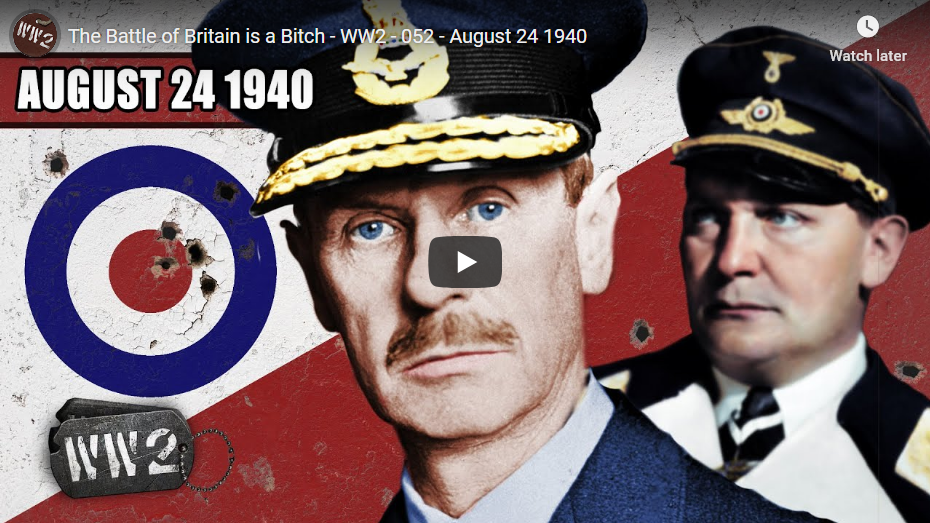
The Battle of Britain is a Bitch – WW2 – 052 – August 24 1940

World War Two
Published on 24 Aug 2019

This week, the communists attack the Japanese in the Battle of 100 Regiments. Meanwhile in Europe, the Battle of Britain enters phase three with the Luftwaffe actively targeting British airfields.

Join us on Patreon: https://www.patreon.com/TimeGhostHistory
Or join The TimeGhost Army directly at: https://timeghost.tv

Follow WW2 day by day on Instagram @World_war_two_realtime https://www.instagram.com/world_war_t…
Join our Discord Server: https://discord.gg/D6D2aYN.
Between 2 Wars: https://www.youtube.com/playlist?list…
Source list: http://bit.ly/WW2sources

Written and Hosted by: Indy Neidell
Produced and Directed by: Spartacus Olsson and Astrid Deinhard
Executive Producers: Bodo Rittenauer, Astrid Deinhard, Indy Neidell, Spartacus Olsson
Creative Producer: Joram Appel
Post-Production Director: Wieke Kapteijns
Research by: Indy Neidell
Edited by: Iryna Dulka
Map animations: Eastory

Colorisations by Norman Stewart and Julius Jääskeläinen https://www.facebook.com/JJcolorization/

Sources:
IWM: H7019, H005772, Q 7928
Color of Trotsky and Soviet leaders by Klimbim
Mercader picture from a public mural by Grahame Miller Ware, Wikimedia Commons
Icons by Sergey Tikhonov, Ely Wahib and Ivan Boyko from iconfinder.com

Eastory’s channel: https://www.youtube.com/channel/UCEly…
Archive by Screenocean/Reuters https://www.screenocean.com.

A TimeGhost chronological documentary produced by OnLion Entertainment GmbH.

From the comments:

World War Two
2 days ago
Last Sunday, we had our one year anniversary livestream in which we talked about the last year, our current challenges and the plans for the road ahead, and answered a lot of your questions. We explained how we want to increase our Patreon income to be able to travel to the known and unknown locations of World War Two. To do so, you can help us by supporting us on https://www.patreon.com/TimeGhostHistory or https://timeghost.tv. Literally every dollar counts. If you’d like to see the livestream I mentioned, you can check that out right here -> https://youtu.be/EKws1jNIAmE

Cheers,
Joram

February 20, 2019

Here’s the Thing… we all worked with Sun Yat Sen!

Filed under: China, History, Humour, Media — Tags: , , , , , , — Nicholas @ 05:00

TimeGhost History
Published on 19 Feb 2019

Mao Zedong, Wang Jingwei, and Chiang Kai-shek – the Snap, Crackle, and Pop of 1920’s China.

Indy decided to write some lyrics about them, God alone knows why … but it’s a concise analysis of those three comrades and comrades in arms of Sun Yat Sen.

Join us on Patreon: https://www.patreon.com/TimeGhostHistory

A TimeGhost interlude produced by OnLion Entertainment GmbH

For context, I’ve posted a series of videos from Extra History on Dr. Sun Yat Sen, and TimeGhost is currently covering the history of China’s post-monarchy period (see the next video for more of that). I also have tags for Mao Zedong (aka Mao Tse-tung in my youth) and Chiang Kai-Shek, should you want to dig a bit deeper. I also denounce myself for laughing-out-loud at the Rice Krispies joke in the description.

January 30, 2019

Sun Yat-sen – A Dream of China – Extra History – #5

Filed under: China, History, Japan, Military — Tags: , , , , — Nicholas @ 04:00

Extra Credits
Published on 26 Jan 2019

Sun’s attempts to found democracy in China were thwarted by the chaos of the authoritarian warlords who still stayed around. But, inspired by the youth of the New Culture Movement, and (surprisingly) Soviet Russia’s aid, he pressed on, and history would remember him as “the Forerunner of the Democratic Revolution.”
Join us on Patreon! http://bit.ly/EHPatreon

December 20, 2018

China’s Cultural Revolution

Filed under: China, History — Tags: , , , , — Nicholas @ 05:00

In Quillette, James David Banker describes the beginnings of Mao Zedong’s Cultural Revolution:

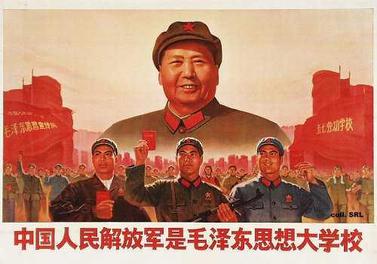
“The Chinese People’s Liberation Army is the great school of Mao Zedong Thought”, 1969.
A poster from the Cultural Revolution, featuring an image of Chairman Mao, published by the government of the People’s Republic of China.
Image via Wikimedia Commons.

“Nobody is more dangerous than he who imagines himself pure in heart,” wrote James Baldwin, “for his purity, by definition, is unassailable.” This observation has been confirmed many times throughout history. However, China’s Cultural Revolution offers perhaps the starkest illustration of just how dangerous the “pure in heart” can be. The ideological justification for the revolution was to purge the Chinese Communist Party (CCP), and the nation more broadly, of impure elements hidden in its midst: capitalists, counter-revolutionaries, and “representatives of the bourgeoisie.” To that end, Mao Zedong activated China’s youth — unblemished and uncorrupted in heart and mind — to lead the struggle for purity. Christened the “Red Guards,” they were placed at the vanguard of a revolution that was, in truth, a cynical effort by Mao to reassert his waning power in the Party. Nevertheless, it set in motion a self-destructive force of almost unimaginable depravity.

The Cultural Revolution commenced in spirit when Mao published a letter indicting a number of Party leaders on May 16, 1966. But it was a seemingly minor event nine days later that ignited the revolution in effect: a young philosophy professor at Peking University named Nie Yuanzi placed a “big-character poster” (a handwritten propaganda sheet featuring large Chinese characters) on a public bulletin board denouncing the university president and others in the administration as bourgeois revisionists. Mao immediately endorsed her protest, which set off a chain reaction of student revolt that swept through China.

That chain reaction was accelerated by “working groups” of ideologues sent to administer schools. Under their tenure, schools became centers of activism rather than learning. Students were encouraged to create big-character posters exposing their own teachers, officials, and even parents. The accused were humiliated in daily “struggle sessions” in which their students and colleagues interrogated them and demanded confessions. The viciousness of these sessions rapidly intensified. Students beat, spat upon, and tortured — in horrifically creative ways — their often elderly teachers and professors. In one case, students demanded their biology professor stare at the sun with wide open eyes. If he blinked or looked away, they beat him. Even middle and elementary school students participated in the struggle sessions, sometimes beating their teachers to death with sticks and belt buckles.

Students were also encouraged to turn on their classmates. As the sins of one generation passed to the next, a new hierarchy was born: the children of revolutionaries on top and the children of “landlords,” “capitalists,” and “rightists” at the bottom. These students were labeled “rotten eggs” and were fair game for the same treatment meted out to their parents. The current president of the People’s Republic of China, Xi Jinping, endured this fate. He was only 15 years old when his father, a loyal Maoist and one-time propaganda chief, was purged, his sister executed, and his own mother forced to denounced Xi as a reactionary. Amid the hysteria, teachers, professors, and intellectuals did not dare to stand up to the students or defend their colleagues lest they suffer similar fates. But they could not escape by being bystanders. With every word and action becoming potential evidence of capitalist sympathy, teachers and intellectuals enthusiastically joined their students in the struggle sessions and screaming rallies.

September 6, 2018

Feature History – Chinese Civil War

Filed under: China, History, Japan, Military — Tags: , , , , , — Nicholas @ 02:00

Feature History
Published on 25 Jul 2017

Hello and welcome to Feature History, featuring a civil war that done happened in China.

Help me recognise Taiwan (or not)
https://www.paypal.me/FeatureHistory
Patreon
https://www.patreon.com/FeatureHistory
Discord
https://discord.gg/Zbk4CvR
———————————————————————————————————–
I do the research, writing, narration, art, and animation. Yes, it is very lonely

May 7, 2018

The Chinese Civil War – Blood for Unity l HISTORY OF CHINA

Filed under: China, History, Japan, Military — Tags: , , , , — Nicholas @ 02:00

IT’S HISTORY
Published on 5 Sep 2015

After the fall of the Qing dynasty China fell apart and both, forces loyal to Chiang Kai-shek’s National Kuomintang Party and as Mao Zedong’s Communist Party of China, fought to rule the country. This bloody struggle would ultimately result in the Chinese Civil War. It would take more than 22 years but would come to a halt during the 2nd Sino-Japanese War. After Japan’s defeat, Mao’s troops grew strong quickly and soon after they were able to force Chiang Kai-shek and his followers out of China. They sought refuge in Taiwan. Shortly after, Mao Zedong called out the People’s Republic of China. Learn all about the Chinese Civil War in this episode of Battlefields with Indy Neidell.

« Newer Posts

Powered by WordPress