
The Korean War by Indy Neidell
Published 3 Mar 2026The UN is not just worried that the Communists have strong air power, they’re worried that because they can’t produce more jets quickly enough, the Communist advantage in the skies will soon become insurmountable, but they at least have plans to try and stave that off. They also have plans for rotating in fresh troops, but those plans have stumbling blocks of their own, as do the negotiations about who might be part of a post-armistice supervisory team, specifically the USSR, whom the US does not see as “neutral” with regard to this war.
00:00 Intro
00:54 Recap
02:05 Supervisory Team
03:29 45th and 40th Divisions
07:14 POW Repatriation
10:29 Communist Air Power
15:52 Notes
16:36 Summary
16:55 Conclusion
(more…)
March 4, 2026
The Korean War Week 89: Is There Such Thing As Soviet Neutrality? – March 3, 1952
February 25, 2026
The Korean War Week 88: Riot or Revolution? – February 24, 1952
The Korean War by Indy Neidell
Published 24 Feb 2026The tensions at Koje-do POW camp explode this week, ending in heavy bloodshed as UN forces desperately try to wrestle control of the situation. Changes will need to be made to counter the growing threat of disorder, and fast. Elsewhere, the Communist forces are on the attack this week, both in the field and through diplomatic channels, as a naval invasion of Yang-do launches and accusations of biological weapons ramp up.
00:00 Intro
00:44 Recap
01:13 Compound 62
04:44 Yang-do Island
07:45 Biological Warfare
09:55 Supervisory Committee
12:22 Notes
13:16 Summary
13:27 Conclusion
14:13 Call to Action
(more…)
February 20, 2026
The Canadian Patrol Submarine Project
The Royal Canadian Navy is planning to replace its four current conventional submarines, the British-built Victoria class with a dozen new conventional submarines from either South Korea or Germany (a joint German-Norwegian design). Michael J. Lalonde, a former Canadian intelligence officer, goes through the requirements for the new submarines, the two contending designs’ strengths and weaknesses, and makes his own recommendation for the RCN’s next submarine class:
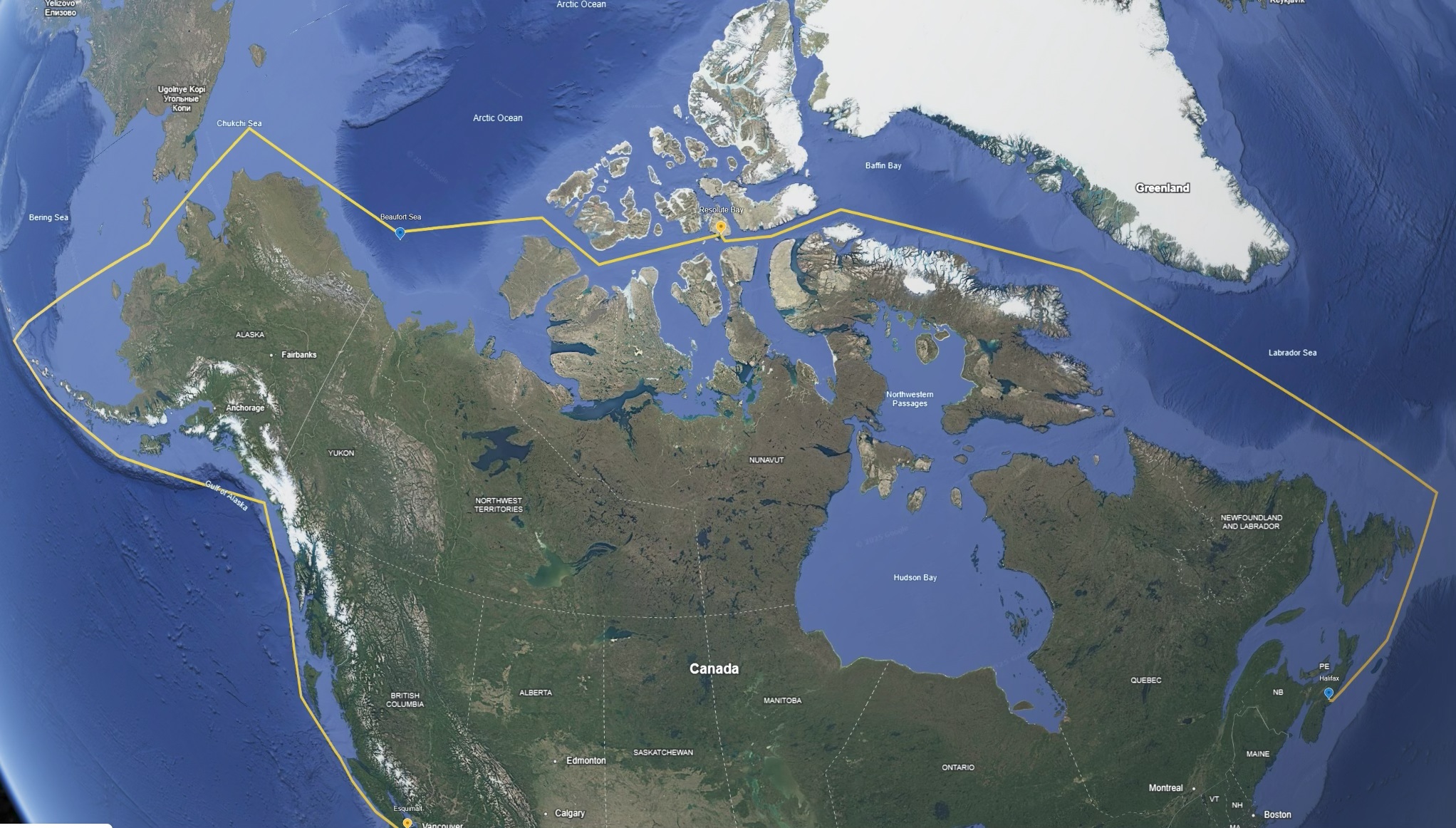
Rough transit routes to Canada’s Arctic from Esquimalt BC and Halifax NS
The first step is to assess what the Government of Canada wants out of its new submarine fleet and what capabilities it will need to achieve its objectives. I’m starting here because there is a common misconception that Canada needs submarines exclusively for Arctic patrol and surveillance, which is false. While it’s true that Arctic sovereignty and security are quite rightfully a preoccupation for the government, patrolling Canada’s Arctic is not the only capability Canada needs out of its new fleet. However, it is the most common argument in favour of a submarine fleet since Arctic sovereignty remains popular within Liberal and Conservative circles alike, along with mainstream media.
Unfortunately, this narrative forces a lopsided conversation about the role these new boats will be expected to play over the coming decades. In addition to Arctic operations, these subs will be expected to deploy far into the North Atlantic with NATO and push across the Pacific to support the Indo-Pacific Strategy. Ottawa’s own defence policy update ties submarine recapitalization to contributions with allies in both theatres.
This implies a blue-water capability, which means these conventionally powered submarines must be able to deploy and fight in the open ocean, far from home ports and daily logistics, for extended periods. This requires long range and endurance for transoceanic transits, sustained submerged persistence through air independent propulsion (AIP) and high-capacity batteries to minimize snorkelling, and habitability and maintenance margins that keep the crew and systems effective past the 30- to 60-day mark. Simply put, the new boats must be able to cross an ocean, remain covert and lethal on station, and deliver effects.
The government further stipulated specific capabilities that the new submarines must have in one of its press releases stating “Through the Canadian Patrol Submarine Project (CPSP), Canada will acquire a larger, modernized submarine fleet to enable the Royal Canadian Navy to covertly detect and deter maritime threats, control our maritime approaches, project power and striking capability further from our shores, and project a persistent deterrent on all three coasts.”
What caught my attention here is the ability to project power and striking capability further from our shores. Power projection is synonymous with a blue-water capability; however, a striking capability, which I take to mean a land strike capability, is not typical for a conventionally powered SSK, which are typically armed only with torpedoes to take out other submarines or surface vessels.
To sum up, Canada’s new subs must be able to:
- Patrol the Arctic with under-ice capability year-round
- Deploy with NATO in the North Atlantic and support Canada’s commitment to the Indo-Pacific Strategy – A blue-water capability
- Remain submerged for three weeks or more at a time
- Covertly detect and deter maritime threats
- Control Canada’s maritime approaches
- A range of 7000 + nautical miles
- Project power far from home ports
- Anti-surface and subsurface warfare
- Land-attack capability via cruise and/or non-nuclear ballistic missiles
- Insert Tier-1 special operators on coastal infiltration missions
- Conduct intelligence, surveillance, and reconnaissance in Canadian maritime approaches and abroad.
With that out of the way, let’s look at what each submarine can do.
He outlines the two competing designs and how they could meet the RCN’s needs and then plumps for the South Korean KSS-III for its stronger case for meeting those needs in the wider ocean environments than the German/Norwegian Type 212CD:
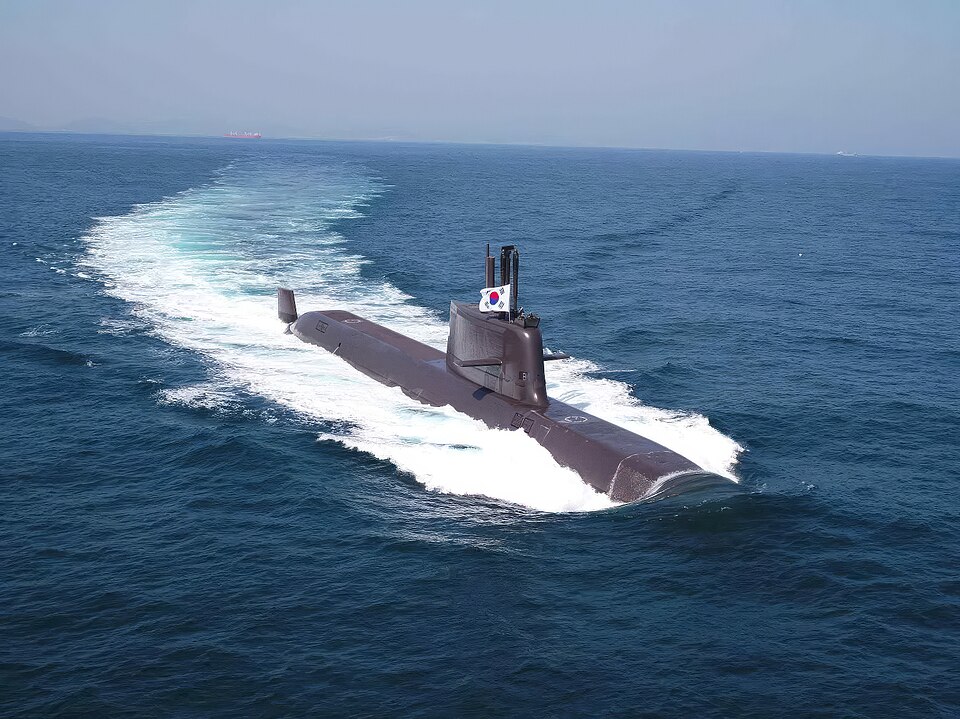
ROKS Shin Chae-ho, a KSS-III submarine at sea on 4 April, 2024.
Photo from the Defense Acquisition Program Administration (DAPA) via Wikimedia Commons.
The KSS-III is the only conventional submarine that can meet all of Canada’s requirements. It combines the blue-water reach and endurance demanded by transoceanic tasking with a vertical launch system that enables credible land-attack and complex anti-surface strike options, supported by lithium-ion batteries that lengthen quiet submerged persistence and improve sortie tempo on distant stations. Its larger hull and higher automation provide the habitability and crew margin needed for 30 to 60 day deployments from Halifax and Esquimalt to the North Atlantic, the Indo-Pacific, and the Arctic ice edge, while remaining within the conventional, non-nuclear profile Canada has set. The design’s modern combat system and sensor suite can be integrated with Canadian and allied command, control, and targeting architectures, and the bilateral sustainment framework required with South Korea can be structured by contract to include full technical data access, in-country training pipelines, and an industrial workshare that anchors through-life support domestically. The delivery cadence proposed for a 2026 award would shorten Canada’s reliance on the Victoria class and reduce associated sustainment exposure during transition, while an initial Canadian order of up to twelve boats would give Ottawa a controlling voice over configuration management, growth paths, and export-variant standards for the life of the class.
February 18, 2026
The Korean War Week 87: What’s Going On In Compound 62? – February 17, 1952
The Korean War by Indy Neidell
Published 17 Feb 2026UN forces kick off this week with an operation to ensnare and capture North Korean and Chinese patrols, as significant progress is made elsewhere at the armistice talks. Prisoners really do seem to be the focus of the week, as rumblings of discontent continue to build at the POW camp on Koje-do island as UN control of the camp slips a little more each day. Just what is happening inside Compound 62 there? And do UN forces have a hope to stop it?
00:00 Intro
00:48 Recap
01:17 Clam Up
01:50 Repatriation
05:02 Item 5 Agreed Upon
07:35 Troop Rotation
09:47 Coastal Waters and Islands
11:02 Compound 62
13:45 The Bigger Picture
14:31 Summary
14:45 Conclusion
(more…)
February 4, 2026
The Korean War Week 85: Futilely Pounding North Korea? – February 3, 1952
The Korean War by Indy Neidell
Published 3 Feb 2026The UN forces are by now having trouble just keeping their planes in the skies, thanks to shortages of spare parts, so for long can they maintain aerial supremacy over Korea? And though the aerial campaign to destroy North Korean infrastructure has been stepped up, so too has the enemy’s ability to quickly rebuild. And at the armistice talks, the big issue this week is which countries will form inspection teams after an armistice, and who might be out of the question. The Soviets?
00:00 Intro
01:06 Recap
01:30 The POW Lists
07:12 The Soviets
10:25 Communist Manpower
12:01 Air Force Supply Issues
13:21 Summary
13:34 Conclusion
14:17 Call to Action
(more…)
January 28, 2026
The Korean War Week 84: Inside Truman’s Diary – January 27, 1952
The Korean War by Indy Neidell
Published 27 Jan 2026Things heat up in the Panmunjom Peace Talks, which each side arguing that the other side’s proposals violate the Geneva Convention, but by the end of the week they talks are in recess. Naval aircraft pound the North Korean infrastructure all week long, though, and US President Harry Truman has a few things to say about the Soviet Union that the world may wish to hear.
00:00 Intro
00:51 Recap
01:29 Repatriation and Parole
05:29 Airfields
07:22 Naval Aircraft Get Busy
10:36 Truman’s Diary
11:42 Summary
(more…)
January 21, 2026
The Korean War Week 83: The Medics’ War! – January 20, 1952
The Korean War by Indy Neidell
Published 20 Jan 2026There’s discussion — and disagreement — in UN Command and Washington about whether or not to poll all the POWs the UN side holds to see where they would like to go should they be released. There are arguments for and against this, and it brings up a couple different interpretations of the Geneva Convention. This week we also talk a lot about recent medical advances in field medicine in Korea, and the development of the “Medics’ War”.
00:00 Intro
00:44 Recap
01:14 Poll the POWS
04:52 UN Decleration
08:19 52nd Medical Battalion
10:56 Cho-Do Island
11:45 Summary
12:06 Conclusion
12:49 Memorial
(more…)
January 14, 2026
The Korean War Week 82: Ridgway’s Nuclear Warning! – January 13, 1952
The Korean War by Indy Neidell
Published Jan 13, 2026Operation Strangle, to destroy enemy logistical capability with air power, has been in progress for months now, and yet the enemy is still able to bring up men and supplies, and even slowly stockpile them for possible future offensives. The UN position now is that should there be an armistice, and should the other side break its terms, retaliation would be broader and would include actions against Communist China, but will the UN have the force to do such retaliation? That is the question.
00:00 Intro
00:44 Recap
01:09 POW Issues
03:30 The Airfields
08:29 UN Declaration
10:15 Operation Strangle
14:13 Summary
14:35 Conclusion
15:25 Call To Action
(more…)
January 13, 2026
The History of SPAM
Tasting History with Max Miller
Published 22 Jul 2025Sliced SPAM layered with cream cheese filling, sliced and served with potato salad and tomatoes
City/Region: United States of America
Time Period: 1951SPAM. The iconic canned meat product. Beloved by some, reviled by others, SPAM was buoyed by a very successful marketing blitz by the Hormel company starting in the 1930s. There were radio and magazine ads, The Hormel Girls (a singing group), and recipes.
I’m not the biggest fan of SPAM, and this recipe turned out way too salty for me. If you want to make the historical recipe, go ahead and follow it, but I would personally opt for the reduced sodium SPAM and cut out the salt in the cream cheese mixture. If you like SPAM, definitely try this out! It’s super flavorful, but it’s just not to my taste.
Tender, pure-pork SPAM joins with a zesty cream cheese mixture for memorable eating. Serve for supper or lunch — or as a noteworthy appetizer.
SPAM ‘n’ Cheese Ribbon Loaf
Cut in 8 slices……1 whole SPAM
Mix together……1 (3-oz.) package cream cheese (softened with a little milk)
1 tsp. lemon juice
1 tsp. grated onion
1 tbsp. minced parsley
1/4 tsp. salt
Spread between……slices of SPAM
Chill……4 hours (or longer; overnight if desired). Slice and serve. Good with deviled eggs or potato salad.Economical all-meat buy! No bone, no waste. SPAM is all meat … juicy pork shoulder and mild, tender ham, with Hormel’s unequalled seasonings.
— Hormel advertisement, 1951
January 7, 2026
The Korean War Week 81: Ridgway Admits the UN is Little Threat! – January 6, 1952
The Korean War by Indy Neidell
Published 6 Jan 2026The year may have changed, familiar faces come and go, but some things remain the same. The POW issue continues to dominate and frustrate armistice talks, the fear of an expanded war in Asia re-emerges, and the snow remains cold. The war found no end and no pause in either 1950 or 1951, but third time’s the charm, surely?
00:00 Intro
00:29 Recap
01:24 Britain and the US
06:49 The US Proposal
10:57 The Slave Trade?
12:12 Summary
13:35 Conclusion
(more…)
December 31, 2025
The Korean War Week 80: Empty Lines and Guerrillas: X-mas ’51 in Korea! – December 30, 1951
The Korean War by Indy Neidell
Published 30 Dec 2025It’s Christmas, 1951, and though peace on earth and goodwill to all men might have a general appeal, peace seems as far away as ever in Korea. There are, though, no large scale offensives being planned at the moment, as the frozen winter grips Korea and the peace talks drag on and on. However, just because the war between armies is quiet, doesn’t mean Korea is; anti-guerrilla operations claim lives by the thousands, and the general drudgery of the war also takes thousands of lives on both sides each and every month. Christmas in Korea is grim.
00:00 Intro
00:27 Recap
00:49 POW Lists
02:25 New Offensive
05:29 Fighting the Guerrillas
07:20 Casualty Numbers
09:04 Boatner and the 23rd
11:54 Inspections and China
13:27 Summary
13:59 Conclusion
(more…)
December 24, 2025
The Korean War Week 79: Soviet Technology Surpasses the USA – December 23, 1951
The Korean War by Indy Neidell
Published 23 Dec 2025Both sides finally release POW information to each other, as required by the Geneva Convention, but neither side is happy with the information, charging it either wildly incomplete or grossly mischaracterized. The Communists also refuse to allow the Red Cross in and the UN doesn’t want compulsory repatriation of POWs, but both are required under Geneva. And away from the truce tables, the Communist air power menace continues to grow, but should there be an armistice will they be allowed to rebuild air bases in North Korea?
00:00 Intro
00:38 Recap
00:58 POW Lists
05:02 Repatriation
07:52 Geoje-Do
09:01 Ambush Program
09:54 Airfields or Armistice
12:00 Communist Air Power
13:23 Summary
13:32 Conclusion
14:50 Call to Action
(more…)
December 10, 2025
The Korean War Week 77: The Korean Winter Bites Hard – December 9, 1951
The Korean War by Indy Neidell
Published 9 Dec 2025Now that they’ve agreed on a Demarcation Line, the talk this week at the Panmunjom peace talks has turned to whether there will be restrictions or not after the signing of an armistice. Also, how would inspections work to make sure the other side is complying with the armistice terms? Perhaps a group of representatives from neutral nations? Meanwhile the troops are digging in to their winter defenses, as the frozen Korean winter descends upon them.
Chapters
00:00 Intro
00:48 Recap
01:16 Two New Points
08:42 Korean Winter
11:47 Communist Defenses
13:20 Summary
13:33 Conclusion
14:28 Call to Action
(more…)
December 3, 2025
The Korean War Week 76: Is America Favouring The Communists? – December 2, 1951
The Korean War by Indy Neidell
Published 2 Dec 2025This week at the Panmunjom Peace Talks the two sides agree on a Demarcation Line for an armistice based on the current battle lines, provided the other items on the agenda have been dealt with within 30 days — or else it is invalid. There is still a huge issue, though concerning rotation and replenishment of force during an armistice, and also the right of inspection. The two sides are very far apart on all that. And 8th Army Commander Jim van Fleet issues orders which are misconstrued in the global press and lead to some embarrassment for Washington.
#KoreanWar #peacetalks #Korea #history #militaryhistory #Ridgway
Chapters
00:00 Intro
01:02 Recap
01:44 Item Three
05:08 Inspections After Armistice?
07:53 Ridgway’s Concerns
09:54 The POW Issue
11:45 Van Fleet’s Instructions
13:51 Summary
14:26 Conclusion
16:36 Call to Action
(more…)
November 26, 2025
The Korean War Week 75: Insurgency Behind The Lines! – November 25, 1951
The Korean War by Indy Neidell
Published 25 Nov 2025While there is no battle action this week, there is still a lot of fighting, as the UN forces must constantly watch their backs against the thousands of guerrillas in the hills of South Korea. At the truce talks, the Communist side accepts the UN proposal for a demarcation line — Item 2 on the agenda — but for it to be valid the other three items remaining on the agenda must be dealt with within 30 days, which seems very optimistic to most. There is also the question of post-armistice inspections teams; are they a good idea? Or will they simply provide the other side with much-needed actionable intelligence?
Chapters
00:00 Intro
00:45 Recap
01:08 Guerilla Actions
03:19 Hanley’s Numbers
05:37 The Demarcation Line
08:04 Inspection Teams
10:36 Ridgway’s Opinion
12:06 The Agenda
12:48 Summary
13:04 Conclusion
13:57 Call to Action
(more…)


