
Here I can’t resist a digression that touches on several of my favorite topics: where do you put your defensive lines? One obvious guess is what Luttwak calls “scientific frontiers”, geographic or other natural features such as rivers, mountains, the edges of deserts, places where the land is already bottlenecked. And that’s not bad as a first order approximation, but there are times that other considerations dominate. For example, placing your borders right along the banks of the Rhine and the Danube is actually quite awkward, because the headwaters of those two rivers come together in a sharp “elbow”. [Image from original post] This results in a kind of reverse-salient poking into your territory, and making it a much longer journey from one side of the intrusion to the other. Much better to conquer that wedge and push the border out a bit. Yes, the frontier is now marginally harder to defend, but it’s more than made up for by the reduced travel time for the army to get anywhere.
Here’s another one — why is Hadrian’s Wall where it is? There’s a much shorter and more defensible alternate location to the north, where the Firth of Forth and the Firth of Clyde create a natural bottleneck. In fact at one point the Romans did build a wall there and claimed all the intervening territory. On paper, the Antonine Wall looks better in every way than Hadrian’s Wall. [Image from original post] It’s shorter, so requires less military “output” to defend. And it encloses more area, so brings to the “inputs” of the machine of state both additional arable land and additional people who can be taxed and conscripted. But as it happened, the Antonine Wall was quickly abandoned, and the empire retreated to Hadrian’s Wall. Why?
It all had to do with the people living between the two walls. They were … hill people who had perfected the art of not being governed. They managed to be so thoroughly intractable, so impossible to control or corral, so very unpleasant to be around, that the Romans eventually threw up their hands in disgust and left them alone. It’s important to understand that this means they must have been true outliers, because the Roman Empire had “unit economics” like an enterprise SaaS business, where “customer acquisition costs” are financed on the assumption that they’ll be paid back in the distant future. Every Roman bureaucrat understood that newly conquered territories would be a drain on fiscal and military resources for a while, until a generations-long process of pacification and Romanization slowly made them net contributors in both departments. But in the case of the lands between the two walls, the payback timeline was so long, and the implied interest rates so high, that even a people as meticulous and relentless as the Romans decided there were better opportunities elsewhere. I count this as a serious victory for the theory of defensive barbarism.
John Psmith, “REVIEW: The Grand Strategy of the Roman Empire by Edward Luttwak”, Mr. and Mrs. Psmith’s Bookshelf, 2023-11-13.
June 29, 2026
QotD: Roman Imperial frontiers and “defensive barbarism”
July 14, 2025
Emperor Hadrian and Antinous the God
Reginald Godwyn reviews a new monograph from Dr. Sean Gabb:
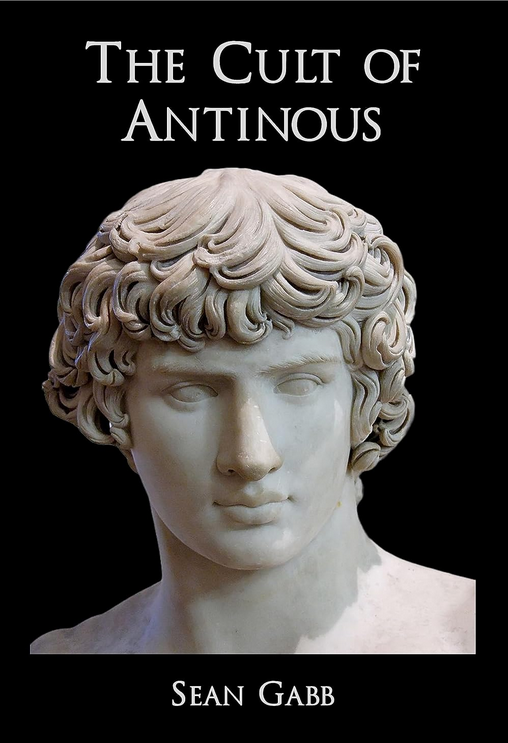
Sean Gabb’s The Cult of Antinous is not a hagiography. It is something better: a quiet, erudite demolition of pious lies from both the ancient and modern world. The lecture-turned-book is a brisk, sardonic tour through the most decadent cult of the Roman world, and one of its most effective. The boy died, yes — but what followed was a miracle of political opportunism and spiritual success. Gabb does not flinch from the disturbing parts. Nor does he genuflect before the fashionably uncritical idolatry now surrounding Antinous as gay icon. This is not a work of celebration. It is a work of historical thought, dressed as a lecture and sharpened with scepticism.
It begins, as it must, with a photograph of Hadrian and Antinous — stone fragments now housed in the British Museum, staring out from beneath museum glass and centuries of self-serving speculation. “Hadrian is on the left”, Gabb says, “Antinous on the right”. But from then on, it is the boy — not the emperor — who takes centre stage. The story is simple enough. Antinous was a Bithynian youth, met Hadrian at around age twelve, became his lover, travelled with him, and died in the Nile under suspicious circumstances. Hadrian made him a god. Cities were built. Statues were raised. Coins were minted. Shrines were erected. And the worship spread quickly and widely—and in ways that make some modern historians uncomfortable.
Gabb’s treatment of all this is not exactly kind, but it is always fair. He reminds us that, when it comes to Antinous, we know almost nothing. The written sources are sparse: Dio Cassius gives a few lines; the Historia Augusta offers rumour. Most of what we “know” is based on “could have”, “may have”, “might have”. And yet on this we have built dissertations, operas, novels, and now neopagan blogs filled with inverted pentagrams and airbrushed torsos. Gabb is not impressed. His repeated refrain is “castle of supposition”. And rightly so. Royston Lambert, he notes, was especially fond of these castles.
But for all that, there is a real story here. Gabb walks us through the ancient views of sex, pausing only to make the necessary disclaimer for his mixed audience of Chinese undergraduates and English middle class language students:
Please be aware that other civilisations frequently have or had views of sexual propriety different from our own. This lecture will discuss, and sometimes show depictions of, sexual relationships between adults and persons somewhat below the present age of consent. Some of these relationships involve disparities of legal status. Though not recommended for imitation in modern England, such relationships are nowhere explicitly condemned. The lecture will also not avoid language that many may consider indelicate or obscene.
What follows is a lesson in ancient sexual economics. Among Greeks, boy-love was structured: older men pursued beautiful adolescent boys, usually between 12 and 17, who were supposed to receive but not enjoy. The Romans were less sentimental: they cared only who did the penetrating. “To use was fine. To be used was shameful.” Gabb’s phrasing here is withering, but accurate. There is no anachronistic moralising — just the dry, clinical reconstruction of a culture with different priorities.


