
In the third and final (?) part of Ed West‘s review of Lee Kuan Yew’s memoirs, he describes the multicultural issue in Singapore and how it was addressed to reduce racial tensions in the city state:
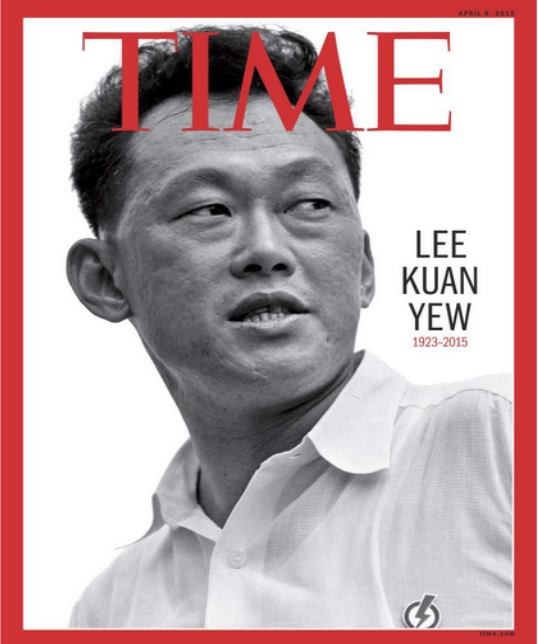
Singapore led the way in becoming the first truly multicultural democracy, but this entailed sacrifices. Because segregation was a major driver of inter-communal tension, so the new Housing and Development Board, as well as providing much needed homes, brought with it the revolutionary idea of neighbourhood quotas. This meant the vast majority of Singaporeans being allocated a flat, on which they had a 99-year lease, in purposefully desegregated housing blocks. The city would never again suffer from race riots.
Parliamentary seats were also reorganised to ensure that every constituency had a representative from each group. “Without this arrangement, the Chinese majority in all constituencies would most likely return Chinese candidates”, he wrote. Voters “preferred one who empathised with them, spoke the same dialect or language and was of the same race. All candidates who have campaigned know this only too well. It was going to be difficult if not impossible for a Malay or Indian candidate to win against a Chinese candidate.”
Lee had a hard-headed approach to multiculturalism, as only someone who was truly multicultural could. As one of the Straits Chinese elite, English was his “master language”, but he spoke Malay well, more like a peranakan — a local-born Chinese — rather than a totok, a recent Chinese immigrant. For his annual speech, which could take up to two hours, Lee would address the audience first in Malay, then Hokkien, and finally in English. Hokkien would later be replaced by Mandarin, even though “for many Chinese Singaporeans, dialect is the real mother tongue and Mandarin a stepmother tongue”.
Lee’s view of multiculturalism also directed his approach to the law. An early experience of defending rioters in 1951 during the “Jungle Girl” disturbances had left him sceptical of the jury system, and he had it abolished in 1969, except for murder trials. Lee saw juries as incompatible with a multi-racial society, but he also believed that many people were too irrational to make such a decision.
He wrote how “a Straits Times court reporter who had watched many jury trials gave evidence … that superstitious beliefs and a general reluctance to take responsibility for severe punishment, especially the death sentence, made Asian jurors most reluctant to convict. They preferred acquittal or conviction on a lesser charge. The reporter said he could predict that whenever a pregnant woman was a member of the jury there would be no conviction on a murder charge, for otherwise her child would be born cursed. After the bill was passed and jury trials were abolished, there were fewer miscarriages of justice arising from the vagaries of jury sentiments.”
Singapore’s tough approach to crime became world famous, and curiously this was partly inspired by his experiences of the Japanese occupation, after which “I did not accept the theory that a criminal is a victim of society”.
He wrote how “punishment then was so severe that even in 1944-1945, when many did not have enough to eat, there were no burglaries and people could leave their front doors unlocked, day or night. The deterrent was effective. The British used to have whipping with a cat-o’-nine-tails or rattan in Singapore. After the war, they abolished whipping but retained caning (with rattan). We found caning more effective than long prison terms and imposed it for crimes related to drugs, arms trafficking, rape, illegal entry into Singapore, and vandalising of public property.”


