Quotulatiousness

January 12, 2011

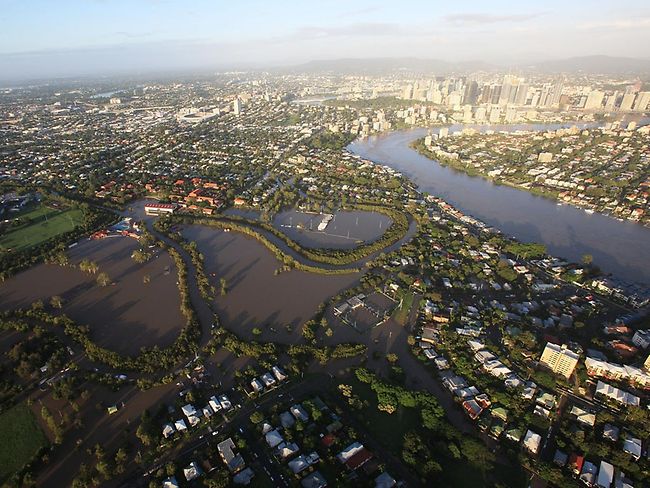
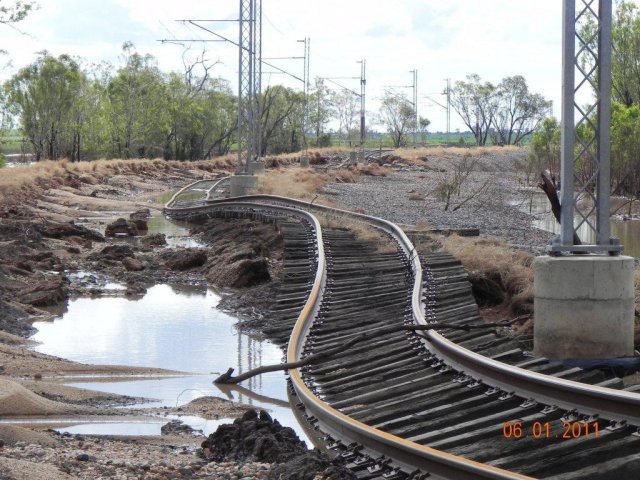
How urban planning may have contributed to the Toowoomba flood damage

Filed under: Australia, Environment — Tags: , , — Nicholas @ 12:07

Heather Brown goes back into flood-ravaged Toowoomba:

Early yesterday morning I went back to the bruised and battered Margaret Street to support any local business that still had the heart to open. My coffee shop was handing out free coffees to the battered owners of the local businesses who had lost so much. When I went to buy my newspaper, the newsagent told me he was devastated, not because of what had happened but because the engineer who had worked on the beautification project told him he couldn’t make them listen when he pleaded for bigger pipes — “18-footers” he called them — to let the water through, because it simply didn’t suit the aesthetics of the architects and landscapers.

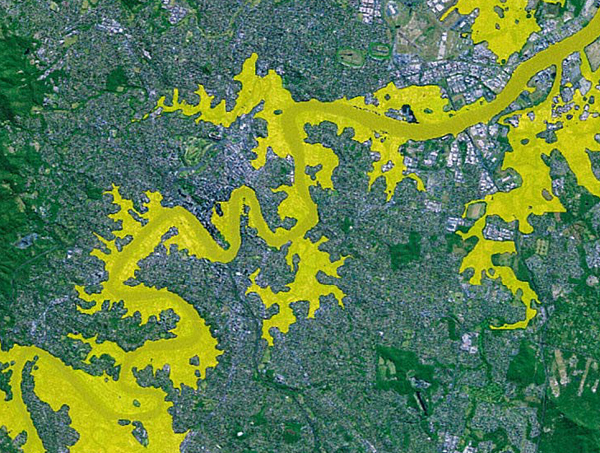
So that’s what happened to my city, folks, the same as happened to so much of flooded Queensland. We did stupid and really, really dumb things because we thought we could get away with them. We built the wrong sort of houses and the wrong sort of bridges. We built towns and suburbs on flood plains. And we ignored at our peril the forces of nature and the history of the great floods that have shaped this continent for thousands of years.

In our arrogance, we created towns and cities better suited to the whims of bean-counters and city-bound architects than the natural lie of the land. And for 20 years we cheerfully welcomed new settlers to Queensland with a “beautiful one day, perfect the next”.

We didn’t tell them what this place was really like when it rained. And we were wrong.

H/T to Roger Henry for the link.

January 11, 2011

Footage of flash flooding in Queensland

Filed under: Australia, Randomness — Tags: , , — Nicholas @ 07:24

You can donate to the flood relief effort at http://www.qld.gov.au/floods/donate.html.

H/T to BoingBoing for the link.

Update: The Guardian is reporting at least nine people are dead, with many more missing:

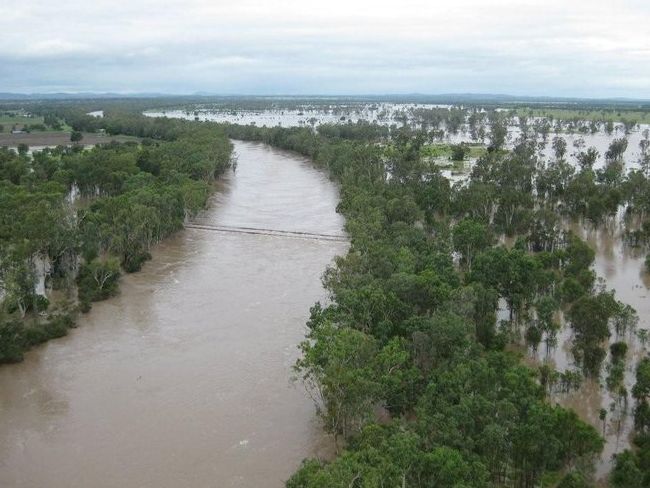
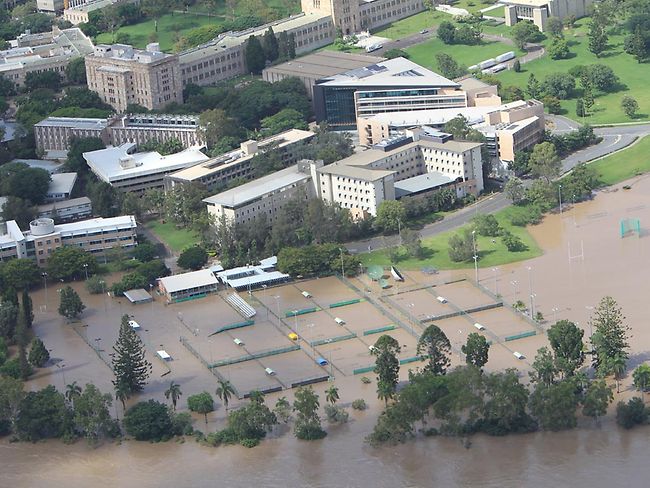
Floodwaters are now heading for Brisbane where the river, which runs through the centre of the city, has broken its banks and police have urged local residents to begin evacuations.

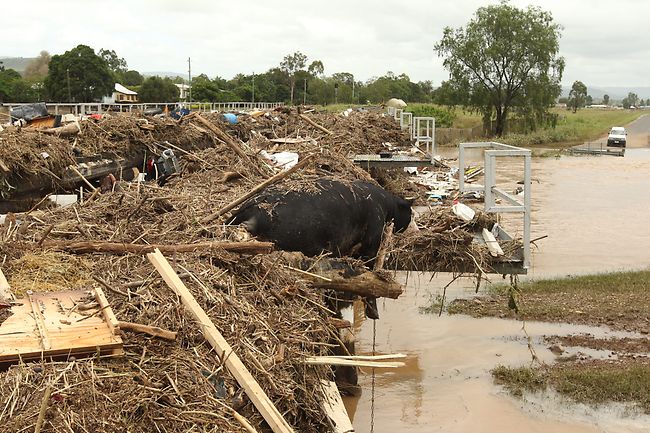
Police described the wall of water that swept through the city of Toowoomba, west of Brisbane, as an “inland instant tsunami”. Cars were tossed like toys down the street, trees uprooted and businesses inundated as the floodwaters tore through the centre of town. Four people including two children were killed.

“Houses were ripped from their stumps. This is unbelievable damage,” said the Toowoomba mayor, Peter Taylor.

From Toowoomba, the water flowed down the Lockyer valley where emergency services plucked more than 40 people from houses isolated by the torrent, which hit with little warning. Thunderstorms and driving rain were keeping helicopters from reaching people still in danger this morning.

Update, the second: My friend and occasional contributor of blogging material Roger Henry is in the Brisbane area and reports on local conditions:

It has been raining all day with a prolonged thunder-storm. West of here it has been raining at an average 6 inches an hour since early this morning. All bets against a major flood are now off. Ipswich looks like it might go underwater. Caboolture, to our north, flooded so fast that residents were fleeing on foot with no clear idea of where to go (Uphill?).

The four-lane highway north is now a 20 mile long parking lot as the cops try to get traffic turned around. That should be fun.

Stocked up on batteries, candles, tinned food and some extra gas cylinders for the little stove. Water is not an issue:-)

We were assured, by experts, that the rain would stop this morning. The opposite seems to have occurred and now they are hoping tomorrow might be fine.

Ooops. Emergency services have just issued a continuing severe weather alert for the next twelve hours.

The problem is not confined to here. Bad weather has spread into
northern New South Wales, and several rivers there are now in flood.

Getting very interesting.

December 23, 2010

Not everyone can get into the Christmas spirit

Filed under: Australia, Environment, Humour, Politics — Tags: — Nicholas @ 09:11

Ethan Greenhart wants to rename Christmas as “Turkey Genocide Day”:

Just as there’s nothing civilised about organising society around the wants of Gaia-mauling human beings, and nothing green about traipsing halfway across the planet to trek with donkeys in Peru (how do you know the donkeys want to trek?), so there can never be anything ethical about a holiday whose centrepiece is a dead bird sexually molested by sage; whose star turn is an obese man who drinks that imperialist tipple Coca-Cola and delivers yet more stuff to already stuffed brats; and where taking a tree from a forest, humiliating it with tinsel and sticking it in a living room is seen as a perfectly normal — nay, fun — thing to do.

This is no holiday; it’s a hell-iday for the defenceless creatures and plants of this ball of gas and air we have arrogantly labelled “Earth”. The signs were there 2000 years ago when a knocked-up teenager enslaved a donkey and forced it to carry her hundreds of miles to Bethlehem before ousting cows and sheep so she could give birth in their home.

If that weren’t bad enough, so-called “wise men” (another contradiction in terms) raided nature to find gifts for the resource-user that this young woman unthinkingly gave birth to, including myrrh, which is literally made from the blood that oozes from the wounds of the Commiphora species of trees, and frankincense, which is stolen from the Boswellia tree.

And so it was that this 2000-year-old orgy of animal enslavement, human breeding and gift-giving became an inspiration to the brainless inhabitants of Christendom, who every year ape the Holy Family by abusing animals and dishing out unnecessary gifts and calling the whole stupid shebang a celebration.

Overall, not a bad rant, although it only manages a close second to the Prince Regent’s complaint:

Edmund: So, shall I begin the Christmas story?

Prince: Absolutely! As long as it’s not that terribly depressing one about the chap who gets born on Christmas Day, shoots his mouth off about everything under the sun, and then comes a cropper with a couple of rum-coves on top of a hill in Johnny Arabland.

Edmund: You mean Jesus, sir?

Prince: Yes, that’s the fellow! Just leave him out of it — he always spoils the X-mas atmos.

H/T to Roger Henry for the link.

November 10, 2010

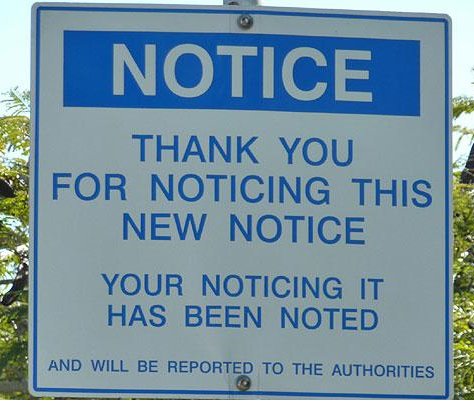
Sign of the times

Filed under: Australia, Bureaucracy, Humour, Randomness — Nicholas @ 13:19

Sue Barrett took a photo of this sign in Brisbane, Australia:

October 29, 2010

Why some vintage dates matter more than others

Filed under: Australia, Cancon, Environment, France, Randomness, Wine — Tags: , — Nicholas @ 12:36

If you’re not a wine fan, you may wonder why wine snobs pay so much attention to vintage dates. If you drink the occasional bottle of “Raunchy ‘Roo Red” or “Zesty Zebra Shiraz”, the vintage dates matter very little: by the name, you’d guess they’d be from Australia or South Africa, both hot climate wine countries. Vintage dates are much less important for hot climate wines: the variation from year to year is relatively small. As Michael Pinkus points out, however, it matters a great deal for cool climate wine countries:

Many wine drinkers never notice the vintage date on the wine they are drinking — they just blindly go off buying wine. I talk to many people and very few know what year they’re drinking, just the producer. In a wine region like Ontario that’s a odd way to be drinking your wine. We’re a cool climate region after all and if you don’t understand the difference between a good vintage wine a mediocre vintage wine you could be stuck with a lot of 2003s in your cellar for 10 years or more. The key is to know their drink-ability (2003) or conversely, know how long you should be holding onto wines like [these], a few extra years of aging will give these wines time to mature and integrate, drink them too early and you’ll miss out on all the fun.

In a cool climate region (Ontario, Bordeaux, New Zealand) Vintage date means more than in a hot climate region (Australia, Argentina, Chile) — there temps are always beautiful (read: warm and sunny) and vintage variation plays little part in the finished wine; while in a cool climate region harvest is a waiting game and in many years prayer is a grape farmers best friend.

Take 2010 for instance, this year has the likelihood and pedigree to be even better than the much lauded 2007. What makes 2010 better? Glad you asked. While 2007 had lots of heat and little rain (which grapes love), 2010 has been a longer growing season, with lots of heat and rain has come at the “appropriate” times. If you’ll recall our winter was very mild and bud break occured in April, at that time the prayer for farmers was the ‘Psalm of No Frost’. A longer growing season with lots of heat means good grapes — but that does not always apply to all grapes, but that’s really a discussion for another time.

Most determine a good season by how well the red grapes are going to be — in a cool region white grapes grow well year-after-year — but many of the Bordeaux red grapes struggle (Merlot, Cabernet Sauvignon and Cabernet Franc). 2007 was a great year for the usual Bordeaux varietals as well as others reds that don’t often ripen fully under the Ontario skies.

October 23, 2010

“How Many Australian Politicians Does it Take to Change a Lightbulb?”

Filed under: Australia, Bureaucracy, Politics — Tags: , , , — Nicholas @ 12:13

None:

The (tangential) Free-Range issue here is this: Why are we increasingly subject to rules and regs that have nothing to do with REAL safety and everything to do with litigation, worst-case-scenario-fantasizing and good ol’ CYA? It’s a time, money and morale-waster, with the added benefit of turning competent people into incompetent cowards. Just like so many rules and regs are implementing with kids: No, children, you CANNOT ride your bikes to school. No, children, you CANNOT do your own chemistry experiments. No, children, you CANNOT babysit/whittle/get a paper route/smile at a stranger. It is all TOO DANGEROUS.

And someday we will wonder why no one in the world (except, perhaps, electricians) can do anything.

H/T to Walter Olson.

August 24, 2010

Censors to poke noses into what Aussies can load on their iPhones?

Filed under: Australia, Law, Liberty, Technology — Tags: , , — Nicholas @ 12:16

Roger Henry sent this information to one of my mailing lists and I repost it here with his permission:

An interesting bombshell in Oz. Apple iPhones, and presumably other similar devices, have been put on notice that all, or nearly all, of the apps that people buy and install should, by law, have been submitted for “Classification” (i.e., censorship). Failure to do so is a criminal offence with penalties of some AU$35,000 per offence. Purchasing said ‘apps’ without a Classification label is also a criminal offence, punishable with jail time and/or fines. Seems that getting these ‘apps’ Classified attracts a charge varying from AU$470 to AU$2,600 so a lot of money is outstanding. With 50,000 apps already in use, the government accepts that there are some practical limitations to the matter but they aren’t going to let the matter just fade away.

This is Roger’s summary from information posted in The Australian‘s weekly IT Notes. And then, in response to a “Dude, WTF?” query:

It may well be that Apple will cease making apps available in Oz. Yes. It is known that they have their own censors. This merely compounds their culpability. What might have been an accidental oversight is now clearly a deliberate attempt to A) avoid censorship and B) defraud the government. This cannot go unpunished. As for the consumers, well, they are all probable pedophiles and identified thieves. No punishment can be too severe . . . it might take awhile but Justice will be served.

While it likely will all end in a round of dignified press releases and backslaps all ’round, there’s still the outside possibility of a highly entertaining politico-technical train wreck here. Let’s hope the wilder spirits prevail.

August 2, 2010

Australian election ads far more amusing than Canadian ones

Filed under: Australia, Media, Politics — Tags: , , — Nicholas @ 11:41

H/T to “Inkless” Paul Wells for the link.

July 6, 2010

Men at Work to pay 5% for infringement

Filed under: Australia, Law, Media — Tags: , — Nicholas @ 07:37

Following up from a post earlier this year, an Australian judge has avoided penalizing Men At Work the maximum for using a riff from another song:

A judge in Sydney has ordered the Australian band Men at Work to hand over a portion of the royalties from their 1980s hit Down Under, after previously ruling its distinctive flute riff was copied from a children’s campfire song.

But the penalty he imposed of 5% of the song’s royalties was far less than the 60% sought by publishing company Larrikin Music, which holds the copyright for the song Kookaburra Sits in the Old Gum Tree.

Kookaburra was written more than 70 years ago by Australian teacher Marion Sinclair for a Guides competition, and the song about the native Australian bird has been a favourite around campfires from New Zealand to Canada.

That seems like a remarkably sensible judgement: the song clearly does infringe, but only for a small portion of the entire recording: it’s not critical to the success of the song, but it does contribute to its overall atmosphere.

June 24, 2010

Australia changes PM

Filed under: Australia, Politics, Technology — Tags: , — Nicholas @ 09:05

I hadn’t realized just how unpopular Kevin Rudd had become:

Although he scored a landslide election victory against an 11-year-old Liberal government led by John Howard in November 2007, he had said he was confident he would win the challenge. But commentators were already writing him off. “He’s a goner. You can stick a fork in him,” Nick Economou of Monash University told Reuters.

For Rudd, the transformation in his political fortunes has been startling. Only six months ago, with the opposition going through its third leadership change since he beat Howard, Rudd and his government seemed untouchable.

A year ago he rivalled Bob Hawke as Australia’s most popular prime minister. Now he will join Hawke as the only other Labor prime minister to be dumped by his party, making him the first one-term prime minister since 1932.

The new prime minister is Julia Gillard, who appears to be facing the kind of challenge that the first female prime minister of Canada faced: being held responsible for the sins of the last leader (Kim Campbell led the Progressive Conservatives into their worst election defeat ever, dropping from holding a decisive majority to only 2 seats).

Update: The Register thinks that one of the first changes Gillard will make is to fire the current Communications Minister:

Speculation was rife this morning (or evening, over in Australia) that controversial Communications Minister and architect of Australia’s great firewall project, Stephen Conroy may shortly be for the chop.

In his place, it is suggested, Australia’s new PM Julia Gillard might prefer the more conciliatory — and also better-informed — approach of Senator Kate Lundy.

If so, this is likely to prove a victory for those opposed to Conroy’s hard line on internet censorship, as Ms Lundy has made it clear over the last few months that she prefers to win support from Australia’s voters for an opt-in filter — instead of imposing a mandatory filter from the centre, which is the hardline stance favoured by the present Communications Minister.

If true, that will be a bit of good news for internet users in Australia.

June 2, 2010

Litany of problems with new NH-90 helicopters

Filed under: Australia, Europe, Germany, Military, Technology — Tags: , — Nicholas @ 09:25

Strategy Page reports that new NH-90 helicopters delivered to Australia are showing similar problems to the laundry list of issues the Germans reported when their NH-90s went into service:

The German Army conducted an evaluation of their new NH-90 helicopters, and were not pleased. Their conclusion was that, for combat missions, another model helicopter should be used whenever possible. A particular problem was the lack of ground clearance. The NH-90 can’t land on a piece of ground with any obstacles higher than 16 cm (6.4 inches). That makes many battlefield landing zones problematic. That assumes you can even get on a NH-90 and find a seat. The passenger seats cannot hold more than 110 kg (242 pounds). Combat equipment for German troops weighs 25 kg (55 pounds), meaning any soldier weighing more than 85 kg (187) has to take stuff off, put it on the floor, than quickly put it back on before exiting. Then there’s the floor, it’s not very sturdy, and combat troops using the helicopter for a short while, cause damage that takes the helicopter out of action for repairs. Worse, there is the rear ramp. It cannot support troops carrying all their equipment, making it useless for rapid exits of combat troops. There is not enough room in the passenger compartment for door gunners. There are no strap downs for larger weapons, like portable rocket launchers or anti-aircraft missiles. The passenger compartment also does not allow for carrying cargo and passengers at the same time. The winch is not sturdy enough for commandoes to perform fast roping operations. And so on. The Germans were not pleased with the NH-90.

I’ve never specced out a new helicopter design, but these complaints sound like issues that should have come up during the initial design review, not things that appear once you’ve taken delivery. It sounds like the military equivalent of buying a new car without taking a test drive or checking the specifications for how well the vehicle matched your actual requirements.

Design fail, manufacturing fail, or ordering fail?

March 18, 2010

What if they could make smoking safer?

Filed under: Australia, Health — Tags: , , — Nicholas @ 08:38

My bet would be that the anti-smoking campaigners would still be as stridently opposed to smokers and their habit even if there were no health risks:

Australian boffins have developed a treatment which allows mice to smoke cigarettes without the usual negative health consequences. The method could potentially allow gasper-loving humans to sidestep some of the self-destructive results of their habit.

The key to the business, according to lead cig-boffin Ross Vlahos, is Granulocyte macrophage-colony stimulating factor (GM-CSF), an agent released by the lungs when they are exposed to cigarette smoke. GM-CSF causes inflammatory leukocytes to activate in the lungs, which then leads to chronic obstructive pulmonary disease (COPD) and other complaints such as “oxidative stress, emphysema, small airway fibrosis, mucus hypersecretion and progressive airflow limitation”.

Vlahos and his team at Melbourne uni decided to tackle this by the use of a blocking agent known as “anti GM-CSF”. As called for by tradition, they got hold of a group of mice and dosed half of them with the miracle smoko-proofing drug, and left the others alone. Then all the mice were given “the equivalent of nine cigarettes of smoke each day for four days”.

At the end of the test every single mouse was dead. However, this was simply because the boffins had killed them in order to examine their lungs. According to the mouse autopsies, the ones treated with “anti GM-CSF” were in much better nick than the others.

Of course, “safer” is not “safe”. This research implies that human smokers could benefit from use of this drug or similar formulations, but it doesn’t address all the health risks of smoking (chances of developing cancer appear to be the same, for example).

A rational reader would assume that this new research would be welcomed, but my belief is that anti-smoking groups will condemn it for “encouraging smokers” and call for the research to be discontinued. After all, this is a moral rather than a scientific campaign for many activists.

Full disclosure: I’m not a smoker, and never have been. I’m not particularly fond of being in smoke-filled rooms, but I do think the crusade against smoking long ago passed the health advocacy point and became mostly moralizing (see this for example).

February 25, 2010

EMI launches appeal over “Down Under”

Filed under: Australia, Law, Media — Tags: , — Nicholas @ 08:12

Following up from earlier this month, EMI is appealing against the decision that Men at Work plagiarized a popular folk song in their 80’s hit “Down Under”:

Papers filed with the Federal Court in Sydney listed 14 grounds for appeal and stated songwriters Colin Hay and Ron Strykert did not breach copyright.

It said similarities may be noted only by a “highly educated musical ear”.

[. . .]

EMI Music said the inclusion of the melody was, at most, a form of tribute to the tune.

In its appeal, EMI also argued that the Girl Guides Association of Victoria state actually owned the copyright, as they sponsored the 1934 Girl Guides song competition for which the song was written.

The decision seemed odd in another way: lack of proportionality. The “offending” part is a very small section of the song, which would not seem to justify awarding 40-60% of the profits from the work to the plaintiff. Perhaps Australian law allows it, but it seems to be an attempt to “right a wrong” by inflicting a disproportional penalty, rather than an equitable one (that’s not to say I think the decision was correct, just a comment on the initial finding).

February 4, 2010

Men at Work lose court battle over plagiarism

Filed under: Australia, Law, Media — Tags: , — Nicholas @ 08:54

Remember the flute part in “Down Under”? Men at Work now probably wish they’d chosen a different way to highlight typical Australian tunes, as they’ve been ordered to pay costs to the estate of Marion Sinclair for using the theme to “Kookaburra Sits in the Old Gum Tree” in their song:

Larrikin Music had claimed the flute riff from the 1981 hit was stolen from Kookaburra Sits in the Old Gum Tree, written by Marion Sinclair in 1934.

The federal court in Sydney ordered compensation to be paid.

That amount has yet to be determined but Larrikin’s lawyer said it could reach 60% of income from the song.

“It’s a big win for the underdog,” said Larrikin’s lawyer Adam Simpson after the judgment.

Sinclair, who died in 1988, wrote the song for performance at a Girl Guides Jamboree in 1935.

Kookaburra Sits in the Old Gum Tree has since been sung by generations of Australian schoolchildren.

Oddly enough, I downloaded this song just last week, prompted by a recent Mark Steyn column.

Men At Work came from a land Down Under and in January 1983 they were on top of the world: “Down Under” was Number One not only in Oz but also in the United Kingdom and in the United States, and to this day Men At Work are the only Australian band to have topped simultaneously both the British and American singles and albums charts. A lot of the pop songs from that period you’ll still hear on the Eighties oldies stations: in America, Men At Work were succeeded at the top of the Hot One Hundred by Toto and “Africa”, which is pleasant enough in a bland sort of way; and in Britain they made way in the Number One slot for Kajagoogoo and “Too Shy”, and gosh, it’s years since my fingers have had cause to type the word “Kajagoogoo” and even then it was as a punchline for a cheap gag. But “Down Under” transcended the passing fancies of the hit parade and has become an Australian anthem. There have been other international Oz hits, of course, notably Rolf Harris’ classic recording of “Tie Me Kangaroo Down, Sport” – and, as we always have to point out whenever the subject arises, a truly great novelty song like “Tie Me Kangaroo” should never be confused with a truly atrocious one like Charlie Drake’s “My Boomerang Won’t Come Back”.

But “Down Under” has become a kind of musical shorthand for contemporary Australia

January 29, 2010

Australia’s film censors got bored, so decided to call attention to themselves

Filed under: Australia, Bureaucracy, Media — Tags: , , — Nicholas @ 19:12

At least, that’s a sensible an interpretation as I can come up with for this lovely little policy change:

A reader writes, “Australian Classification Board (ACB) is now banning depictions of small-breasted women in adult publications and films. They banned mainstream pornography from showing women with A-cup breasts, apparently on the grounds that they encourage paedophilia, and in spite of the fact this is a normal breast size for many adult women. Presumably small breasted women taking photographs of themselves will now be guilty of creating simulated child pornography, to say nothing of the message this sends to women with modestly sized chests or those who favour them. Australia has also banned pornographic depictions of female ejaculation, a normal orgasmic sexual response in many women, with censors branding it as ‘abhorrent.'”

Hard to come up with a sensible explanation for this, you have to admit.

« Newer PostsOlder Posts »

Powered by WordPress