Like many, I’ve heard of Jean Raspail’s novel The Camp of the Saints but I’ve never seen a copy of it for sale and I certainly haven’t actually read it myself. At Postcards From Barsoom, John Carter discusses a rare thing: a newly translated printing of the book that iscurrently available for sale:
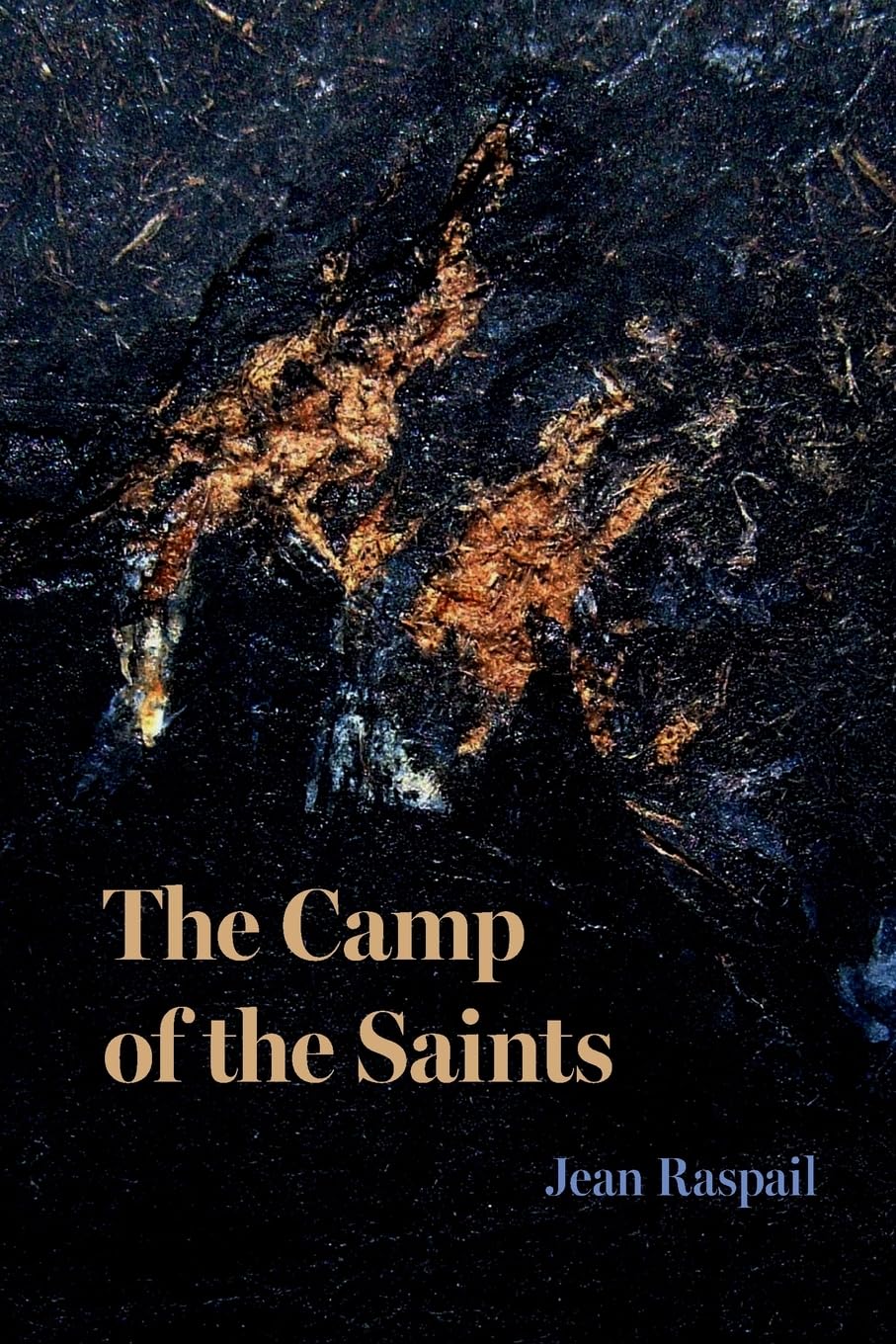
To call The Camp of the Saints prescient undersells it. At times, Raspail seems to be downright prophetic. Pope Benedict XVI plays a prominent role (albeit this is a character who could not be more different from Cardinal Ratzinger). Raspail also correctly predicted that Rhodesia would become Zimbabwe, which may have been easily foreseeable when Raspail was composing the work but still did not formally happen until 1980, seven years after the novel’s publication; while Raspail was writing, the Rhodesian Bush War was still in full swing. The Rhodies fought until the bitter end to prevent the breadbasket of Africa from being turned into Africa’s basketcase.
The Camp of the Saints is sometimes described as a dystopian novel, which should be read alongside 1984, Brave New World, Fahrenheit 451, Slaughterhouse 5, and C. S. Lewis’ That Hideous Strength. There’s something to be said for this interpretation. You get a pretty good description of the modern world with the Venn diagram overlap of the total state’s panoptic tyranny, the flattening of the human spirit into a mass-produced Last Man via the endless consumption of mass-produced trivial amusements, the death of literary curiosity, the imposition of forced egalitarianism, demon-worshipping transhumanist technocracy, and Raspail’s civilizational collapse via obsequious moral inversion.
Like every good dystopia, however, The Camp of the Saints is first and foremost a satire of the modern world, a warning about where things will head if certain sociopolitical trends are taken to their natural conclusion. Raspail’s work does not take place in some science-fictional near future, as the majority of other dystopias do: its world is technologically and politically indistinguishable from the world Raspail lived in, and still all too recognizable to us. It has been derided as a far-right racist tract, and Raspail’s depiction of the third world horde that subsumes the West is far from flattering, but his venom is directed primarily at the West’s own spineless cultural thought-leaders and political elites, who he identifies as the true and only possible architects of the world-historic catastrophe that he predicts.
The Camp of the Saints also has all the key tropes of a zombie apocalypse story.
The third world horde is depicted as a vast, ravenous, mindless beast comprised of individual members who are not at all fearsome or intimidating, but which triumphs through sheer numbers and slow but relentless advance, and which is defended by its revolting appearance and overpowering, nauseating stench. The migrants are the most wretched products of the slums of Calcutta, malnourished and sickly, afflicted by every kind of congenital defect, infectious disease, infirmity, and skin infection. Their leader is a monstrous, drooling idiot dwarf with lidless eyes, a toothless sphincter for a mouth, and stumps for limbs, who rides about on the shoulders of a giant coprophage. They make their way from India packed like human sardines in a fleet of rusting, dilapidated plague ships, wallowing their way towards Europe through the nauseating miasma that arises from the swamp of corpse-littered shit that they leave in their wake, spending their days listlessly staring out to sea and mindlessly copulating amidst their own putrifying filth. Merely to look upon the migrant horde is to be transfixed with a kind of a religious terror, overcome by its ugliness, paralyzed by pity. Soldiers forced to take even the smallest of aggressive actions against the horde, with only a few exceptions, throw down their weapons and run, not because they are terrified of the horde itself, but because they are terrified of their own conscience should they strike down a defenseless, pitiable wretch. In a few cases, soldiers take their own lives after being made to shoot. The horde’s primary weapon is the crushing psychological pressure that slams down on the souls all who behold it; better to give up and accept the inevitable than suffer the torment of fighting against it.
When the horde encounters a westerner, one of two things happens. Either the westerner is immediately killed by being trampled underfoot or torn limb from limb, or he is smoothly assimilated into the horde, becoming by and by indistinguishable from the innumerable wretches that comprise it. The zombies either eat you, or turn you into a zombie. Women of course are assimilated by rape.
Not everyone succumbs right away, of course. At the end of the novel a small group of psychologically resilient Frenchmen led by an army colonel and a right-wing government minister fall back to an abandoned mountain village. Inside the village’s borders they establish a micocosm of the old, pre-invasion French civilization. They defend their redoubt simply by shooting any migrants or white “assimilates” (as they immediately take to calling them) who get too close. The migrants and assimilates are easily seen, a constant presence shambling in the distance; they are just as easily picked off, being slow and unarmed, and the village’s inhabitants soon take to treating the hunt as a sport. Of course this refuge does not last long: the French air force, in what is implied to be its last act (for the new world will not be able to maintain airplanes) wipes the last surviving Frenchmen out in an airstrike. Racism can’t be tolerated, you see.
Finally, there are the delusional lunatics who imagine that they can befriend or master the horde, turning it to their own purposes or making common cause with it, and who are therefore instrumental in opening the gates to their and everyone else’s doom. Upon actually encountering the horde the madmen find only death or assimilation; the horde is utterly indifferent to any expression of friendship.