
Quotulatiousness

February 16, 2026

“Multiculturalism” should really be called “anti-cultural slop” for it destroys real culture in favour of bland genericism

Filed under: Cancon, Government, Media, Politics — Tags: , , , , , , — Nicholas @ 05:00

At Without Diminishment, Geoff Russ traces the rise of the “global hub” among western cultures and identifies why we shouldn’t strive to drown distinct local cultures under a tide of “could be anywhere” multicultural slop:

London’s vibrantly diverse bus riders … or is it Toronto … or Sydney … or Montreal?

Multiculturalism is the false prophet of celebrating difference, presented as the ultimate engine for “diversity”.

In practice, it is a factory of global homogenisation, and a solvent that erases local cultures. Cities like Sydney, Toronto, and London now compete to be the top “global hub”, which is no unique identity at all.

There is no preservation of character under the hegemony of the global hub, only its erasure. The officially multicultural city is uniform across continents, like clones of each other in all but the most superficial ways. It sounds contradictory on the surface, but makes perfect sense once it is understood that multiculturalism as a policy and identity is inherently anti-cultural.

The multicultural city has nearly identical urban design, and its bureaucrats and professionals weaponise the same moral vocabulary, deploying terms like “inclusivity” and “openness“. It has all the charm of an airport lounge, justified with the same slogans, decorated with the same grey glass-and-steel architecture, and guided by the same self-reinforcing sensibilities.

It makes people docile, and rewards them with sensory appeasement, like supposedly exotic cuisine. A fusion rice bowl is the consolation for the disappearance of the environment you grew up in.

In Canada, it first came to the Anglo cities like Toronto and Vancouver. Now it has broken linguistic and cultural containment into Quebec. For decades, Montreal was the metropolis of the Québécois. Now, as Kevin Paquette outlined last month, the city has changed. It mirrors the anti-culture that took over Toronto, and has no use for the legacy of those who built it.

Paquette described how Montreal has become a “filter” that promotes an internationalist identity that renders it alien to Quebec’s exurban regions. Bloc Québécois (BQ) leader Yves-François Blanchet has warned that “two Quebecs” have emerged, which are disconnected and alienated from each other.

Jean-François Lisée has gone further, and written of the emergence of an “anti-Québécois identity” in an increasingly diverse Montreal. In public schools, students openly mock the Québécois, and English is more commonly spoken than French in the hallways.

Lisée writes that an alternate, anti-Quebec dynamic now exists among some newcomers. In this dynamic, attachment and assimilation into the Québécois identity become contemptible.

This is the essence of multiculturalism when treated as an end in itself. “Inclusion” is the hollowing out of the obligation to belong, and the transformation of identity into a lifestyle choice.

Not even Quebec City is immune. It was long a living, breathing exception to Canadian multiculturalism, with a dominant Québécois culture and ethos. However, the mayor, Bruno Marchand, has embarked on a mission to destroy what makes it distinct.

The following sentence is from a glowing feature in the Globe and Mail last week: “Mr. Marchand says his hometown’s traditional pure laine image is changing, and it’s a good thing”.

Quebec City’s inherited way of life is being targeted so that it can become just one more global hub. The city’s established symbols, traditions, and habits stand in the way. It takes remarkable ideological and moral heavy lifting to dismiss provincial identities as unworthy, and as something that must inevitably be replaced.

The city still carries deep meaning for francophones across the country.

“I’ve never lived there, or in the province of Quebec, and yet it speaks to me profoundly,” said one resident of Ontario I spoke to. “This is where my ancestors landed 400 years ago and it still bears witness to them.”

What was the point of Quebec’s 400-year effort to survive if it becomes a mirror image of what has happened to the rest of Canada?

Ontario, and the rest of Anglo-Canada, have long been conditioned to regard its own inheritance as unworthy of loyalty or respect.

Anglo-Canada is bound up in the history of the British Empire, the most fashionable whipping boy of leftist academics and activists. Due to the institutional power of these malcontents, it naturally follows that Canada’s historic and cultural self is treated as an embarrassment, whose memory is a problem that must be solved, or rather dissolved.

Update, 17 February: Welcome, Instapundit readers! Have a look around at some of my other posts you may find of interest. I send out a daily summary of posts here through my Substackhttps://substack.com/@nicholasrusson that you can subscribe to if you’d like to be informed of new posts in the future.

Unsung Heroes of the Eastern Front – Soviet Fighter Aces – WW2 Gallery 08

Filed under: Germany, History, Military, Russia, WW2 — Tags: , , , — Nicholas @ 04:00

World War Two
Published 15 Feb 2026

We’re back with another helping of fighter ace tales, this time taking us to the USSR. From the personal brilliance of Ivan Kozhedub, to the cerebral genius of Alexander Pokryshkin, come with us as we explore five more individual stories of skill, determination, self-sacrifice, and tragedy, who defined a generation of Soviet aviation in a theatre of WW2 where the aerial campaign is so often overlooked in favor of the ground war.

Check out Sabaton History‘s episode about the Night Witches: • Night Witches – Female Soviet Pilots – Sab…
(more…)

The destruction of Dresden, February 1945

Filed under: Britain, Germany, History, Military, USA, WW2 — Tags: , , , , — Nicholas @ 03:00

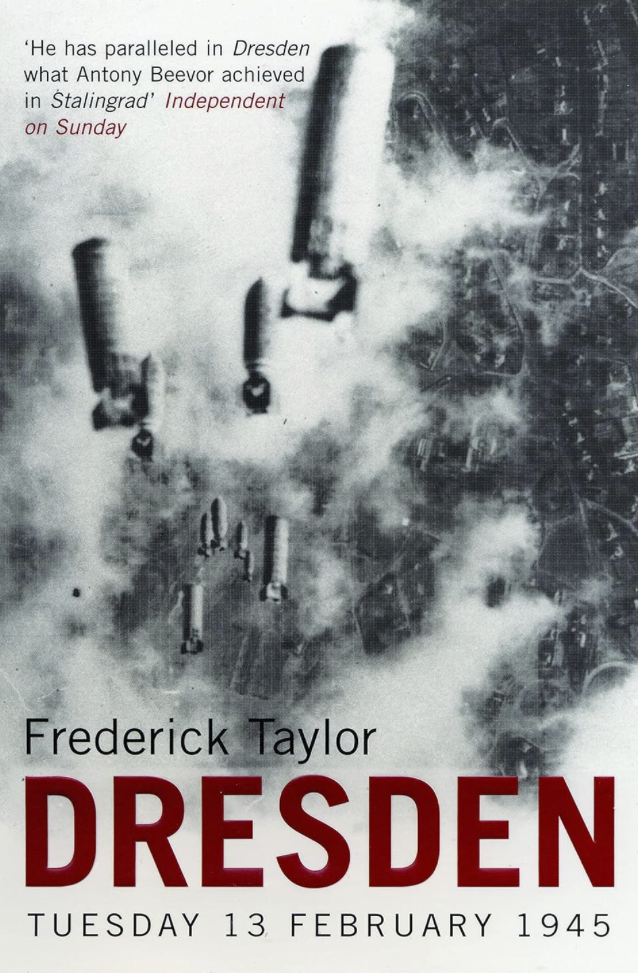
If you’ve watched the two-part video on the bombing of Dresden by LordHardThrasher (Part 1, Part 2), much of this will already be familiar to you, as Ed West discusses the history of the city up to the point the RAF bombs began to fall on Shrove Tuesday in 1945:

… Just over six years later the city of Dresden would be reduced to ashes by hundreds of bombers from the RAF and US Air Force, a horror that began on the evening of Shrove Tuesday, February 13, 1945, lasting until Thursday morning. Griebel would survive, but all his art went up in the blaze.

Dresden is perhaps, after Hiroshima, the name most synonymous with slaughter from the air, and in Britain at least the most controversial. Last year, while visiting this incredibly beautiful city — much of it now rebuilt — I reread Frederick Taylor’s account of the bombing, published back in 2005 on the 60th anniversary of the event.

Dresden’s destruction was extensive. Almost no buildings in the centre or its inner suburbs survived the bombs, and the death toll was immense, although difficult to assess in a city packed with refugees from the east. Anything between 20,000 and 80,000 fatalities is possible, although the consensus seems to be around 25,000.

That night was to be the worst of many wartime firestorms, a meteorological event in which the heat of the blaze becomes so intense, up to a thousand degrees centigrade, that the oxygen is sucked out of the surrounding air. More died in Dresden from asphyxiation than fire, and even those who thought they had found shelter in fountains were boiled alive. Many more drowned in the city’s reservoir, where they had gone to seek protection, their energy sapped by the soaring temperatures, unable to climb out. The bombers, thousands of feet above, could feel the warmth of the thousand fires below.

[…]

As everyone in the 1930s was well aware, the new war would bring aerial destruction on a hideously greater scale, and when it came again, it was the Luftwaffe who first put these ideas into practise, first in Poland and then Rotterdam.

After failing to destroy the Royal Air Force over the summer of 1940, the Nazis switched to aerial bombing of British cities. Between September 7, 1940 and New Year’s Day 1941, London was attacked on 57 consecutive nights, killing 14,000 inhabitants, a rate of 250 fatalities for each day of bombing. The German air force went on to kill an estimated 43,000 British civilians over the course of the war, with V-1 attacks continuing until the last weeks of the war.

On November 14, 1940, over 500 German bombers took off for a mission that would gift their language a new verb: Coventrated. Five hundred tons of high explosives, 30,000 incendiary bombs, fifty landmines and twenty petroleum mines were dropped on the target, and the medieval city went up in flames.

Like the blitz on other British cities, morale was not crushed in Coventry, but something dawned on the British high command. The destruction of Coventry’s infrastructure, utilities and transport had proved far more damaging than the destruction of any purely “military” target. Furthermore, bombers were notoriously inaccurate, and one survey showed that only 2 per cent of bombs fell within even one thousand feet of their intended point. Aerial bombardment of cities would prove far more effective than any hopeless targeting of particular coordinates.

They also learned that a large enough bombing raid would result in a firestorm, in which air currents are drawn in from the surrounding area, causing the fire to burn far more intensely. Indeed, a major attack on the City of London on December 29, 1940 might have become another firestorm but for the bad weather.

The British had been initially reluctant to take the war to Germany. While Poland was left to endure hell, leaflets were dropped over Berlin in October 1939 claiming that Nazi leaders were secretly profiting from the war, leading Noel Coward to suggest that it looked like we were trying to bore the Germans to death. There is even the apocryphal story about British official Sir Kingsley Wood refusing to bomb industrial targets in the Black Forest because it was private property. Indeed, our attempts to bomb Germany in 1940 were so feeble that Goebbels had to fake British “atrocities” to rouse the German public

With the entry of the United States and Soviet Union into the war in 1941, and with the German defeat at Stalingrad, the shoe was now on the other foot. The British invested more resources in Bomber Command and its head, Air Marshall Arthur Harris. “Bomber” Harris would become representative of the entire policy of destroying Germany’s cities, and a figure of controversy; the unveiling of his statue in 1992 attracted protests and has been repeatedly vandalised, but like many architects of wartime destruction, he was motivated by a desire to prevent a repeat of what he saw in 1914-18. The son of a colonial official who might have spent the rest of his life as a farm manager in Rhodesia were it not for war, he had joined the Royal Flying Corp in the first conflict and from his plane saw the horror of trench warfare and became determined that this sort of stalemate should never be repeated.

Having stuck to targeted industrial centres, in February, 1942 Allied command issued the Area Bombing Directive authorising the wide scale destruction of enemy cities. On 28 March the Hanseatic town of Lübeck was destroyed in a firestorm, and its most famous son, the anti-Nazi novelist Thomas Mann, appeared on BBC radio saying that while he regretted the destruction of his native city, “I think of Coventry, and have no objection to the lesson that everything must be paid for. Did Germany believe that she would never have to pay for the atrocities that her leap into barbarism seemed to allow?”

After the Lübeck bombing, Goebbels approached a state of panic for the first time, describing the damage as “really enormous”. He responded, in April 1942, by saying that he would “bomb every building in England marked with three stars in the Baedeker Guide” – Exeter was now hit in retaliation.

On May 30 the Allies launched what Harris called “the Thousand Plan”, the first thousand-bomber raid. Cologne and Hamburg were singled out for destruction, but on last-minute meteorological advice only the Rhineland city was chosen. Hamburg’s citizens would never know how fate had saved them – if only for another year.

So shocked were the Germans by the attack that the authorities forced the city’s fleeing citizens to sign a pledge of secrecy about what they saw, which ended with the sinister line “I know what the consequences of breaking this undertaking will be”.

Things would only get worse, and the Allies were getting both more destructive and more skilled. In faraway Utah, the Americans were now busy testing the destruction of German-style buildings, even hiring German refugee architect Erich Mendelssohn to recreate a German apartment block.

M1918A2 MOR: How to Make a Non-NFA BAR

Filed under: Government, History, USA, Weapons — Tags: , , , , — Nicholas @ 02:00

Forgotten Weapons
Published 24 Sept 2025

Prior to 1986, Group Industries imported BAR parts kits and then manufactured and registered full-auto receivers for them. This produced transferrable guns which were subject to NFA registration and the $200 transfer tax — which was a much more significant sum at that time than it is today. Some of the potential customers were people (like reenactors) who wanted guns that looked and handled like real BARs but were not regulated by the NFA. To satisfy this subgroup of customers, Group designed a receiver which neither had nor could be adapted to have a gas piston, rendering the gun manually operated. It would fire from an open bolt, but had to be manually recocked after each shot. This was not legally a machine gun, and he made 68 of them.

When the Hughes Amendment to the FOPA passed in 1986, manufacture of new transferrable machine guns ceased, and Group Industries went out of business. Its assets were sold off, including a number of parts kits and unbuilt M.O.R. receivers. One of the buyers was Ohio Ordnance Works (then called Collector’s Corner). They got ten receivers and after selling them, decided to develop a semiautomatic BAR for that same non-NFA BAR market. That gun ended up being the M1918A3, which is still available from them today.
(more…)

QotD: How nuclear weapons were viewed right after WW2

In that context [clear Soviet superiority of conventional forces in Europe], the fact that it had been the United States which had been the first to successfully develop nuclear weapons (and use them in anger, a decision which remains hotly debated to this day) must have seemed like an act of divine providence, as it enabled the western allies to retain a form of military parity with the USSR (and thus deterrence) while still demobilizing. US airbases in Europe put much of the Soviet Union in range of American bombers which could carry nuclear weapons, which served to “balance” the conventional disparity. It’s important to keep in mind also that nuclear weapons emerged in the context where “strategic” urban bombing had been extensively normalized during the Second World War; the idea that the next major war would include the destruction of cities from the air wasn’t quite as shocking to them as it was to us – indeed, it was assumed. Consequently, planners in the US military went about planning how they would use nuclear weapons on the battlefield (and beyond it) should a war with a non-nuclear Soviet Union occur.

At the same time, US strategists (particularly associated with the RAND Corporation) were beginning to puzzle out the long term strategic implications of nuclear weapons. In 1946, Bernard Brodie published The Absolute Weapon which set out the basic outlines of deterrence theory; he did this, to be clear, three years before the USSR successfully tested its first nuclear weapon in 1949 (far earlier than anyone expected because the USSR had spies in the Manhattan Project). Brodie is thus predicting what the strategic situation will be like when the USSR developed nuclear weapons; his predictions proved startlingly accurate, in the event.

Brodie’s argument proceeds as a series of propositions (paraphrased):

  1. The power of a nuclear bomb is such that any city can be destroyed by less than ten bombs.
  2. No adequate defense against the bomb exists and the possibilities of such are very unlikely.
  3. Nuclear weapons will motivate the development of newer, longer range and harder to stop delivery systems.
  4. Superiority in the air is not going to be enough to stop sufficient nuclear weapons getting through.
  5. Superiority in nuclear arms also cannot guarantee meaningful strategic superiority. It does not matter that you had more bombs if all of your cities are rubble.
  6. Within five to ten years (of 1946), other powers will have nuclear weapons. [This happened in just three years.]

All of which, in the following years were shown to be true. Consequently, Brodie notes that while nuclear weapons are “the apotheosis of aggressive instruments”, any attacker who used them would fear retaliation with their enemy’s nuclear weapons which would in turn also be so destructive such that “no victory, even if guaranteed in advance – which it never is – would be worth the price”. Crucially, it is not the fact of retaliation, but the fear of it, which matters and “the threat of retaliation does not have to be 100 per cent certain; it is sufficient if there is a good chance of it, or if there is a belief that there is a good chance of it. The prediction is more important than the fact.” [emphasis mine]

This does not “make war impossible” by any means, but rather turns strategy towards focusing on making sure that nuclear weapons are not used, by making it clear to any potential aggressor that nuclear weapons would be used against them. And that leads to Brodie’s final, key conclusion:

    Thus, the first and most vital step in any American security program for the age of atomic bombs is to take measures to guarantee to ourselves in case of attack the possibility of retaliation in kind. The writer in making that statement is not for the moment concerned about who will win the next war in which atomic bombs are used. Thus far the chief purpose of our military establishment has been to win wars. From now on its chief purpose must be to avert them. It can have almost no other useful purpose.

To sum that up, because both the United States and its key enemies will have nuclear weapons and because their destructive power is effectively absolute (so high as to make any “victory” meaningless) and because there is no effective defense against such weapons, consequently the only rational response is to avoid the use of nuclear weapons and the only way to do that is to be able to credibly threaten to retaliate with nuclear weapons in the event of war (since if you cannot so retaliate, your opponent could use their nuclear weapons without fear).

That thinking actually took a while to take hold in actual American policy and instead during the 1940s and 1950s, the United States focused resources on bomber fleets with the assumption that they would match Soviet superiority in conventional arms in Europe with American nuclear superiority, striking military and industrial targets (“precision attacks with an area weapon”, a notion that is as preposterous as it feels) to immediately cripple the USSR in the event of war, or else aim to “win” a “limited” nuclear exchange.

Bret Devereaux, “Collections: Nuclear Deterrence 101”, A Collection of Unmitigated Pedantry, 2022-03-11.

Powered by WordPress


