
Quotulatiousness

December 6, 2025

The least offensive kind of soft power – The Rest is History

Filed under: Books, Britain, History — Tags: , , — Nicholas @ 05:00

Ed West recounts his (very) early discovery of The Rest is History, a podcast featuring Dominic Sandbrook and Tom Holland (not that Tom Holland, I’m told). I’ve been a (free) subscriber on YouTube for the last year or two, but Ed got there much earlier than I did:

The Rest is History must be the only thing of which I can say that I was into it before it was popular, my sole experience of being an early adopter. I remember listening to the very first episode as soon as it was released, during Lockdown 2, because I had been a fan of Tom Holland for years and followed him on Twitter. Straight away, I knew that it would be an enormous success, because even people who rarely watched history documentaries or read history books would find it entertaining.

And now, as they say, “the rest is history” (ho ho). The programme has just been named Apple Podcasts Show of the Year 2025, the first ever British winner, and is beyond successful, into the realm of “phenomenon”. When television writers in the distant future make dramas set in the 2020s and wish to give immediate shorthand to establish the decade, they’ll put The Rest is History soundtrack somewhere in the background, just as they always have Tears for Fears playing on the radio during any drama set in the 80s.

It became such a huge part of my life that, when cooking or cleaning and unresponsive to questions, the children came to learn that I must be listening to “Tom and Dom” on my AirPods. Initially, of course, when I mentioned that I had actually met Tom Holland a few times, they’d respond with awe until they realised that I was not talking about the Spiderman actor. It became a running joke about “your Tom Holland” rather than the “famous” one.

During the golden years of television there were a number of shows which became so commonly popular in one’s friendship circles that they were routinely talked about – The Sopranos, The Wire, Breaking Bad or Game of Thrones – but there were always plenty of people who had never watched them; there’s so much choice, after all, and the media culture has fragmented.

As Tom and Dom discussed on an old episode about the 1990s, that was the last period when the whole country had a common popular culture. Yet The Rest is History is approaching something close to that. It’s become so all-pervading that literally everyone I know, or ever speak to, listens to it. Perhaps I live in a bubble, but it’s a warm and cosy bubble filled with chat about the Kaiser’s deck shoes and Costa Rica’s infamous Dr Valverde, a sick and twisted psychopath who liked to torture frogs. The word I’d use to describe the show is “wholesome”, a term they’re fond of, an escape from the modern world, without rancour, hectoring or — crucially — swearing.

I realised that it must have become something more than popular when I read that it was the biggest podcast in Finland. Admittedly the Finnish market is not globally important, but this obviously wasn’t some quirky localised fanbase, like Norman Wisdom in Albania. It had become big everywhere, including the largest market of all; to use an analogy that Holland might appreciate, they’d reached their Ed Sullivan moment.

[…]

All the great drama series of the 2000s I mentioned were American, and I’d even go as far as to argue that The Rest is History is now Britain’s main cultural export and proponent of soft power. While the case might be made for the Premier League or Warhammer, the Goalhanger production has far more sway on international elites and how educated, cultured people around the world see our country.

Foreigners tend to value an idea of Britishness characterised by classiness and erudition, but also humour and modesty. Yet the global popularity of our national brand is out of tune with what our own cultural elites value, which reflects their sense of cringe but often comes across as strangely parochial and inward-looking. Two erudite historians who wear their scholarship lightly, whose interests are openly Anglocentric but reflect a passionate interest in the world beyond our island, talking to the audience like a pair of friendly academics in a cosy pub in Oxford – that’s the fantasy they want.

Fans are always conscious that any show will pass its peak, and then start to decline as everyone runs out of ideas. There’s no sign of it yet, and the good thing about history is that it’s literally endless, and you can always return to the subject at greater length. Their recent series on Nelson was outstanding, despite covering previous ground, and nothing says the holiday season like that festive subject, the Nazis. I can’t wait for the eleven-episode series about the Costa Rican Civil War.

Battle of Tarawa, 1943

Filed under: History, Japan, Military, Pacific, USA, WW2 — Tags: , , , , — Nicholas @ 04:00

Real Time History
Published 5 Dec 2025

The Marine and US Army landing on the Tarawa Atoll’s Betio and Makin islands were the first operations in the new Central Pacific front of the Pacific War. Tarawa was one of the deadliest amphibious landings for the Marine Corps which hadn’t yet perfected such complex operations. But the lessons learned at Tarawa would already be applied a few months later at Kwajalein and Eniwetok.
(more…)

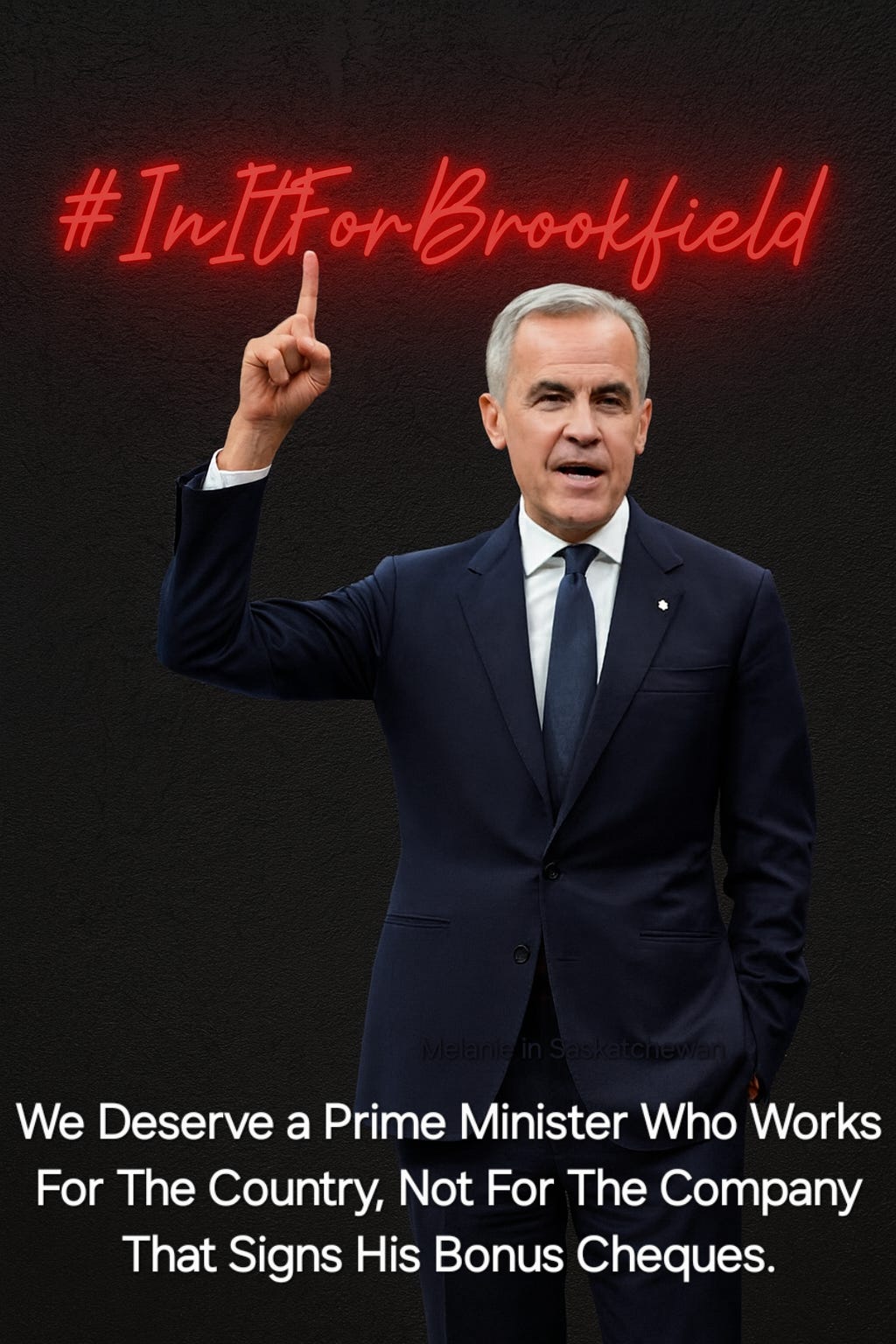
Canada – a subsidiary of the Brookfield Corporation

Filed under: Cancon, Government — Tags: , , , , — Nicholas @ 03:00

Melanie in Saskatchewan reminds us that Prime Minister Mark Carney’s interests seem to align far more with those of the Brookfield Corporation than with those of ordinary Canadians:

Canadians are tired of being treated like an afterthought. Eight months ago, Mark Carney parachuted into the safe Liberal seat of Nepean, shoved aside a long-serving MP, and promised voters he would be their voice in Ottawa. Today, there is still no constituency office open in the riding. Residents who need help with immigration files, CRA problems, or passports are told to send an email and wait, sometimes for several weeks. That betrayal starts at home, and Nepean is living proof that Carney’s priorities lie somewhere else entirely.

That “somewhere else” has a name: Brookfield Asset Management.

A $500-million federal “green steel” subsidy was rushed through cabinet for Algoma Steel in Sault Ste. Marie. Nothing wrong with helping steelworkers, except the electricity for the project comes almost exclusively from wind farms owned by Brookfield Renewable Partners. Mark Carney still holds roughly $6 million in unexercised Brookfield stock options that vest based on the company’s renewable-energy profits. In other words, every tax dollar sent to Algoma flows through to the bottom-line gains that Carney himself pockets.

The Parliamentary Budget Officer has already flagged the transaction as one of several in Carney’s $78-billion deficit budget that rely on “creative accounting” to hide the true cost.

This isn’t a conspiracy theory; it’s on the public record in Carney’s own ethics disclosure filed with the Conflict of Interest Commissioner Konrad von Finckenstein. The same disclosure that conveniently claims his former advisory role was “exempt” from stricter rules, rules that apply to every other cabinet minister.

While Canadians wait 33 hours in emergency rooms, watch their real wages shrink, and see layoff notices pile up at Stellantis, CAMI, and Algoma itself, the Prime Minister’s old firm is doing just fine. Brookfield’s stock is up 18 per cent since the subsidy was announced. Coincidence?

Hardly.

The hypocrisy runs deeper than one subsidy. Carney spent years on the world stage lecturing banks and governments about “climate risk and the urgent need to phase out fossil fuels”. Yet the same Alberta energy memorandum that triggered Steven Guilbeault’s resignation quietly allows new pipelines and extends oil recovery through carbon-capture tax credits, credits that, once again, flow disproportionately to companies in which Brookfield has major stakes.

Green Party Leader Elizabeth May says Carney personally assured her those provisions would never see the light of day. Nine Liberal MPs are now telling reporters, off the record, that they feel betrayed by the same broken promise.

G150: Swiss Silenced Guerrilla Anti-Materiel Rifle

Filed under: Europe, History, Military, Weapons — Tags: , , , , , — Nicholas @ 02:00

Forgotten Weapons
Published 21 Jul 2025

The G150 is a rifle specifically assembled by and for the Swiss P-26 organization: a very secretive stay-behind group intended to fight foreign occupiers of Switzerland. It was one of a series of such organizations that began with a concern during World War Two the Germany might invade, and continued during the Cold War with the threat of Soviet occupation in the aftermath of nuclear war. The P-26 group specifically was formed in 1981, and disbanded in 1991 under a cloud of controversy over its political leanings.

P-26 was armed with an assortment of weapons ideal for guerrilla warfare, including P210 pistols and suppressed MP5 submachine guns. The G150 rifle was intended to be a very quiet rifle for destroying enemy materiel like radar systems, fuel tanks, parked aircraft, and the like. About 250 were made using commercial JP Sauer actions, SIG 540 like pistol grips and folding stocks, and very large two-part suppressors. They were chambered for the .41 Remington Magnum revolver cartridge, loaded with a 408-grain subsonic bullet. The scopes were adjustable from 4-6 power (yes, 4-6: it;s a weird choice) and had BDC elevation turrets adjustable out to 200 meters.

Only three G150 rifles are known today, although the remainder may still be in some deep military storage in Switzerland. Many thanks to the anonymous viewer who arranged access to this one for me to film! To see another perspective on one of the other known examples, I recommend Bloke on the Range’s video:
BotR Exclusive! Swiss 10.4mm G150 subsonic…
(more…)

QotD: King Henry wants a divorce

Filed under: Britain, History, Quotations, Religion — Tags: , , , , , , — Nicholas @ 01:00

So, it’s 1532 and Henry VIII’s divorce case is at a critical juncture. The King’s former chief minister, Cardinal Wolsey, has failed to pull it off. The King was about to have Wolsey tried for treason (technically, for a crime known as praemunire, file that away for now) when he, Wolsey, died, but the fact that Wolsey was on his way to London for trial was a signal to the jackals: Open season. Every gripe anyone ever had about the Church in England fell on Wolsey’s head.

In 1532, then, Parliament presented the King with the Supplication Against the Ordinaries. “Ordinaries” means “members of a religious order” — basically, the Supplication is everyone’s beefs with the Church. You can read the list at the Wiki link, but they all boil down to this: The Church was effectively a state-within-the-State, operating a different system of law, taxation, etc. And that’s what praemunire means, too — “a 14th-century law that prohibited the assertion or maintenance of papal jurisdiction, or any other foreign jurisdiction or claim of supremacy in England, against the supremacy of the monarch”. By accusing Wolsey of it, Henry VIII was saying that he, Wolsey, was ultimately working for the Church, not the King … which is kinda what you’d expect from a Cardinal, no?

That’s the problem.

Long story short, by 1532 the state-within-the-State that was the Church was blocking the upward mobility of new men like Thomas Cromwell.1 There was an entire secular education system; it was cranking out talented, ambitious men; in short, there was an “overproduction of elites”, since there were limited spaces in the nobility and the Church and they were all already occupied by either bluebloods, or guys like Wolsey who had jumped on the gravy train much earlier.

But this was an artificial bottleneck. The Tudor state had plenty of room to expand; they needed far more educated bureaucrats than the old system was capable of supplying. The old system needed to go, on order to make room for the new, and in many ways that’s what the Reformation was: A brushfire, clearing off the deadwood. A political and administrative brushfire, disguised as a theological dispute. It’s no accident that the most Reformed polities — late Tudor England, the Netherlands, the Schmalkaldic League — were the most politically and economically efficient ones, too.

And by Reforming the Church, the brushfire could extend to the rest of the depraved, decadent, moribund, fake-and-gay culture. The Renaissance is obsessive about the old, but it is, obviously, something very very new. People raised in the Late Medieval world were emotionally incapable of a total break with the past — I don’t think any culture really is, but a culture as hidebound as the Middle Ages certainly isn’t. But so long as they could find some warrant for change in the Classical past (and being the inventive types they were, they’d always find such a warrant), they could purge the culture, root and branch, in the guise of “returning ad fontes“.

Severian, “Reformation II”, Founding Questions, 2022-03-08.


  1. This is where the analogy breaks down, because Late Medieval men were not Postmodern men — Cromwell was actually loyal to Wolsey almost to his, Cromwell’s, literal death. Men had honor back then. It also speaks to the kind of man Wolsey must’ve been, to have inspired the loyalty of a guy like Cromwell despite it all. Cromwell was a ruthless motherfucker, even by Tudor England’s Olympic-class standards; he’d stab his own mother if he found it politically necessary; but he still stayed loyal to his man even when it looked like that would cost him his life.

Powered by WordPress



