
Quotulatiousness

November 22, 2025

“Whig history”

Filed under: Books, Britain, History — Tags: , , , , — Nicholas @ 05:00

If you’ve read any history books written before the Second World War (aside from explitly Marxist interpretations), you’ll probably recognize the worldview which, subtly or overtly, informed the stories being told (and those not mentioned). On her Substack, Mary Catelli discusses “the Whig interpretation of history”:
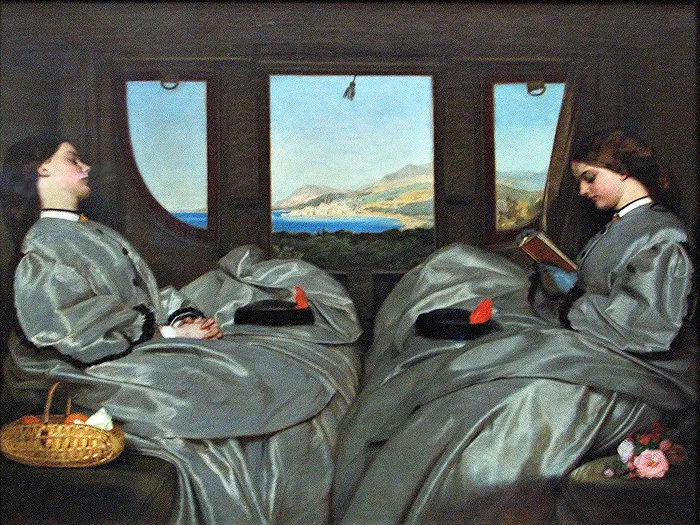
Among the many perils of viewpoint that lurk in your path when you read history, one of the nastiest is the Whig Interpretation of History, and its variants, and other teleological views.

The original interpretation, popular in British history writing of the 19th century, was that all of history had been aiming for the wonderfully wonderful wonder that was 19th century Britain. And if it was not quite so smooth as a train ride gliding over well-laid tracks, it was unnecessary to point out minor details.

The most disastrous effect, for the reader, is that the things of the past are described for their presumed effect on the progress toward that aim. They were not described for their actual effect on the era, or how they appeared to the people of that era (possibly more important for the fiction writer), which is what a reader using them for that era needs. Down to and including excluding vital details as unimportant.

(Obviously, “development of what they regard as progress” books are more or less resistant to this, though they can press some very odd things into the service of their thesis, and sandpaper off quite a bit of things they deem anomalies. It is when it colors works about something else — or nominally about something else — that the peril really arises.)

Plus of course any coloring the viewpoint gives them in regarding the people of the era as stepping stones toward the ideal future. In particular, the heroes and villains are assigned not for the moral character of their deeds but whether they sped history along the right path. Frequently enough, any openly and clearly stated motives by the historical figures will be breezed over for the “real” motives according to the historian’s agenda. Some quote the primary source and not even apparently noticing that it contradicts the agenda before writing as if the historical figures’ intentions matched the agenda.

H. G. Wells, in The Outline of History, gets all starry-eyed about any attempt, or success, at union between countries because he’s looking forward to the beneficent World State, regardless of how the union was imposed, and what its consequences were, and again looking with a jaundiced eye on any division regardless of how justified.

It would be easier if the issue were limited to the historians of that school, but, of course, anyone who regards history in light of a progress toward the wonderful present — or future — will have the same issues. World War I hit the original Whig interpretation quite hard, but the Marxist interpretation kept roaring along, and is not quite dead yet.
Democrats may come to regret their “refuse illegal orders” messaging

Filed under: Bureaucracy, Government, USA — Tags: , , , , , — Nicholas @ 04:00

Many current and former military folks ridiculed the Democrats for their sudden discovery of the right (and obligation) to refuse illegal orders … which has been part of western military doctrine since the end of World War Two. I poked some fun at them as well, but J.D. Tuccille points out that it’s a weird stance for the party that is always fully in favour of government agents’ maximizing their powers:

I favor government employees defying orders and sabotaging the instruments of the state as much as the next libertarian (well, maybe a little more). But I suspect the Democratic lawmakers urging members of the military and the intelligence community to “refuse illegal orders” haven’t entirely thought through their positions. While their advice is commendable so far as it goes, as officials of a political party known for its expansive view of the role of government their words are likely to come back and bite them on their collective asses. It’s hard to imagine them being so enthusiastic about a reboot of this message directed at the Bureau of Alcohol, Tobacco, Firearms, and Explosives (ATF), Environmental Protection Agency (EPA), and IRS agents under a Democratic administration.

Lawmakers Say: Refuse Illegal Orders

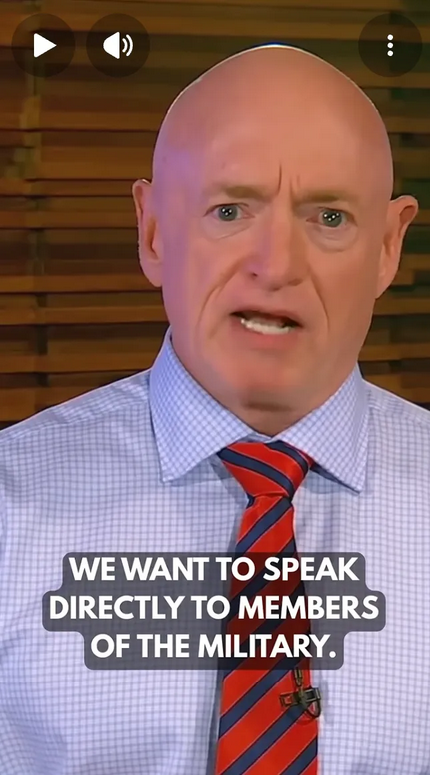
In a video message released this week, Democratic Sens. Elissa Slotkin of Michigan and Mark Kelly of Arizona, and Reps. Chris Deluzio of Pennsylvania, Maggie Goodlander of New Hampshire, Chrissy Houlahan of Pennsylvania, and Jason Crow of Colorado, introduce themselves with emphasis on their past roles in the military and intelligence agencies.

“We want to speak directly to members of the military and the intelligence community,” they say. “We know you are under enormous stress and pressure right now. Americans trust their military, but that trust is at risk. This administration is pitting our uniformed military and intelligence community professionals against American citizens. Like us, you all swore an oath to protect and defend this Constitution. And right now, the threats to our Constitution aren’t just coming from abroad, but from right here at home.”

That’s a nice lead-in. Then we get to the heart of the message: “Our laws are clear. You can refuse illegal orders. You can refuse illegal orders. You must refuse illegal orders. No one has to carry out orders that violate the law or our Constitution.”

Stirring stuff. And accurate. Referencing a Vietnam War-era atrocity, retired General Philip M. Breedlove, former Supreme Allied Commander in Europe, told NewsNation regarding the video, “Since My Lai, the way we have interpreted this is, as a combatant, as a military officer, you are not obligated, not obligated, to carry out an illegal or an immoral order. You simply refuse the order.”

[…]

Take Advice to Refuse Illegal Orders Seriously, and Apply It Universally

So, if we’re to take seriously — and I believe we are well-advised to do so — the six Democratic lawmakers’ advice that “no one has to carry out orders that violate the law or our Constitution,” there are interesting implications for our political culture. That’s because much of what the federal government does on a daily basis flouts constitutional protections and offends human decency.

So, how would Slotkin and Kelly, and Deluzio, Goodlander, Houlahan, and Crow, respond to campaign a few years from now under the next Democratic administration urging ATF and IRS agents, federal regulators, and general workers to refuse orders? How would they treat an attempt to recruit more whistleblowers like Manning and Edward Snowden?

Don’t get me wrong, I think the advice the lawmakers offer is praiseworthy. But I look forward to seeing it applied universally and becoming a permanent feature of our dealings with government. I suspect that likelihood hasn’t occurred to those six legislators, but thanks to them for showing the way.

In counterpoint to my original take on the issue, on the social media site formerly known as Twitter, Cynical Publius expresses his belief that the Democrats are actually encouraging disobedience to legal orders that they happen to dislike:

I’m not sure I’ve ever been angrier at Democrats than I am right now.

As a career Army officer, I take this latest nefarious chicanery from these filthy Congressional Democrat veterans quite personally,

It is loathsome and disgusting. You know, I know, they know and even their brainwashed acolytes know that what they are REALLY doing is encouraging active duty service members to refuse to follow lawful orders under the guise of pretending the orders are “unlawful”.

What these Democrat filth are doing is encouraging a form of military coup where service members get to decide not to do things they disagree with politically by pretending those otherwise lawful things are “unlawful”.

This is the greatest threat to US internal stability since the last time Democrats started a civil war. A military ruled by politics is no military at all. Instead, it is a group of armed thugs akin to the South American military juntas of the 1970s.

I cannot overstate what an extreme threat this situation is to our nation.

This is a precursor to civil war, initiated and deliberately created by traitorous elected officials hiding behind the honor of the uniform they once wore but now disgraced.

I have never been angrier.🤬

Ottawa is working hard … to keep beef prices high for consumers

Filed under: Bureaucracy, Cancon, Economics, Food, Government — Tags: , , — Nicholas @ 03:00

It’s not your imagination, beef is still much more expensive than it used to be (we no longer buy any “good” cuts of meat, settling for ground beef and “stewing beef” when we do the shopping). But rest assured, the feds are working diligently … to prevent beef prices from falling:

We recently received information from a reliable industry source about how the federal government is administering beef import permits. If accurate, it raises serious concerns about whether Ottawa is knowingly sustaining an outdated and opaque system that keeps beef prices unnecessarily high. At a time when many families are struggling with food costs, this is more than a bureaucratic issue — it directly affects affordability.

Canada’s beef import rules operate under a tariff-rate quota system. A limited volume of beef can enter the country at a low tariff, but anything beyond that is slapped with a steep import charge. When supply tightens or when specialty products are required, supplemental import permits are meant to provide flexibility and help stabilize the market. For years, the system worked reasonably well.

But the structure behind the process has not kept pace with today’s realities. The committee originally created to provide guidance — the Beef and Veal Tariff Rate Quota Advisory Committee — has not met since 2015. For a decade, no formal mechanism has existed for importers, retailers, or independent distributors to participate in discussions with government about how permits are allocated. Instead, decisions have shifted informally toward a small group of influential players, including major domestic processors who have a vested interest in limiting imports. The transparency and balance once built into the system have eroded.

Adding to this complexity is the broader concentration of market power in the sector. Beef packing and processing in Canada is dominated by two foreign-owned private companies: Cargill, based in the United States, and JBS, headquartered in Brazil. Together, they control the overwhelming majority of beef slaughter and processing in this country. When a sector is this concentrated, and when a federal system restricts competition through import controls, the beneficiaries are obvious. Any policy that tightens import access — intentionally or not — further entrenches the dominance of these two multinational giants.

The consequences are no longer theoretical. Our source described a case where a long-established importer has beef sitting in bonded storage in Canada. The product is legally imported and properly documented. The importer applied for a supplemental permit to release it into the market at the regular tariff rate. The application was refused. The justification offered — that the beef had been purchased abroad at a price “too low” compared with U.S. prices — makes little economic sense. The product did not come from the U.S., and competitive pricing has never been grounds for rejecting a permit. With no permit, the importer must wait until the next quota year or pay the full over-quota tariff. Ironically, the only reason paying the tariff is even possible now is because beef prices have climbed so sharply. The federal government, of course, collects that tariff revenue.

Cases like this raise an uncomfortable question: does Ottawa actually want to keep beef prices high? If the goal were genuinely affordability, the government could issue supplemental permits when supply conditions justify them. It could restore a functioning advisory committee to ensure balanced input. It could provide clear and transparent criteria for permit decisions. Instead, legitimate requests are rejected, supply is restricted even when product is physically present in the country, and both processors and Ottawa benefit from elevated prices.

Why did the US Enter WW1?

The Great War
Published 11 Jul 2025

In early 1917, the United States was still neutral in the First World War. Meanwhile, German leaders were getting desperate — if they couldn’t find a way to break the war of attrition on the Western Front, the Allies would probably defeat them. The result was multiple gambles that staked everything on a quick victory with the risk of drawing the US into the war.
(more…)

QotD: The value of a human life

Filed under: Books, Humour, Quotations — Tags: — Nicholas @ 01:00

Once, passing a second-hand bookstore, I spotted in its window a book I very much wanted to acquire. Knowing the bookseller, I dashed into his shop, grabbed the book and, while advancing towards him at the cash desk, exclaimed that I had been willing to kill for it.

“How much?” I asked, catching my breath.

“Eighty dollars,” he replied, nonchalantly.

I told him I could not possibly pay that, and sadly released the book from my grip.

“Well,” the bookseller observed. “Thanks to this exercise, we know the value you place on a human life. Less than eighty dollars.”

In those days, I think I would have drawn the line at thirty. But to his moral credit and mine, the bookseller and I were finally able to agree on fifty-five dollars (plus sales tax).

David Warren, “Virtual March for Life”, Essays in Idleness, 2020-05-14.

Powered by WordPress



