Quotulatiousness

November 19, 2025

US Democrats issue clarion call to the military: “You must refuse illegal orders”

Filed under: Government, Law, Military, USA — Tags: , , , , — Nicholas @ 05:00

Well, thank goodness that someone remembers Nuremberg! Apparently President Trump has been issuing illegal orders to the US Army, Navy, and Air Force, and these brave legislators are putting their careers — and even their lives — on the line to defend democracy. I’m unaware of what these specific orders may be, but as Chris Bray points out, he’s the Bad Orange Man so pretty much anything he orders must be illegal:

Note what they don’t say. They say that the American military is being “pitted against” their own countrymen, and they say to servicemembers that “you can refuse illegal orders …”

… they don’t say, even once, even in a pretty clear hint, precisely what illegal orders Trump has issued. He’s being vaguely bad, so you don’t have to obey him. The serious version would look like this: On [date here], the President of the United States ordered [unit name] to enter [place name] for the purpose of [specific action], and that order violated [explicit citation of US Code]. They mushmouth around a set of feelings-signals about Mean Orange Something, but they never quite manage to spit it out. What’s the illegal order anyone is supposed to disobey, and what makes it illegal? News reports suggest that they mean to refer to the boat strikes, but click on that link if you want to see more vagueness and weak hinting.

This is exactly what the Catholic bishops just did in their own stupid virtue performance, the precise mark of an absence of seriousness in a coven of drama queens, as they declared that they’re very concerned about questions that have arisen regarding certain situations involving immigrants. More mush from the wimps. Donald Trump is very bad, because mumble mumble mumble. Be precise and clear, or be silent.

This is an age of unseriousness, and here’s another heaping plate of it. Soldiers, you don’t have to obey the orders of your military superiors if you feel that they, that they, uh, oh hey look at the time anyway I have to go. It’s passive-aggressive bad girlfriendspeak as politics. I guess if you feel like you have to obey, that’s fine. No, it’s fine! I’m not mad! Let’s just go to dinner!

We want to speak directly to members of the military, but we don’t actually have anything to say. Just, you know, disobey the president. Small thought, not a big deal.

High school drama club president Elissa Slotkin has been banging on this drum in an especially insistent way, as she holds town hall meetings with veterans who mumble their own vague slogans about Trump bein’ against the Constitution real hard and stuff.

But all of their descriptions are stupid. Sending a few hundred National Guard troops to a city of hundreds of thousands of people with narrow orders about protecting federal facilities and personnel or patrolling to deter violence isn’t military conquest of the population or the militarization of all law enforcement. The hyperbole renders the argument insane. Related, the veterans in Slotkin’s video talk about the “systematic removal” of military leaders, and the “purge of the generals”. The US military has over 800 flag officers; the Trump administration has removed about 15. There’s a desperate stupidity to all of this panic-mongering that just renders it deeply tiring.

Actual servicemembers will be familiar with the rhetorical style of the shithouse lawyer, the idiot in the barracks who tells you that akshully they can’t order you to do that, it’s totally illegal.

You should just tell your drill sergeant that you refuse! He can’t even do nothin’ about it! He’ll just back right down!


The Korean War Week 74: The US Wants To Prolong The War – November 18, 1951

Filed under: China, History, Military, USA — Tags: , , , , , , — Nicholas @ 04:00

The Korean War by Indy Neidell
Published 18 Nov 2025

UN Commander Matt Ridgway has everyone in Washington worried because of his refusal to play ball with the Communist side at the peace talks. The Communist side aren’t exactly playing nice either, lobbing insults at the UN delegates, but the newspapers of the world wonder if the US actually even wants a truce, since bloody headlines implying impending vengeance come out in American papers timed suspiciously with possible breakthroughs at the talks.

Chapters
00:00 Intro
00:43 Recap
01:12 Ridgway Disagrees
04:29 Insults at Panmunjom
06:50 What The Troops Think
09:05 Ridgway’s Statement
10:11 POW Repatriation
12:50 Summary
13:06 Conclusion
(more…)

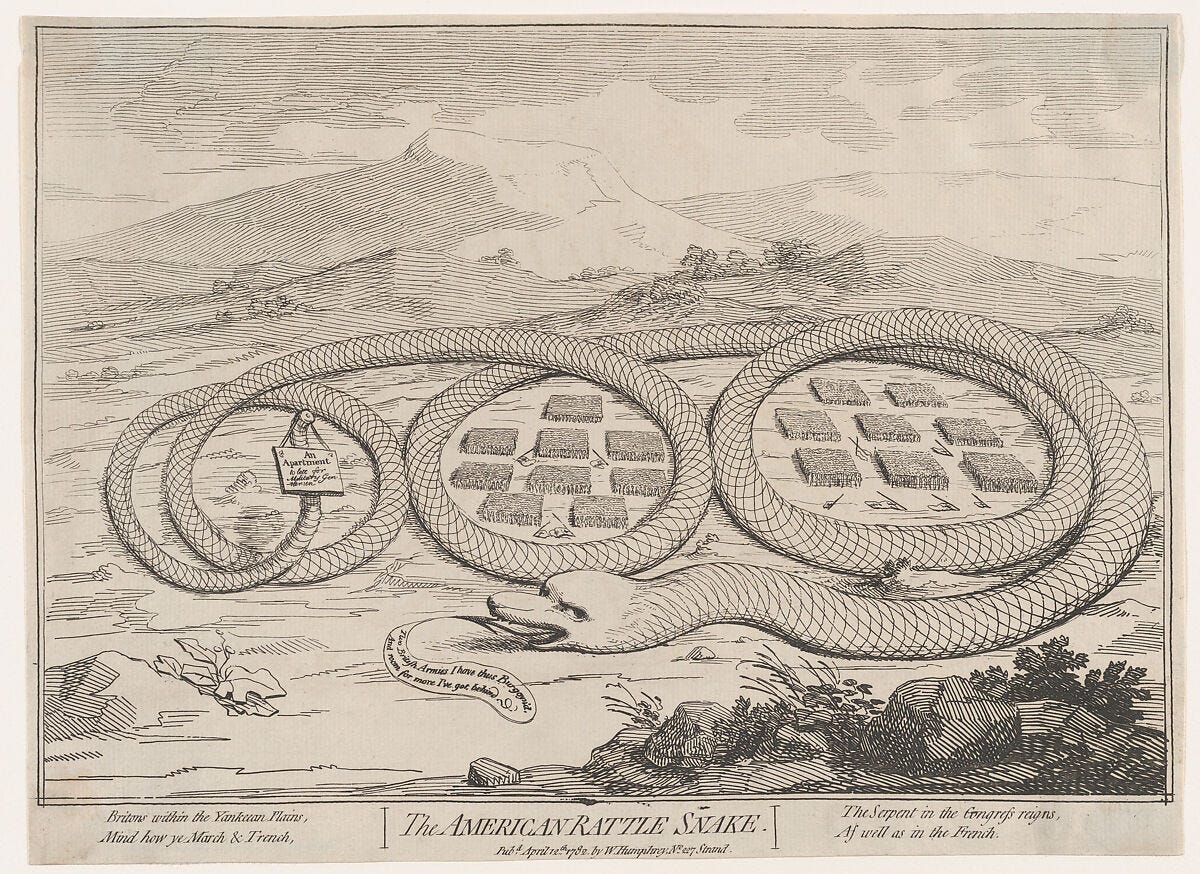
Ken Burns’ The American Revolution gets the Howard Zinn seal of approval

Filed under: Britain, History, Military, USA — Tags: , , , , , — Nicholas @ 03:00

CDR Salamander is persuaded, against his better judgement, to watch the latest Ken Burns documentary … and discovers that it’s somehow still 2018-2022 in Burns’ world:

So, I’ve watched the two episodes of Ken Burns’s documentary, The American Revolution, in spite of my stated zero desire to do so. Why? If you are not up to speed with the MSNBCification of Ken Burns over the last decade, catch up.

Anyway, as Mrs. Salamander knows more about the American Revolution than 99.7% of people out there, she insisted we watch it. I’ve been married for over three decades for a reason, so I sat down with her to watch.

FFS.

… and … it started with a land acknowledgement. ISYN.

It doesn’t get better.

By the end of episode two we’ve gotten through the Battle of Bunker Hill, yet there has been no mention of John Locke, Montesquieu, or any of the other philosophical drivers of the revolution. They have plenty of time to quote the memories of an old man about what he thought of George Washington when he ran into him when he was 8 (it wasn’t good).

Let’s pause there a bit. It is clear that they made a decision that for every good thing they say about GW in the first two episodes, they insist on finding a way to smear him with presentism. It is also clear that he really wants to do a documentary on African Americans in the Revolutionary War, but couldn’t get the funding for that. Instead there is a constant referring back to slavery and racial issues. Just overdone to the point of being obvious, given that they were, at best, tertiary issues during the war. It deserves mention, but not in this ham-fisted, patronizing manner it is being done … and done mostly to smear GW up.

The presentism and biased scholarship is not shocking if you’ve read my reports at my Substack over the years about the absolute woke-soaked state of American historical organizations such as the American Historical Association. (see my FEB 2021 Substack, “The War on (Military) History: Half a Century In” for reference.)

The smearing of GW like this is more than “balance” — it is emblematic of the presentism that makes so many modern virtue signaling tiresome — and exactly meets the low expectations I had for this documentary.

There is also the pettiness of their choices of what to comment on, and how — the smug New England perspective of the Acela Corridor that is Ken Burns’ intellectual terrarium. Just one example from the second episode: the arrival of the Virginians to support the patriot forces around Boston. Might as well have called them rednecks.

Even Mrs. Salamander, halfway through Ep. 2, had about enough of the shoehorned in identity politics of “inclusion” … as if everyone ever got over the fever of 2018-2022.

Julia: A Feminist Retelling of 1984?

Filed under: Books, Britain, Media, Politics — Tags: , , , , — Nicholas @ 02:00

Feral Historian
Published 11 Jul 2025

Julia, a 2023 novel by Sandra Newman, does more than just retell Orwell’s 1984 through Julia’s eyes. That perspective switch presents an Oceania that is both more mundane and more familiar. It’s certainly a companion piece more than a stand-alone work, but it does have something to offer both in how it examines Orwell and a few times, how it contradicts him.

00:00 Intro
02:18 a Different Perspective
09:30 Caught in a Trap
12:45 Backstory
15:40 Departures
20:18 Endings and Beginnings
(more…)

QotD: Rum Sodomy & the Lash

Filed under: Britain, History, Media, Quotations — Tags: , , , — Nicholas @ 01:00

Released 40 years ago by London Irish legends the Pogues, the album is named not after a decent night in old Soho, as the title would suggest, but an apocryphal quote of Churchill’s. “Don’t talk to me about naval tradition,” he’s purported to have said. “It’s nothing but rum, sodomy, and the lash”. For many years, listening to the album while writing and drinking in this adopted riverside local, I’d no idea it was recorded a stone’s throw away in Elephant Studio, in the basement of Metropolitan Wharf. Or that the pubs of the area, such as this one, were frequented by Pogues musicians: their frontman and chief songwriter Shane MacGowan and the album’s producer Elvis Costello.

The album was even launched on the river, upstream, on board HMS Belfast with the band wearing Nelson-era naval regalia. They’d been ferried to the moored cruiser from Traitor’s Gate, arriving to find the assembled journalists (one of whom ended up, temporarily, in the Thames) already tearing into the drink. After the gig, MacGowan’s admiral’s hat vanished; in one story settling onto the river bed with all that other historical debris. At the time, the album felt like a raucous act of vandalism. Now, it’s viewed almost universally as a stone-cold classic.

The cover, a remade version of Géricault’s The Raft of the Medusa, where the band themselves are among the wretched shipwrecked crew, acts as a framing device. What Rum Sodomy & the Lash does is allow erased, abandoned or sidelined histories to erupt — the piratical and press-ganged, the adventurous and the damned — in a way that gracefully, modestly hides the band’s self-taught virtuosity and the lyricist’s songwriting genius. It was an album that, at that time, socially and politically, shouldn’t have existed, but through courage and sheer force of nature had to.

The Thames may not forget, but society is all too willing to. There are, alas, few signs of gratitude or even recognition of the colossal impact the Irish have had on London. A statue of Oliver Cromwell, the Butcher of Drogheda, stands pride of place outside the House of Commons, but there’s scarce trace of his Hibernian victims. It took the London Irish Centre to erect a plaque in Camden Square, in 2017, to the “Forgotten Irish”, “who left their homes, counties and country … to work and rebuild this city and country, ravaged and destroyed by war … Many would never return to Ireland”.

[…]

Even at the time of the album, in fact, the Pogues ran into opposition, and not just among musical snobs and gatekeepers in England. In Ireland, their adversaries were two-fold — traditionalist embalmers of folk music, and cringe-beset “cosmopolitans” who were mortified with anything too Irish, too plebian, too diasporan. Ironically, it turned out that the Pogues were far more effective custodians of Irish traditional music, and more authentic examples of cosmopolitan hybrid-culture, than their adversaries, exemplifying the maxim that, “Tradition is not the worship of ashes, but the preservation of fire”.

At the heart of Rum Sodomy & the Lash‘s success and legacy is embrace of apparent opposites: high and low culture, Ireland and England, city and rural, home and exile, intellect and soul, sacred and profane, debauchery and dignity, stars and gutter. So you get “Navigator”, a tribute to the Irish workers who built the railways, and MacGowan’s rowdy “Sally MacLennane”, a tribute to his uncle’s Irish pub in Dagenham, the Irish car-making workforce it served and the real-life characters he encountered, some less than salubrious. There’s also a fierce and atmospheric instrumental, “The Wild Cats of Kilkenny”, inspired by Spaghetti Westerns, or else the industrial hangover of Ewan MacColl’s “Dirty Old Town”, especially poignant at a time of deindustrialisation.

The true legacy of the Pogues exists not in print, of course, but in music. Their inheritors include the drone and conscience of the modern band Lankum, the otherworldly transformations of the past in the music of Lisa O’Neill and John Francis Flynn, and the pulse of the new in Fontaines DC. But the album also impels its listeners to articulate discontent, defy the rot, preserve the fire, to genuinely transgress, to face reality in surreal or raw terms, to lament and howl not in the transience of placards or social media, but in an art form that hits far deeper, than rusting plaques, and lasts much longer. It’s all out there, more than ever, out of sight, below decks or at the bottom of the river, waiting to escape.

Darran Anderson, “The Pogues soundtracked Irish London”, The Critic, 2025-08-05.

Powered by WordPress