
Quotulatiousness

August 4, 2025

The EU still dominates in one key area – over-regulation

At the Foundation for Economic Education, Cláudia Ascensão Nunes identifies the one area that the EU has carved out a unique niche for itself … and it’s global in scope:
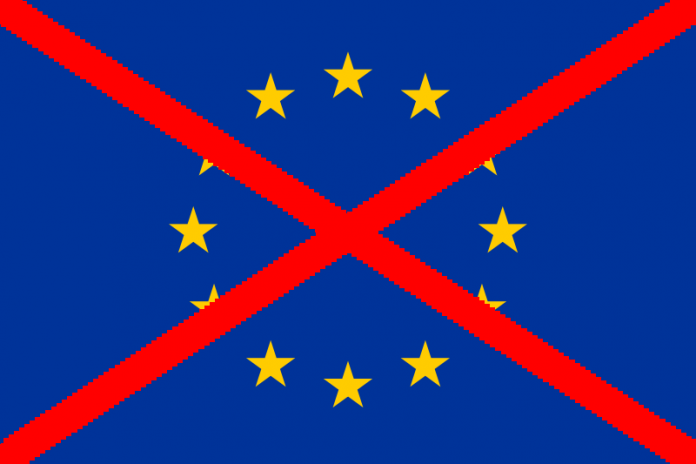
EU regulations delenda est

In a world where global power is measured by military strength, technological innovation, or cultural influence, it is striking that the European Union, without housing major tech giants or centers of disruptive innovation, has turned bureaucracy into a tool of global power. It shapes the behavior of global companies, including American big tech firms, which adapt their products to comply with European norms. This phenomenon is known as the “Brussels Effect” and has positioned the EU as the world’s regulatory superpower, fueling growing tensions, particularly with the United States following the re-election of Donald Trump.

The European market comprises 450 million consumers with significant purchasing power, making it an essential destination for global companies. However, access to this attractive market comes with detailed regulations based on the precautionary principle, ostensibly prioritizing consumer and environmental protection, and enforced by an efficient bureaucracy capable of implementing and enforcing rules with precision. This combination encourages companies to align their global operations with European standards, as maintaining different product versions for each region is costly and complex. In practice, this exports European standards worldwide.

American big tech companies such as Apple, Google, and Meta exemplify the impact of the “Brussels Effect,” as they face the requirements of legislations like the Digital Markets Act (DMA) and the Digital Services Act (DSA). These laws have forced companies to overhaul their business models, often at high cost and with significant implications. The DMA, for instance, forced Apple to allow alternative app stores and third-party payment systems on iOS, leading the company to announce, in 2024, global changes to its app policy affecting users even outside Europe, with cost estimates in the billions of dollars to restructure its infrastructure and address revenue losses from the App Store.

Google, under the same regulation, was required to offer alternatives to its search engine on Android and to unbundle services such as YouTube, impacting its global strategy and requiring significant investments in new operating systems and interfaces. The company faced potential fines of up to 10% of its global revenue for non-compliance.

Meanwhile, Meta, under the DSA, was required to invest billions in content moderation systems, a serious imposition that openly seeks to control freedom of expression on a global scale. Operational costs increased by around 20%, according to market analysts. These costly adjustments are ultimately coercive due to the weight of the European market, demonstrating how Brussels shapes corporate behavior on a global scale.

These successive impositions and forced adaptations illustrate precisely Friedrich Hayek’s warning about the dangers of central planning. By replacing spontaneous order with top-down, uniform rules imposed by a technocratic authority, the capacity for local adaptation and respect for market complexity is lost. In this scenario, the European Union increasingly takes on the features of a regulatory Leviathan, a body concentrating disproportionate power in the hands of bureaucrats far removed from citizens, reducing freedom of choice and stifling innovation.

Day Ten – German Victory in the Battle of France – Ten Days in Sedan

World War Two
Published 3 Aug 2025

May 19, 1940. Ten days into Fall Gelb, Guderian’s panzers thunder toward the Channel, poised to slam a steel ring around nearly half a million Allied troops. In Paris, Paul Reynaud ousts Daladier and Gamelin, calling back Marshal Pétain and General Weygand as France’s last throw of the dice. The pocket is almost shut, yet the story is far from over. Is there time for one more twist? Keep watching as we follow the fight to its end and discuss the aftermath of this campaign.
(more…)

TERF Island

Filed under: Books, Britain, Health, Media, Politics — Tags: , , , , — Nicholas @ 03:00

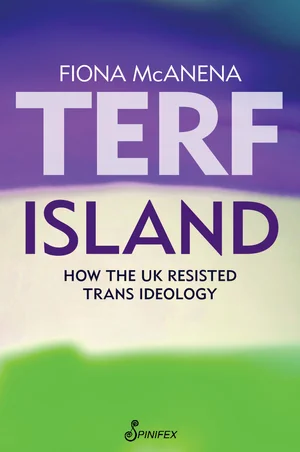
At Spiked, Jo Bartosch reviews Fiona McAnena’s TERF Island: How the UK Resisted Trans Ideology:

The truth is, before they are revered, history-makers are almost always reviled. From universal suffrage to the abolition of the slave trade, the freedoms we take for granted today began as the unpopular obsessions of the awkward and bloody-minded. Fiona McAnena’s TERF Island: How the UK Resisted Trans Ideology charts how just such a small group of determined women – mocked, maligned and misrepresented – dragged sex-based rights back from the brink, often at huge personal cost. It’s the story of how they were hated before they became feted.

Part battle manual and part whodunnit, TERF Island is an insider’s chronicle of how a scrappy, unfunded grassroots movement of mostly middle-aged women outmanoeuvred a lobby bankrolled by billionaires and cheered on by multinational corporations and well-intentioned human-resources departments.

I have been involved in the TERF wars for a decade, and I know McAnena herself is no bystander. Formerly a volunteer at Fair Play for Women and now director of campaigns at Sex Matters, she has done her time in the trenches, too. Each chapter is a vivid, accurate and compelling profile of a key figure in the movement, including Transgender Trend’s Stephanie Davies-Arai, Fair Play for Women’s Nicola Williams, Let Women Speak founder Kellie-Jay Keen and Maya Forstater, whose case against her employer established gender-critical beliefs as protected in UK law – all women I’m proud to know.

It’s almost hard to remember how recently it was considered heresy to say, to use the words popularised by Keen, that “a woman is an adult human female”. In April, the Supreme Court confirmed this truth in law. The BBC may still choke on it, but the legal precedent stands. Yet only a few years ago, saying this out loud could land you in a police station, on the dole queue or even in hospital.

McAnena captures the febrile atmosphere of those early days, when stating a biological fact was enough to have you smeared as a fascist. She takes us inside the campaigns that exposed the lunacy of housing violent male offenders in women’s prisons, the cruelty of sterilising confused children and the institutional capture of sporting organisations. Now, a decade after Davies-Arai launched Transgender Trend, barely a week passes without a professional body or council quietly reversing a discriminatory “trans inclusive” policy. That didn’t happen by accident.

What makes TERF Island so readable is that it doesn’t just document the headline moments. McAnena records the unglamorous grind: women lobbying MPs, poring over policy documents and calmly dismantling pseudoscience from stalls in the high streets of British towns. As McAnena puts it, the campaign against gender self-identification, which galvanised the resistance, brought “hundreds of women on to the streets and thousands more online to defend their sex-based rights”. “It was the catalyst for greater awareness, resistance and campaigning for the rights of women and children in the face of the demands of transgender ideology.”

HBO’s Rome – Ep 8 “Caesarion” – History and Story

Adrian Goldsworthy. Historian and Novelist
Published 19 Feb 2025

Continuing series looking at the HBO/BBC co production drama series ROME. We will look at how they chose to tell the story, at what they changed and where they stuck closer to the history.

QotD: The impeachment of Andrew Johnson

Filed under: Government, History, Law, Politics, Quotations, USA — Tags: , , , , — Nicholas @ 01:00

Over the past few weeks, it has surprised me how seldom the name Andrew Johnson has come up. Sure, every time it has been mentioned that Donald Trump is the third (or fourth — or third and a halfth) President to be impeached, Johnson, the first, is given a brief mention, but very few details are offered of a story almost as stupid, insane, villainous, and corrupt as what’s going on now.

Almost.

I am greatly obliged to my old friend revisionist historian Jeffrey Rogers Hummel, who encouraged me to look into the Johnson impeachment. Johnson was the 17th President of the United States, rising to that office when his predecessor, Abraham Lincoln, was assassinated. Johnson had been a southern Democrat Senator, unjustly reviled by both sides, but remained in the Senate throughout the War Between the States and was chosen by Lincoln to help spread the appeal of a crypto-Republican “National Union” party dedicated to the peaceful and humane reintegration of those states that had seceded and been militarily crushed.

Lincoln’s Secretary of War, Edwin M. Stanton, however, held a somewhat different view. He thought he should be running the government. For various unsavory reasons — that would fill a book or two by themselves (hint: look up Grenville M. Dodge) — Stanton wanted to grind the South down even further under the Northern boot-heel, establishing, for example, extra-constitutional military zones to supervise the phony replacement “carpet-bag” state governments that the North had imposed on Southern states.

Once Johnson became President, he fired Stanton — whom more than one historian believes actually engineered Lincoln’s assassination — immediately running afoul of a little ditty called the 1867 Tenure of Office Act, which it appears was specifically cobbled together to keep Johnson from operating his own Presidency, leaving the nascent Stantonian Police State intact. Stanton and his cohorts impeached Johnson; his conviction failed by one vote in the U.S. Senate. Stanton resigned and skulked off to the garbage-heap of history.

L. Neil Smith, “Andrew and Donald”, Libertarian Enterprise, 2019-12-22.

Powered by WordPress


