
Quotulatiousness

July 14, 2025

The “War of the Sexes” is over … men now expected to surrender and go back to doing what women want

Filed under: Health, Media, Technology — Tags: , , , , — Nicholas @ 05:00

The more I read about the state of male-female interactions on the dating scene (such as it is), the more grateful I am that I’m decades out of that killing ground. Male survivors have clearly decided that the risks are far greater than the potential relationship rewards and individually withdrawn in large enough numbers that the “dating scene” is a shadow of what it once was in the pre-swipe-left era. Janice Fiamengo responds to a “men, come back!” plea from Rachel Drucker in the New York Times:
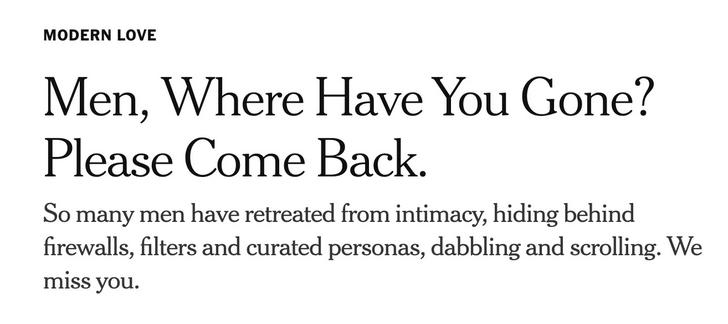
The question of where men have gone, in the title of Rachel Drucker’s New York Times op/ed, is surely disingenuous. Drucker thinks she knows: men have disappeared into social media posting, digital lurking, uncommitted sexting, and porn. Allegedly afraid of emotional intimacy, they are no longer “showing up” for women. Drucker addresses men directly, diagnosing their feelings: “You’ve retreated — not into malice, but into something softer and harder all at once: Avoidance. Exhaustion. Disrepair.”

Well, maybe. Maybe not.

Drucker’s article is part social lament, part personal ad, and like many statements by modern women about men, it is notable for its presumption. Drucker seems to think she can call off the sex war simply by saying she’s had enough. Men were never supposed to stop being available to women. Drucker mourns a lost time when men “asked questions and waited for the answers”, when they “listened — really listened — when a woman spoke”. It doesn’t seem to occur that men have been listening and have heard women’s messages, loud and clear.

Drucker goes so far as to express nostalgia for a time of male sexual pursuit, when having a woman on one’s arm was a way for a man to prove himself and impress other men. “It wasn’t always healthy”, she says in one of her many massive understatements (ignoring the barrage of condemnation leveled against such men) “but it meant that men had to show up and put in some effort”.

Drucker produces no evidence of men’s lack of effort, and it is not clear that her personal anecdotes — all culled, it seems, from her monied Chicago milieu — are representative. I know many men, including young men, who are still willing to pursue romantic relationships with women; many put in a lot of time and thought. But it does ring true that at least some portion of men are far more wary than in previous eras, unwilling to risk the potential hell of divorce or of a false accusation in a culture that believes women and belittles men.

Some men have simply come to the conclusion that modern women aren’t, in general, all that likable — neither marriage material nor viable candidates for motherhood.

As far as female pronouncements about men go, Drucker’s piece is not the worst. It does not hector or accuse (at least, not much), and Drucker expresses some genuine liking for men. But it’s not clear how much that is worth when she is so oblivious to men’s points of view and unaware that at least some of the onus for re-engaging men must fall on women. Drucker’s blind spots and unearned certainty turn her wistful dirge into a tone-deaf commentary on contemporary sexual politics.


The article begins with a restaurant, where Drucker notes the absence of men. There are women together, doing what women do, but almost no coupled men. And in her own life, Drucker notes, there has been retreat. It isn’t just her, she’s sure: it’s a collective act in which men are removing themselves from women’s lives, no longer “trying to connect”.

Drucker is part of the problem, though she doesn’t seem to recognize it. She admits that she “spent over a decade” working for Playboy and more hardcore sites to get men addicted to digital pornography. Part of her job was “to understand exactly what it took to get a man to pay for content he could easily find for free”. She does not seem to regret this work or recognize its damage; on the contrary, she exults that it helped her understand men’s deepest selves.

Her characterization is simplistic and contemptuous: “We knew what worked”, she boasts. “It wasn’t intimacy. It wasn’t mutuality. It was access to stimulation — clean, fast and frictionless. In that world, there’s no need for conversation. No effort. No curiosity. No reciprocity.”

If this is what men fundamentally are to Drucker — sex bots without emotion or desire for reciprocity — why is she so disappointed that they are no longer around?

Day Seven – Ghost Division! – Ten Days in Sedan

Filed under: Britain, France, Germany, History, Military, WW2 — Tags: , , , , , , — Nicholas @ 04:00

World War Two
Published 13 Jul 2025

May 16 1940: Our WW2 Blitzkrieg documentary, Ten Days in Sedan, continues as Winston Churchill arrives in Paris. The Prime Minister still has hope but he’s shocked to see the French burning documents and preparing to evacuate. Meanwhile French and German tanks slug it out in Stonne, Guderian reaches Montcornet, and Rommel leads his Ghost Division far behind French lines.

Chapters
00:00 Intro
00:58 Recap
01:38 Stonne
03:05 Panzers Drive West
07:02 New French Plan
12:23 Rundstedt’s Halt Order
16:06 Ghost Division
21:53 Churchill in Paris
(more…)

Emperor Hadrian and Antinous the God

Filed under: Books, Europe, History, Religion — Tags: , , , , , , — Nicholas @ 03:00

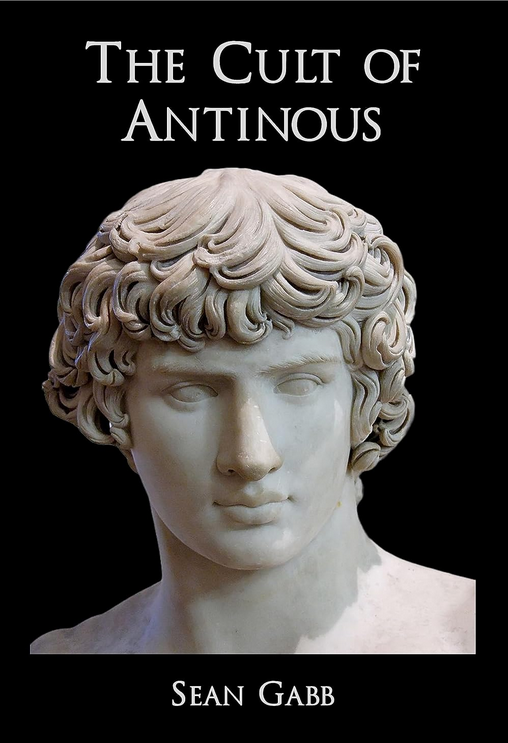
Reginald Godwyn reviews a new monograph from Dr. Sean Gabb:

Sean Gabb’s The Cult of Antinous is not a hagiography. It is something better: a quiet, erudite demolition of pious lies from both the ancient and modern world. The lecture-turned-book is a brisk, sardonic tour through the most decadent cult of the Roman world, and one of its most effective. The boy died, yes — but what followed was a miracle of political opportunism and spiritual success. Gabb does not flinch from the disturbing parts. Nor does he genuflect before the fashionably uncritical idolatry now surrounding Antinous as gay icon. This is not a work of celebration. It is a work of historical thought, dressed as a lecture and sharpened with scepticism.

It begins, as it must, with a photograph of Hadrian and Antinous — stone fragments now housed in the British Museum, staring out from beneath museum glass and centuries of self-serving speculation. “Hadrian is on the left”, Gabb says, “Antinous on the right”. But from then on, it is the boy — not the emperor — who takes centre stage. The story is simple enough. Antinous was a Bithynian youth, met Hadrian at around age twelve, became his lover, travelled with him, and died in the Nile under suspicious circumstances. Hadrian made him a god. Cities were built. Statues were raised. Coins were minted. Shrines were erected. And the worship spread quickly and widely—and in ways that make some modern historians uncomfortable.

Gabb’s treatment of all this is not exactly kind, but it is always fair. He reminds us that, when it comes to Antinous, we know almost nothing. The written sources are sparse: Dio Cassius gives a few lines; the Historia Augusta offers rumour. Most of what we “know” is based on “could have”, “may have”, “might have”. And yet on this we have built dissertations, operas, novels, and now neopagan blogs filled with inverted pentagrams and airbrushed torsos. Gabb is not impressed. His repeated refrain is “castle of supposition”. And rightly so. Royston Lambert, he notes, was especially fond of these castles.

But for all that, there is a real story here. Gabb walks us through the ancient views of sex, pausing only to make the necessary disclaimer for his mixed audience of Chinese undergraduates and English middle class language students:

    Please be aware that other civilisations frequently have or had views of sexual propriety different from our own. This lecture will discuss, and sometimes show depictions of, sexual relationships between adults and persons somewhat below the present age of consent. Some of these relationships involve disparities of legal status. Though not recommended for imitation in modern England, such relationships are nowhere explicitly condemned. The lecture will also not avoid language that many may consider indelicate or obscene.

What follows is a lesson in ancient sexual economics. Among Greeks, boy-love was structured: older men pursued beautiful adolescent boys, usually between 12 and 17, who were supposed to receive but not enjoy. The Romans were less sentimental: they cared only who did the penetrating. “To use was fine. To be used was shameful.” Gabb’s phrasing here is withering, but accurate. There is no anachronistic moralising — just the dry, clinical reconstruction of a culture with different priorities.

Tiberius: Rome’s Most Underrated Emperor?

Filed under: Books, Europe, History — Tags: , , , , — Nicholas @ 02:00

The Rest Is History
Published 31 Jan 2025

The Roman historian Suetonius’ biography of the controversial Emperor Tiberius is one of his most shocking and salacious, condemning Tiberius to infamy. But was Tiberius really the perverted monster Suetonius would have us believe? Born of Rome’s most illustrious family and a sacred bloodline — the Claudians — Tiberius’ mother Livia was unceremoniously taken from his father while she carried him, to marry the great Emperor Augustus. So it was that Tiberius grew up in the very heart of imperial power, proving himself intelligent, and a superb military commander. But, following the unforeseen deaths of Augustus’ young heirs, he found himself primed to become the next Caesar of Rome. The reign that ensued would prove largely peaceful, prosperous and stable, though Tiberius himself was increasingly plagued by paranoia and fear. While the last of Augustus’ bloodline were wiped out one by one, he retired to Capri, much to the horror of the Roman people. Before long, rumours had begun percolating of the heinous deeds, sick proclivities, and vile abominations Tiberius was practicing on his pleasure island …

Join Tom and Dominic as they discuss Tiberius, the impressive though widely lambasted second emperor of Rome. What is the truth behind the sordid myths and mysteries of his reign …?

00:00 The bad emperor?
06:45 Was he depraved?
08:30 The Roman version of the Kennedys
13:29 How he became the heir
16:50 The greatest general of his generation
17:53 Tiberius is manoeuvred into the succession
21:23 Tiberius the emperor
(more…)

QotD: The inevitable endgame of power-for-power’s-sake

Filed under: Books, Government, Liberty, Quotations — Tags: , , , — Nicholas @ 01:00

One reason Hobbes’s “state of nature” thought experiment is so seductive is because, though the premise is glaringly false, the conclusions are true. Every Dissident should memorize this, it’s the most important passage in modern philosophy (if not the whole of philosophy, from Socrates on):

    I put for a general inclination of all mankind a perpetual and restless desire of Power after power, that ceaseth only in Death. And the cause of this is not always that a man hopes for a more intensive delight than he has already attained to, or that he cannot be content with a moderate power: but because he cannot assure the power and means to live well, which he hath present, without the acquisition of more.

Or, if you prefer it in slightly more modern English:

    Now I will tell you the answer to my question. It is this. The Party seeks power entirely for its own sake. We are not interested in the good of others; we are interested solely in power. Not wealth or luxury or long life or happiness: only power, pure power … Power is not a means, it is an end. One does not establish a dictatorship in order to safeguard a revolution; one makes the revolution in order to establish the dictatorship. The object of persecution is persecution. The object of torture is torture. The object of power is power. Now do you begin to understand me?

That’s the bedrock of human existence, right there: Power. Everything that isn’t Power is nothing, until Power requires it; when it’s no longer useful to Power, it becomes nothing again. Nietzsche would’ve understood O’Brien perfectly.

But please note: Human existence.

Human — animals aren’t like that. They can’t be. They’re not mere automata, as Descartes would have it, but they’re obviously not self-conscious, either. All that Green hooey about animals living in harmony with their environment is, nonetheless, true. They can’t do any other, because they’re animals. Only humans can see that extra step ahead, all the potential dangers that will never let him rest content with the power he has.

And existence – not life, existence. The world Hobbes and O’Brien describe with such terrifying eloquence isn’t life, it’s mere existence. O’Brien couldn’t see where his philosophy led, but Hobbes could:

    Whatsoever therefore is consequent to a time of War, where every man is Enemy to every man; the same is consequent to the time, wherein men live without other security, than what their own strength, and their own invention shall furnish them withal. In such condition, there is no place for Industry; because the fruit thereof is uncertain; and consequently no Culture of the Earth; no Navigation, nor use of the commodities that may be imported by Sea; no commodious Building; no Instruments of moving, and removing such things as require much force; no Knowledge of the face of the Earth; no account of Time; no Arts; no Letters; no Society; and which is worst of all, continual fear, and danger of violent death; And the life of man, solitary, poor, nasty, brutish, and short.

This is the end of power-for-power’s-sake. O’Brien was wrong about that boot stomping on a human face, forever. The “state of nature” doesn’t actually exist IN nature, but Big Brother’s Party created it artificially.

But for such a creation to continue, as O’Brien shows, it must be completely static … and that’s impossible. The opposite of Power is Entropy, and Entropy always wins in the end.

Severian, “Salute the Hat”, Founding Questions, 2021-12-07.

Powered by WordPress


