
Quotulatiousness

June 14, 2025

Mere disagreement on a political point does not rise to the level of “causing harm” … even in Canada

Filed under: Cancon, Education, Media, Politics — Tags: , , , , — Nicholas @ 04:00

In The Free Press, Rupa Subramanya reports on a Canadian school board’s attempt to paint a parent’s (valid) objection to the forced speech of modern-day “land acknowledgements” as causing “harm” and not acceptable:
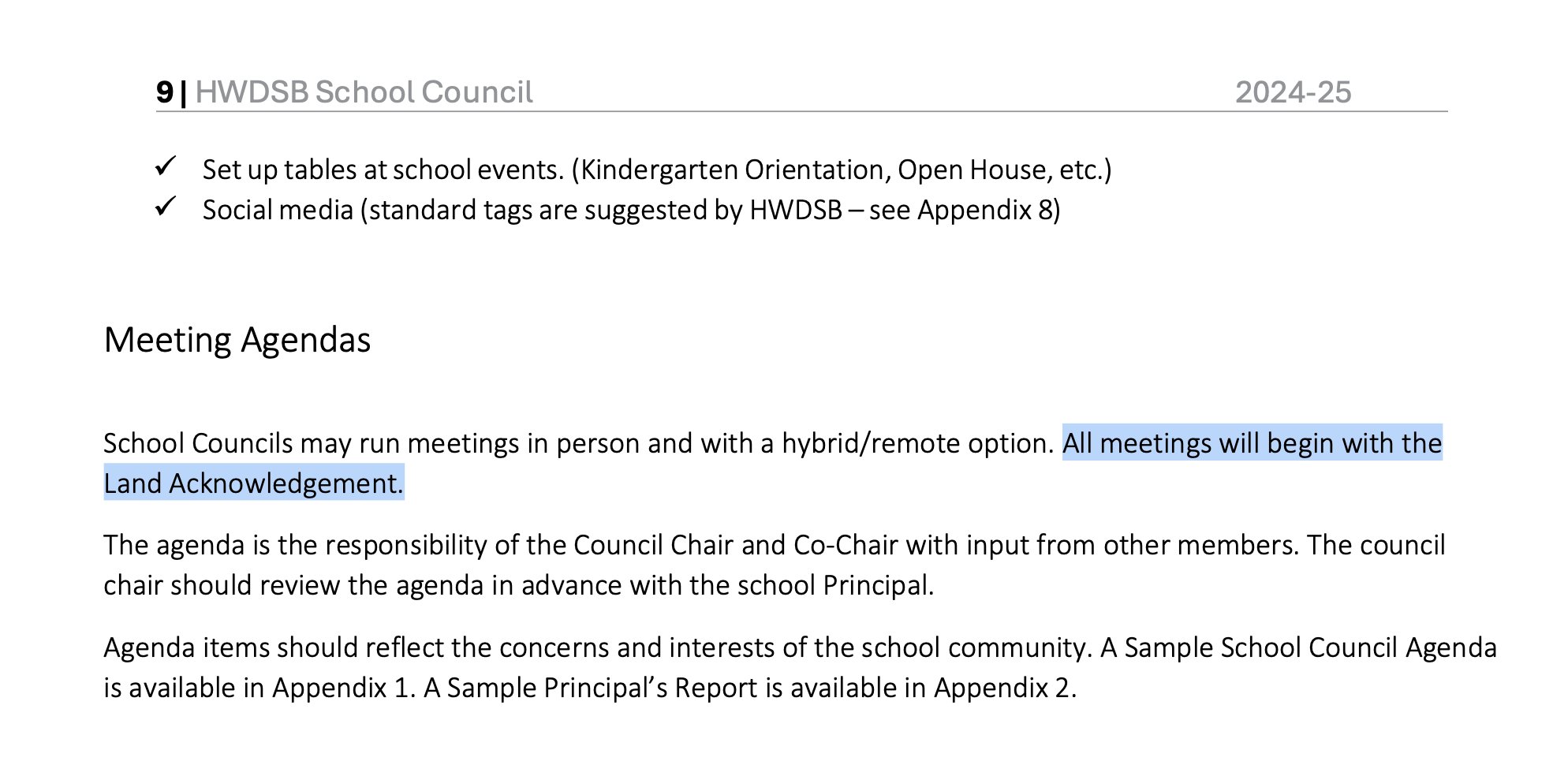
Late last month, a Canadian school board informed Catherine Kronas, a parent serving on her child’s local school council in Ontario, that her role was being “paused” for allegedly causing “harm” and violating board policy.

Her offense? “Respectfully” requesting during an April 9 council meeting that her objection to the land acknowledgment be recorded in the meeting minutes. Kronas argued that the Hamilton-Wentworth District School Board lacks an official mandate to require land acknowledgments at school council meetings and that such statements “undermine the democratic process”, amount to “compelled speech”, and are “divisive” and “inappropriate”.

Kronas, who has served on the board for the past year and like all board members is a volunteer, has since been barred from attending upcoming meetings, including virtual ones, while the board reviews the allegations.

“They’ve ostracized me and painted me as someone who harms others,” Kronos told me, pointing to the letter she received in May.

Parents who once expressed similar concerns about land acknowledgments privately have all “slunk away” and “gone silent”, she said. She is convinced that if even one other parent had publicly backed her objection, she wouldn’t have been suspended.

“I have no support,” Kronas says.

But Kronas is far from alone in her views. A new poll shows that a majority of Canadians — 52 percent — reject the idea that they live on “stolen” indigenous land. In Kronas’s own region, Hamilton-Niagara, a suburb just outside Toronto, 50 percent said “no” to the concept.

There’s also a political shift underway that reflects this: New legislation from Ontario premier Doug Ford that is widely viewed as effectively anti–diversity, equity, and inclusion (DEI) aims to roll back some of the ideological activism that has spread through school boards. The bill will, among other things, ban the renaming of schools based on the belief that historical figures are linked to “systems of oppression” and mandate the return of school resource officers, a form of law enforcement, in jurisdictions where police services provide them. In recent years, many Ontario school boards have removed police from schools on the grounds that their presence causes harm to “racialized” groups — a peculiarly Canadian euphemism for non-white people that casts them as perpetual victims in need of saving — and makes at least this brown Canadian feel like something is inherently wrong with us.

Damian Penny’s diligent recycling efforts pay off

Filed under: Media, Middle East, Military, Weapons — Tags: , , , — Nicholas @ 03:00

At Rigid Thinking, Damian Penny has to be given top marks for recycling this week, although it’s not newspapers or plastic cartons he’s getting to do twice the work:

Please keep psychotic Twitter accounts with animated-squirrel avatars in your thoughts and prayers this weekend. They’re going through a tough time right now.

And, once again, the point I made last week is proven:

    Did this operation really do as much damage as the Ukrainians Israelis say? I dunno. I don’t begrudge the Ukrainians Israelis their own propaganda weapons.

    (Plus, these are Russian planes Shah-era jets for which getting parts is a massive pain in the ass, so there’s a good chance they might have just exploded on their own, like a Soviet television set left plugged in overnight.)

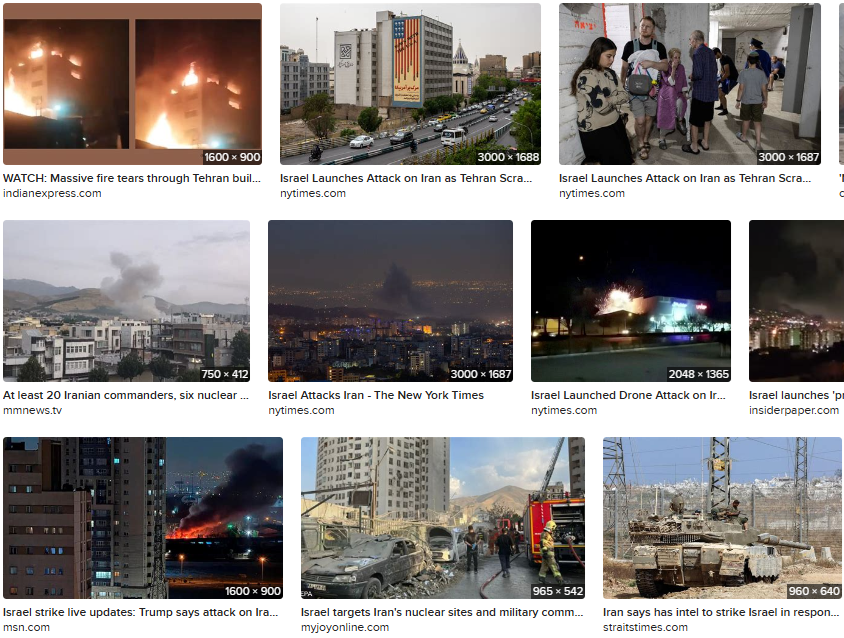
    But the mere fact that Ukraine Israel was able to pull this off at all, right under the Russians’ Iranians’ noses, is a game changer. The message to Czar Vladimir the Mullahs, that we can strike literally anywhere, couldn’t be more clear.

    We’ll get the whole story from the Ukrainian Israeli side soon enough. What I’m chomping at the bit to see is what’s in the Russian Iranian archives someday, when Putin the “Islamic Republic” is gone and McDonald’s has been restored to its rightful place in Red Square Azadi Square.

    A few weeks after the Russian invasion, when it became clear that they were in for a much harder time than anticipated, I wrote about how what would appear to be an authoritarian government’s great advantage over liberal democracy — the ability for its leaders to just “get stuff done” instead of having to put up with the horse-trading and lobbying and arguing and mean tweets which make can make things so exhausting and frustrating for a more open society — eventually becomes a disadvantage.

    […]

    If the leader can do whatever he wants without any serious resistance, everyone else learns to keep their heads down and not do nor say anything which will make him angry.

    Because you really, really wouldn’t like him when he’s angry.

    As a result, the guy in charge is surrounded by sycophants and yes-men who will nod along and feign enthusiasm for whatever he wants to do, even if they know it’s really risky and/or really, really stupid.

    That filters down to the drones (the human kind) and proles, too. I’m not a betting man, but I’d bet my entire hoard of Hawk Tuah meme coins that Russian Iranian intelligence services actually knew, or at least strongly suspected, that something like Operation Spiderweb Operation Rising Lion was in the works.

    Good for them. Now, you go and tell the Czar Ayatollah that there are Ukrainian Mossad operatives (and, at the risk of wishcasting, some Russians Iranians brave enough to assist them) thousands of miles away from Ukraine Israel, ready to take out much of the strategic bomber fleet air defences.

    Ukraine Israel, by contrast, is an open enough society to learn from its mistakes, see what actually works, and adapt accordingly. Russia Iran is a closed society which keeps doubling down on what it was already doing, and woe is you if you suggest a change of course.

    It doesn’t matter how much stronger you are in terms of weaponry, if your society and political system punishes anyone who might tell the leader he’s wrong.

Well, that was surprisingly easy to write about. Here’s hoping I don’t get lazy and get into the habit of throwing on old reruns, assuming you kids won’t know the difference.

Surviving on Tulip Bulbs during World War 2 – Dutch Hunger Winter

Filed under: Europe, Germany, History, Military, WW2 — Tags: , , , , — Nicholas @ 02:00

Tasting History with Max Miller
Published 14 Jan 2025

Mashed potatoes, red cabbage, carrots, kale, and tulip bulbs

City/Region: The Netherlands
Time Period: 1945

The Netherlands was relatively well off for food during much of WWII up until the harsh winter of 1944-1945. A combination of factors like German occupation, extreme weather conditions, and lack of Allied relief resulted in the population existing on only 500 calories a day. Tulips, a major Dutch export, were stored as dried bulbs, and the government issued documents that instructed people on how to prepare them safely.

If you make this dish, be sure to use organic bulbs and remove the yellow sprout in the center of the bulb completely as described in the instructions below. The yellow center is what can make you sick.

The flavor of the dish comes from the vegetables, and the unique flavor of the bulbs is lost in everything else. Save at least one bulb back before you mash it to taste it. Different varieties of tulip bulbs are supposed to have different flavors, and mine had a kind of earthy metallic sweet taste that was quite unlike anything I’ve ever had.

    Stamppot with Tulip Bulbs
    1 kg of vegetables, 1/2 kg of potatoes, 1/2 kg tulip bulbs, salt, oil.
    Clean and finely chop the vegetables. Scrub the potatoes and quarter them. Clean the tulip bulbs. Put everything in a pot with a little water and salt. Boil for 30 to 45 minutes. Mash everything and add oil to taste.
    — Dutch State Office for Preparation of Food Distribution, 1945

(more…)

QotD: University students or NPCs?

Filed under: Education, Quotations, USA — Tags: , , , , — Nicholas @ 01:00

When I first started teaching, for instance, I had to constantly remind myself that my charges were just teenagers. At most they were 21, 22 tops, which is basically the same thing. So much of the crap they pulled, then, was just typical teenager stuff. All they really needed to straighten themselves out was two good head knocks and a swift kick in the ass, which life would soon provide. I did exactly the same sort of dumb stuff back in my own undergrad days – maybe not as bad, but it was a difference of degree, not kind. They’d be ok in a few years.

A few semesters on, and that no longer applied. Sure, sure, they were still teenagers, and still pulled typical teenager capers … but a new set of behaviors crept in. I can’t describe them exactly, in detail, but the overall impression was: here’s someone doing a pretty good impersonation of a teenager. Most every kid goes through the faux-sophisticate stage, usually somewhere around age 12, and this kinda looked like that — young kids pretending to be a lot older — but it also looked a lot like the opposite end of the spectrum. Not quite “hello, fellow teens!” — not yet — but there was something like that going on, too. It was weird, but I figured it was mostly in my head — I’ve always been a grouchy old man, but now I was actually chronologically old enough to let my freak flag fly, so I assumed that’s what I was doing. They’re not changing, I am

Fast forward a few more semesters, and nope, it’s definitely them. The kids at the tail end of my career still looked like bargain basement Rich Littles, doing impersonations of teenagers, but their act was terrible. Remember a few years back, when Facebook or Twitter or whoever tried to make an AI chat bot, and it immediately turned super racist? Not that these kids were racists — they were the furthest thing from that — but they all seemed to have a small stock of crowdsourced responses. And that’s ALL they had, so no matter what the situation, they’d shoehorn it in to one of their canned affects, because that’s all they had.

By the very end, interacting with them was like playing one of those old text-adventure games from the very dawn of the personal computer, like Zork. They’d respond to commands, but only the right commands, in the exact word order. No deviations allowed, and of course their responses were equally programmed.

Severian, “Terminators”, Founding Questions, 2021-12-04.

Powered by WordPress


