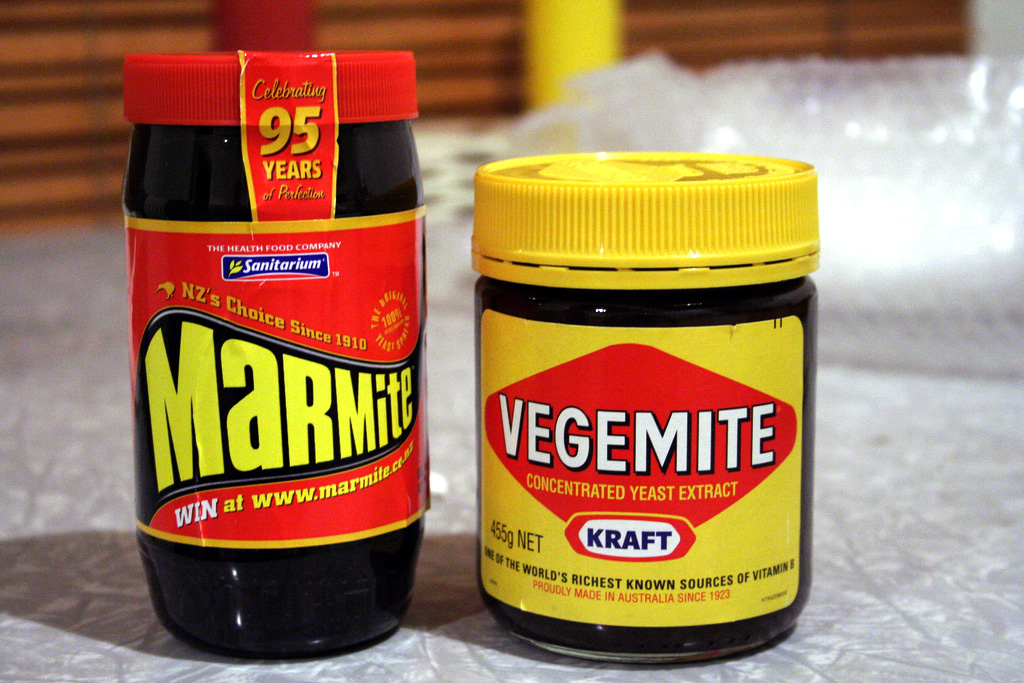
In the National Post, Jesse Kline points out that Canadian food label regulations have become so nit-picky that they prevent safe and accurately labelled foods from Australia, Britain, and other countries from being sold here:
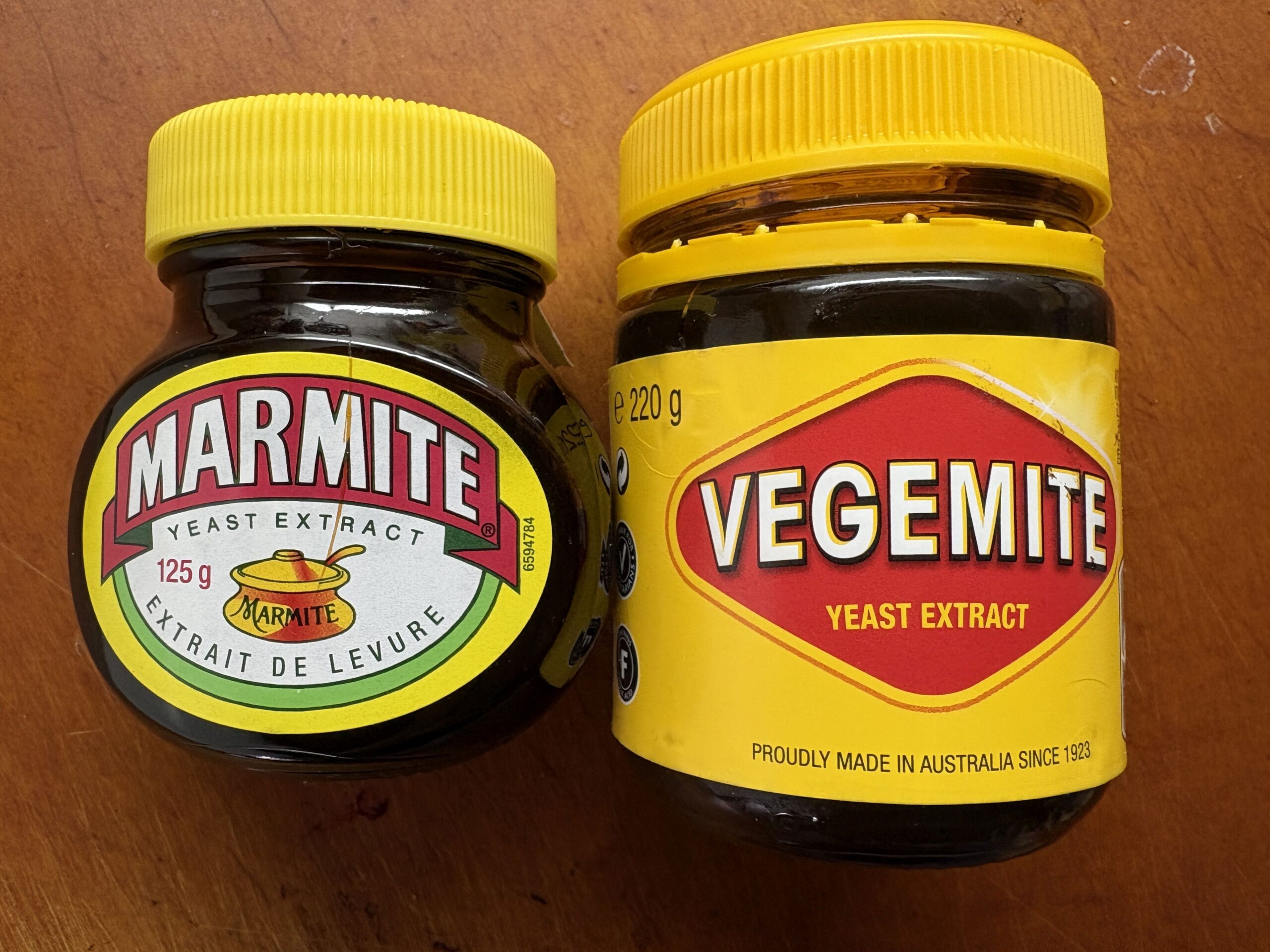
Marmite from the UK and Vegemite from Australia, two of the products at risk of Canadian over-regulatory twitches.
Shortly after winning the Liberal leadership, Mark Carney travelled to Paris and London to shore up our trading relationship with our European allies.
Yet it is noteworthy that Canada is one of only two countries that has not yet ratified the United Kingdom’s accession into the CPTPP, meaning that we don’t enjoy the benefits of free trade with the country with whom we share a system of government and a King. Meanwhile, France is one of a handful of countries that has yet to ratify the free-trade agreement between Canada and the EU.
If we can’t even agree to implement trade deals that have already been negotiated and agreed upon with countries that have such deep historical ties to Canada, what hope do we have of improving trade with our other partners around the world?
Part of the problem is that Canada refuses to follow the example of countries like Australia and New Zealand, which successfully phased out their own systems of supply management years ago with great success.
As a result, supply management has proven to be a sticking point in virtually every trade negotiation we’ve entered into, and is a constant source of tension even among countries we have free-trade deals with.
But we have also fallen into the trap, along with our European friends, of over-regulation. Modern bureaucratic states impose so many restrictions on commercial enterprises, it often becomes uneconomic to market their products in other countries.
Canada, for example, imposes stringent labelling requirements to ensure product information is available in both English and French, and that nutritional information conforms to our very specific requirements.
None of this is necessary, especially in an age in which we can hold a phone up to a box of French crackers to see what it says. But the problem extends far beyond language or disagreements over the recommended daily intake of fibre.
As the CBC reported on Monday, Leighton Walters, an expat from Down Under who owns several Australian-themed coffee shops in the Greater Toronto Area, was told earlier this year by the Canadian Food Inspection Agency (CFIA) that he was no longer allowed to sell the roughly $8,000 worth of Vegemite he had imported because it contains … too many vitamins.
Under current regulations, only a select list of products are allowed to contain added vitamins. Vitamin B-rich spreads like Vegemite and its British equivalent Marmite are not among them because … well, just because.
A similar situation arose a decade ago when reports that the government had ordered Marmite and the Scottish drink Irn-Bru to be taken off the shelves of a British supermarket in Saskatoon caused outrage on both sides of the pond.
The CFIA later clarified that only versions of those products formulated specifically to meet Canadian requirements — i.e., those that don’t contain added vitamins or a specific type of food colouring — are allowed to be sold in this country. Because heaven forbid we trust that other advanced Commonwealth nations would have reasonable enough food safety standards.
We have quite literally regulated ourselves into a corner. We can’t even import spreads like Marmite and Vegemite — which have been staples of British and Australian diets for decades — not because they’re unhealthy or unsafe, but because they don’t conform to our nit-picky regulations.