
September 7, 2011
Brendan O’Neill – The Riots: A Mob Made By The Welfare State?
September 2, 2011
Doubts about Britain’s next proposed high speed rail line
The Economist is usually pretty gung-ho about high speed rail development in general, so this article expressing some serious doubts is noteworthy:
Earlier this year the coalition government announced details of a £32 billion ($52 billion) super-fast railway line from London to Manchester and Leeds via Birmingham (see map). Philip Hammond, the transport secretary, claims it will be a “fast track” to prosperity. If the project goes ahead—and there is still, just, time to reconsider—the final route, and Stoke’s transport fate, will not be decided until 2012 at the earliest. The first trains won’t reach Birmingham until 2026, and Leeds and Manchester until 2032-3.
There are practical reasons to favour a new north-south line. Good infrastructure lasts a long time: Britain is still enjoying the fruits of Victorian railway investment. At some point in the next 20 years the existing west-coast main line will face a capacity crunch. Upgrading lines is disruptive and expensive, so constructing a new one appears sensible. The vision of a futuristic train scything across Britain at 250mph (400kph) is appealing.
But although the plan has cross-party support, the British public is not entirely convinced. Objections have so far focused on two concerns. First, the environmental damage, particularly to the Chilterns, an area of “outstanding natural beauty” and home to many well-off voters. Second, the business case for the line: the projected doubling of long-distance rail use by 2043 seems ambitious.
August 18, 2011
August 16, 2011
Influence of the education system on the London riots
Neil Davenport wonders how changes to the English education system may have influenced the rioters’ attitudes:
Some young people, asked by journalists why they rioted, blamed their violence on the scrapping of the educational maintenance allowance (EMA), the hike in university tuition fees or rising youth unemployment. These apparently radical platitudes sound obviously rehearsed, designed to please liberal journalists. [. . .]
No doubt there was a hardcore of repeat delinquents smashing in windows. But many more of the rioters seemed like the normal, and likeable, teenagers that I have taught in schools in London over the past decade. In the capital, some 91 per cent of the riotous offenders were under 25, many of them aged between 16 and 18. As one commentator quickly observed, this means they were all educated under the New Labour government (1997 to 2010). It makes you wonder what they learnt at their New Labour-era hi-tech schools. Perhaps the real lesson they learnt is that nothing should be allowed to dent their self-esteem, and nobody should ever be allowed to ‘victimise’ or ‘bully’ them or prevent them from doing what they like.
In recent years, young people have internalised a corrosive sense of entitlement, where they really do believe that the world owes me, me, me a living. Since this retrograde outlook is far more institutionalised in London’s education system than elsewhere in Britain, it is not that surprising that a hardcore of rioting took place in the capital rather than in, say, Scottish cities. Their education system is largely separate from England’s.
‘New Labour kids’ have been more flattered, mollycoddled and freed of responsibilities than any generation before them. These days, as young people progress through the education system, they learn that there is a whole raft of medical reasons why they can’t write neatly or behave properly in class. They also know that if their exam grades are slightly disappointing, they can always blame the teachers. And New Labour’s social-inclusion charter also means that schools cannot automatically throw kids out, even in the sixth form, for not working hard enough or for their poor behaviour. Local education authorities can fight to ensure that a suspended child is reinstated and then attack the school for failing to provide ‘adequate support’ to address the pupil’s ‘psychological issues’.
August 15, 2011
The London rioters are not “Thatcher’s grandchildren”
Brendan O’Neill has little patience for what he refers to as an “Idiot’s Guide to Social Decay”:
Is there anything bad in the world that ‘neoliberalism’ is not responsible for? The rap sheet grows longer by the day. This nebulous yet apparently nefarious ideology is said to have brought about two wars in the Middle East, an economic recession, and the general disintegration of human morality. And now it stands accused of causing the destruction of parts of Tottenham, Hackney and other English city suburbs, as commentators rush to claim that the recent riots are the bastard offspring of the zealous promotion of market values. The rioters are ‘Thatcher’s grandchildren’, says one observer, their lives shattered and brains washed by the ‘neoliberal amoral creed’ which has ‘reigned unquestioned since Thatcher’.
This claim, the outrage-heavy but evidence-lite argument that the rioting is a product of the unleashing of market forces into every area of life, captures what the term ‘neoliberalism’ represents in modern public debate: not a serious attempt to analyse or describe events, but an expression of political exasperation, a borderline childish belief that a bogeyman, in a Thatcher mask, is responsible for every terrible thing that happens. The screech of ‘neoliberalism!’ is meant to sound assertive, radical even, but really it speaks to an extraordinary intellectual passivity and unwillingness to face up to the true forces laying waste to British communities.
As to why the recently riot-torn communities have become so poor and dysfunctional, there’s been a significant change in how communities used to cope with job loss and changes in business pattern and how those changes are handled today:
It is important to note that, throughout modern history, communities around Britain have been rocked by the vagaries of the market, by the wholesale closure of industries and massive job losses. Yet they did not respond by burning cars and looting Boots. The difference today is the almost total welfarisation of these communities, the intervention of the state into every single aspect of people’s lives and social relations, with a relentlessness that would have alarmed William Beveridge, the social reformer who founded Britain’s modern welfare state. In the past, communities that found themselves kicked hard by capitalism would have reorganised themselves and perhaps fought for jobs, or simply dissipated. People, entire families, would have upped sticks and moved to other areas with better job prospects, leaving behind a town that would have turned ghostly, waiting to be taken over by some prospector 20 years down the line. Today, by contrast, such communities are artificially maintained, massively subsidised by an interfering state pouring in economic and social resources in a way that was never experienced by interwar or postwar working-class communities that also underwent economic devastation. It is this invasion of the welfare machine, the erection of permanent scaffolding around communities with little remaining purpose, which has nurtured the kind of nihilism we witnessed in recent days.
Because when the state invades a community and puts it on the welfare equivalent of an artificial life-support machine, when the state seeks to provide for people’s every basic need and even to shape their morality and parenting practices, it has a seriously detrimental impact on community spirit and social bonds. The very idea of ‘community’ becomes corroded. People become so reliant on the state that they no longer turn to their neighbours for moral and social sustenance. What’s more, the external propping up of economically whacked communities massively undermines the social wherewithal and pioneering spirit that working-class communities would have utilised during times of economic hardship in the past, either by moving on or organising themselves into a job-demanding collective of some sort. Today, when people are sustained by the agents of welfare right from childhood to adulthood into old age, from Sure Start to jobseekers’ allowance or incapacity benefit to pension payments, both their individual and collective resourcefulness become seriously weakened. The risky business of reorganising your life and your community in response to economic upheaval is discouraged, in favour of simply living a safe if depressingly uneventful life in the welfare safety net.
August 14, 2011
Mark Steyn wants to thank Londoners for re-enacting chapter 5 of his new book
In a column at the Orange County Register, he shows how well-timed certain recent news items have been for illustrating parts of his latest book, After America:
The trick in this business is not to be right too early. A week ago I released my new book — the usual doom ‘n’ gloom stuff — and, just as the sensible prudent moderate chaps were about to dismiss it as hysterical and alarmist, Standard & Poor’s went and downgraded the United States from its AAA rating for the first time in history. Obligingly enough they downgraded it to AA+, which happens to be the initials of my book: After America. Okay, there’s not a lot of “+” in that, but you can’t have everything.
But the news cycle moves on, and a day or two later, the news shows were filled with scenes of London ablaze, as gangs of feral youths trashed and looted their own neighborhoods. Several readers wrote to taunt me for not having anything to say on the London riots. As it happens, Chapter Five of my book is called “The New Britannia: The Depraved City.” You have to get up pretty early in the morning to beat me to Western Civilization’s descent into barbarism. Anyone who’s read it will fully understand what’s happening on the streets of London. The downgrade and the riots are part of the same story: Big Government debauches not only a nation’s finances but its human capital, too.
August 12, 2011
“The riots have confirmed … the gaping chasm between Britain’s elites and its white working-class natives.”
The problem, according to the governing class, is not the rioters — it’s the people who want to stop the rioters:
And so it has been this week, which kicked off with reckless rioting by multi-ethnic yoof in inner-city patches, yet which ended, bizarrely but at the same time predictably, with an orgy of elite handwringing about those non-rioting white working classes who haunt London’s suburbs. That some of ‘these people’ dared to patrol their streets, to set up miniature citizen armies to see off the chancers and tricksters of the looting lobby, has been treated as the No.1 threat now facing Britain. They are a ‘white mob’, we are told, who could precipitate a ‘race war’. According to the deputy mayor of London, Kit Malthouse, their community-protection antics are ‘deeply undesirable’. Come on Kit, you can say it: you think these people are ‘undesirables’.
This riotous week has confirmed that the great and the good of Great Britain don’t have much in the way of a shared morality anymore. At the start of the week, the political class, cops and Fourth Estate all proffered various explanations for the youthful violence, often pointing the finger of blame at each other in a moral stand-off not dissimilar to the final scene in Reservoir Dogs. Yet by Friday they were tentatively re-linking arms around the one thing they agree on: that there is nothing scarier — nothing — than the sight of 100+ white blokes on the streets, shouting things in those gruff voices they have. You may have looked at the groups of men in Enfield and Eltham and seen working people keen to protect their homes and shops, but the upper echelons of society, through their snob-goggles, saw the emergence of an English version of the Third Reich — they saw ‘race hate’ and ‘fascists patrolling the streets’.
[. . .]
Note to the cultural elite: Just because someone is white and possibly a labourer and not currently glued to the American remake of The Killing, that doesn’t mean he is a fascist. The police’s PR assault on the ‘vigilantes’ in Enfield and Eltham, suburbs with large white working-class communities, shows that what the cops lack in riot-tackling skills they more than make up for with shamelessness. This is a force so paralysed by risk-aversion, so witlessly scared of provoking controversy, that this week it effectively stood back and allowed young people to loot shops, burn cars and destroy homes. It seems that in the morally inverted world of the modern police, such destruction is a price worth paying if it means their own officers don’t get a graze or PTSD. Upon what moral authority is the Met now telling working people not to patrol their communities? Cops bussed into a suburb might consider it acceptable to allow youth to smash things up in the hope that they’ll eventually tire, but for the people who live in those suburbs, who have a moral, emotional and economic attachment to them, that really isn’t an option. It takes brazenness to a brand new level for a state which failed to police the streets to libel those citizens who decided to do it for themselves.
Now a chilly, damp banana republic?
Allister Heath tries to point out the real damages from this past week’s rioting:
What a year of contrast this has been for the UK. A few months ago, the world looked on longingly as we put on a marvellous, heart-warming show for the royal wedding, in a brilliant piece of PR highlighting the continuity and stability of Britain’s institutions, a valuable commodity in a troubled world. Today, all eyes are on us once again — but this time, the message is one of incompetence, chaos and decline.
From royal fairytale to banana republic in one summer: it has been a shameful, embarrassing disaster, not just for the tourism industries but also for foreign direct investment.
He also points out that more has changed than the blackened, burnt-out shopfronts:
The public’s mood has changed irrevocably; on crime and punishment, social attitudes will have hardened permanently as a result of the past week’s events. Strong speeches from the prime minister are a step in the right direction, as is the much more effective policing of the past 48 hours, but the public wants real, permanent change, not just temporary, emergency measures. A YouGov poll found that 85 per cent of the public believe that most of those taking part in the riots will go unpunished — they have lost faith in the system. This is understandable: it also reflects the perception of the thugs themselves. Criminal activity is far more rational than people believe, especially in wealthy societies such as ours: there is a lot of empirical and statistical work that shows that criminals implicitly weigh up the costs and benefits of crime. A high probability and cost of detection reduces crime, all other things equal; a low likelihood of detection, a low likely cost (such as a negligible prison sentence or a caution, as has too often been the case in the past) and a larger payoff (flat screen TVs or expensive trainers) raises it. Many of those storming shops made that very calculation this week, albeit implicitly and in some cases incorrectly.
No matter how much the public’s opinion has hardened, it’s the opinions of the governing class that will make the most difference, and there’s been mixed indications in the British press from that sector. Opinions have shifted, when even the Guardian can run articles that fail to exonerate the rioters, but there’s no guarantee that opinion has shifted far enough for changes to be made. A few more “tough” speeches from the PM and the Lord Mayor are not change: they’re a substitute for action, unless the pressure increases for real change to be implemented.
H/T to Tom Kelley for sending me this link. He responded to Mr Heath’s article:
Welcome to Detroit circa 1960, a once-vibrant community and global center of employment, now reduced to a ghost-town where serious consideration is being given to bulldozing entire neighborhoods and letting them return to nature. The past 50 years of unchecked, continuous, Democrat Party and labor union rule have resulted in what many saw right from the start as an inevitable outcome.
There’s no need for me to go on at length about Detroit, as the details of this downfall are well-recorded, even in the most biased of historical and news accounts.
What’s left of England has a choice, Detroit or the metropolitan areas of Texas (Dallas, Houston, Austin . . . ), two sides of a coin that were roughly equal in 1960, and couldn’t be farther apart today.
I’m sure that in England as well as in Detroit, the ill-fated plans started out with the best of intentions, but as is frequently the case, the well-intended plans completely ignored the reality of human nature, that when offered a free-ride, too many of the otherwise-capable will take it, leaving too few to provide the ride.
The class warfare that served the Left well as a political tool in elections, has led to its own inevitable result, real warfare, both in your current riots, and ours during the late sixties. I fear that we in the States are due for another round of riots when fiscal reality slams the door on the undelivered utopia promised in 2008.
Study Detroit thoroughly and decide wisely my friend, the future of England depends upon it.
Update: Well, well, well. This might be an indication that things really are starting to change:
A London council is trying to evict a tenant whose son has appeared in court charged in connection with rioting and looting at Clapham Junction.
Wandsworth Council is serving the tenant with an eviction notice — the first stage in the eviction process.
The tenant is believed to be the first in England to face losing their council-owned home as a result of this week’s disturbances.
Neither the tenant nor their son can be named at this stage for legal reasons.
I’m not keen on the idea that they’re starting eviction proceedings based on only a charge rather than a conviction, but they claim they’ll drop the process if he’s found innocent.
August 10, 2011
Contrasting the London police response now to the 1980s
Back in the bad old days, Mick Hume was active with the Revolutionary Communist Party. He contrasts the muscular (and, to be frank, horrifyingly racist and inhumane) police response to rioting in the Broadwater Farm riots of 1985 with the diffident, hyper-restrained actions of the London police this week:
Back then the police acted as the frontline of a state at war with sections of its own population, determined to hold the line at all costs in an all-out battle for control. By contrast, this week the police have more often looked as if they don’t even know where the line might be and are fearful of crossing it. They have allowed people to run riot. Even when they confronted looters, the abiding images were of officers waving their sticks around in the air like boys trying to appear tough without risking a real confrontation. As the man said, they looked ‘impotent’.
[. . .]
Recent events look less like an Eighties-style ‘uprising’ from below than a collapse of authority from the top down. The authorities have left a power vacuum that invited anybody with a brick or a shopping trolley to come and have a go. On Saturday police left people free to loot shopping centres in north London, supposedly while the Force focused on dealing with the riot in Tottenham. Yet as residents pointed out, they did nothing to stop the burning down of shops and flats there, either. Over the days that followed there were many complaints from angry shopkeepers of the Met standing back while their premises were robbed and fired.
So what did the police think they were doing while this was going on? One Met commander gave a revealing interview to Sky News, explaining that the policing of communities had changed a lot since the riots of 25 or 30 years ago. This time, he said, ‘we’re standing next to these people watching them cry because their businesses have been destroyed. We’re going to work with the partners in that local community to make sure we help them rebuild Tottenham. That’s what policing is all about.’ Call me old-fashioned, but that sounds more like a professional therapist or town planner than a police chief faced with civil disorder.
“It is effectively an invitation to riot”
Brendan O’Neill is disgusted with the official response to the rioters in London:
For a Londoner like me, the saddest sight of the past four days has been the extraordinary levels of central institutional capitulation to the rioters. The police have been deployed to vast swathes of London at around lunchtime every day, where they have advised shops, restaurants, pubs and cinemas to shut up, board up, hide their valuables, and send home their staff, ‘out of harm’s way’. From Harrow in the extreme north of London, best known for its posh school, to Camberwell in the south, police have effectively been calling on what they view as decent society to retreat, to go into hiding, to insulate themselves and their property from any possible interaction with The Thugs. Their thinking seems to be that if we close down normal life, if we evacuate the streets of shoppers and socialisers, then maybe the rioters will look around, scratch their heads, give up, and go home. Of course, it has had exactly the opposite effect.
Because when you shut down normalcy in response to a bit of recreational rioting, you actually give the rioters an extraordinary feeling of power over society. You endow their relatively small-scale and completely pointless violence with disproportionate strength and influence. You effectively say to them: ‘By burning bus-stops and smashing Santanders in Hackney, you can bring all of London to a standstill!’ And when it comes to youth who seem pretty determined to display a bit of swagger and cock-of-the-walk violence, that is like waving a red rag to a bull. It is effectively an invitation to riot. By publicly advertising its fears and weaknesses, by demonstrating its abjectness and its willingness to retreat in the face of small numbers of misguided youth, society actually empowers anti-social elements and inflames their desire to have a pop. You don’t have to be a rocket scientist to know that if you skulk away from your post, then others will feel tempted to tiptoe towards it.
Indeed, it seems largely to have been this institutional cowardice, this political wretchedness, the bizarre police-and-mayoral strategy of shutting down London in response to historically quite minor disturbances, which sustained the rioting over four days and nights and allowed it to spread around the country. Certainly the rioting is not being sustained by its pursuit of a political agenda (it has none) or by public backing (it has none. And no, sympathetic columns in the Guardian written by people who live nowhere near Hackney or Salford do not count as public backing.) Rather, it was the initially startled, hands-off attitude taken by the police, followed by the strategy of capitulation, which, in the words of one academic observer, probably filled the youths with an ‘adrenalin-fuelled euphoria’. The real story of these riots, if we look at them coolly, is not so much the fury of those on the outskirts of society, but rather the cowardice of those who are supposed to guard and uphold the centre of society. The riots are a product of the interplay between this institutional incoherence and the self-pitying politics of victimhood amongst the welfare state-raised kids ‘out there’.
August 9, 2011
To every action, there’s a reaction
The rioters in Toronto and Vancouver were frequently caught on camera, and the photos were posted on the various photoblogging sites. Many people were identified this way, and some of them were charged as a result. Londoners are responding in the same way, with sites like http://catchalooter.tumblr.com/ where photos are being posted from the last few nights’ mayhem.
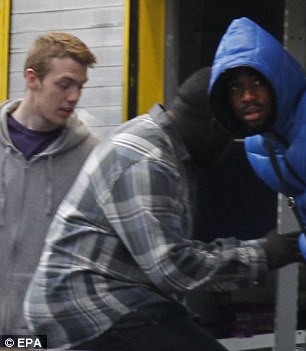
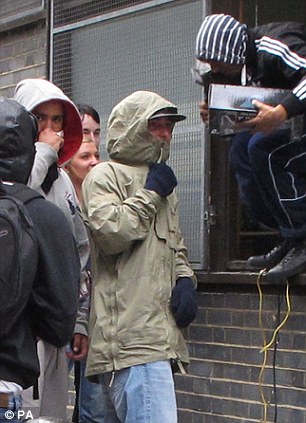
Every action does have a reaction, though, as rioters and even “innocent bystanders” are becoming more likely to attack anyone with a camera. This means a much greater risk for would-be citizen journalists (and professional journalists), as the police generally try to surround and contain mobs (when they don’t just evacuate altogether, of course). If someone in the mob decides that you’re “the enemy”, you won’t have much support — don’t risk your life just to get a “good shot”.
Update: Speaking of police unwillingness to protect civilians, there’s this account:
Cypran Asota, who has run the Boots opticians for 25 years, told the London Evening Standard how he watched as the shop was destroyed.
He said police stood by yards away, adding: ‘White boys ripped off the shutters, then a group of around eight or nine children went in and stole the day’s takings.
‘I ran back over the road to plead with them, this is my livelihood and I have to protect it, but they kept coming back in. They must have got away with £15,000 worth of frames. My insurance doesn’t cover acts of terrorism.
‘All the time the police were about 15 yards away, just watching. They didn’t do anything to stop it. They looked more scared of those kids than I was.’
Shopkeeper Shiva Kadih, 39, told the Standard he had ‘nothing left’ as witnesses said they prevented an attempt to burn down the shop as police watched nearby.
“Mobs rule as police surrender streets”
The rioting in London has gotten worse, and more widespread. The media are having trouble coming up with ways to explain why it’s happening, with the most common being pent-up anger at the police:
The politicians are lucky, though, for the greater share of anger is being directed at the Metropolitan Police. The accusation, also voiced after the riots (ostensibly against public spending cuts) that took place in central London in the spring, is that the Met’s approach to civil disorder amounts to standing by for fear of provoking even more vicious rioting, with a view to catching culprits afterwards through the use of CCTV footage. The front-page headline in today’s Times, “Mobs rule as police surrender streets”, captures the mood, though the Met, alternately accused of brutality and laxity in recent years, are in an invidious position.
[. . .]
Second, policing will become a much hotter topic of political discourse. It is curious that it is not already. The theology of academic selection and university funding obsesses the political and media classes but the polling evidence is clear: crime is a bigger worry for voters than education. So expect much tardy reflection among politicians about the police. They will grapple, in particular, with the question of whether successive, well-intentioned efforts to check and soften the Met (such as the Scarman report in the 1980s, the McPherson report in the 1990s, the rebranding of the force as a “service”, the proliferation of “community support officers” and the like) have resulted in an unduly tentative approach to policing the streets. Whatever the answer, the debate will no longer take place at the margins of politics.
I’m sure it’s not the only reason, but if the way opinions about the police soured after the bungled response to the G20 protests in Toronto are a guide, it’s going to be an awful August for the Metropolitan Police. Being a cop on the street can be a tough job, but if you lose the support of the people, you’re more like a soldier in an occupied zone than an ordinary police officer. Toronto’s police lost a lot of respect — and a lot of quiet support — for their schizophrenic actions during the G20. London’s police may lose more than that.
Update: When I wrote that the rioting had become more widespread, I wasn’t exaggerating:

July 18, 2011
“We used to talk to career criminals all the time. They were our sources”
A look inside the News of the World newsroom before the closure:
“It was the kind of place you get out of and you never want to go back again.” That’s how one former reporter describes the News of the World newsroom under editor Rebekah Brooks, the ferociously ambitious titian-haired executive who ran Britain’s top-selling Sunday tabloid from 2000 to 2003.
Journalists who worked there in that period describe an industrialized operation of dubious information-gathering, reporters under intense pressure attempting to land exclusive stories by whatever means necessary, and a culture of fear, cynicism, gallows humor and fierce internal competition.
“We used to talk to career criminals all the time. They were our sources,” says another former reporter from the paper who also worked for Murdoch’s daily tabloid, the Sun. “It was a macho thing: ‘My contact is scummier than your contact.’ It was a case of: ‘Mine’s a murderer!’ On the plus side, we always had a resident pet nutter around in case anything went wrong.”


