
Quotulatiousness

June 20, 2019

The Centre for International Governance Innovation and the Transatlantic Commission on Elections Integrity for the Alliance of Democracies Federation

Filed under: Cancon, Government, Media, Politics — Tags: , , , , — Nicholas @ 05:00

Did you read that headline? I certainly didn’t. And I wrote copy’n’pasted it. Have you ever heard of either of those organizational entities? I hadn’t until I read Colby Cosh’s article.

A wire story by The Canadian Press’s Joan Bryden arrives over the transom. Let me quote briefly from Bryden’s copy, as an exercise in describing how news sausage is sometimes ground. “An international report says Canada has taken ‘commendable’ steps to safeguard this fall’s federal election from foreign interference. But the report says this country needs to do more to regulate social media giants and should impose ‘major sanctions’ on those that fail to control fake news and other forms of disinformation on their platforms.”

An international report says Canada is vulnerable to fake news! Food for thought. But as I was mulling over this dread warning about sensationalistic information from questionable sources, a skeptical question came to mind: what is “an international report” exactly?

Bryden goes on to tell us, sort of: “The report,” she writes, “is part of a series of assessments conducted by the Centre for International Governance Innovation and the Transatlantic Commission on Elections Integrity for the Alliance of Democracies Federation.” Show of hands: how many of you found it possible to read that sentence without falling asleep? Don’t worry, you weren’t meant to read it — just to absorb its general miasma of seriousness.

Ottawans will know the Centre for International Governance Innovation: it is, essentially, a big pile of Jim Balsillie’s money, and ours. There is a CIGI Campus in Waterloo, Ont., built by Balsillie with matching funds from the provincial and federal governments, that contains the CIGI think-tank and collects rent from the U of W and Wilfrid Laurier U. The Transatlantic Commission on Election Integrity is another think-tank, an international one established amidst post-Trump panic by a range of institutions that includes Microsoft, BMW and other global companies and nonprofits.

Bill Gates didn’t write the “international report.” The report says it was “submitted to TCEI by Allan Rock, TCEI member.” Mr. Rock was, you may recall, a key figure in Jean Chrétien’s cabinet and then president of the University of Ottawa. He “submitted” the report … but did he write it? What the text says is that research and writing done by two University of Ottawa law students “were essential to the preparation of this report … Allan Rock expresses his sincere appreciation for their excellent work.”

So, yeah: it’s a jeremiad against fake news that is pretty much just a long op-ed written on contract by two underpaid young Canadians. After a few impressive-sounding (and foreign-funded) brand names are tacked on, this ends up in your newspaper as a distinguished “international report” justifying draconian regulation of social media.
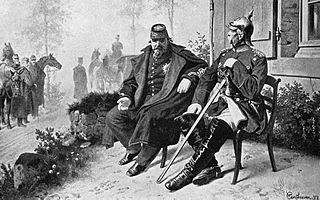
Otto von Bismarck talks with the captive Napoleon III after the Battle of Sedan in 1870.

The “news sausage” comment is a reference to a quote frequently (but apparently mistakenly) attributed to German Chancellor Otto von Bismarck, that laws and sausages are things you should never watch being made.

March 24, 2019

So this is why we all know about “Florida Man” and “Florida Woman”

Filed under: Law, Media, USA — Tags: , , — Nicholas @ 05:00

Now that it’s been explained … nope, I still think Florida is the home of the crazy.

March 3, 2019

Fake News in the Radio Age | Between 2 Wars | 1926 Part 1 of 2

Filed under: Europe, History, Media, Technology, USA — Tags: , , , , , — Nicholas @ 04:00

TimeGhost History
Published on 28 Feb 2019

Modernization caused a communication revolution in the 1920’s with the mass adaptation of the radio, with all sorts consequences for the entertainment industry as well as the political game.

Join us on Patreon: https://www.patreon.com/TimeGhostHistory

1919 Between Two Wars Episodes on post war technology: https://www.youtube.com/edit?o=U&vide…

Hosted by: Indy Neidell
Directed by: Spartacus Olsson
Written by: Spartacus Olsson
Produced by: Astrid Deinhard
Executive Producers: Bodo Rittenauer, Astrid Deinhard, Indy Neidell, Spartacus Olsson
Creative Producer: Joram Appel
Edited by: Wieke Kapteijns
Research by: Spartacus Olsson

Credits for this episode: Bundesarchive | Old Time Radio Researchers Group | Library of Congress

Colorized Pictures by Olga Shirnina and Norman Stewart
Thumbnail by Klimbim/Olga Shirnina: https://klimbim2014.wordpress.com
Norman’s pictures https://oldtimesincolor.blogspot.com/

Video Archive by Screenocean/Reuters http://www.screenocean.com

A TimeGhost chronological documentary produced by OnLion Entertainment GmbH

February 5, 2019

The looming threat of agents plotting to influence the next federal election

Filed under: Cancon, Politics — Tags: , , , — Nicholas @ 05:00

Andrew Coyne has the details:

I have an urgent warning for the people of Canada. Even now, certain agents are plotting to influence the result of the next election campaign by means of stealth and deception.

Posing as ordinary Canadians, they plan to use social media to spread falsehoods designed to inflame public opinion, using the latest micro-targeting technologies to tailor their messages to the reader’s particular fears and prejudices.

These agents are better known as the political parties.

One of the problems with the Liberal government’s recently announced plan to “defend Canadian democracy” from foreign interference, notably in the form of “fake news,” is the basic premise: that the principal threat to the integrity of the Canadian electoral process is posed by outsiders, third parties and foreign agents, rather than the participants.

If there is something ominous about the government involving itself, however indirectly, in deciding what is and is not fake news, there is something quite ludicrous about a political party raising the alarm over the spreading of falsehoods during an election campaign. Indeed, a good short definition of an election campaign would be “a sustained, intense, all-party burst of falsehood, slander and misrepresentation.”

There isn’t a lot else. A modern campaign consists mostly in what is gently termed “defining” opposing party leaders, in a way calculated to make them unrecognizable to their own mothers. The rest is devoted to deliberately misrepresenting the other parties’ positions, while making false or exaggerated claims about their own.

There remains a gentlemanly expectation that these falsehoods should not be obviously detectable as such — that is, that the lie should itself be artfully concealed, disguised as an elision, half-truth or what a Liberal MP recently called “rhetorical advantage,” rather than rubbed in the public’s faces in the manner pioneered by Donald Trump.

December 26, 2018

Only in Canada…

Filed under: Cancon — Tags: , — Nicholas @ 03:00

February 16, 2018

Trump’s Fake News: Deep Breaths and Fact-Checking Might Just Save America

Filed under: Humour, Media, Politics, USA — Tags: , , , — Nicholas @ 04:00

ReasonTV
Published on 15 Feb 2018

President Trump labels whatever he dislikes as “fake news,” and makes up his own, but the media is part of the problem. In the latest “Mostly Weekly,” Andrew Heaton provides a solution.

—————-

Donald Trump tends to call whatever he dislikes “fake news,” from inconvenient facts to unfavorable reporting. Even though the President himself is less a font of truth and more a spigot of self-serving exaggeration and insults.

But Trump isn’t all wrong when he labels reporting against him as fictitious or slanted. Reporters have become so enraged with the President that in their hurry to lambast him, they sometimes forget about fact checking and standard quality controls.

The result is that actual “fake news” is slipping into major news outlets. When hit pieces turn out to be false, they bolster Trump’s claims about the media and discredit journalists in the eyes of his supporters.

In the latest “Mostly Weekly” Andrew Heaton explains the relationship between “Trump Derangement Syndrome,” fake news, and a solution for the media.

Mostly Weekly is hosted by Andrew Heaton, with headwriter Sarah Rose Siskind.

Script by Sarah Rose Siskind with writing assistance from Andrew Heaton and Brian Sack.

Special guest appearance by Brian Sack as “TV doctor”

Edited by Austin Bragg and Siskind.

Produced by Meredith and Austin Bragg.

Theme Song: Frozen by Surfer Blood.

July 7, 2017

“Donald Trump views the mainstream press with contempt, and the mainstream press returns the favor”

Filed under: Media, Politics, USA — Tags: , , , — Nicholas @ 03:00

Jacob Sullum on the tendentious relationship between President Trump and the mainstream media:

Donald Trump views the mainstream press with contempt, and the mainstream press returns the favor. Or is it the other way around?

Just as the president has trouble distinguishing between negative press coverage and “fake news,” the journalists who cover him tend to treat every inaccurate, unfounded, or even debatable statement he makes as a lie. That mistake, to which I myself am sometimes prone, clouds the judgment and damages the credibility of reporters and commentators who aspire to skepticism but too often settle for reflexive disbelief.

New York Times columnist David Leonhardt recently catalogued “nearly every outright lie [Trump] has told publicly since taking the oath of office.” There are a lot of verifiably false assertions on Leonhardt’s list, but it’s an exaggeration to say every one of them is an “outright lie,” which implies that Trump knew the statement was wrong when he made it and said it with the intent of misleading people.

Take Trump’s preposterous puffery about the size of the crowd at his inauguration. “It looked like a million, million and a half people,” he said the next day in a speech at CIA headquarters.

Four days later, Trump was still marveling at the size of the crowd. “The audience was the biggest ever,” he told ABC News anchor David Muir on January 25, standing in front of a photo on the wall in the White House. “This crowd was massive. Look how far back it goes.”

Maybe Trump was trying to trick people into ignoring plain photographic evidence that his inaugural audience paled beside Barack Obama’s in 2009. But it seems much more likely that he was offering an emotionally tinged, self-flattering impression of his experience as he took the oath of office.

May 19, 2017

Common Sense Soapbox #1: Fake News is Old News

Filed under: Media, Politics, USA — Tags: , , , — Nicholas @ 04:00

Published on 18 May 2017

The term “Fake News” gets thrown around all the time, but what is it?

Sometimes it’s just a phrase people use to to discredit information or sources they don’t like. But there are also people who spread misinformation to further their own agenda. So how do you avoid getting stuck in a bubble without being a victim of misinformation?

We give you 5 helpful tips on how to spot Fake News, and use a skeptical eye to assess information.

Written by Seamus Coughlin & Sean W. Malone
Animated by Seamus Coughlin

Check out FEE.org: https://fee.org/articles/fake-news-is-old-news/

March 6, 2017

Origins of the Tea Party movement

Filed under: Media, Politics, USA — Tags: , , , , — Nicholas @ 05:00

The Z Man provides a thumbnail sketch of the start of the Tea Party early in Barack Obama’s first term in office:

Back in Obama’s first months on the throne, Rick Santelli, a TV personality, was “reporting” from the floor of the stock exchange. He responded to a question about Obama’s housing plan with a rant about socialism, finishing it off with a call for a new Tea Party. Whether it was spontaneous or choreographed is hard to know, but at the time people took it to be entirely spontaneous. Santelli is a carny barker prone to getting carried away on the air and his rant had the feel of an old fashioned stem winder.

Regardless of the intent or the execution, the rant went viral and the Tea Party Movement was born. Middle America was ready to be pissed off due to the terribleness of the Bush years, so Obama’s poor start put the normies in a fighting mood. Before long people were showing up at town hall meetings, dressed as Samuel Adams, giving their congressman the business about reckless government behavior that had made a hash of things. Since the Democrats were the majority, they got the brunt of the abuse.

It did not take long for the moonbats to declare the whole thing a racist conspiracy cooked up by the twelfth invisible Hitler in league with the eternal cyclops of the KKK. This was when the fake hate crime stuff got its start as a daily phenomenon. It was also when it became apparent to a lot of people that the news is mostly fake. The increasingly deranged Nancy Pelosi, slurring about “Astroturf” was so weird, it begged a challenge, but the news people carried on like it was manifestly true.

The claim that middle aged suburbanites, dressed in tricorne hats, were paid agents of a nefarious conspiracy was so nutty that the response from the press should have been laughter and then derision. After all, it has been known for decades that the Left uses rent-a-mobs. They pay people to show up and hold signs. Unions have been doing this since the days of Jimmy Hoffa. For the Democrats to clutch their pearls and call the Tea Party inauthentic should have been too much of a farce for even the very liberal press corp.

“What could possibly account for that growth? Statistical fakery so fake that a Vegas bookie would weep”

Filed under: Media, Politics, Religion, USA — Tags: , , , , — Nicholas @ 03:00

Daniel Greenfield on how to hoax the media into reporting on a burgeoning anti-Muslim movement in the United States:

“Huge Growth in Anti-Muslim Hate Groups During 2016: SPLC Report,” wails NBC News. “Watchdog: Number of anti-Muslim hate groups tripled since 2015,” FOX News bleats. ABC News vomits up this word salad. “Trump cited in report finding increase in US hate groups for 2nd year in a row.”

The SPLC stands for the Southern Poverty Law Center: an organization with slightly less credibility than Ringling Bros and Barnum & Bailey Clown College, and without the academic degree in greasepaint.

And you won’t believe the shameless way the SPLC faked its latest Islamophobia crisis.

The Southern Poverty Law Center’s latest “hate group” sightings claims that the “number of anti-Muslim hate groups increased almost three-fold in 2016.”

That’s a lot of folds.

And there is both bad news and good news from its “Year in Hate and Extremism.”

First the good news.

Casa D’Ice Signs, the sign outside a bar in K-Mart Plaza in Allegheny County, Pennsylvania, is no longer listed as a hate group. The sign outside the bar had been listed as a hate group by the SPLC for years. The owner of Casa D’Ice had been known for putting politically incorrect signs outside his bar. So the SPLC listed the “signs” as a hate group. (Even though there was only one sign.) Not the bar. That would have made too much sense.

Since then Casa D’Ice was sold and the SPLC has celebrated the defeat of another hate group. Even if the hate group was just a plastic sign outside a bar.

But the bad news, according to the Southern Poverty Law Center, is that anti-Muslim hate groups shot up from only 34 in 2015 to 101 in 2016.

What could possibly account for that growth? Statistical fakery so fake that a Vegas bookie would weep.

March 2, 2017

Words & Numbers: The Problem with Alternative Facts

Filed under: Media, Politics, USA — Tags: , , , — Nicholas @ 04:00

Published on 1 Mar 2017

I this week’s episode, Antony & James talk about alternative facts and how false, partisan data skews important discussions about public policy.

Update: For some reason the original post link was taken private, so I’m reposting to the current version.

March 1, 2017

The different “flavours” of propaganda

Filed under: China, Media, Politics, Russia, USA — Tags: , , , , — Nicholas @ 03:00

Cory Doctorow on the various types of propaganda in use around the world:

Jonathan Stray summarizes three different strains of propaganda, analyzing why they work, and suggesting counter-tactics: in Russia, it’s about flooding the channel with a mix of lies and truth, crowding out other stories; in China, it’s about suffocating arguments with happy-talk distractions, and for trolls like Milo Yiannopoulos, it’s weaponizing hate, outraging people so they spread your message to the small, diffused minority of broken people who welcome your message and would otherwise be uneconomical to reach.

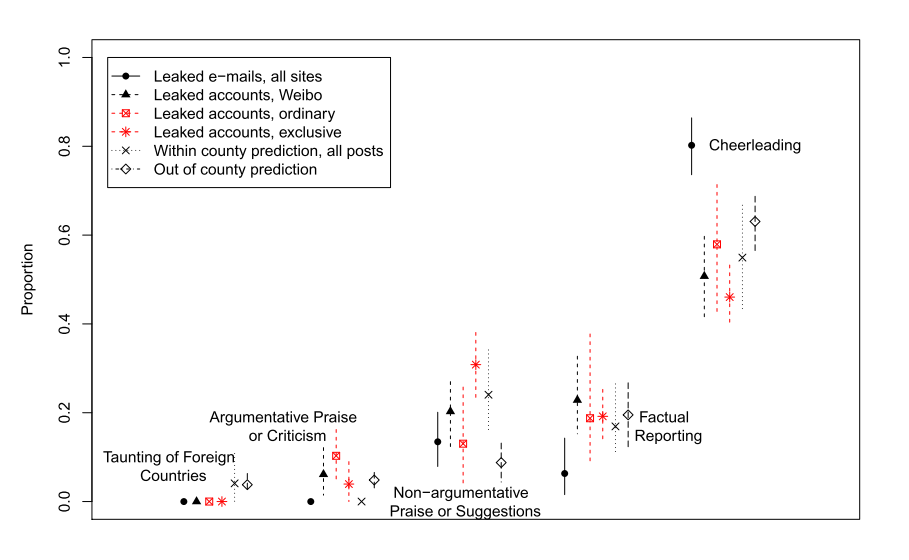
Stray cites some of the same sources I’ve written about here: Tucker Max’s analysis of Yiannopoulos’s weaponized hate and The Harvard Institute for Quantitative Science team’s first-of-its kind analysis of leaked messages directing the activities of the “50-cent army, which overwhelms online Chinese conversation with upbeat cheerleading (think of Animal Farm‘s sheep-bleating, or Nineteen Eighty-Four‘s quackspeak).

But I’d never encountered the work he references on Russian propaganda, by RAND scholar Christopher Paul, who calls Russian disinformation a “firehose of falsehood.” This tactic involves having huge numbers of channels at your disposal: fake and real social media accounts, tactical leaks to journalists, state media channels like RT, which are able to convey narrative at higher volume than the counternarrative, which becomes compelling just by dint of being everywhere (“quantity does indeed have a quality all its own”).

Mixing outright lies with a large dollop of truth is key to this tactic, as it surrounds the lies with a penumbra of truthfulness. This is a time-honored tactic, of course: think of the Christian Science Monitor‘s history of outstanding international coverage, accompanied by editorials about God’s ability to heal through prayer; or Voice of America‘s mixture of excellent reporting on (again) international politics and glaring silence on US crises (see also: Al Jazeera as a reliable source on everything except corruption in the UAE; the BBC World Service‘s top-notch journalism on everything except UK complicity in disasters like the Gulf War, etc).

In addition to this excellent taxonomy of propaganda, Stray proposes countermeasures for each strain: for Russia-style “firehoses of falsehood,” you have to reach the audience first with an alternative narrative; once the firehose is on, it’s too late. For Chinese quackspeak floods, you need “organized, visible resistance” in the streets. For pathetic attention-whores like Yiannopoulos, Stray says Tucker Max is right: you have to ignore him.

February 13, 2017

“[M]ost of what journalists know about radioactivity came from watching Godzilla

Filed under: Japan, Media, Science, Technology — Tags: , , , — Nicholas @ 03:00

Charlie Martin explains why the “news” out of Fukushima lately has been mostly unscientific hyperventilation and bloviation:

On February 8, Adam Housley of Fox News reported a story with a terrifying headline: “Radiation at Japan’s Fukushima Reactor Is Now at ‘Unimaginable’ Levels.” Let’s just pick up the most exciting paragraphs:

    The radiation levels at Japan’s crippled Fukushima nuclear power plant are now at “unimaginable” levels.

    [Housley] said the radiation levels — as high as 530 sieverts per hour — are now the highest they’ve been since 2011 when a tsunami hit the coastal reactor.

    “To put this in very simple terms. Four sieverts can kill a handful of people,” he explained.

The degree to which this story is misleading is amazing, but to explain it, we need a little bit of a tutorial.

The Touhoku earthquake and tsunami on March 11, 2011, along with all the other damage they caused, knocked out the TEPCO Fukushima Daiichi (“plant #1”) and Daini (“plant #2”) reactors. Basically, the two reactors were hit with a 1000-year earthquake and a 1000-year tsunami, and the plants as built weren’t able to handle it.

Both reactors failed, and after a sequence of unfortunate events, melted down. I wrote quite a lot about it at the time; bearing in mind this was early in the story, my article from then has a lot of useful information.

[…]

So what have we learned today?

We learned that inside the reactor containment at Fukushima Daini, site of the post-tsunami reactor accident, it’s very very radioactive. How radioactive? We don’t know, because the dose rate has been reported in inappropriate units — Sieverts are only meaningful if someone is inside the reactor to get dosed.

Then we learned that the Fukushima accident is leaking 300 tons of radioactive water — but until we dig into primary sources, we didn’t learn the radioactive water is very nearly clean enough to be drinking water. So what effect does this have on the ocean, as Housley asks? None.

The third thing we learned — and I think probably the most important thing — is to never trust a journalist writing about anything involving radiation, the metric system, or any arithmetic more challenging than long division.

February 2, 2017

The genesis of Fake News

Filed under: Media, Politics, USA — Tags: , , , , — Nicholas @ 02:00

Victor Davis Hanson on the modern-day phenomenon of “fake news”:

… all politicians fib and distort the truth — and they’ve been doing so since the freewheeling days of the Athenian ekklesia. Trump’s various bombastic allegations and claims fall into the same realm of truthfulness as Obama’s statement “if you like your health plan, you can keep it” — and were thus similarly cross-examined by the media.

Yet fake news is something quite different. It is not merely a public figure’s spinning of half-truths. It is largely a media-driven, and deliberate attempt to spread a false narrative to advance a political agenda that otherwise would be rejected by a common-sense public. The methodology is to manufacture a narrative attractive to a herd-like progressive media that will then devour and brand it as fact — and even lobby for government redress.

Trump’s lawyer Michael Cohen has never been to Prague to negotiate quid pro quo deals with the Russians. Trump did not watch Russian strippers perform pornographic acts in the bedroom that Barack Obama once stayed in during a visit to Moscow. Yet political operatives, journalists, and even intelligence officers, in their respective shared antipathy to Trump, managed to lodge these narratives into the public consciousness and thereby establish the “truth” that a degenerate Trump was also a Russian patsy.

No one has described the methodology of fake news better than Ben Rhodes, a deputy national security advisor for Barack Obama and brother of the president of CBS News, David Rhodes. Ben Rhodes cynically bragged about how the Obama administration had sold the dubious Iran deal through misinformation picked up by an adolescent but sympathetic media (for which Rhodes had only contempt). As Rhodes put it, “The average reporter we talk to is 27 years old, and their only reporting experience consists of being around political campaigns. That’s a sea change. They literally know nothing.”

Translated, that meant that Rhodes and his team fed false narratives about the Iran Deal to a sympathetic but ignorant media, which used its received authority to report those narratives as “truth” — at least long enough for the agreement to be passed before its multitudinous falsehoods and side-agreements collapsed under their own weight. “We created an echo chamber,” Rhodes bragged to the New York Times: “They [reporters] were saying things that validated what we had given them to say.”

December 27, 2016

When New York Times articles “switch to passive voice, they are covering up a lie”

Filed under: Media, Russia — Tags: , , — Nicholas @ 02:00

Robert Graham has a handy tip for understanding newspaper stories, the New York Times in particular:

Here’s a trick when reading New York Times articles: when they switch to passive voice, they are covering up a lie. An example is this paragraph from the above story [*]:

    The Russians were also quicker to turn their attacks to political purposes. A 2007 cyberattack on Estonia, a former Soviet republic that had joined NATO, sent a message that Russia could paralyze the country without invading it. The next year cyberattacks were used during Russia’s war with Georgia.

Normally, editors would switch this to the active voice, or:

    The next year, Russia used cyberattacks in their war against Georgia.

But that would be factually wrong. Yes, cyberattacks happened during the conflicts with Estonia and Georgia, but the evidence in both cases points to targets and tools going viral on social media and web forums. It was the people who conducted the attacks, not the government. Whether it was the government who encouraged the people is the big question — to which we have no answer. Since the NYTimes has no evidence pointing to the Russian government, they switch to the passive voice, hoping you’ll assume they meant the government was to blame.

It’s a clear demonstration that the NYTimes is pushing a narrative, rather than reporting just the facts allowing you to decide for yourself.

« Newer PostsOlder Posts »

Powered by WordPress

