
And, part two, with Wil Wheaton’s immortal advice “Guys . . . when a woman joins the game, don’t be a dick.”:
March 9, 2011
Felicia Day, Wil Wheaton, and Amy Okuda panel discussion
Comments Off on Felicia Day, Wil Wheaton, and Amy Okuda panel discussion
March 5, 2011
This week in Guild Wars 2 news
 I’ve been accumulating news snippets about the as-yet-to-be-formally-scheduled release of Guild Wars 2 for an email newsletter I send out to my friends and acquaintances in the Guild Wars community.
There’s been so much information this week, thanks to the early leak of information that ArenaNet intended to release next week at PAX East, that I’m dividing the newsletter into sections:
Part 1: Commentary on earlier information
- Economy and Consuming Goods — An interesting discussion thread about the Guild Wars economy (pro and con).
- Flameseeker Chronicles: Norn Week — Rubi Bayer rounds up her impressions of the “Norn Week” revelations.
- GuildMag‘s “Thalador Doomspeaker” talks about the Norn information we got during “Norn Week”.
Part 2: New information on Guild Wars
- The latest issue of GuildMag is now available for download.
- NCSoft is introducing new password security features for your Master Account. Check the page for details.
- Wartower.de video interview with John Stumme on the new (March 3rd) Guild Wars update. Includes information on “the Embark Beach Content Update, featuring the seven hero group, a new mission-hub, enhancements to the user interface, changes to pre-searing Ascalon, Titles and a new hero mechanic.”
- Summary of the GW2 Thief introduction and the March 3rd GW game update.
- Kill Ten Rats looks at the GW March 3rd update: “This update will change the game to such a degree that it might as well be Guild Wars 1.5 now.”
- FAQ on the new Mercenary Hero feature (where you can “hire out” your other characters as heroes — a nice, but potentially expensive, way to fill out your new seven-hero parties).
Part 3: New information on Guild Wars 2
- Localization for Guild Wars — Localizing is a big issue for software, especially one with as rich a selection of user interface options, text prompts, storylines, and all the rest of the things that set Guild Wars apart from other MMORPGs. I work in the software industry, and localization is one of the big ticket items for smaller companies (in this context ArenaNet counts as a small company).
- J. Robert King talks about the process of developing and writing Edge of Destiny, the second Guild Wars 2 tie-in novel.
- The next new GW2 class is officially theThief.
- Walkthrough of a new Norn Guardian’s first quest and dynamic event.
- A Thief packing twin pistols beats up the wildlife in a high-level area.
- A Thief demonstrates interesting attack skills, the downed skill, and being defeated during a high-level dynamic event.
- Massively reviews the new Thief profession.
- Even more on the Thief, including the importance of an attribute called Initiative: “Initiative regenerates at one point a second, which allows you to fight at a fairly consistent pace without letting you spam your strongest skills. There’s a profession ability (not tied to which weapon you’re using) called Roll For Initiative (ha!) that moves the Thief well away from his current position, while giving him an Initiative boost.”
Comments Off on This week in Guild Wars 2 news
March 3, 2011
New Guild Wars 2 profession: Thief
Comments Off on New Guild Wars 2 profession: Thief
Major update for Guild Wars going live today
Wartower.de had the opportunity to talk with John Stumme (Lead Game Designer for the Guild Wars Live-Team) about the Embark Beach Content Update, featuring the seven hero group, a new mission-hub, enhancements to the user interface, changes to pre-searing Ascalon, Titles and a new hero mechanic.
Comments Off on Major update for Guild Wars going live today
Sneak preview of the next Guild comic
Whitney Matheson has a preview of the next comic starting the members of The Guild. This one is about Tink:
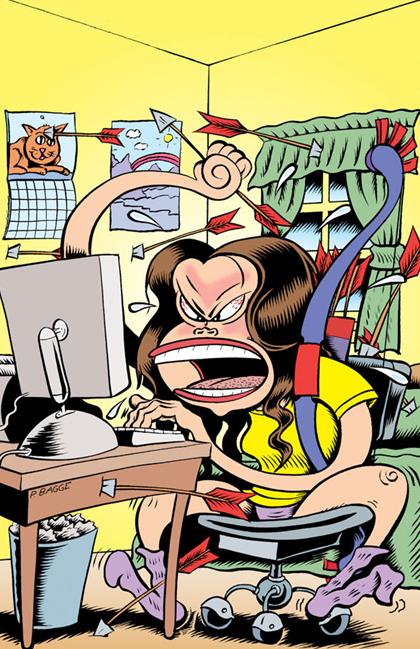
This should be in the stores by mid-March.
Comments Off on Sneak preview of the next Guild comic
February 26, 2011
This week in Guild Wars 2 news
I’ve been accumulating news snippets about the as-yet-to-be-formally-scheduled release of Guild Wars 2 for an email newsletter I send out to my friends and acquaintances in the Guild Wars community.
- Norn Week Begins — The first post to kick off “Norn Week” on the ArenaNet blog.
- Player reactions to the Dervish update in Guild Wars. I’ve certainly noticed a lot more Dervishes around in-game this week, especially in PvP areas.
- Next post on the Norn: Legend and Legacy. The voices of the Norn, with some insight into why they act the way they do. (I find the samples to be a bit too modern, but perhaps that’s just my personal preference.)
- Norn Week post 3: Go Big or Go Home. The sheer scale of the Norn and their works.
- Eurogamer speculates on Mesmers and Assassins in Guild Wars 2. My own take: Mesmers are explicitly mentioned in the 2nd Guild Wars 2 novel, so they’re in. Assassins are not mentioned, but one of the key characters in the novel has a set of skills that seem remarkably similar to GW assassins.
- A player’s response to the GW Dervish updates and how they’ve changed the playing experience.
- Norn Week: Designing and Redesigning Events.
- ArenaNet’s plans for PAX East, including a new demo featuring the Norn starting area.
- Updates and additions to the official web site’s Norn page.
- Views to admire: Relics of Orr posts the list of must-see places in Guild Wars.
- Norn Week: A Spirit of Legend
Comments Off on This week in Guild Wars 2 news
February 23, 2011
February 19, 2011
This week in Guild Wars 2 news
I’ve been accumulating news snippets about the as-yet-to-be-formally-scheduled release of Guild Wars 2 for an email newsletter I send out to my friends and acquaintances in the Guild Wars community.
- GuildMag has an article on the revelations from the military forces of Kryta post last week.
- Closed Alpha and Beta for 2011: More information/speculation about the recently announced closed alpha and closed beta programs for later this year.
- Rounding up “Humanity Week”: Rubi rounds up last week’s information from ArenaNet on humans.
- An ode to love in Tyria.
- Inside the Quality Assurance group at ArenaNet.
- Rumour of a GW2 team working on “console” development. Expect this to be quashed by ArenaNet soon: UI changes between PC and various consoles alone would make this a very difficult addition to their existing plans. (Later: Regina Buenaobra had apparently already posted this message to dispel these rumours: “I just want to reiterate that the development team is fully focused on making GW2 the best PC MMO ever released. We have a very small team exploring the possibility of console, but there are no definite plans for a console version at this time. The core of Guild Wars 2 development is fully focused on delivering a fantastic PC MMORPG experience.”)
- The promised Guild Wars Dervish update has been released. This is, as promised, a major revision to many Dervish skills. I expect to have to rebuild all my Derv’s builds, eventually. It’ll take a while to absorb the scale of all the changes.
- Developer notes on the Dervish update.
- If you liked “Humanity Week”, you’ll probably be very happy to hear that next week is going to be “Norn Week“
Comments Off on This week in Guild Wars 2 news
February 12, 2011
This week in Guild Wars 2 news
I’ve been accumulating news snippets about the as-yet-to-be-formally-scheduled release of Guild Wars 2 for an email newsletter I send out to my friends and acquaintances in the Guild Wars community. It just occurred to me that some of my blog audience might also be interested:
- Last Saturday, the official Guild Wars 2 Twitter account posted this teaser:
“Next week, we’re taking a closer look at the human race in #GuildWars2 ! Keep an eye on the blog and GuildWars2.com! Happy weekend everyone!” - http://bloogum.net/guildwars/ If you like looking at the great scenery in Guild Wars, this site is for you. It’s a huge gallery of screen shots of places in GW . . . over 6000 of them.
- Kill Ten Rats speculates that the new GW2 demo for PAX East may herald a wider (dare we say “open”?) availability.
- http://www.guildmag.com/plotting-more-than-depth Speculation on the upcoming Winds of Change content in Cantha: “if we go back to the same thing too many times, we’re going to end up with Mursaat being the equivalent of Daleks, only without the goofy and endearing qualities.”
- http://www.arena.net/blog/oh-the-humanity-human-week-begins Start of a week of posts on the Arenanet blog about humans in GW2.
- Are long-running events a good thing or a bad thing?
- Against the Wall: Humanity in Guild Wars 2
- Designing Humans The next post in Humanity Week is about the graphics (comparing humans in GW with their descendants in GW2).
- Responses to some of the questions generated by the voices of GW2 clips.
- Canthan New Year – the best bits Looking back on Canthan New Year.
- Updated info on Humans at the GW2 official site. My dogs “sang along” with the music on the Kryta video clip. (HD version of the clip here)
- Details of the GW update for the Dervish. It’s pretty significant: 90% of Dervish skills have been updated or changed.
- The Line of Duty What should be the final “Humanity Week” posting: the Three Military Orders of Kryta.
- I’ve also seen multiple references to a November 2011 release date. No confirmation of that from Arenanet, of course. (Also, the Guild Wars 2 FAQ has been updated with this little snippet: ‘We will be conducting small closed alpha and beta tests in 2011.’ )
Comments Off on This week in Guild Wars 2 news
February 11, 2011
The Guild renewed for a fifth season
Felicia Day and friends will be back for another season, thanks to Microsoft:
The Guild, in case you’re new, is the long-running series about a pack of socially awkward MMORPG addicts, created by Felicia Day and produced by Kim Evey. Launched independently in July 2007, the show has received over 100 million views (according to an official release) and attracted a worldwide fan base that fills convention halls.
I mention the convention thing because, as promised at the end of Season 4, the action of Season 5 will involve the characters attending a convention for the unnamed game they play. According to Evey, to handle this production requirement they’re not only considering shooting certain scenes at a small convention, but working with additional brands.
“We haven’t really had success with brand integration aside from Microsoft and Sprint, who help us make sure their brands are visible but not obnoxious,” Evey said via phone. “But the brands that we need now are brands which would sell their wares at a convention like this, and are willing to be in our show.”
Comments Off on The Guild renewed for a fifth season
December 16, 2010
Military FPS games
Perhaps all those concerned parent organizations had a germ of truth to feed their panic after all: the US military has been finding their FPS games really have been useful as recruiting tools:
The army began using simulation training game tech for recruiting a decade ago when it rolled out the online game “America’s Army” (www.americasarmy.com/). Britain, Australia and New Zealand eventually went in the same direction as the marines. To the despair of parents everywhere, it appears that video games do serve a useful purpose. “America’s Army” was originally developed as a recruiting and public relations tool. It cost over eight million dollars to create. By late 2002, it had 929,000 registered players, 563,000 of whom stayed around long enough to finish the basic training exercise. The game costs $3.5 million a year to maintain. So far, nearly ten million people have downloaded the front end (player) software. At peak times, over 5,000 players are online with the game simultaneously. Recruiters are satisfied with the number of prospects coming in because of the game. But an unexpected bonus has been the number of other uses the game has been put to.
The game, like many games today, was based on one of the “game engines” that are for sale to those developing commercial games. A “game engine” is the software for an earlier, successful, game, with all the specific graphics and play elements removed. When you buy a game engine, you add your own graphics and specific game and play elements, and have a new game. America’s Army used the Unreal game engine, and that led to clones of the America’s Army software for additional training systems. Using the highly realistic combat operations depicted in the game, special versions are used to create specific games for all sorts of combat situations. The public will never see most of these, especially the classified ones.
The USMC, of course, prefers not to do things the army way:
The marines went with a different engine because, well, even with lots of updates, the America’s Army software is showing its age. More realism is a matter of life and death in these training simulations, as getting the details wrong can teach troops the wrong lesson and get them killed. The marines have long been innovators in the use of tactical training and wargames. Back in the 90s, they adapted one of the first FPS (First Person perspective Shooters), “Doom” to marine use. Now they have a much more realistic game engine to use, and one that can be easily networked. Many marines take their laptop computers to combat zones, and that takes care of a lot of hardware problems.
Comments Off on Military FPS games
December 15, 2010
That’s not an elaborate Christmas display. This is an elaborate Christmas display
PC World says:
Turner calls the game “Snowball Blaster.” If you help Santa dodge all the snowballs, you get a special lights display. Passers-by can hop into the “blaster” unit and use a controller to play via a PC that operates 128-channels of lights to form the display.
Comments Off on That’s not an elaborate Christmas display. This is an elaborate Christmas display
December 9, 2010
Preview of The Guild: Vork
Guild fans will be interested to see the first five pages of the The Guild: Vork at PopCandy:
As you may know, I’m a huge fan of The Guild, the funny, imaginative, geeky, gleeful and addictive web series created by Felicia Day. If you’ve seen one episode, chances are you’ve seen them all. (And bonus: The talented Wil Wheaton added some spark to the last two seasons.)
It makes sense that The Guild would branch out to comics, since much of its audience probably consists of comic-book fans. On Dec. 22 Dark Horse will issue The Guild: Vork, a story written by Day and Jeff Lewis (the actor who plays Vork in the series).
I offered you a preview of the Guild covers a few months ago. Now hold your breath, because I have the first six pages of Vork right here
Comments Off on Preview of The Guild: Vork
November 20, 2010
JourneyQuest, Episode 1
H/T to Ghost of a Flea for the link. There are several episodes available, so do follow along. The first episode is a bit slow, but it picks up nicely in later episodes.
Comments Off on JourneyQuest, Episode 1
October 5, 2010
The Guild, Season 4 episode 12
Comments Off on The Guild, Season 4 episode 12


