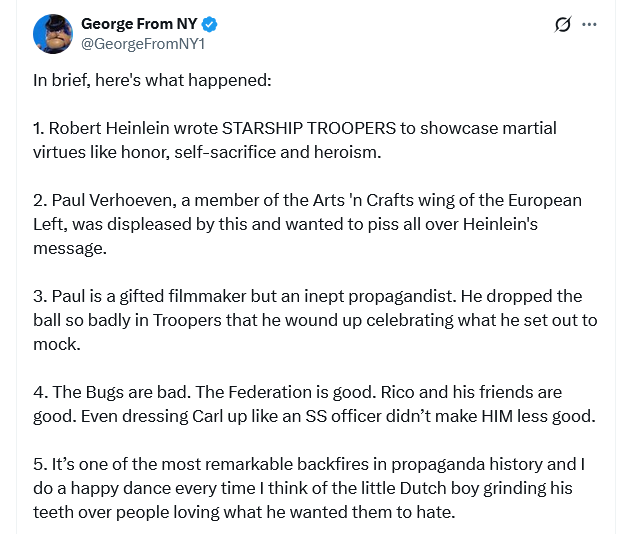
On the social media site formerly known as Twitter, Devon Eriksen explains why filmgoers still identify with the humans in Verhoeven’s unfaithful-to-the-story film of Robert A. Heinlein’s Starship Troopers:
Here’s a hint:
It’s called Starship Troopers. Not The Big War with the Bugs.
There’s a reason for that. Heinlein was one of the 20th century’s greatest authors, if not THE greatest, and he was also the 20th century’s greatest philosopher and it’s not even close.
So he didn’t name things by accident.
Starship Troopers isn’t about the war. It isn’t even about war. And it’s certainly not about the fucking bugs.
All that shit is just stage dressing for the story is really about. That’s why the book doesn’t end with defeating the enemy. It ends with Rico meeting his father again, facing future fights together.
Starship Troopers is about the military life, the relationship between armies and the civilizations they serve, and what it means to be a soldier and a man.
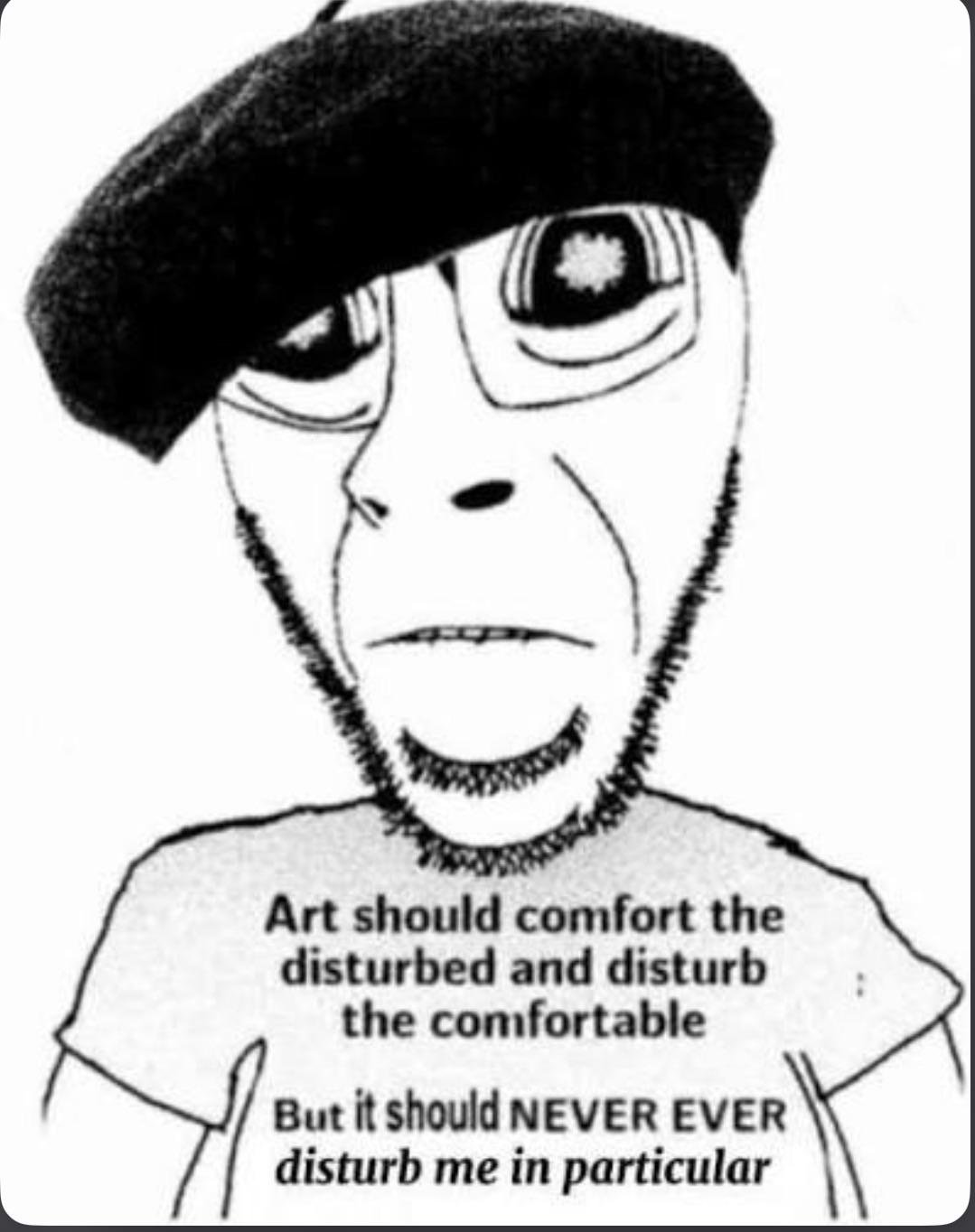
Eurotrash communists failed to get the point, not merely because they have the “media literacy” of a sack of wet hammers, but also because they don’t understand soldiering, civilization, or manhood.
So, yes, Verhoeven tried to make fun of Heinlein and failed miserably because Heinlein was a better storyteller, a better man, and a better human being by a margin so great that the Earth can barely encompass it.
But even though his failed satire makes humanity clearly the good guys, the war clearly righteous, and soldiers clearly cool and heroic, it still doesn’t recapture the actual meaning of Starship Troopers.
Because the real themes were so invisible, so incomprehensible, to Verhoeven that he couldn’t even see them to disagree with.
So enjoy the film for what it turned out to be … a fun, campy, morally unambiguous story of heroes squashing disgusting bugs. Suitable for popcorn consumption.
Then, read more Heinlein.