Ted Gioia reconsiders his childhood loathing of the TV western (because of massive over-exposure to the genre):
I hated cowboys when I was a youngster. Not real cowboys — I never met a single gunslinger, cowpoke, or desperado in in my urban neighborhood. My loathing was reserved for cowboys on TV.
And they were everywhere.
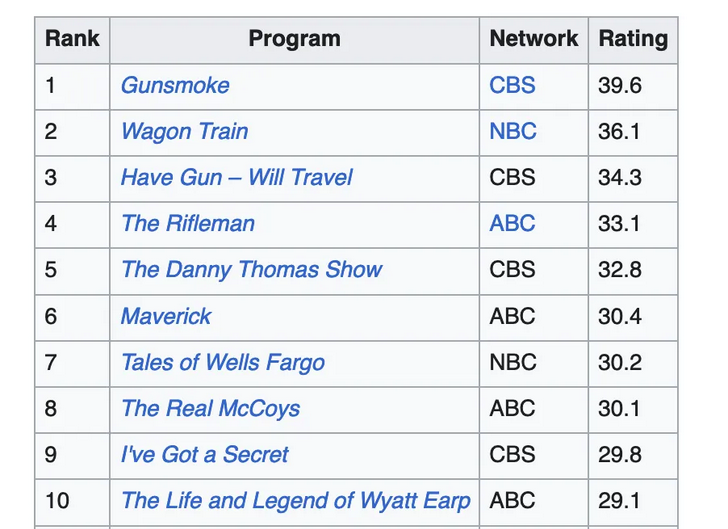
At one point, eight of the top ten shows on the flickering tube were westerns. And it got worse from there — Hollywood kept churning out more and more cowboy movies and TV series. I tried to avoid them, as did many of my buddies, but it was like dodging bullets in Dodge. There was nowhere to hide.
That’s because our parents loved these simple stories of frontier justice. They couldn’t get enough of them. And when they weren’t watching them on TV, they dragged us off to movie theaters to see The Magnificent Seven (128 minutes), The Alamo (138 minutes) or How the West Was Won (an excruciating 164 minutes).
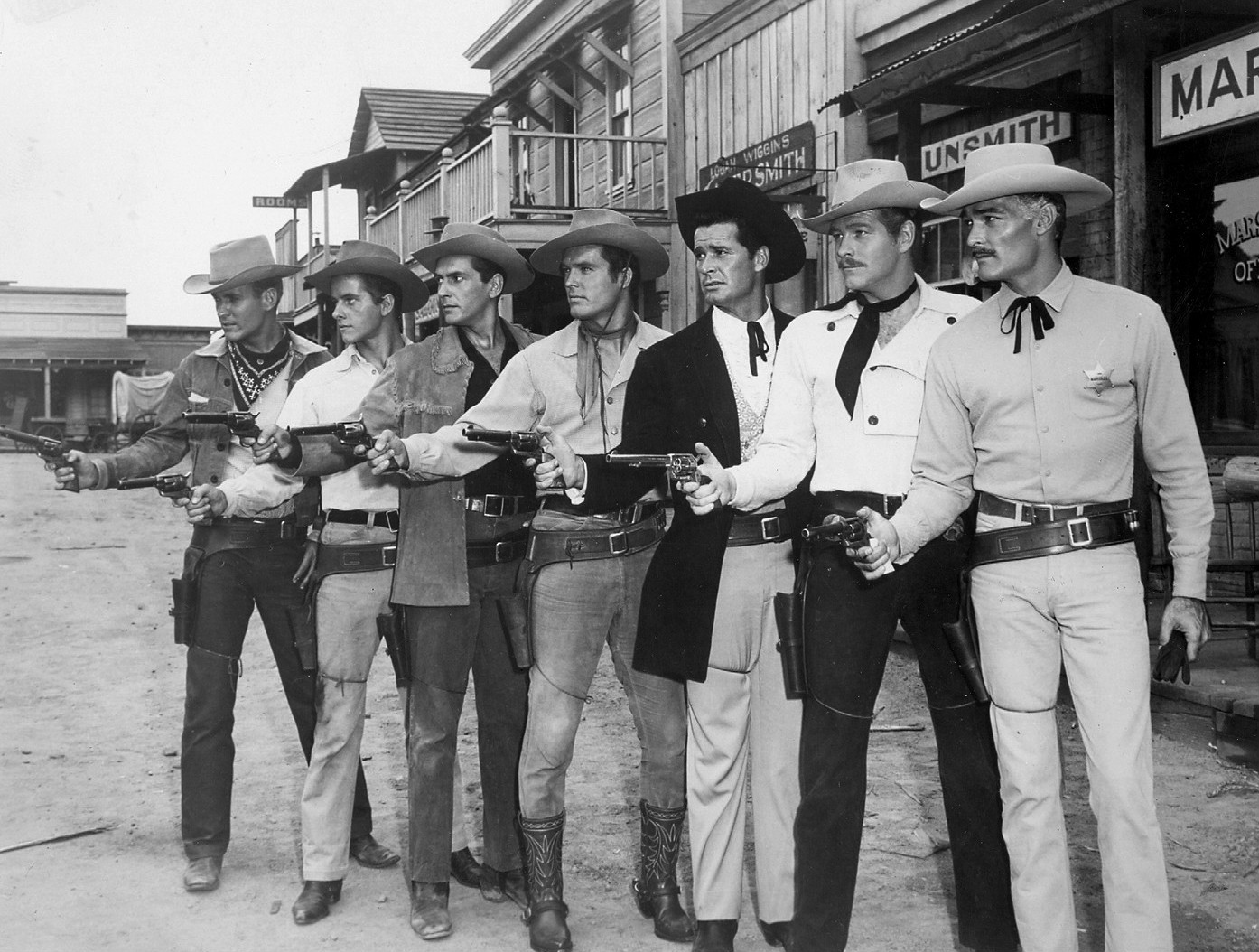
In 1959, Warner Bros posed some of their TV cowboy stars in a single photo (Source)
[…]
Many aspects of these films still put me off. I struggle with the clichés and tired formulas. But I’ve gradually acquired an affection for the genre — or maybe an affection for the audiences of an earlier day who could put such trust and faith in a sheriff or US marshal or gunslinger for hire.
Do any of us have that kind of faith in any authority figure nowadays? I doubt it. But I wish we could. And that’s impressed powerfully on my mind when I see Gary Cooper take on outlaws in the deserted western street of High Noon. Or James Stewart confront the dangerous Liberty Valance. Or John Wayne battle with a gang of desperadoes in Rio Bravo.
So forget all the shootouts and cattle drives and fancy roping. The real foundation of the western genre was moral authority. And Hollywood never let you forget it — that’s why heroes wore white hats and villains dressed in black.
The audience didn’t even have to think about it.
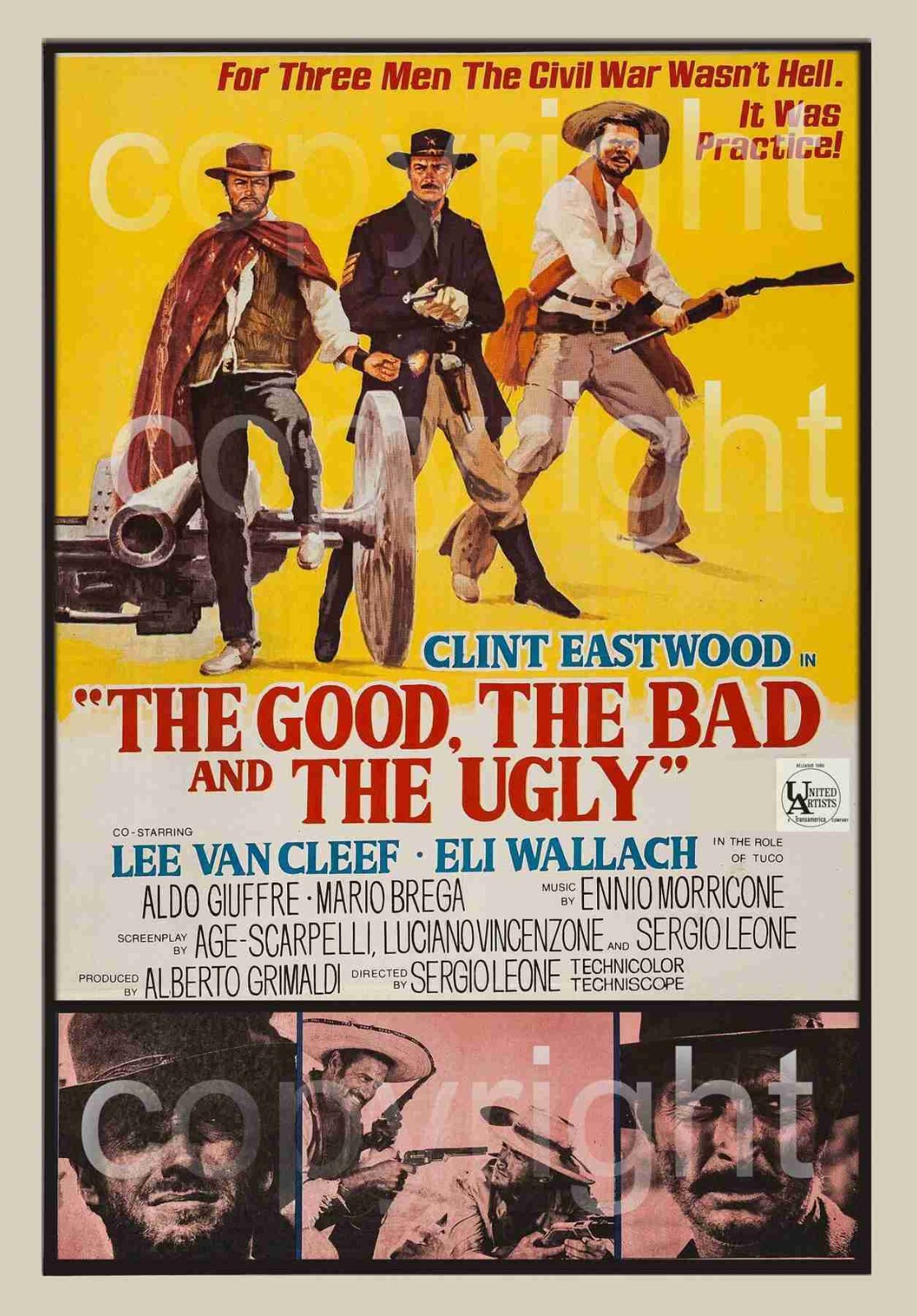
[…]Because that’s exactly what happened to the western. Just consider the unsettling film The Good, the Bad and the Ugly — which came out around the time the western genre died. Despite the movie’s title, it’s hard to identify any character in this film as good — instead they merely differ in their degrees of badness and ugliness.
And the same is true of The Wild Bunch or Once Upon a Time in the West and so many other films from that era. There are no heroes on display here, only various pathways into nihilism.
So long John Wayne. Hello Friedrich Nietzsche.
But this made perfect sense. The entire US of A was traumatized by the Vietnam War, and then Watergate — along with assassinations, riots, sex, drugs, and rock & roll. The moral sureness of the Eisenhower years, along with the complacent righteousness of so much of the public started to erode. At first it happened slowly, and then rapidly.
The classic western could not survive this.